
16,755 views ·
10 replies
17k views
10 replies
Tiles around floor drain/trap... ?!
Hello... I have a small question regarding my laundry room project....
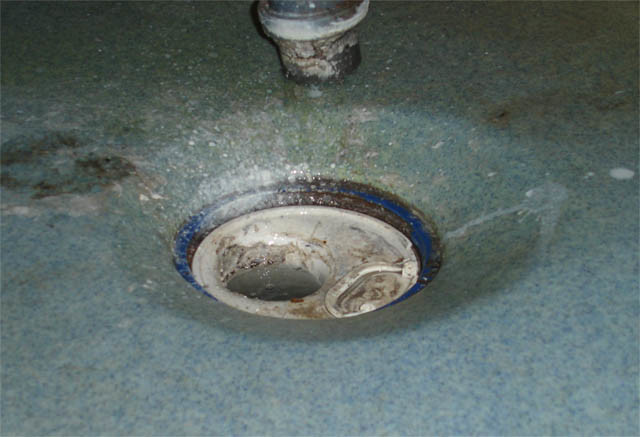
I have a floor drain with a water trap where the washing machines' water goes out (attached is a picture of the model).... And I am about to lay tiles around it... Now to the question... How should I do around it?? Is it possible to raise such a device in some way? The waterproofing and the clamping ring are not connected to that, they end up where they end up and do not affect the water trap.... Should I raise the entire drain with waterproofing and clamping ring or just the water trap??
Currently, the "drain" itself is recessed about 2-3 cm from the surrounding floor, and around the "drain" there is quite a steep slope of about 5 cm in all directions.... (See picture)
Hope you understand....
How to achieve a good and nice result with future tiles??
Appreciate all tips... Best regards
I have a floor drain with a water trap where the washing machines' water goes out (attached is a picture of the model).... And I am about to lay tiles around it... Now to the question... How should I do around it?? Is it possible to raise such a device in some way? The waterproofing and the clamping ring are not connected to that, they end up where they end up and do not affect the water trap.... Should I raise the entire drain with waterproofing and clamping ring or just the water trap??
Currently, the "drain" itself is recessed about 2-3 cm from the surrounding floor, and around the "drain" there is quite a steep slope of about 5 cm in all directions.... (See picture)
Hope you understand....
How to achieve a good and nice result with future tiles??
Appreciate all tips... Best regards

How do you mean you could just raise the water trap? I suggest you move the drain up to the correct height, fill/seal it, apply the waterproofing, and lay the tiles.
In theory, it works to lay tiles around the drain as it currently appears, but then the drain grate (tile frame) is placed higher up, level with the rest of the floor, but you shouldn't have such a steep edge when connecting the waterproofing to the drain.
In theory, it works to lay tiles around the drain as it currently appears, but then the drain grate (tile frame) is placed higher up, level with the rest of the floor, but you shouldn't have such a steep edge when connecting the waterproofing to the drain.
I was just wondering if there was some kind of "muff" for the water trap that brings it level with the floor, while the drain itself stays at the same level... So all the water that doesn't go through the water trap can flow "past" it... But maybe that was just a made-up dream scenario by me 
But about your idea then... What's the best way to go about casting it up, and what do I need in terms of equipment? Besides the filler Will the waterproofing be done the same way I planned to do it? That is, drain collar and waterproofing, with the clamping ring... Or will it be a whole new story??
Regards...
But about your idea then... What's the best way to go about casting it up, and what do I need in terms of equipment? Besides the filler
Will the waterproofing be done the same way I planned to do it? That is, drain collar and waterproofing, with the clamping ring... Or will it be a whole new story??Regards...
It is possible that there is an extension ring that allows you to raise the well flange so that you can fill in and get a reasonable slope on the floor, but the water trap ends up at the same level as before. Which hardly matters. However, if the well is older than 1990, you need to replace it in any case.
If you are going to replace the well, you naturally connect the waterproofing as usual.
If you are going to replace the well, you naturally connect the waterproofing as usual.

Question, since I don't know the rules; do you really need to replace the floor drain because it is older than the '90s if, for example, it's a laundry room that is not entirely waterproofed and has a concrete substrate?
Depends on how you see it. If you want to claim something on insurance, you should replace it, but if the whole room is concrete, the chance of getting any water damage is significantly minimal.
If you're going to follow the rules, I interpret them to mean that if it's a laundry room, you should have a waterproof membrane on the floor IF you have insulation under the slab. If you have no insulation, you shouldn't have a waterproof membrane either, but this is where it gets tricky, because if you read the Building Ceramics Council's rules:
"The rules apply to the function and application
of waterproofing systems on various substrates when tiles,
clinker, or mosaic are to serve as the surface layer on floors
and walls in wet rooms, such as bathrooms and
showers in private residences or spaces with similar water exposure.
The rules also apply to floors in toilets
and for floors in laundry rooms, as well as for floors in
spaces with a water heater (not wet rooms),
where the waterproofing is extended at least 50 mm up
the wall. (BBR 6:5331)
Both new construction and renovation
are covered by the rules."
I interpret it to mean that if you don't have waterproofing, you don't need to follow the rules, which also means replacing drains older than 1990. But it's the insurance company's interpretation that matters in the end, so it might be a good idea to call and check with them first.
If you're going to follow the rules, I interpret them to mean that if it's a laundry room, you should have a waterproof membrane on the floor IF you have insulation under the slab. If you have no insulation, you shouldn't have a waterproof membrane either, but this is where it gets tricky, because if you read the Building Ceramics Council's rules:
"The rules apply to the function and application
of waterproofing systems on various substrates when tiles,
clinker, or mosaic are to serve as the surface layer on floors
and walls in wet rooms, such as bathrooms and
showers in private residences or spaces with similar water exposure.
The rules also apply to floors in toilets
and for floors in laundry rooms, as well as for floors in
spaces with a water heater (not wet rooms),
where the waterproofing is extended at least 50 mm up
the wall. (BBR 6:5331)
Both new construction and renovation
are covered by the rules."
I interpret it to mean that if you don't have waterproofing, you don't need to follow the rules, which also means replacing drains older than 1990. But it's the insurance company's interpretation that matters in the end, so it might be a good idea to call and check with them first.
It seems complicated... Now, there's no other water coming down into the floor drain except the water from the machines that goes via pipes directly into the water trap... So the risk of water damage is minimal, but you still want to do it correctly...
What can happen if you waterproof an uninsulated slab? I'm not entirely sure if it's insulated or not, the previous owner cast the slab.... But the vinyl flooring that is there now is a waterproofing layer, so let's hope the previous owner knew that you shouldn't waterproof an uninsulated slab...
What can happen if you waterproof an uninsulated slab? I'm not entirely sure if it's insulated or not, the previous owner cast the slab.... But the vinyl flooring that is there now is a waterproofing layer, so let's hope the previous owner knew that you shouldn't waterproof an uninsulated slab...
Click here to reply