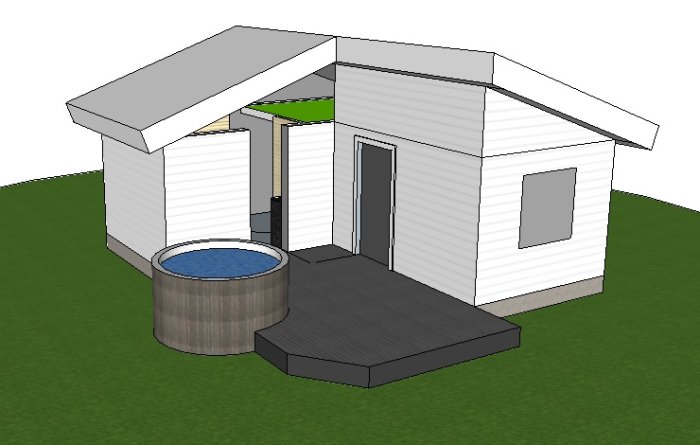
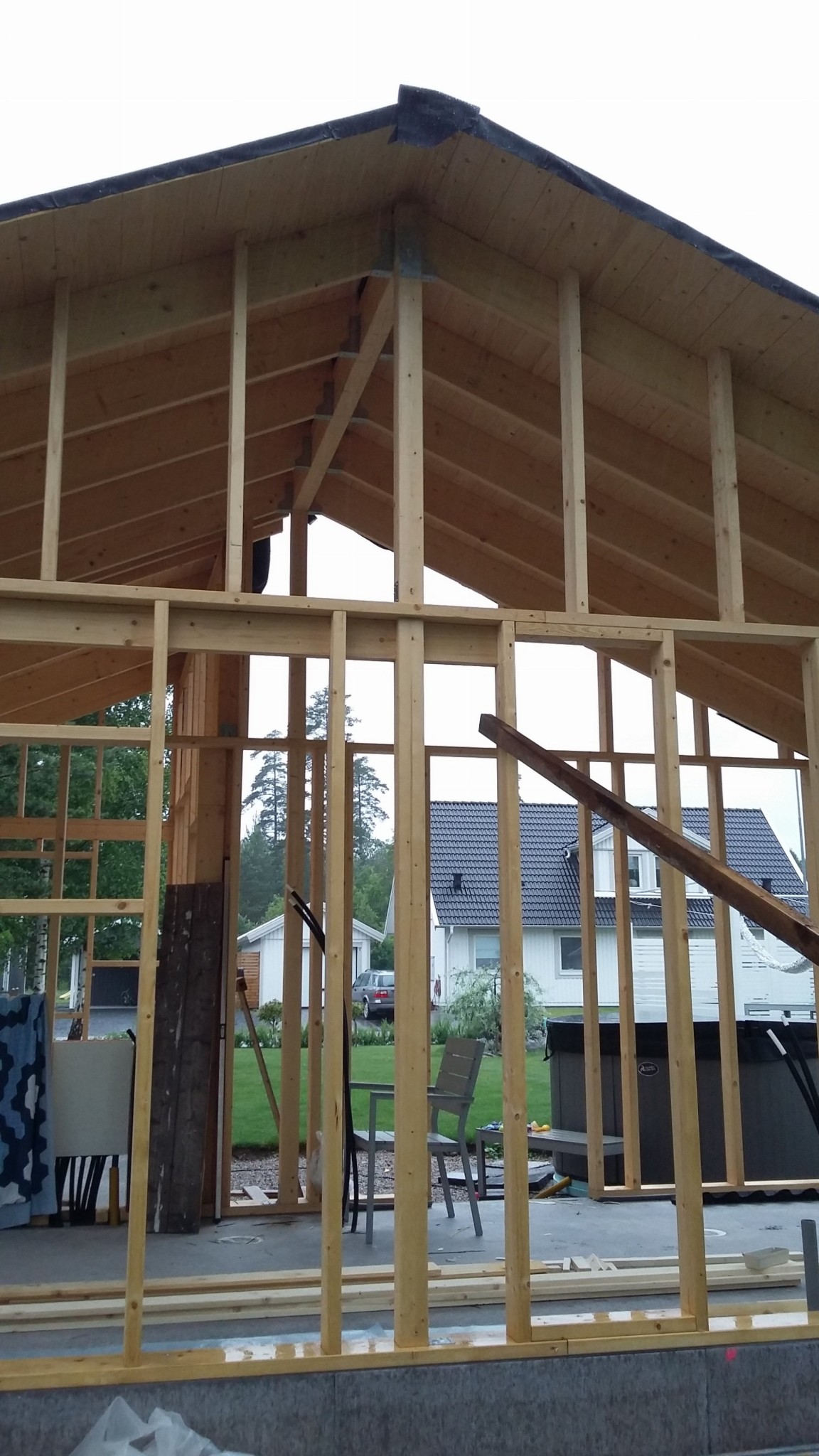
Received a quote for trusses for a 32 sqm cabin. The gable roof section will have a loft covering almost the entire area and be about 110 cm high in the middle.
The lean-to section will be open up to the ridge at the same angle as the outer roof.
Conditions:
Approximately 22-degree angle
Heavy roof with tongued and grooved/concrete tiles
Snow zone 2
Span 6.5m on gable roof/3m on lean-to
120 mm frame
The quote is about 13,500:-
This includes 10 pieces of 45x225 (cc60), 3m laminated beam 115x315, and 10 joist hangers for the gable roof.
5 pieces of 45x220 (cc120) for lean-to roof
Transport
Calculation
Now to the question. Can a standard C24 handle 3m on cc120? There's no mention of either laminated beams or standard C24 on the sketches. I've checked on Trädguiden but that example is for a maximum 10-degree slope.
Possibly, the carpenter will make the trusses himself as the delivery time seems to be dragging and there isn't a single gang-nail plate to attach, just angle adjustments at the feet. But. He wants to order the materials by tomorrow at the latest.
Cost of self-purchasing materials: about 3,500:-
Yes, a 45x220 C24 with a 22-degree roof slope and a span in the horizontal plane of 3 m on c/c 1200 mm can handle a distributed load of 2.5 kN/sqm (snow 2 + self-weight 0.5).
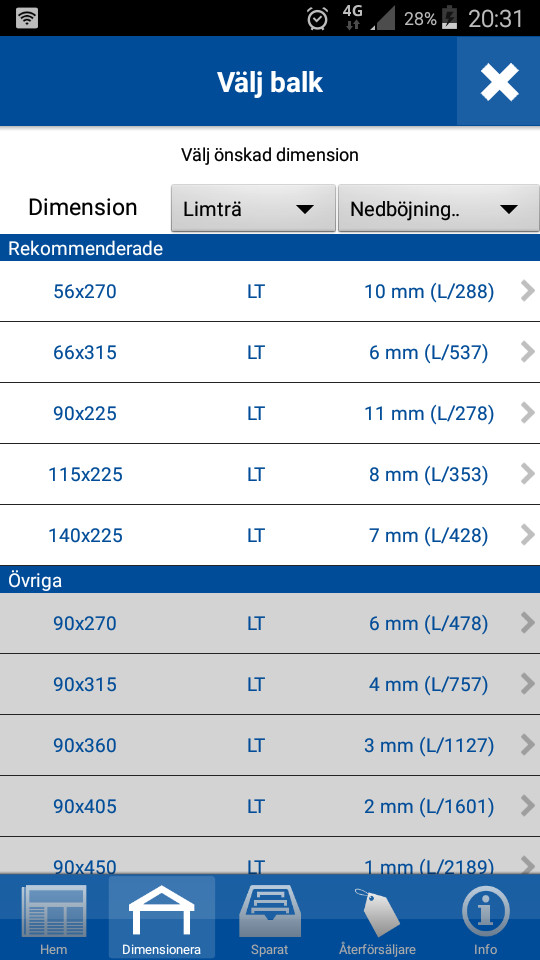
I tried to find out if I can reduce the height dimension on the glulam beam using Moelven's glulam app but don't quite understand the difference between the various parameters. Anyone who has a good grasp?
I figured it out myself using knowledge in structural mechanics and strength theory combined with the tables available in Träguiden. If you want to compare different glulam dimensions (or construction timber), you just need to calculate their moment of inertia, b*h^3/12, for deflection, or section modulus, b*h^2/6, for strength. In a roof construction, it's the latter that applies. A glulam beam of 115x315 has a section modulus of 11.5*31.5*31.5/6 = 1902 cm^3. A 165x270 has a section modulus of 2005 cm^3, so it is usable. If the original dimension comes from Moelvens app, I would probably double-check it first.
Thanks for your answers, Justus! I've been busy building the framework with the carpenter and having kids' parties and what not this weekend.
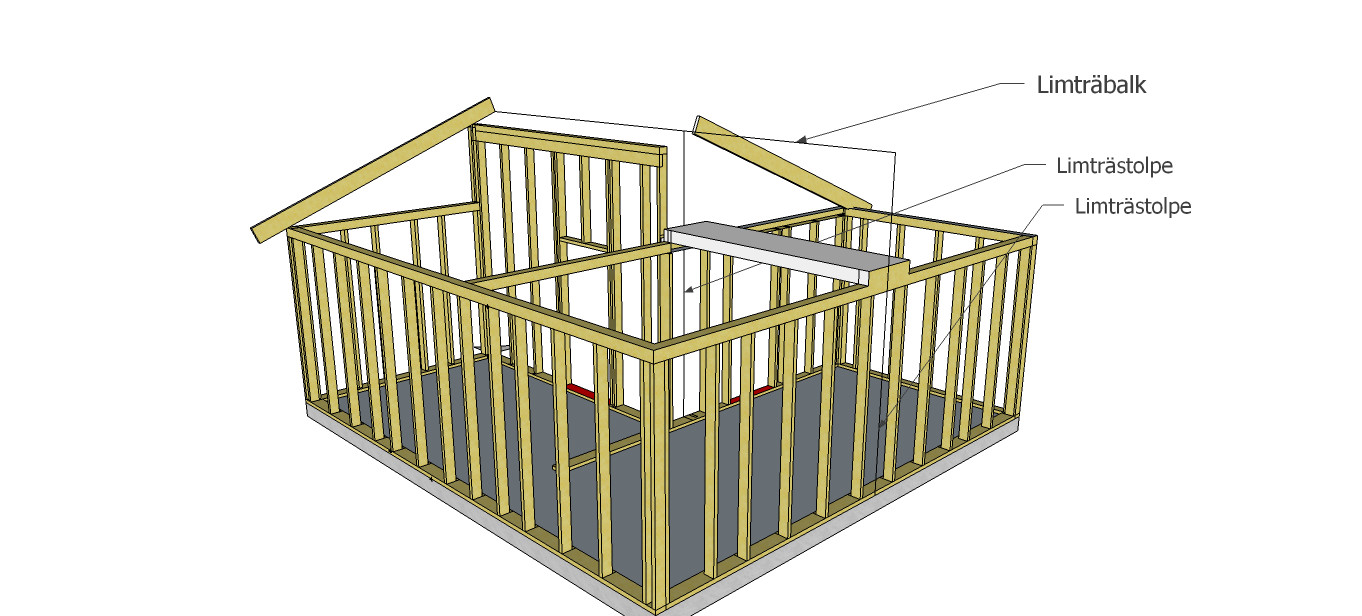
I was planning to post a picture of the roof construction on Sunday and would gladly receive input on the glulam beam and posts for it. The 115x315 beam was the constructor's suggestion, but I might want to reduce the height to save loft height. What do you mean by the app? Are there any parameters that it doesn't take into account?
I often think that Moelven's app tends to give unnecessarily large dimensions. However, the fundamental problem with all dimensioning programs is that if you provide them with incorrect input data, the result will not be reliable. If you are not certain about the static situation, it can easily go wrong.
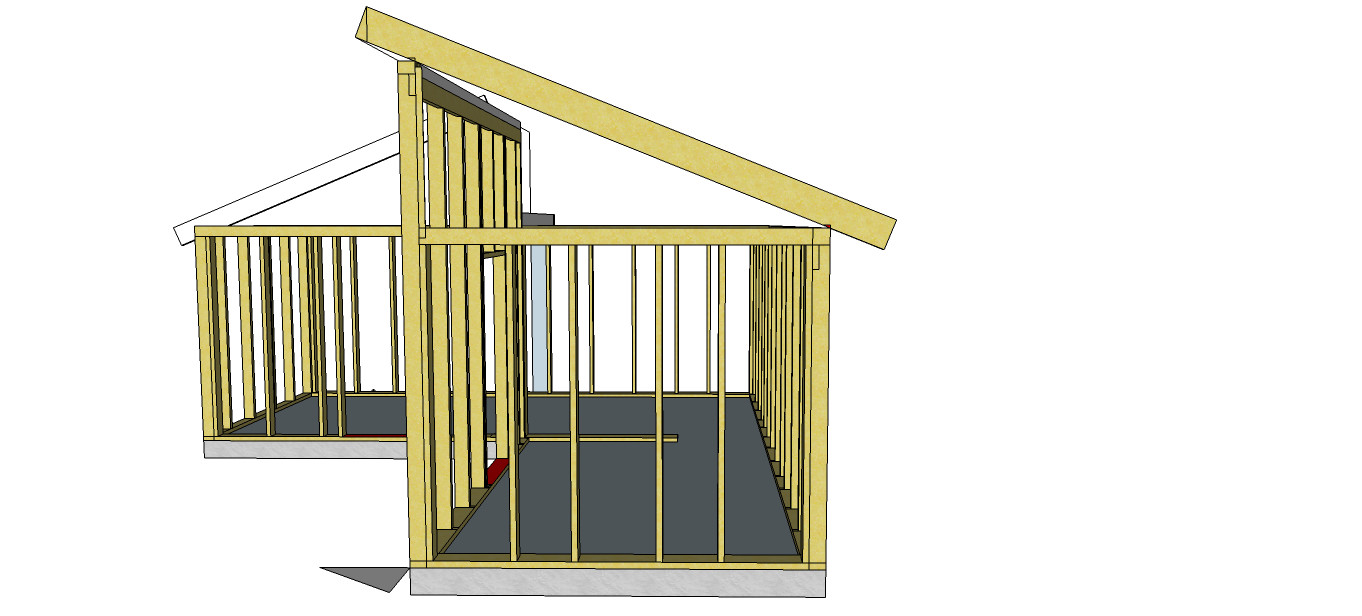
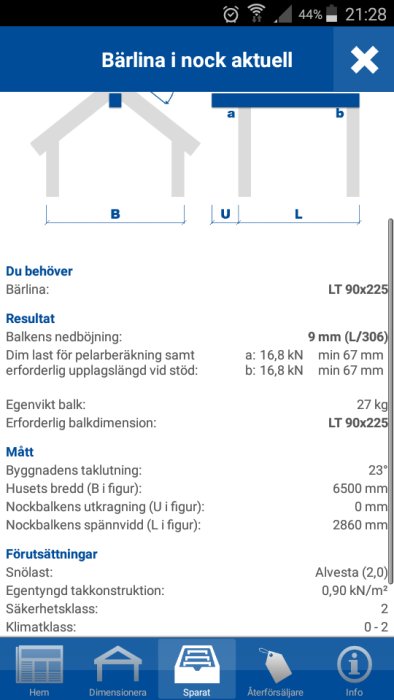
Here's the plan for how the roof should look. What I'm thinking about, as mentioned, is the sizing of the beam and posts. The span is 6.48m and 2.96m wide. The app recommended a bunch of different sizes, see the image.
Another consideration is how much you can notch the 220 beams to fit correctly on the wall plates. Or if there's a better solution? I was thinking of using beam hangers against the glulam beam.
I just remembered that the first suggestion from a constructor was 170+170 as trusses, which I thought was way too much. Maybe that's why he suggested the 115x315 beam, to have something to attach 34cm beams to. 🤔 I don't actually know which program he got his calculations from. As mentioned, I chose to move forward with this myself.
/EDIT Just thought of something, you wrote earlier when we discussed 220x45 that they can handle snow zone 2 and a self-weight of 0.5 kN/sqm. The app says 0.90 kN for concrete tiles/insulation/interior cladding. Is it the app that is incorrect?
The deflection is an aspect of construction that one only cares about when it comes to floor joists, not roofs. This might explain why you have such large dimensions. 115x315 is quite a significant over-dimensioning if you have a post in the middle. 42x315 should suffice. However, if you are using glulam columns, the minimum dimension is 90x90, so a beam that is 90 mm wide might be appropriate. 90x225 will more than meet the needs (actually, 90x180 is enough, but if you have roof beams that are 220 high, it makes it easier with a higher ridge beam.
I don't think you should notch into the roof beams; it's always an unnecessary weakening. It's better to make wedges.
Thanks for the answers! I'll go with 90x225 with a couple of 90x90 posts. It's just a 3m beam so it probably doesn't cost much more to go up a bit in size. I'll probably skip notching the 220 studs on the high part of the roof. On the lower part, I'll cut at an angle and place them with the inside against the inside wall plate.
Suddenly realized I made a mental slip. I thought the 90x90 pillars felt a bit weak, so I looked at the glued-laminated timber app again. With my measurements, I would need two 90x180 pillars to handle 17kN! Is it just a matter of biting the bullet and replacing them with thicker ones, or can I solve it in another way? I can't add anything on the inside as the pillar aligns with the studs inward.
Just realized two things:
1. I can fit a 45x95 on the inside of one of the pillars so that it supports all the way up to the underside of the beam.
2. It seems that the app doesn't give the same results for the inputted values now as it did 20 days ago. It doesn't even recommend 90x225 anymore, but 90x270! Also, I may have misunderstood the load calculation for the pillars. See attached image.
The height you're referring to, I assume, is for the pillars. The total height is 3.6m, but we split them at the hammer beam and recessed them like the usual standing studs.
The ability to load a glue-laminated column is limited by what is known as the "buckling length," the higher the unbraced column, the smaller the allowable load. A glue-laminated column with dimensions 90x90 can handle approximately 20 kN in centric load at a buckling length of 4 meters. So it should not be a problem. The buckling length must be assessed in both the x and y directions. The x direction is in the direction of the outer wall, where you have a bracing at a height of 2.4 meters, but you have no bracing in the y direction, where the buckling length is then 3.6 meters.
Based on the information I have, you don't need to do anything at all. Do not trust dimensioning apps. Like all computer programs, they calculate based on the input they receive, and their underlying algorithm is unknown.
Whoops! Seems I forgot to send my reply! Again, thank you for your input! Okay, so it's not 16.8 kN x 2 that should be calculated?
I don't quite understand what you mean by the buckling length in the Y-direction but I trust you!
It's 16.8 kN per column according to what you've determined, so it's fine. The x- and y-direction refer to the two orientations a column with a rectangular cross-section has, where the x-direction is the narrower and the y-direction is the wider. For a column with a square cross-section, x and y are the same size. However, glulam is slightly stiffer in the longitudinal direction of the joints.
Click here to reply
Vi vill skicka notiser för ämnen du bevakar och händelser som berör dig.