Hello, I am going to build/repair an internal wall (insulation for shower room/basement) made of aerated concrete blocks. I had bought thin-joint mortar on the recommendation of the block seller, but now I'm reading and see that it seems "thin-joint adhesive" is recommended instead of "thin-joint mortar." However, I can't find anything when I google the building supplies on a Sunday - and just need to get it quickly.
Does anyone know?
I was going off a DIY article, where they barely mention which adhesive they use. I'll look into it tomorrow, of course, but I thought if someone was knowledgeable about this and could give simple tips/explanations.
My slab is of unknown manufacturer (K-Bygg) but is comparable to, for example, H+H or Siporex. Dimensions 100mm deep, 400x600 mm.
I choose this because it is what the rest of the wall is originally built with and has somewhat better insulation properties than Leca. Easier to work with.
Hi, I'm going to repair/lay bricks for an interior wall (insulation shower room/basement) made of aerated concrete blocks. I had bought thin-set mortar on the recommendation of the seller of the blocks, but now I read and see that "thin-set adhesive" seems to be recommended instead of "thin-set mortar." However, I can't find anything when I google building supplies on a Sunday - and I just need to get it quickly.
Does anyone know?
I based it on the DIY article, where they barely mention which adhesive they use. I'll check with them tomorrow, of course, but I thought if anyone was knowledgeable in this and could give simple tips/explanations.
[link]
My slab is of unknown brand (K-Bygg) but comparable to, for example, H+H or Siporex. Dimensions 100mm deep, 400x600 mm.
I choose this because it's what the rest of the wall is originally built with and has slightly better insulation properties than Leca. Easier to work with.
Just keep building with this, different suppliers choose to call it different things..
[link]
that link doesn't seem to work for me.
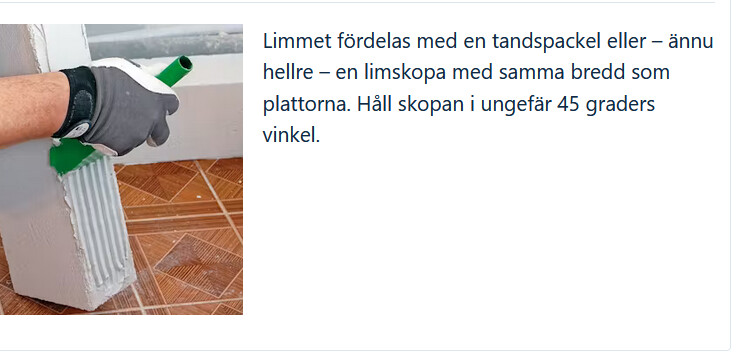
sure it works, but I have bad experience with mortar and find it difficult to work with. The adhesive is supposed to have better adhesion, and I would like to use it if available. It looks much easier to work with the adhesive. It's a completely different consistency. Do you know where one can get it?
probably possible, but I have bad experience with mortar and find it difficult to work with. The glue should have better adhesion, and I would like to use it if it exists. Looks much easier to work with the glue. It's a completely different consistency. You don't know where to get it?
[image]
But I don't think there's a difference, google the product sheet for your purchased product..
It's not any mortar you bought because it has ballast of 0-0.5mm..
In "pre-treatment" it is mentioned: "The surface should also be thinly primed with grundningsbruk," what is that bruk? Is it needed when you are laying blocks on top of each other, or is it just when plastering?
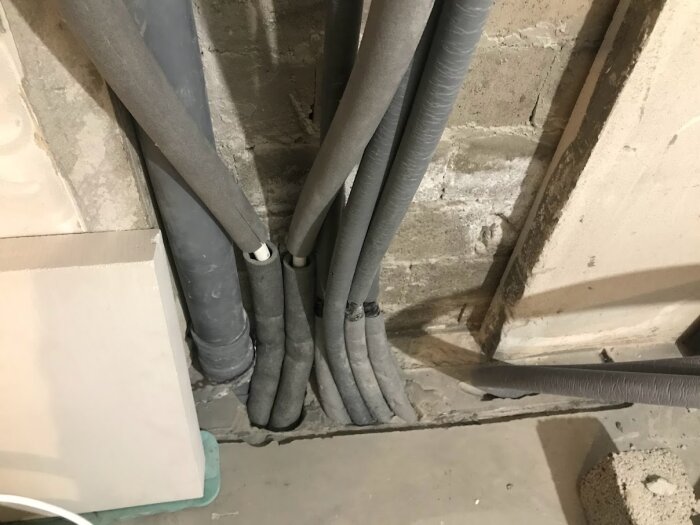
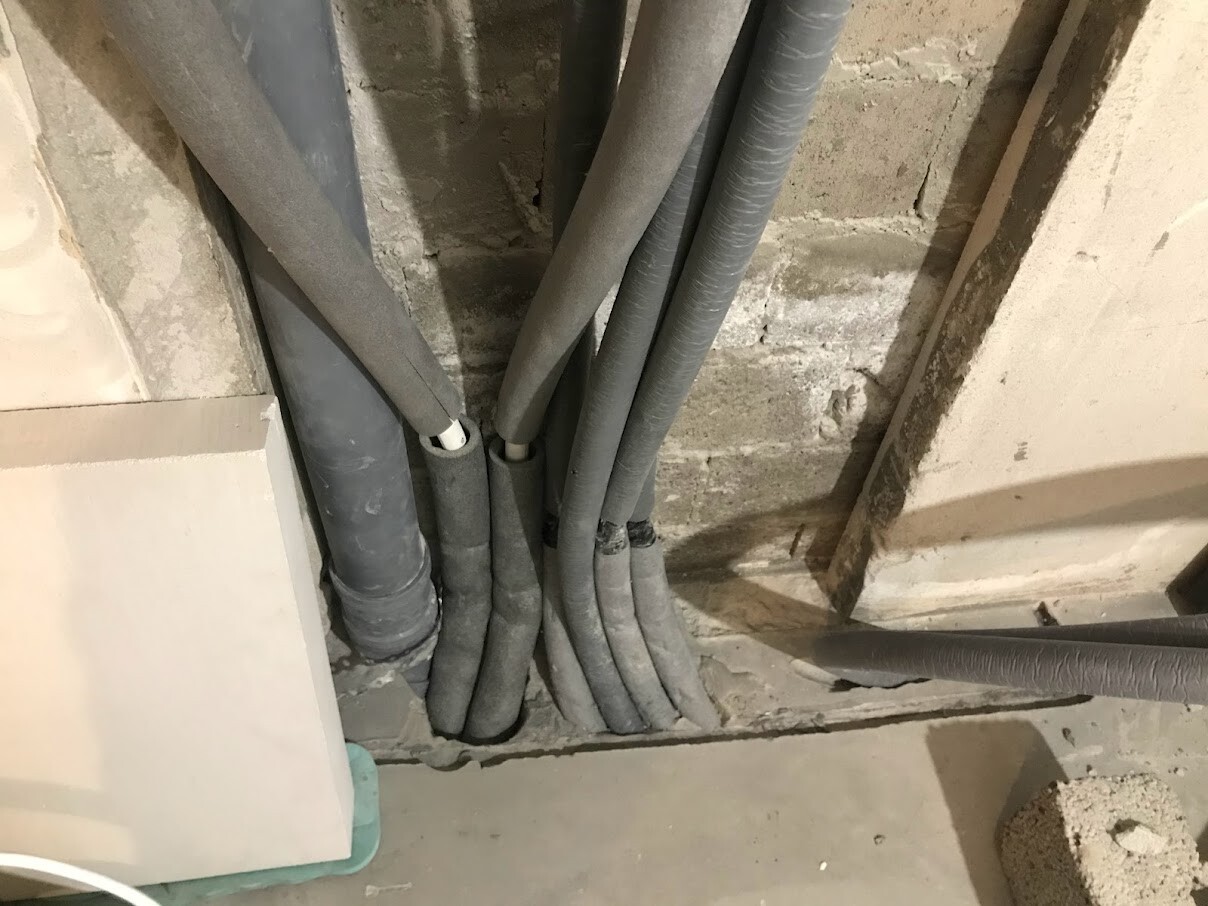
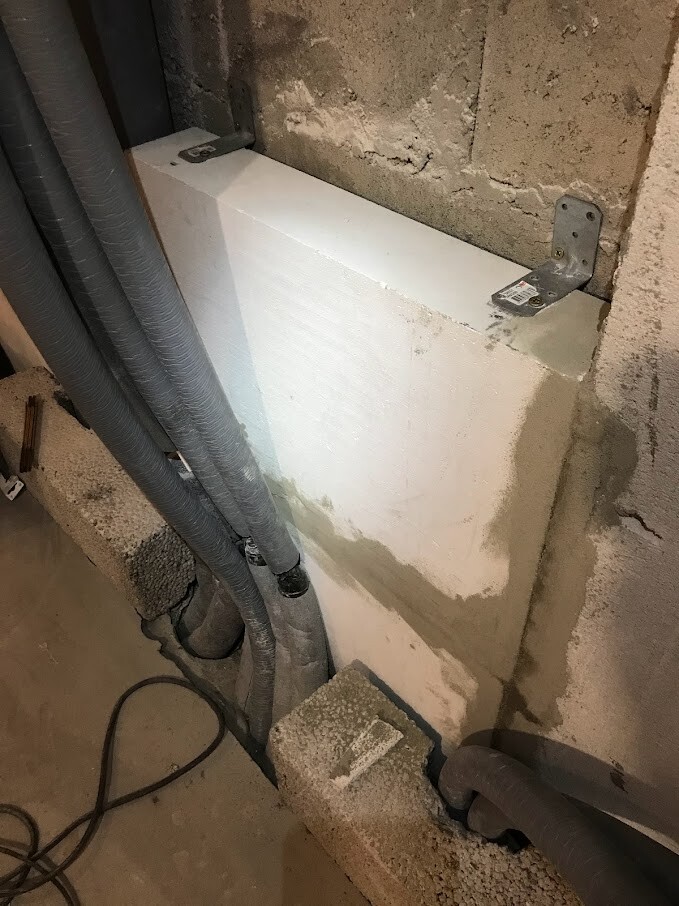
before (a 600x2000 element had cracked and has been removed):
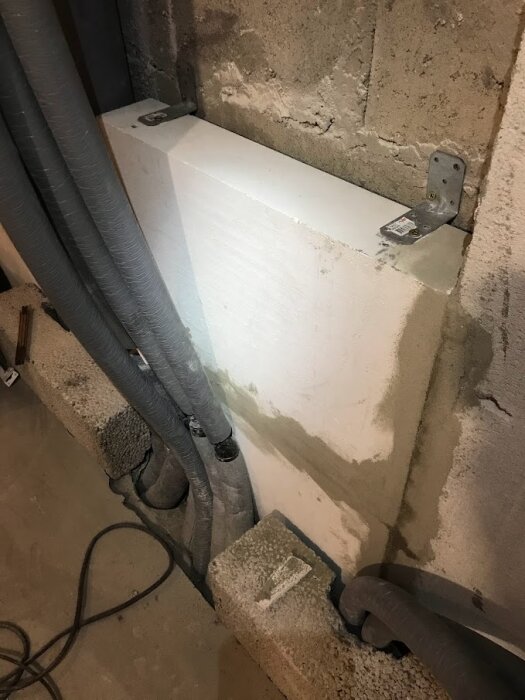
after:
(the angle iron solution comes from the Gds article - there is a 20mm air gap behind so wanted to make sure it stands stable - no fastening to the left either where the sewer pipe goes).
Now I'm going to finish building the wall upwards and then build a layer on the outside to cover the pipes.
Hope it holds as a base for sealing and microcement.
Click here to reply
Vi vill skicka notiser för ämnen du bevakar och händelser som berör dig.

KJD said:
Hi, I'm going to repair/lay bricks for an interior wall (insulation shower room/basement) made of aerated concrete blocks. I had bought thin-set mortar on the recommendation of the seller of the blocks, but now I read and see that "thin-set adhesive" seems to be recommended instead of "thin-set mortar." However, I can't find anything when I google building supplies on a Sunday - and I just need to get it quickly.