
4,227 views ·
15 replies
4k views
15 replies
The walls are giving way
Hello,
About to buy a 200 sqm house where the walls have started to give way, i.e., if you look at the facade all around, it's wavy. Previous owners have installed steel cables running through the entire house to stabilize everything.
Wondering how to renovate the walls correctly without tearing down the whole house.
Any tips?
About to buy a 200 sqm house where the walls have started to give way, i.e., if you look at the facade all around, it's wavy. Previous owners have installed steel cables running through the entire house to stabilize everything.
Wondering how to renovate the walls correctly without tearing down the whole house.
Any tips?
What kind of walls are they? Why are they not stable?

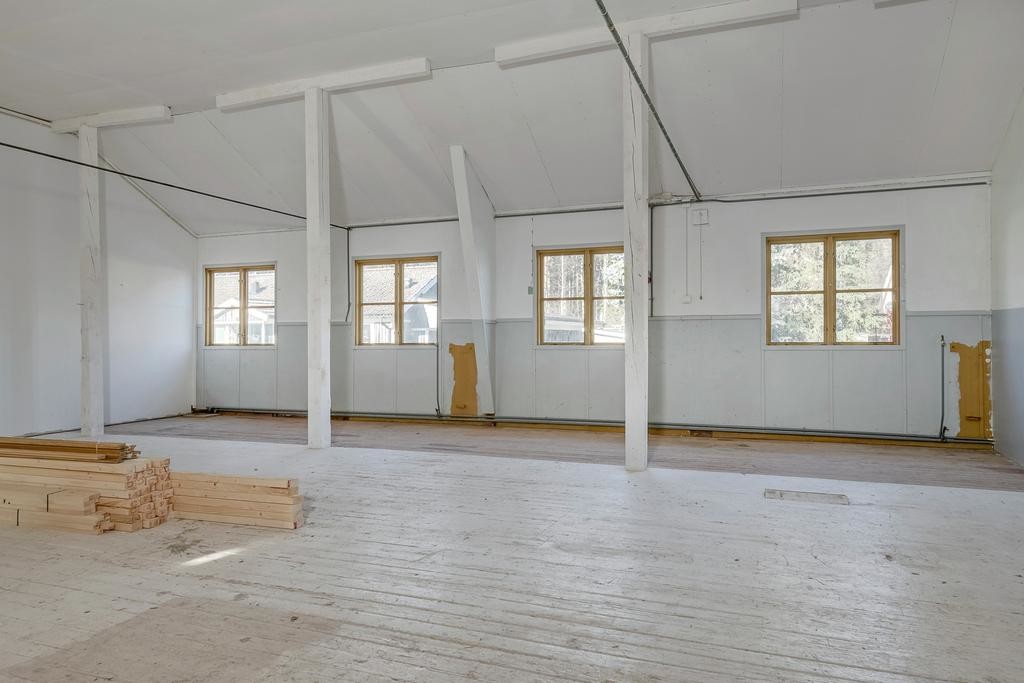
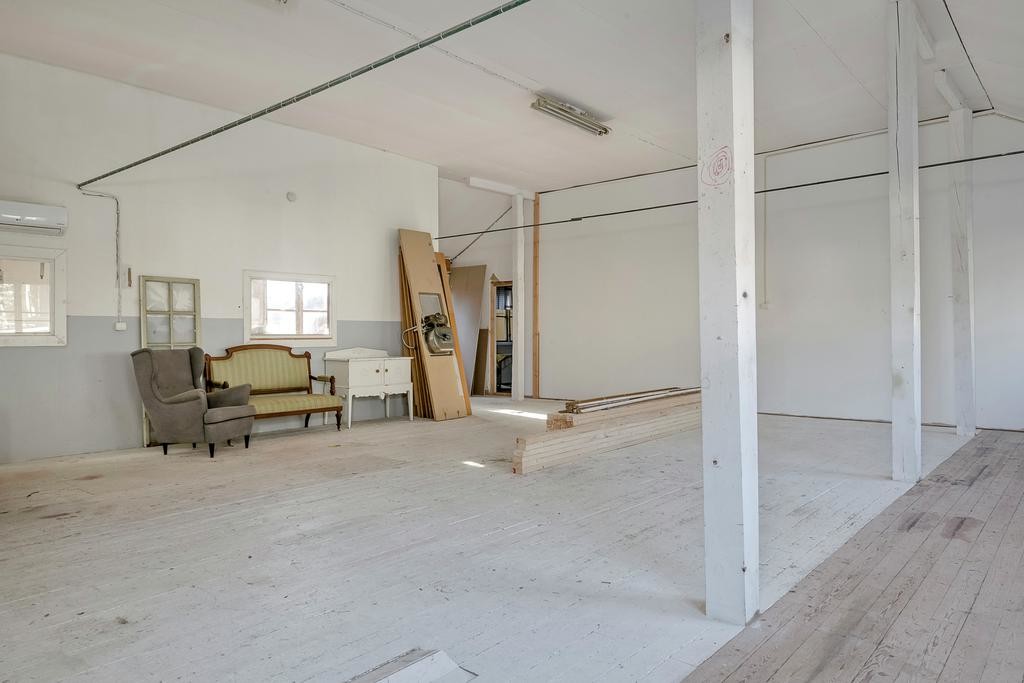
Yes, I might be getting in over my head... This is how it looks inside..
I should add that the roof bulges inward, it's an old asbestos roof, and the foundation might not be the best either..
So it might be a demolition object...
You see the wires across. Looking at the facade from the outside, it's wavy, so to speak.
Here's the link to the ad anyway: https://www.svenskfast.se/fritidshus/gotland/gotland/romakloster/snickaregatan-11/226060
I might back out, hehe.
I should add that the roof bulges inward, it's an old asbestos roof, and the foundation might not be the best either..
So it might be a demolition object...
You see the wires across. Looking at the facade from the outside, it's wavy, so to speak.
Here's the link to the ad anyway: https://www.svenskfast.se/fritidshus/gotland/gotland/romakloster/snickaregatan-11/226060
I might back out, hehe.

Member
· Västerbottens län
· 18 064 posts
Looks like the rafters are about to give in and are pushing out the walls.
The wires work as a collar tie.
If you look at the ridge outside, does it sag in the middle?
Tie rods can be seen, for example, in semi-old churches just to prevent the walls from being pushed out.
The wires work as a collar tie.
If you look at the ridge outside, does it sag in the middle?
Tie rods can be seen, for example, in semi-old churches just to prevent the walls from being pushed out.
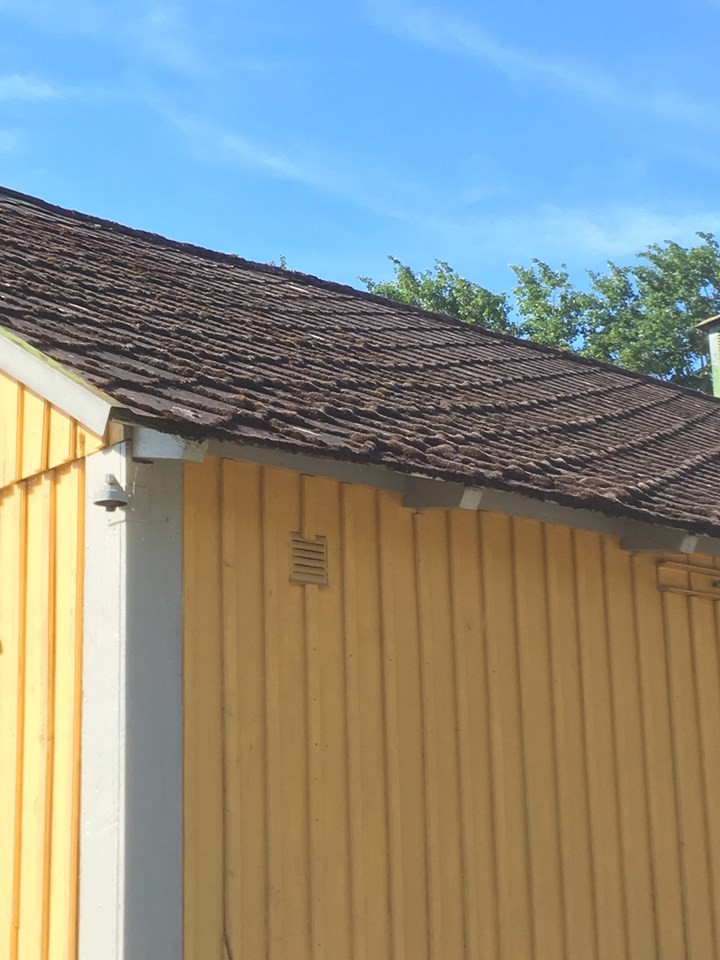

It's common for cables to be used in that way. Here they seem to be spaced too far apart, there should be a cable per roof truss, roof trusses are often spaced at cc 120.
That could be the case, but when you look at the facade from the outside, you can see that it is wavy, i.e., it gets pushed in a bit where the wires run.S Strontus said:
Member
· Västerbottens län
· 18 064 posts
The tension rods in some form probably need to stay, no wall construction can hold if the trusses have the opportunity to push out the walls.
If you remove the rods, you'll need to build a support wall perpendicular to the facade, as found in older churches.
Protte
If you remove the rods, you'll need to build a support wall perpendicular to the facade, as found in older churches.
Protte


If you are going to convert to apartments, it will probably still involve stripping down to the shell to build new fire compartments etc., it's usually difficult to just build on the old structures when aiming to meet modern standards. So, the wires are probably the minor issue.