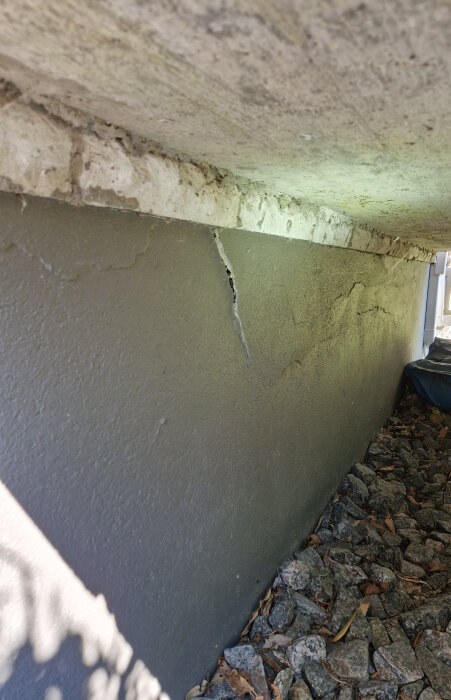
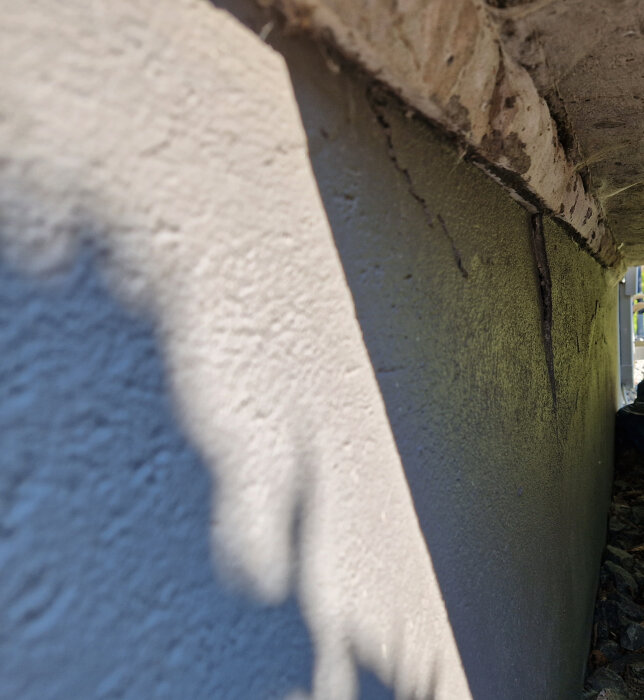
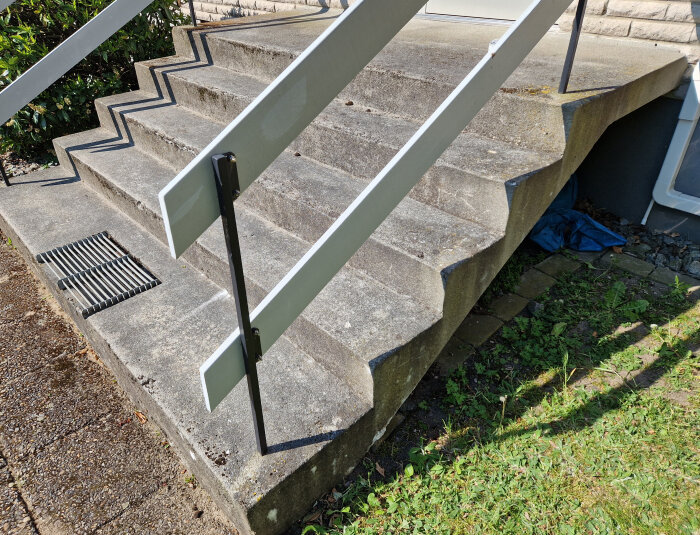
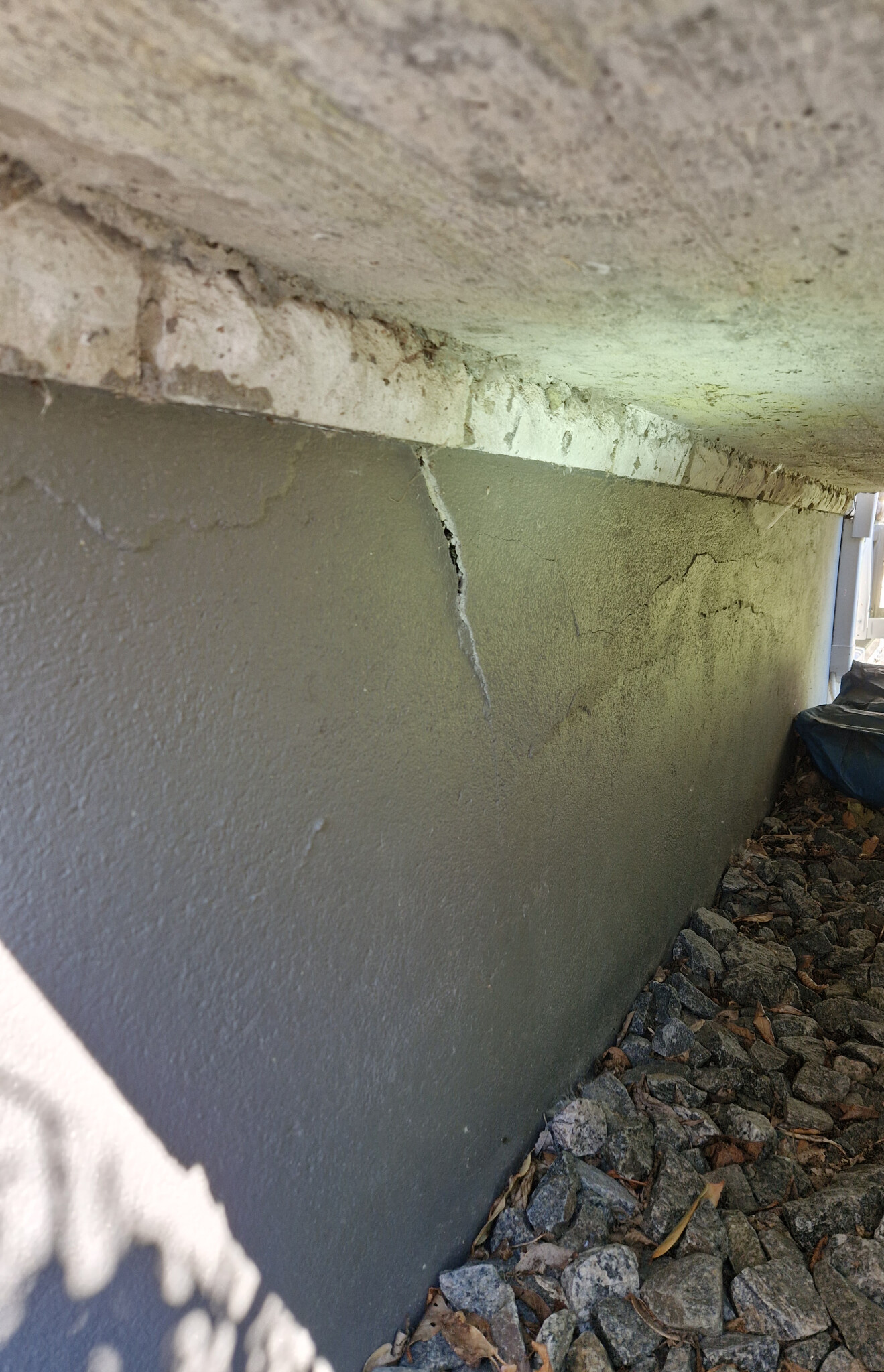
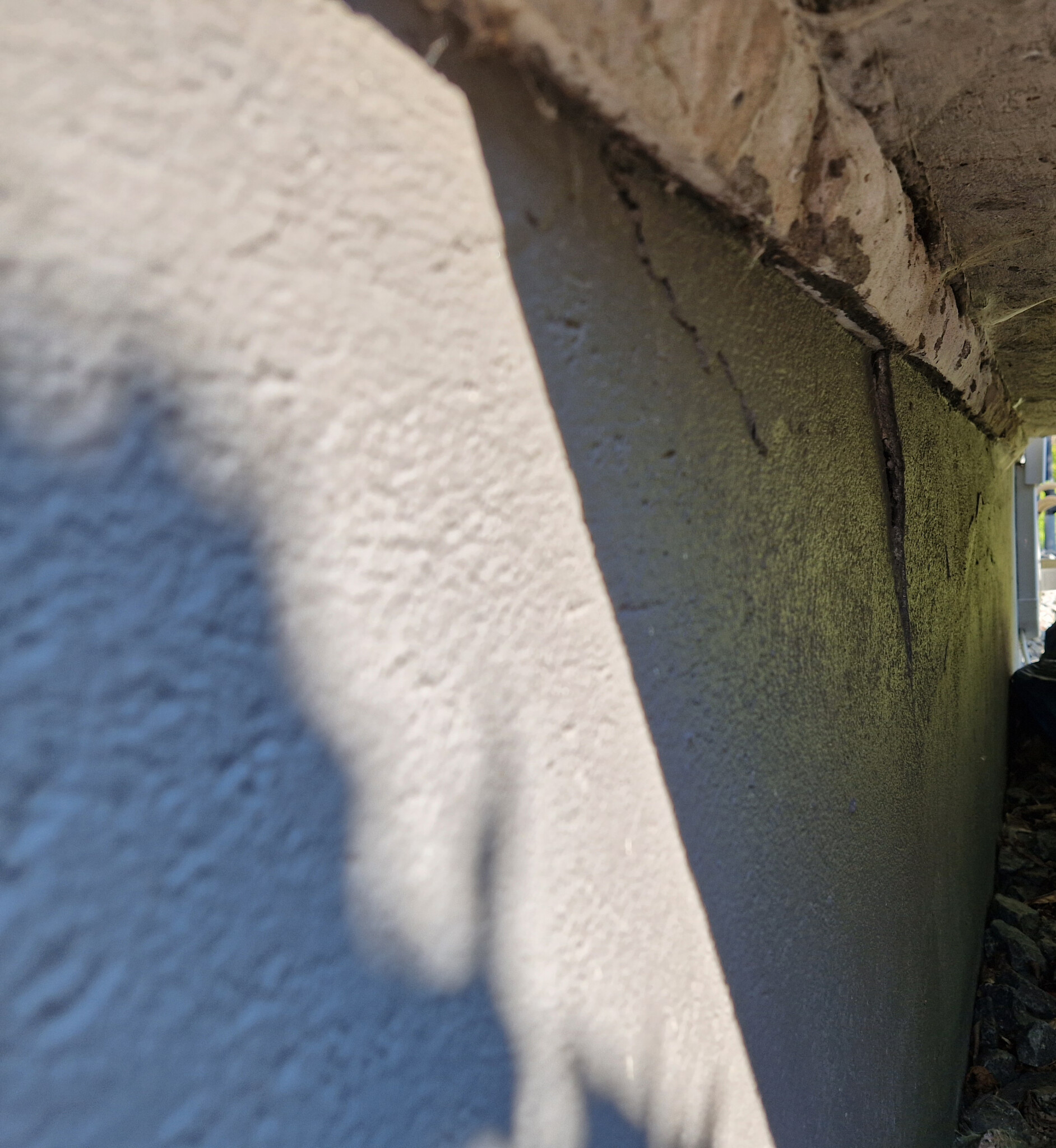
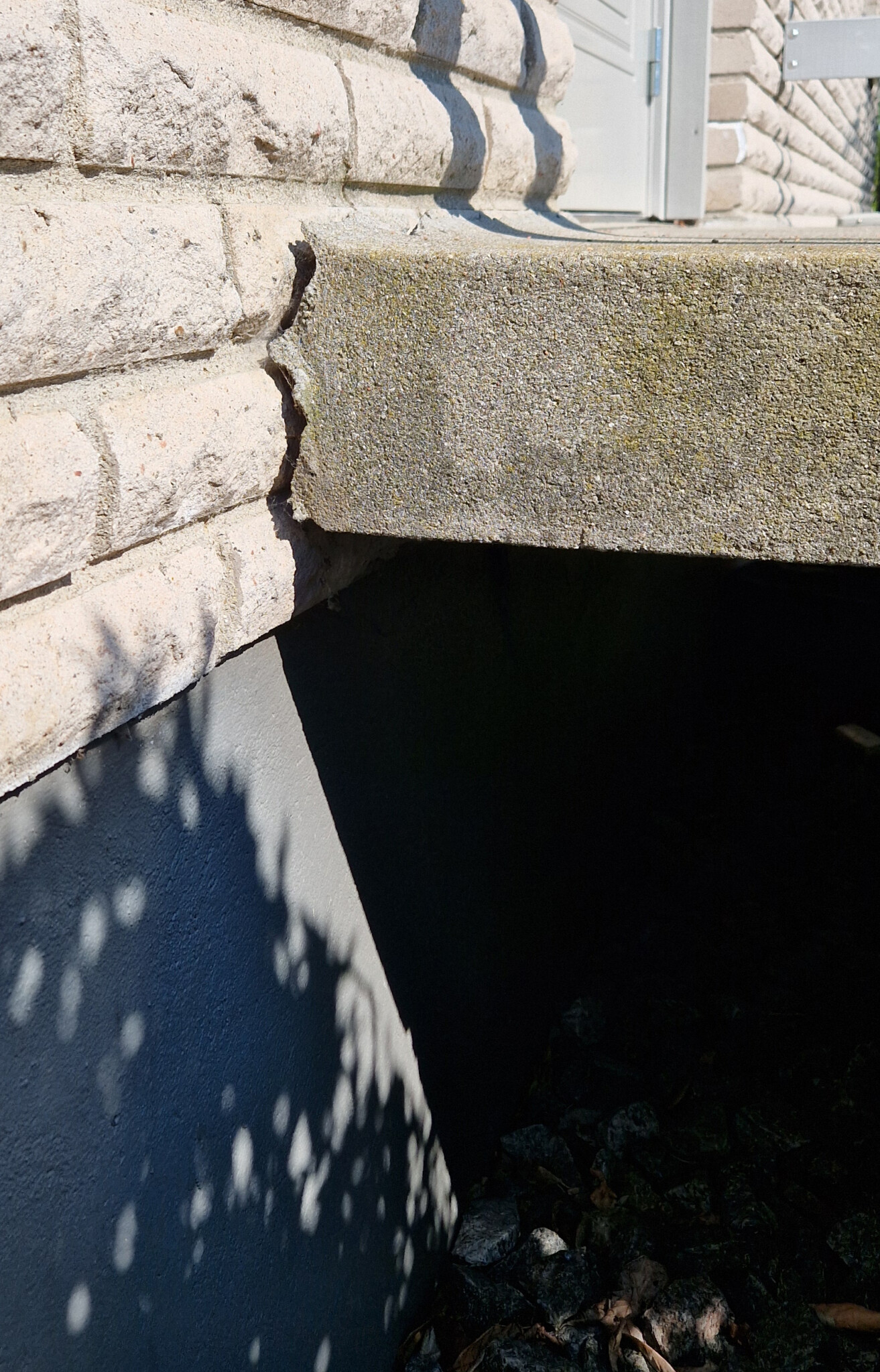
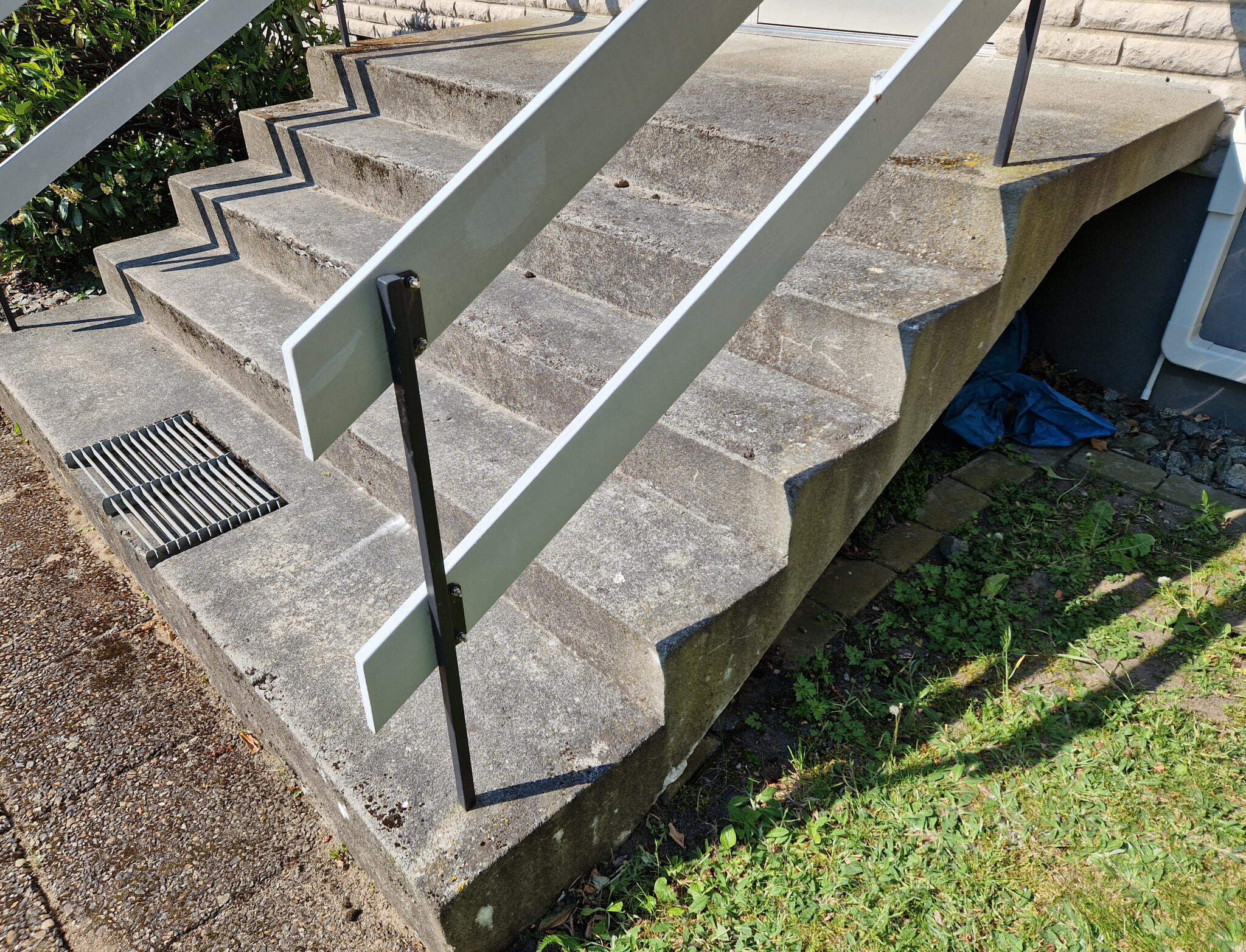
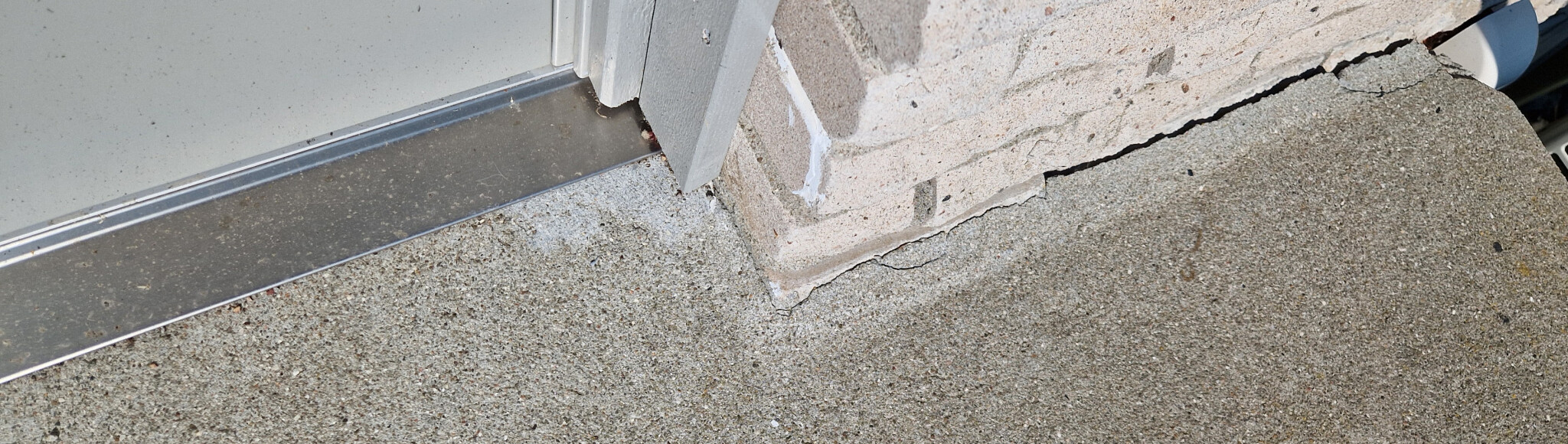
Yesterday, I noticed that there has been a significant damage to the foundation facade under the stairs of our 1970s house (wood frame with mexitegel facade).
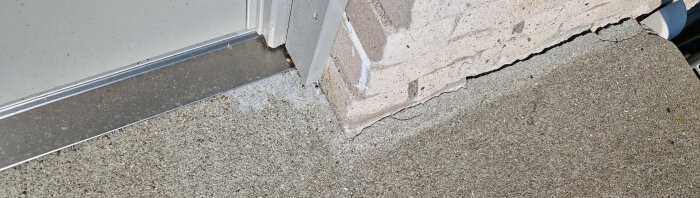
We replaced the door and sidelights about two years ago. It then became evident that there had been a major leakage. The outer part of the sill in the left part of the door opening was severely rotted and broke when touched. We neither had the time nor knowledge to replace the entire sill, so since the area had now dried up and did not appear to be very large, we chose to fill it with sealant. There were no problems mounting the door, and we have not seen any other issues until now.
We see three possible reasons for the current damage:
The stairs are collapsing.
The sill has expanded and caused more damage than we previously saw.
Due to the construction, the foundation has cracks in various places, not so much that the facade is pushed out or falling off like this, but it might still be part of the problem.
Regarding the sill, there are two possible causes for its water damage:
A. The original door's threshold was very poorly sealed, while the stairs have a slight incline. This might have caused moisture to seep down and damage the threshold and sill.
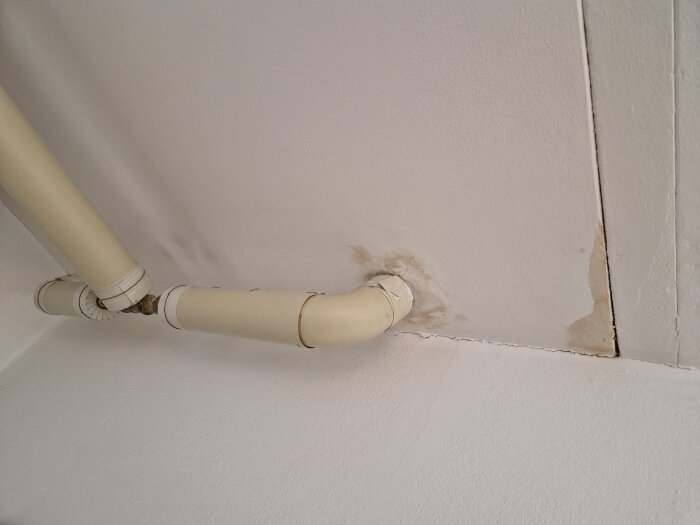
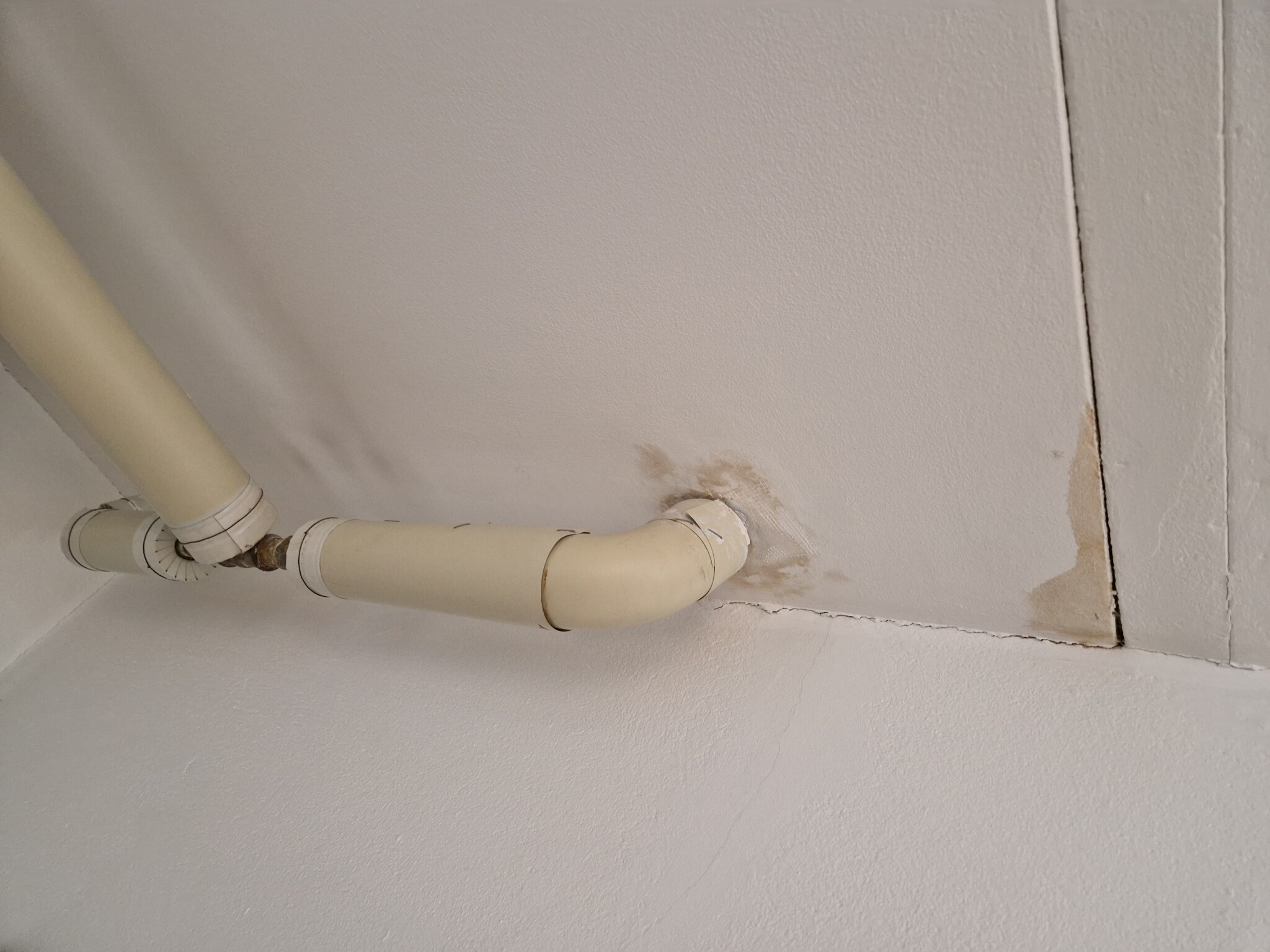
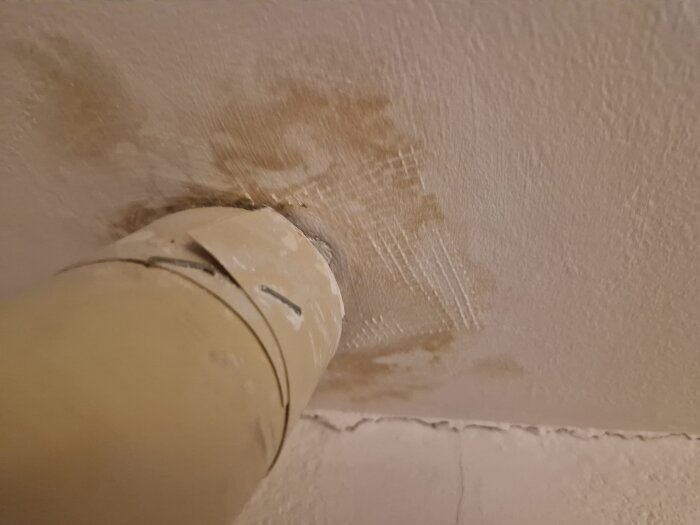
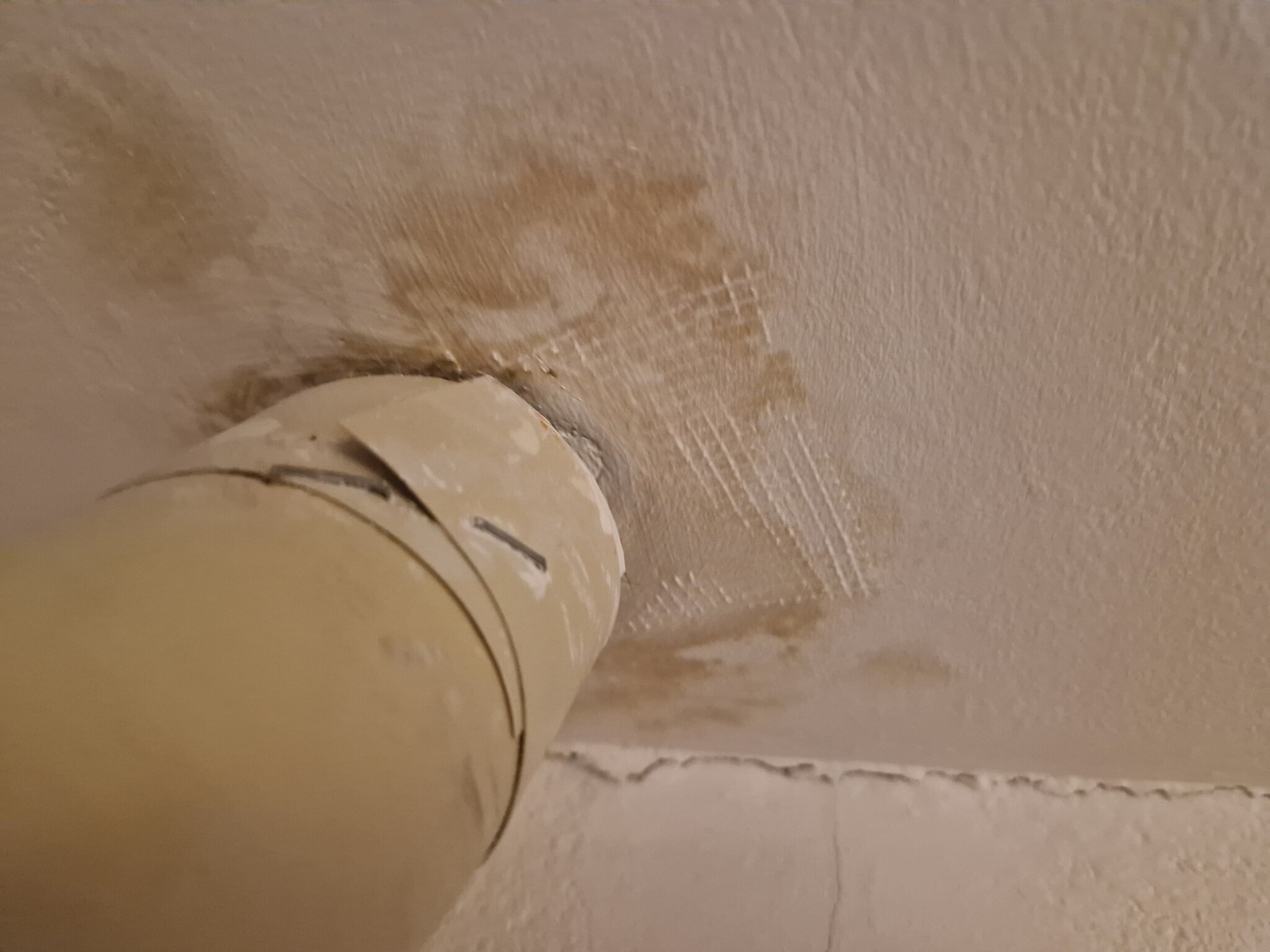
B. In the livable basement, in close proximity to this area, there was a water leak before we moved in, which can be seen here:
It was dry when we moved in, and I've tried painting over it a couple of times, but sooner or later it emerges again. I guess there might have been a water leak on the upper floor that made its way down. It's not impossible that this is behind the damage to the sill.
Lying under the stairs and tearing down the facade feels spontaneously dangerous if the stairs were to collapse.
Naturally, you want to tear everything out and replace it, but it also has to be economically viable and therefore a necessity.
There is no visible impact on the surface (possibly with the exception of what we found under the threshold), and the staircase does not appear to have started sagging. Now I don't know how large beams are in the walls, but it must be a very high beam if it is to stretch from the threshold down to under the staircase in this way.
The first step here is likely to tear down the facade where the crack is under the staircase to see if there really is an underlying problem. If you're lucky, there is nothing more, and you can be satisfied with just repairing.
But the question is what risks exist here, for example:
Is there a risk that the staircase might collapse? Should you try to demolish from a distance with something long and thin? Should you rent some type of pillar to support the staircase while you remove the facade?
Once the facade has been torn down, how urgent is it to apply new material? Can it endure being exposed for a few weeks?
I would say that the first step is to tear down/move the stairs and then start tearing down the facade to determine the extent of the damage. With the stairs in place, you can't possibly access the entire damaged area.
The recurring stain on the ceiling indicates it is an ongoing problem, not an old damage; otherwise, it could have been painted over.
Filling the damage under the threshold with sealant (instead of fixing it) was probably one of the worst solutions you could come up with.
Do it over, do it right, and repair the damage instead of "covering" it up!
An alternative to tearing down the stairs could be a 145x45 that you attach under the stairs (somewhere at the front edge) and then lift with a jack. I lifted a garage wall from the sill that way.
I imagine if you succeed in raising it 15-20 cm and then build a stable construction for the stairs to rest on, you'll have one less problem.
We tore down some paneling and fixed things a few years ago; it remained open for a couple of weeks but in the meantime, we put up a tarp to protect against rain.
Otherwise, I agree with the writer above, if you can't paint over it, you haven't found the cause of the problem.
The thread creator writes that parts of the sill in the house were rotten but they "repaired" it with sealant because they lacked the time and knowledge to fix it.
I therefore don't think it's enough to just reinforce the staircase. Everything has to be removed and rebuilt, including the house itself around the door.
Okay, it sounds like it's time to find a good builder who can fix this. I would have actually wanted to investigate more and see what's really hiding back there. If it was only about exterior facade maintenance without the risk of collapse, I would have done it myself. But since there might be a risk of collapse, it's better to hand it over to someone who knows what they're doing.
Regarding the damage under the threshold, it was about 5 cm wide, 1-2 cm deep, and 15-20 cm long. The lower part of the threshold was severely damaged. The damage was neither particularly deep nor wide but mainly located on the outer edge of the sill towards the stairs. One could see poor sealing against the threshold plate, leading us to assume it was due to years of weather exposure. Although the wood material was obviously water-damaged, it was completely dry at the time. We guessed the damage was at least 10 years old. Replacing the entire sill would have been desirable, but at that moment, we felt nothing more could happen with it. If the damage had been a bit larger, we probably would have inset new wood.
Regarding the spots on the ceiling, they weren't there when we moved in, probably recently repainted. After a few years, they slowly began to emerge, and upon closer inspection, you could see it had been repaired previously. The wood material had been reinforced, filled, and painted.
We know some discolorations can bleed through multiple layers of paint over time, so we assumed that's what's happening here. We painted one layer, but after 4-5 years, we can see it coming back again. The surface feels dry, and pressing the area, nothing gives way.
What I might consider doing before bringing in builders is poking loose "flakes" of the facade from a distance to see what's hiding underneath. Can you see wood material causing problems? Can you see deeper cracks in the wall? Or is it just facade separation occurring under the stairs?
I BELIEVE that the sill behind (to which the staircase is attached) has given way and now only the facade is holding up the staircase.
The staircase is thus pulling that part of the facade away from the house.
If you remove the plaster on the plinth and the brick under the staircase (to investigate) there is a risk that everything will collapse.
That it was dry on top of the sill (I assume you only felt with your fingers and did not use a moisture meter) when you replaced the door does not indicate how damp the sill actually is or how far down the moisture has penetrated.
If the wood has become so damp that the threshold of the old door is destroyed and the sill has been badly damaged, it should have been an indication for you that there was a problem that needed to be addressed. Filling up damages with caulk does not address the cause, it covers up the symptom and likely traps moisture in the construction.
If the staircase is the cause of the facade cracking, the staircase should have moved. However, there are no signs of this. The fact that the staircase is not fully attached to the facade is a common issue that is difficult to avoid, but as far as I can see, it is still aligned. There are also no visible cracks in the staircase.
But as you say, there are certainly risks even with "just" removing parts of the facade, so I will leave this to a builder.
Regarding the measures, everything obviously depends on how extensive the damage is and where the line is drawn. Tearing up an entire sill is not something to be taken lightly; it's not a job you do in an afternoon. Our assessment was that the damage was local and not particularly large, but it could certainly have been a misjudgment.
It will be interesting to find out what is really behind this. Of course, it's not impossible that there is greater damage and that it is related to a water source from within, such as underfloor heating or water pipes.
Why are you now speculating about water coming from the inside when there have been clear signs that it comes from the outside? Are there other clues you haven't mentioned?
The damage to the beam under the threshold of the front door has likely occurred due to inadequate sealing against the stairs. We initially assessed this damage as not particularly extensive, which resulted in the temporary repair.
However, as previously mentioned, there is or has been a water leak evident at the pipe penetration in the basement in the same area. How this occurred is unclear. It may have arisen in connection with the installation of the hydronic underfloor heating system in the hallway inside the front door, or it could have been a pipe leak. How extensive the damage is inside the wall, we do not know, but it is clear that an exterior repair has been made. Personally, I do not believe it is an active leak but rather discolorations bleeding through the paint. However, there may be underlying damage affecting the structure that the stairs are attached to.
But now I have sent inquiries to a couple of builders, so we will see what they come up with.
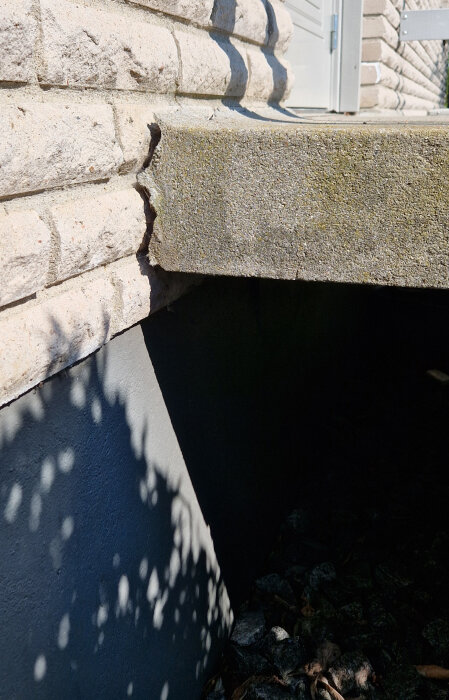
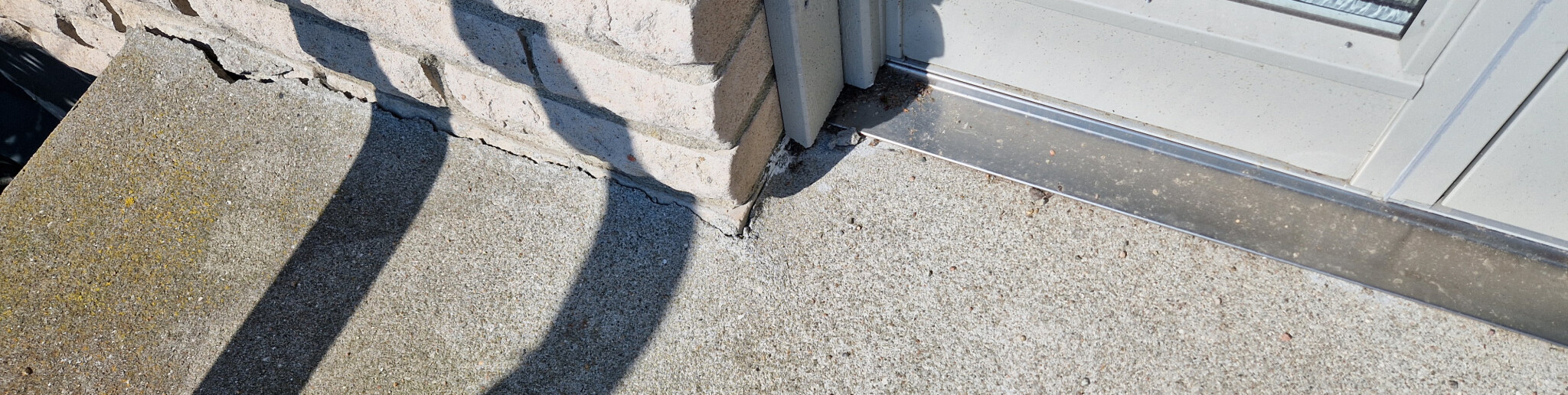
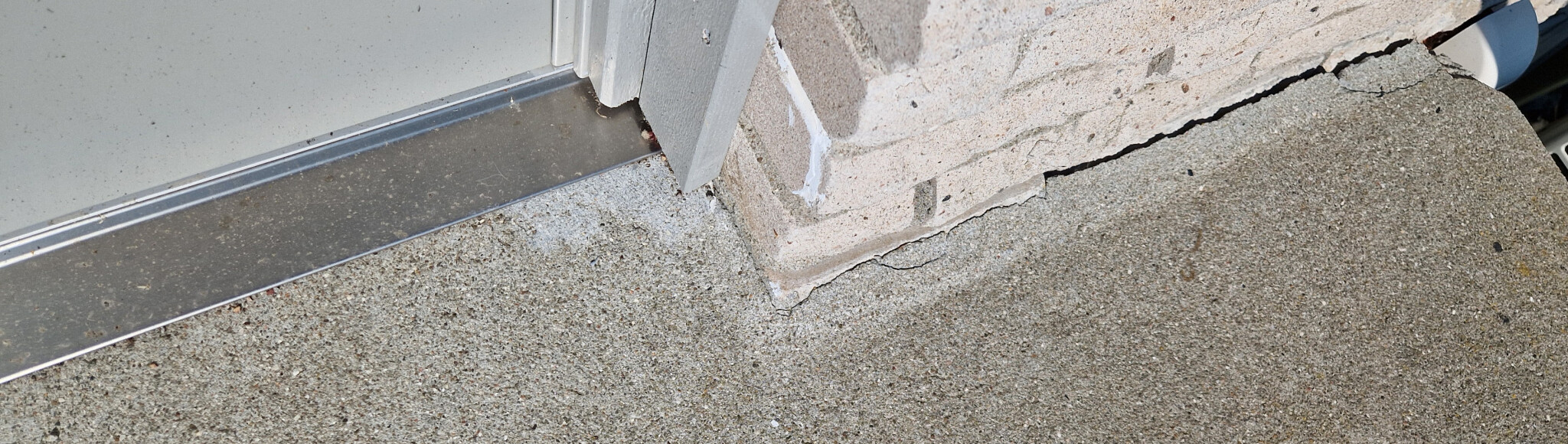
It is clearly visible in the pictures that the stairs and facade were once "connected" (the shape of the stairs is a direct replica of the brickwork) and that there is now a gap between them..
Moreover, in the pictures from underneath, you can see that the stairs are pulling the brickwork outward..
That you (who actually seem to have quite a low level of knowledge) assessed that it "wasn't that serious" when you replaced the front door and the sill was significantly affected does not inspire much confidence in the claims in this thread that are directly opposed to what the pictures show..
And a dried-out moisture damage (water) does not bleed through paint repeatedly.. then there is still incoming water..
Isn't it possible that the stains on the ceiling are actually ongoing damage? That it is rainwater that has found its way in via the stairs and the rotten sill and then down along the pipes. So that one doesn't too quickly dismiss it as an old dried-up leak, just because it happens to be in the same place? Have you done any moisture measurements around the stains recently?
No, I'm hardly a builder, but according to others, I've done well with other renovations in the house. I usually make sure to take photos, but in this case, unfortunately, I didn't, which means I don't have any pictures to show of the underlying visible damages. Talking about the level of expertise without having seen the actual damages is just unnecessary. We'll simply see what the experts say when they've analyzed the damages.
The crack between the stairs and the facade looked the same when we moved in nine years ago. Sure, neither we nor the inspector measured it to the millimeter. However, the facade slip wasn't there, and when it started to crack, we don't know; we noticed it for the first time over the weekend.
The house is from the 70s and has several other details where different building structures have parted a bit. For example, the adjoining garage wall and house wall have moved away from each other by similar distances as seen on the stairs. Then we have an adjoining wall (also the same brick) in the patio room that has both moved out and settled a few centimeters relative to the house wall (i.e., the pattern no longer matches).
In any case, it will be very interesting to see what the real cause is and what needs to be done.
Could it be that the stains on the ceiling are actually an ongoing issue? That it's rainwater that's found its way in via the staircase and the rotten sill and then down along the pipes. So that one doesn't too quickly dismiss it as an old dried-up leak just because it happens to be in the same place?
Have you done any moisture measurements around the stains recently?
It definitely deserves investigation! We haven't done any actual moisture measurement, so we'll ask the experts to do that at the same time. The previous door did indeed have metal, but it had poor fitting and no sealing. The "new" door and its sealing are installed according to all the rules of the art. The sealing was done extra thoroughly, so today there's no external leakage. However, it's likely that rainwater runs in the crack between the staircase and the façade at the sides down to the foundation, where there are now open cracks.
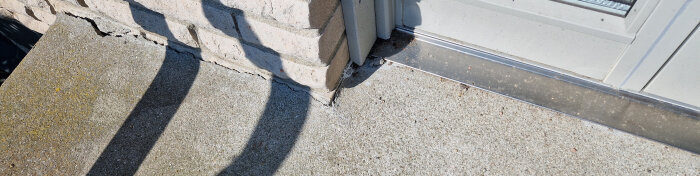
In this image, you can clearly see that the staircase has detached from the house wall on the far right, and as mentioned, that's how it looked when we moved here. But if the staircase has shifted so much recently that it is pulling the facade below with it, it's strange that the crack on the left (closer to the door) hasn't gotten bigger.
This would be the case if the staircase both slid out and down, but there's nothing from above indicating that the staircase has actually dropped. When we installed the new door, it was where we expected it to be, meaning no large gap under the metal plate.
We haven't filled in with mortar or sealant here, except around the door.
Vi vill skicka notiser för ämnen du bevakar och händelser som berör dig.