There might (probably) be reinforcement bars or other iron that go from the staircase into the building structure? If so, the ribs (or screws if attached to wood in the house) hold against those irons very well until enough water has entered and the corrosion/rot has progressed sufficiently, then a lot can happen quite quickly.
However, I haven't seen any drawings of how it is done, and I'm not a builder by profession. On the other hand, I have studied much material where things have collapsed due to water intrusion. Now it's just a staircase, so there probably won't be any catastrophic consequences even if, in the worst case, part of the façade would follow along.
I'm not a doomsday prophet, just want you to take such a long-term damage seriously, but experts seem to have been ordered, so hopefully, they will be able to provide an exact answer. Try to gauge if they seem serious and avoid glossing over the problems, but tell everything plainly. That way, you have the best chance to get this fixed permanently.
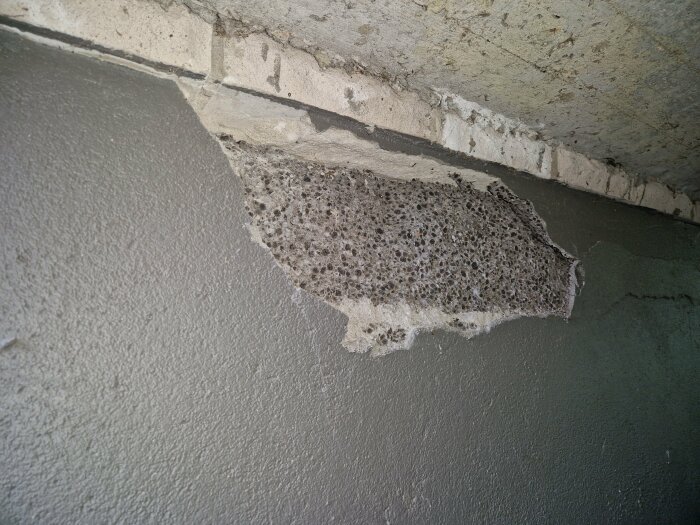
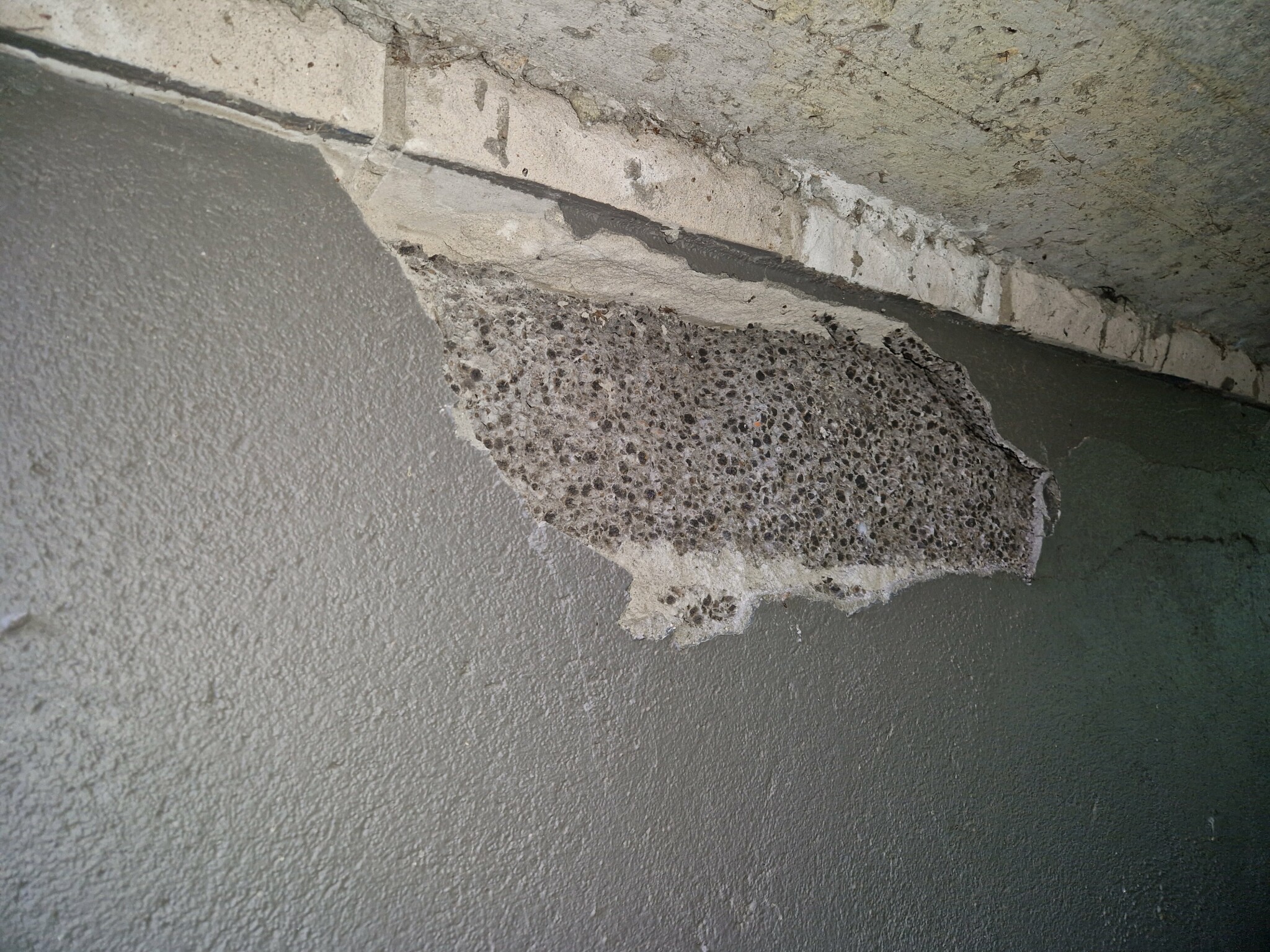
It looks like the staircase has shifted away from the wall. In conjunction with this, the staircase's support has moved so that the bricks "press" on the plaster, which has not withstood the load and thereby detached from the base. How it should be repaired is difficult to guess since we can't really see from the pictures how the house is constructed. But moving the staircase is probably a must to continue the "project fix/seal".
The builder was on site today for inspection. Initially, it was difficult to assess the damage and what it was based on. But after knocking off part of the facade, a fairly good picture of the problem emerged.
It is believed that water leaked in from the threshold of the door down to the sill and further down into the building blocks (lekablock). When the temperature dropped below freezing, the water expanded and shattered parts of the lekablock, which in turn led to damage to the facade as well.
There are no signs that the stairs themselves are causing these damages.
There are no risks seen in working under the stairs. The stairs are anchored with reinforcements in the base blocks, and even though some of them have minor damages, they are not severe enough to pose any risks.
Now that the threshold is sealed, it is suggested to knock off all loose material under the stairs and then fill it up with a facade that will be at least as durable as the building blocks. If the cracks reappear, there is a larger underlying problem that must be further investigated, but right now it doesn't seem to be a major issue.
The company will get back with a quote. This is actually a job I could do myself, but even though I trust the company's conclusion, I’m not ready to take the risk it might entail.
Click here to reply
Vi vill skicka notiser för ämnen du bevakar och händelser som berör dig.