
Hello
I am going to mount a TV on the wall and have identified two studs that will be good to secure into, in addition to using molly plugs. The 65mm long screws that came with it are recommended by Samsung, and they suggest pre-drilling with a 3mm bit, which I have done. My drill is having a lot of trouble with the last bit, and I've already rounded two screws. Does the drill setting matter? Should I drill a bit larger? The screw is about 5mm in diameter. I have a Ryobi with 50 torque. What is a common mistake for beginners with drills might be a better question
Thanks in advance
I am going to mount a TV on the wall and have identified two studs that will be good to secure into, in addition to using molly plugs. The 65mm long screws that came with it are recommended by Samsung, and they suggest pre-drilling with a 3mm bit, which I have done. My drill is having a lot of trouble with the last bit, and I've already rounded two screws. Does the drill setting matter? Should I drill a bit larger? The screw is about 5mm in diameter. I have a Ryobi with 50 torque. What is a common mistake for beginners with drills might be a better question
Thanks in advance
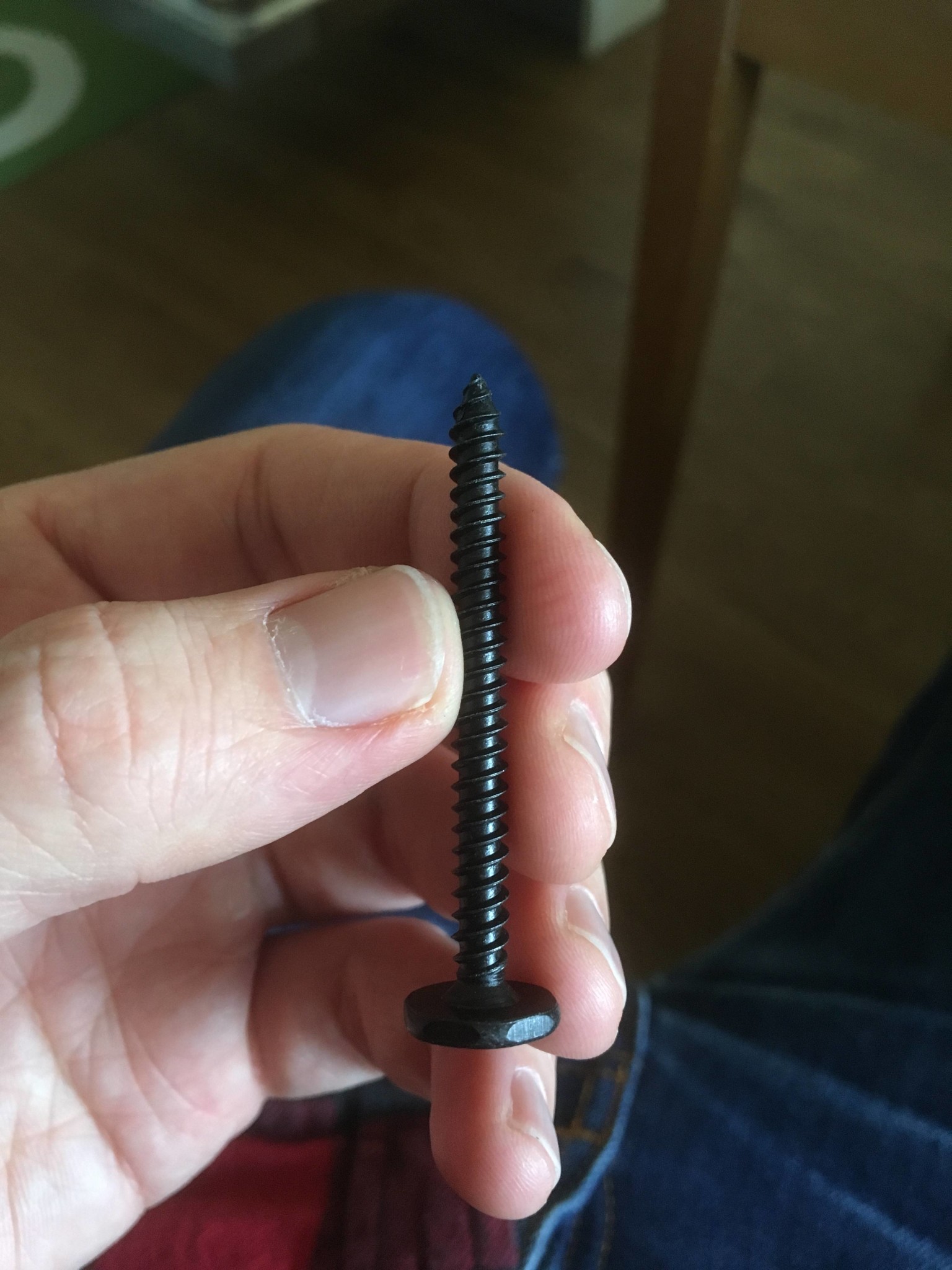

A common mistake beginners make is trying to "help" the screwdriver by twisting and "joxing" with it. You should concentrate on keeping the screwdriver perpendicular in all joints to (in this case) the wall and maintain a firm pressure on the screwdriver so that the pressure between the bit and the screw is as high as possible. In your case, you can tighten the last part of the screw with a wrench or even better a suitable socket wrench since Samsung's screws have a hexagonal head.

Do not drill with a larger drill bit in this case. According to TS, the total diameter is 5 mm on the outside of the thread, it's estimated that the thread is approximately 1 mm deep (coarse thread screw), which means that the diameter of the screw down in the thread is exactly 3 mm. The reason Samsung has provided such coarse screws and specified a drill diameter of 3 mm is to ensure the TV doesn't fall down. I don't think your TV will fall down if you drill with a larger drill (this absolutely does not mean larger than 3.5 mm), but I wouldn't take the chance.Isakare said:
Your screwdriver is also a bit weak for these "beasts" of screws.
Otherwise, I think the others are giving good advice to TS and other beginners with screwdrivers.
Sorry, I read carelessly and missed that the screw was 5 mm.P pilen said:Do not drill with a larger drill in this case. According to TS, the total diameter is 5 mm on the outside of the thread, presumably the thread is about 1 mm deep (coarse-threaded screw), which means that the diameter of the screw down in the thread is precisely 3 mm. The reason Samsung has included such coarse screws and specified a drill diameter of 3 mm is because they do not want the TV to fall down. I don't think your TV will fall down if you drill with a larger drill (absolutely not larger than 3.5 mm) but I would not take the chance. Your screwdriver is also a bit on the weak side for such "big boys" of screws. Otherwise, I think the rest of you are giving good advice to TS and other beginners with screwdrivers.
Below you will see the most common screw heads. It is especially important to distinguish between pozidrive and philips as already mentioned above. It is very easy to strip the screws with the wrong bits. Note that pozidrive has small marks/lines between the screw's slots that philips doesn't have, making it easy to identify which one it is.

Thank you all and spot-on picture RoBo, for me those on the right were "stjärnskruv," i.e., the same in my world Now I know better.
I am so impressed/grateful for everyone's willingness to help in this forum.
Now I know better.I am so impressed/grateful for everyone's willingness to help in this forum.
R RoBo said:Below you can see the most common screw heads. It is especially important to distinguish between pozidrive and philips as already mentioned above. It's very easy to damage the screws with the wrong bits. Note that pozidrive has small markings/lines between the screw's slots that philips does not have, which makes it easy to see which it is.
[bild]
Click here to reply