
10,380 views ·
11 replies
10k views
11 replies
The roofing felt became too short, how to extend?

Hello!
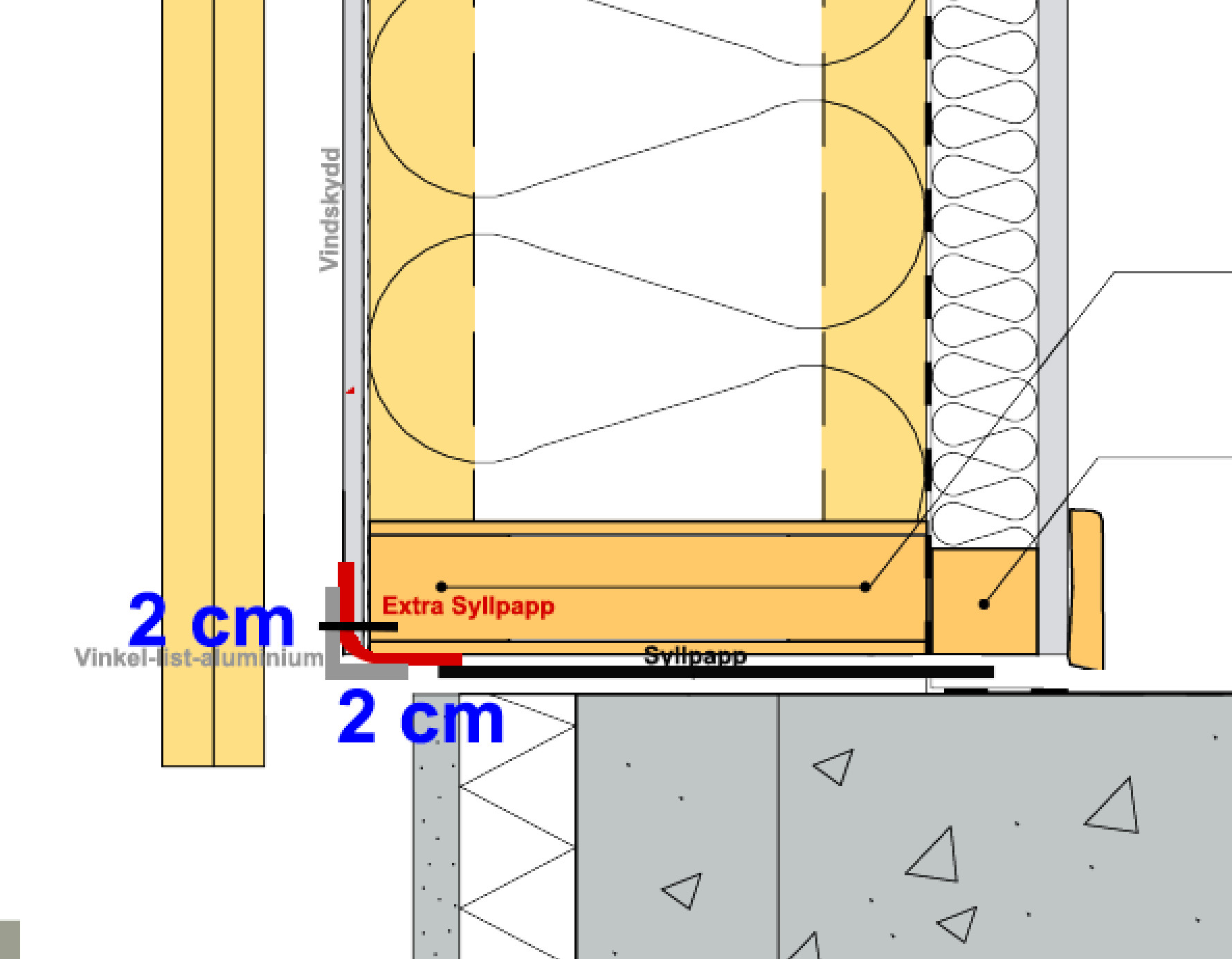
The sillpapp became a little too short (1cm) on the outside of the facade.
I thought of extending it to be completely sure.
The idea is to push in about 4 cm of sillpapp from underneath and secure it with an L-aluminum angle.
What do you think? How else could one solve it?
Thank you very much.
The sillpapp became a little too short (1cm) on the outside of the facade.
I thought of extending it to be completely sure.
The idea is to push in about 4 cm of sillpapp from underneath and secure it with an L-aluminum angle.
What do you think? How else could one solve it?
Thank you very much.
Member
· Etelä Pohjanmaa
· 2 467 posts
The best way to solve it is by doing nothing. It's probably just destructive to try to insert syllpapp in there afterward.
Member
· Västernorrland
· 12 032 posts
The pappen is in a place where it is useful anyway. Additionally, it likely won't even be needed if everything else is fundamentally okay. So the syllpappen is really just a double safety measure. It doesn't have any real function.
The sill paper is supposed to protect against moisture that comes up from the concrete, right?
I have read some reports where old houses without sill paper have problems with moisture.
Thanks!
hmm.. not sure how to proceed really
I have read some reports where old houses without sill paper have problems with moisture.
Thanks!
hmm.. not sure how to proceed really
Member
· Etelä Pohjanmaa
· 2 467 posts
But you already have syllpapp, the one cm that is outside is not against the concrete. Why should you do anything?
Member
· Västernorrland
· 12 032 posts
yes but not that much moisture rises in the concrete, not even in old houses so if you read about someone who has had problems it's guaranteed to be due to something else fundamentally.



Thank you for all the answers!
I had it explained by our K.A that it can flow in from above, just as you all said.
The best solution, said our carpenter, "is to lay asphalt from below."
So now they will apply hot asphalt from below to protect against any splashes, etc. that may occur when it rains from below.
Best regards
I had it explained by our K.A that it can flow in from above, just as you all said.
The best solution, said our carpenter, "is to lay asphalt from below."
So now they will apply hot asphalt from below to protect against any splashes, etc. that may occur when it rains from below.
Best regards
Member
· Västernorrland
· 12 032 posts
Is the "väggen" really visible and so exposed on normal houses then? Sounds very backwards all of it.
Member
· Västernorrland
· 12 032 posts
Yeah, I saw the drawing but I was thinking more that others might be able to give an idea of how it usually is? It sounds a bit far-fetched that you'd need to protect it in this way. That it would be so exposed?
Click here to reply