
4,954 views ·
7 replies
5k views
7 replies
The plug does not attach in lightweight concrete
Hello,
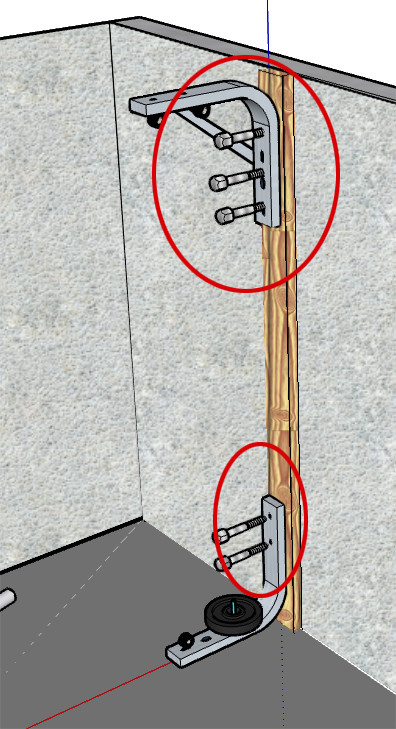
I have mounted a vertical 2x4 stud against a lightweight concrete wall. I've drilled 12mm holes with the correct plug and screw, which are slightly longer in total. The concrete is solid and the holes are round and good, but further into the wall, the drill encountered uneven resistance. The hole may have been drilled too deep. Perhaps there is hollow block a bit further in. When the stud is loaded, the plug comes loose.
Since I can't see the plug when I'm screwing (hex head screw), I suspect that the plugs were pushed in with the screw. I got the tip at Beijers Bygg to apply PL400 first, then the plug, and let it cure. Then screw.
Doesn't the whole idea of the plug disappear if you do it like that? It can't really expand if it has cured with PL400, can it?
Is the tip effective, or is there an alternative way to solve the problem?
Grateful for any tips //PC
I have mounted a vertical 2x4 stud against a lightweight concrete wall. I've drilled 12mm holes with the correct plug and screw, which are slightly longer in total. The concrete is solid and the holes are round and good, but further into the wall, the drill encountered uneven resistance. The hole may have been drilled too deep. Perhaps there is hollow block a bit further in. When the stud is loaded, the plug comes loose.
Since I can't see the plug when I'm screwing (hex head screw), I suspect that the plugs were pushed in with the screw. I got the tip at Beijers Bygg to apply PL400 first, then the plug, and let it cure. Then screw.
Doesn't the whole idea of the plug disappear if you do it like that? It can't really expand if it has cured with PL400, can it?
Is the tip effective, or is there an alternative way to solve the problem?
Grateful for any tips //PC

You're probably right that the plug won't perform properly in cured PL400. I usually blow out the hole thoroughly and push in PL400 and the plug, and the screw in directly. Then let it cure without load. This way, the adhesive fills in all cavities. If it’s very porous, you can let it cure for a few hours before inserting the screw so that the plug doesn't spin.P Plaincollar said:Hi
I have mounted a 2"4 upright stud against a lightweight concrete wall. I have drilled 12mm holes with the correct plug and screw, which are slightly longer in total. The concrete is solid and the holes are round and good but into the wall, the drill encountered slightly uneven resistance. The hole may have become too deep. Maybe it's hollow brick a bit further in. When the stud is loaded, the plug comes loose.
Since I can't see the plug when I screw (hex head screw), I suspect the plugs have been pushed in with the screw. I got the tip at Beijers Bygg to push in PL400, then the plug, and let it cure before screwing.
Doesn't that defeat the purpose of the plug if you do that? It can hardly expand if it's cured with PL400?
Is the tip workable or is there an alternative way to solve the problem?
Grateful for tips //PC
Wise.J Jocke Best said:You're probably right that the plug doesn't come into its own in hardened pl400. I usually blow out the hole properly and press in pl400 and plug, and screw in directly. Then let it cure without load. This way, the glue fills all the cavities. If it's very porous, you can let it cure for a few hours before the screw goes in, so that the plug doesn't spin.
I use both 12 nylon plugs with 10 screws and 10 plugs with 8 screws. Drilled 12 and 10 respectively. Probably too big. Could be one of the problems. Just followed the instructions on the packaging. The only screw they had with a hex head was a French wood screw. Noticed that it has a bit of a hard time grabbing onto the nylon plug. Just put PL400 in the holes and pushed the plug in. At least they stay put and won't spin. Won't access the things for a few days, so I hope BBygg wasn't completely off track. But the plug effect is likely to fail. It will be interesting to see how it goes when screwing in and the durability. In the worst case, I'll have to drill new holes, then with a smaller drill! How do you fix old ugly holes in such cases? Concrete filler? Incredible hassle for a few screws in a wall...
Strange that you're having such problems. It's important to have a good masonry drill bit that doesn't wobble and make the hole larger than intended. You shouldn't drill a hole smaller than the plug either, as this ruins the plug's shape when you hammer it in. The plug should be able to be tapped in with a small pen-hammer (120 g or so). And don't buy cheap plugs! I've never heard anyone say you need to use glue for a plug to hold!
 Just an example
Click here to reply