After reading your responses, I continued searching here on the forum and on the web. My solution was floor leveling. Specifically, RAW leveling compound. Dust-reduced, cement-based, fiber-reinforced, and pumpable leveling compound purchased at Beijer. Applied with two coats of RAW primer before casting.
Total cost 388 SEK. I'm not sure if this is the best or cheapest solution, but it looks good right now before I've driven the car over the area I poured on Thursday... The reason for choosing this solution was that I asked a salesperson earlier this year what he recommended and he suggested this. Also, the technical specification stated it could be poured 2-50 mm thick on concrete. So this week when it was warm enough, I primed on Tuesday and Wednesday, then poured on Thursday.
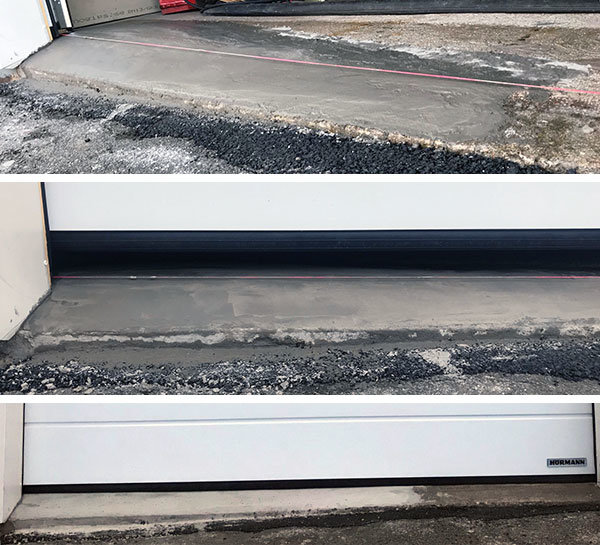
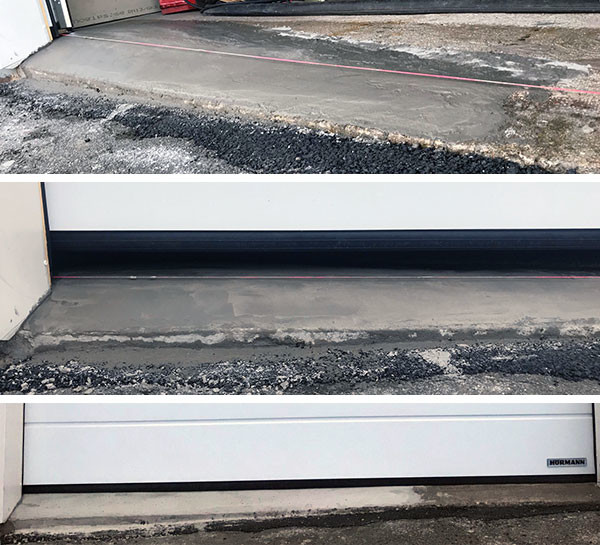
During the casting, I first stretched a string from one side to the other at the height of the bottom of the garage door tracks to make it easier to get the right height on the finish. I poured 4 liters of water into my masonry bucket. Added 25 kg of leveling powder and mixed it with a drill and a paint mixing stick purchased from Jula. Poured the mixture in a wide sheet and then started to shape the mixture to my liking. The instructions state that 4 - 5.5 liters of water should be used with 25 kg of powder. I don't know if 3.5 liters would have been okay, but a less loose mixture would have made shaping easier in my case, I think. It took a long time for the mixture to stop flowing down the slope of the existing concrete slab.
Three pictures of the masterpiece. Don't be fooled by the last picture. Now it's both straight and horizontal.
What I want to do now is somehow protect and bind the dust on the newly poured area and the rest of the garage floor somehow. After reading lots of threads here on the forum, I'm now wondering:
Does water glass work both on "dust-reduced, cement-based, fiber-reinforced, and pumpable leveling compound" and on rough concrete floor that was poured about 50 years ago?
Nicely done Can't give a definite answer, but I was tasked at work to dust-bind a floor from the 40s, it worked.
Thanks! Sounds good that it works on old floors. Since the leveling compound is concrete-based, I hope water glass works on it too.
Andreas_kalmar said:
Water glass works but there are better suited options if one wants a surface
From reading threads here on the forum, I have understood that lithium silicate is better than sodium silicate, but I believe that sodium silicate (water glass) is still good enough. But maybe you were thinking of completely different surface layers?
Some facts:
- The garage slab I want to dust-bind/protect the surface of was cast in the late 60s or early 70s, I think.
- It is 6.70m x 3.25m. Approximately 22 square meters.
- No surface treatment has been done previously as far as I can see.
- The slab consists of concrete with embedded reinforcement bars, and since Thursday the surface also has some leveling compound at the garage door.
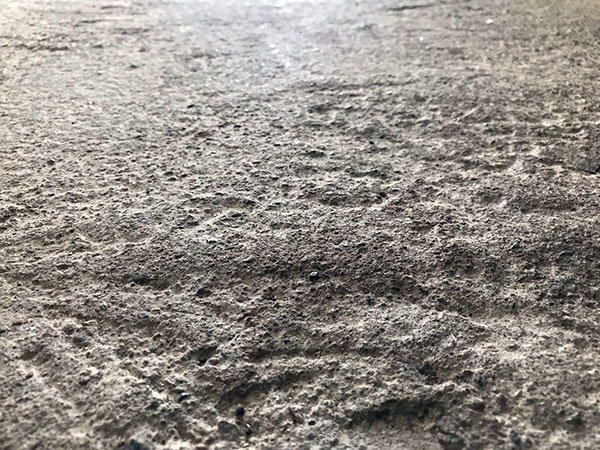
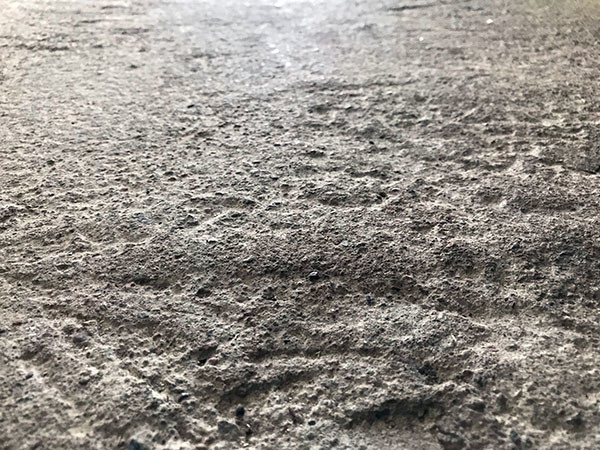
- The concrete surface is rough, the surface uneven with valleys and peaks.
- During casting, it seems that the substrate or formwork didn't hold completely tight. In one corner of the slab, where I laid the leveling compound, there was a hint of reinforcement bars on the surface. (This is now covered with leveling compound.)
- The garage is heated to about 10 degrees in winter.
- There is a dehumidifier in the garage.
- In the garage, there is a car that is only used during summer. That is to say, there is no driving on the slab with studded tires at the moment.
- I use a jack and jack stands in the garage sparingly now and then.
- I don't wash the car in the garage, but if the surface allowed it, I might consider washing wheels and smaller parts.
- Primarily, I want to give the surface a layer that dust-binds but also protects against wear.
- Currently, the budget is actually 0 SEK, but as I realize that a surface layer applied now reduces the risk of higher costs and more work later, I still want to do something now.
- If the surface layer, besides dust-binding and protecting against wear, can make the floor brighter and nicer to look at, that would be a plus.
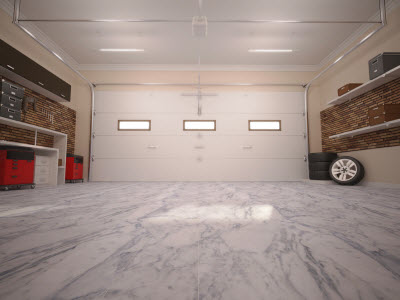
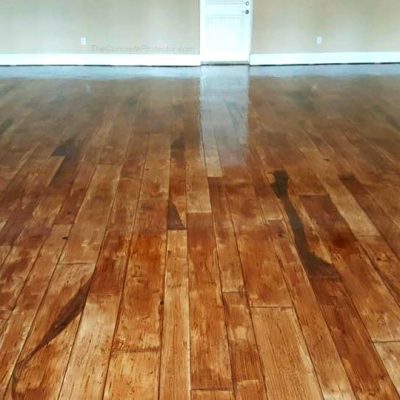
- When I dream big, I wish for a fully glossy epoxy surface in the form of light gray marble, or why not oak planks? However, there is no budget for this right now. (These floors would probably be super slippery and dangerous to walk on with slightly wet shoes.)
I have long considered what I really want, but most of all, what I can afford and manage to lay for a surface. Right now, sodium silicate (water glass) or other silicate seems the best option for me. It protects the surface while not complicating or making future more expensive layers impossible. I have not found or decided on any specific silicate product yet, so I don't know what it costs. I hope to spray the liquid with the help of a "weed sprayer" as recommended here on the forum now and then.
Option number two on my list right now is to paint with some type of two-component epoxy paint directly on the rough surface after manually sanding away the worst protruding peaks. Verkehrsweiss or reinweiss maybe? https://www.ebay.de/itm/Epoxidharz-...hash=item460dc6c317:m:mn0ODLxGNp7j2FkesGFtMjg
The problem with this is probably that if it doesn't work well and starts to peel after a while, it will be troublesome and expensive to fix a new surface layer. Had I known that this worked on my rough concrete floor, this would probably have been my first choice today.
If you're going to paint, there's a bit more requirement to sand properly, which I would have done anyway, and a water-based epoxy doesn't need to cost a fortune either.
I think your spackel should be protected with paint or varnish if it's outdoors, but then epoxy is the wrong choice as it is not UV resistant.
Click here to reply
Vi vill skicka notiser för ämnen du bevakar och händelser som berör dig.


Isakare said:
Andreas_kalmar said: