
10,741 views ·
32 replies
11k views
32 replies
The art of not drilling into electricity, water pipes and drains?
Page 1 of 3
Hi,
I am planning to set up clotheslines in the laundry room (basement) with 6x80 mm eye bolts (8x50 plugs). The walls are made of some type of hollow brick (not blue concrete) that is very easy to drill into. Here's what it looks like:
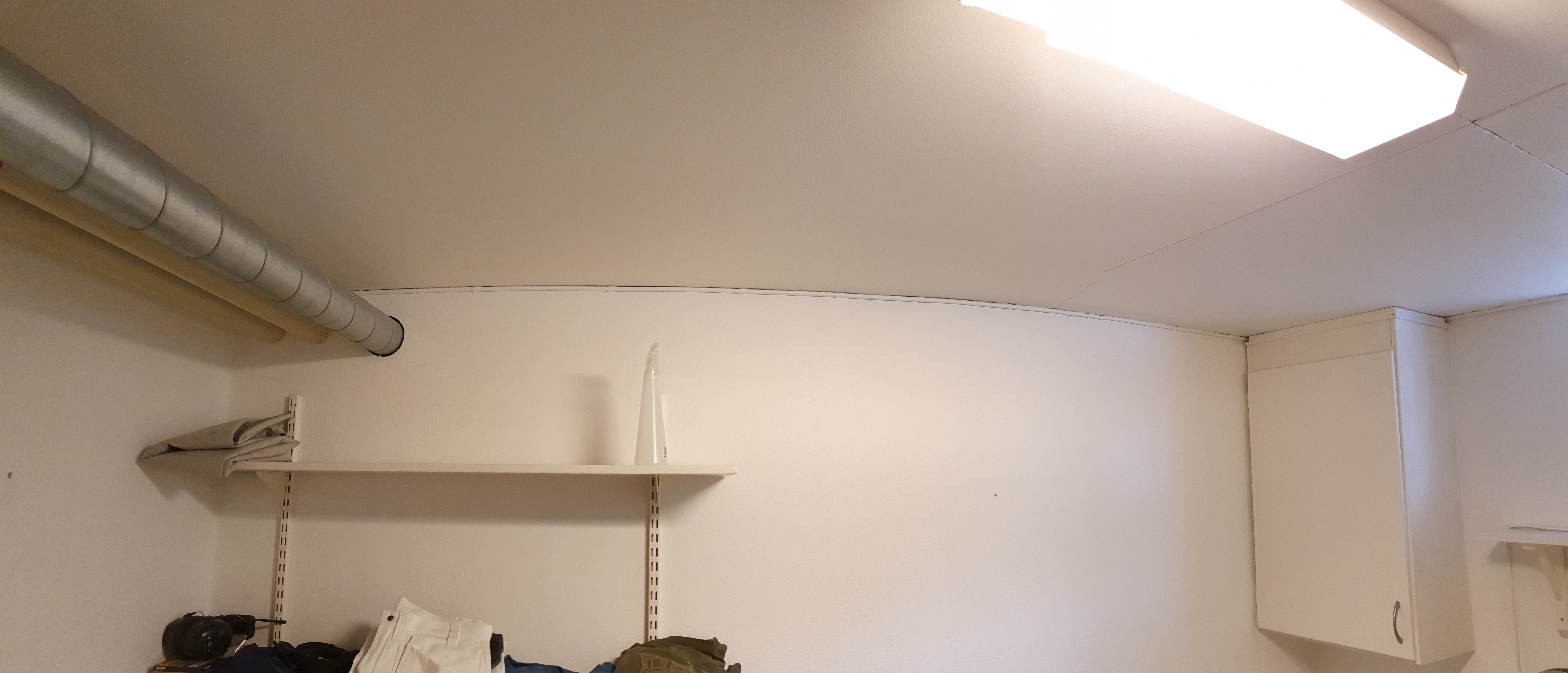
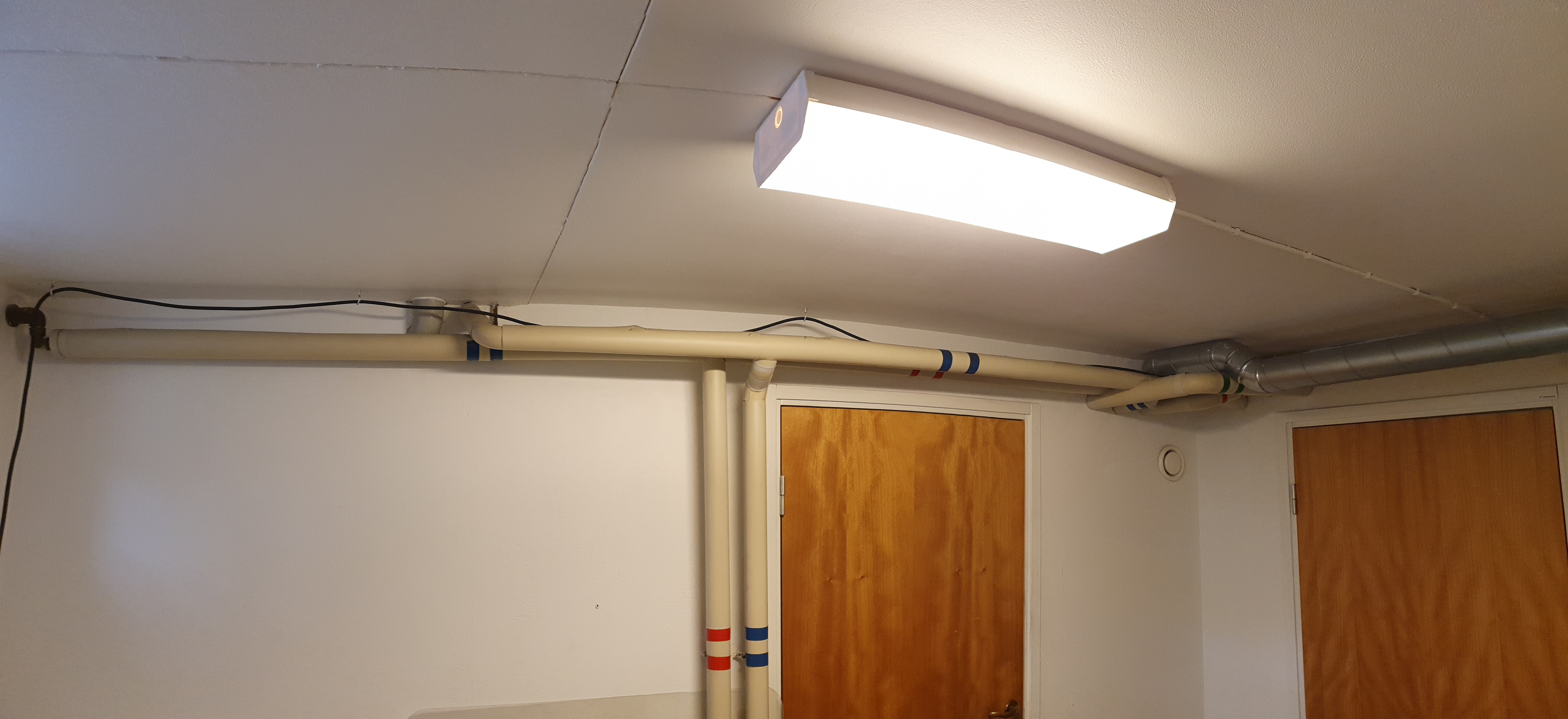
The water pipes mainly run on the outside of the walls, as you can see, but it's not impossible that there are some pipes inside the walls as well. I have no idea where the electrical wiring runs in the walls, but there are no electrical outlets or anything similar on these two walls (regardless of the side).
There are multi-detectors that are supposed to help minimize the risk of drilling into important parts, but from what I understand from forums and reviews, they generally do a poor job regardless of the price?
So how do you proceed here? Is it even safe to set up a clothesline in this space?
Edit: To add, the house was built in the 1970s and is manufactured by Gullringshus. The basement is some type of hollow brick while the entrance is mainly wood with brick cladding. Unfortunately, I don't remember the house manufacturer, but it's a "standard house," i.e., not custom-designed.
I am planning to set up clotheslines in the laundry room (basement) with 6x80 mm eye bolts (8x50 plugs). The walls are made of some type of hollow brick (not blue concrete) that is very easy to drill into. Here's what it looks like:
The water pipes mainly run on the outside of the walls, as you can see, but it's not impossible that there are some pipes inside the walls as well. I have no idea where the electrical wiring runs in the walls, but there are no electrical outlets or anything similar on these two walls (regardless of the side).
There are multi-detectors that are supposed to help minimize the risk of drilling into important parts, but from what I understand from forums and reviews, they generally do a poor job regardless of the price?
So how do you proceed here? Is it even safe to set up a clothesline in this space?
Edit: To add, the house was built in the 1970s and is manufactured by Gullringshus. The basement is some type of hollow brick while the entrance is mainly wood with brick cladding. Unfortunately, I don't remember the house manufacturer, but it's a "standard house," i.e., not custom-designed.
Last edited:
The water is surface-mounted, and you don't see any outlets or junction boxes on the wall? I'd say just go for it. Sure, there's a risk that there's an electrical conduit feeding another part of the basement, but that's a risk I would take. If you want to be a bit more certain, you could check the height of the junction boxes in the rest of the basement; any potential conduit is likely at approximately that height.
I would definitely have drilled into these walls. The risk of hitting an electrical wire is very small since there are no outlets on the walls. There should be a switch next to the door seen in the lower picture, right? It’s on the other side of the door you’re going to drill, I assume, so you should be safe, I would say.
Hmm yeah, now that you mention it, on the wall with the door there is actually a switch (for the ceiling light) and a wall outlet down by the floor. Can one guess that these go straight upwards? If so, it's just a matter of not placing any mount directly in that direction.

Yep, most likely straight up and straight down.S snowjim said:
And the ground worker's tip is very good!

Yes, it's a common solution that I understand is often used where the walls are fragile or generally difficult to attach to? It involves as much drilling but it should result in fewer holes in the wall with a batten. What dimensions did you use for your batten? Did you need to treat the batten in any way? What distance did you have between the bolts? And what kind of bolts did you use?M Markarbetaren said:
Twisted paths have a tendency to crack, so a rule that minimizes the number of holes in it is definitely interesting. However, it's a bit tight on the wall where there are lots of pipes. Can a regular 45x45 rule be sufficient? And should it be treated in some way? Paint? Varnish?
I would have taken something thinner like 28x70, but 45x45 works too.S snowjim said:
I have concrete hollow bricks. The rules are 45x95, 150cm long, and the distance between the walls is 200cm. Each rule is attached with 3 sturdy screws with plugs. 13 hooks (or rather loops as they are closed) in each rule with 10cm CC. The clothesline is pulled tight so there is no sag when heavy clothes are hung up. I painted the rules white when I repainted the laundry room. The clothesline runs a maximum of 3 times, then it's tied and started anew. If you run it too many times back and forth, you get a lot of slack.S snowjim said:Yes, it's a common solution that, as I understand, is often used where the walls are fragile or generally difficult to attach to? It involves as much drilling but surely should result in smaller holes in the wall with a rule. What measurements did you use for the rule? Did you need to treat the rule in any way? What distance did you have between the bolts? And what bolts did you use?
I would choose 45x70 or 45x90, or possibly 35mm thick.S snowjim said:
I would bolt it with a cc of around 60-120cm, depending on how tightly I plan to stretch the lines, how many kg of laundry I think there will be, and how well the fastening holds to the wall.
Painting and such is a free choice. But a painted surface is nice, as dust is easier to wipe away.


We have skipped traditional clotheslines, we use pipes that we hang the laundry over.
The advantage of pipes is that you avoid the creases from the lines on the laundry.
We bought a number of round curtain rods at Ikea that we have hung from the ceiling. These don't sag.
https://www.byggahus.se/forum/threads/galvade-roer-som-tvaettlina.236422/#post-2043548
https://www.byggahus.se/forum/threa...aettstuga-torkstaellning.268463/#post-2377646
The advantage of pipes is that you avoid the creases from the lines on the laundry.
We bought a number of round curtain rods at Ikea that we have hung from the ceiling. These don't sag.
https://www.byggahus.se/forum/threads/galvade-roer-som-tvaettlina.236422/#post-2043548
https://www.byggahus.se/forum/threa...aettstuga-torkstaellning.268463/#post-2377646
Do you possibly have a picture? Does 10 cm center-to-center feel appropriate for the hooks?M Markarbetaren said:I have concrete block walls. The studs are 45x95, 150cm long, and the distance between the walls is 200cm. Each stud is secured with 3 sturdy screws with plugs. 13 hooks (or rather eyes since they are closed) in each stud with 10cm center-to-center. The clothesline is very tight so that it doesn't sag when heavy clothes are hung up. I painted the studs white when I repainted the laundry room. The clothesline runs a maximum of 3 times before it is tied and started again. If you run it too many times back and forth, you get too much slack.
Went to Hormbash today and bought the materials. Here's what the screw, plug, washer, and hook look like:
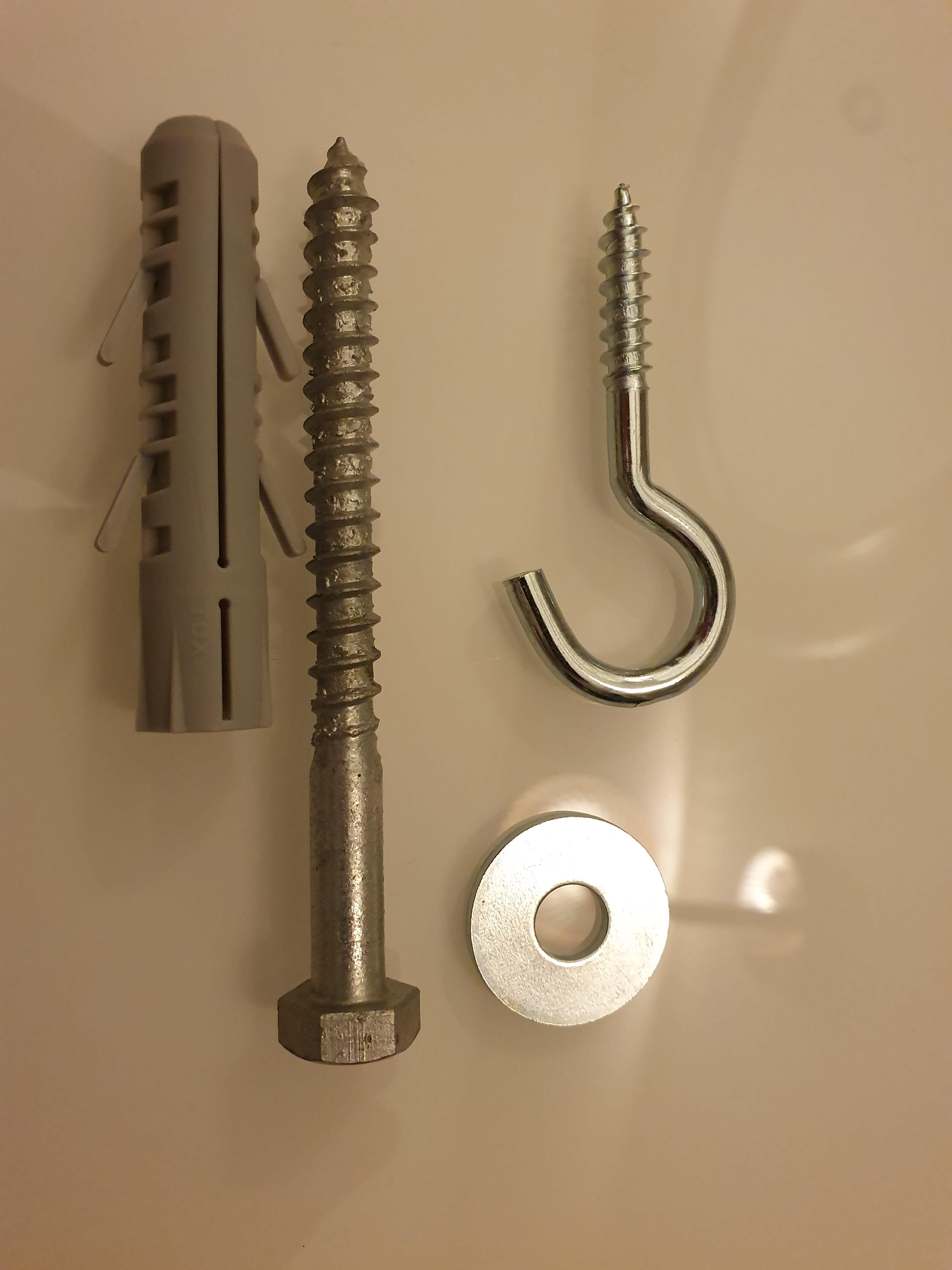
Wood screw 8x90 mm
Washer 8.4
Nylon plug Barracuda 12x60 for brick and lightweight concrete. The screw should be 8-10 mm
Bent screw hooks 4.8x60
The beams were too large, so I went with the battens, which in this case are 25x38 mm and 2300 mm long. These are now sanded and will be primed and painted white.
The hope is that 3 bolts in the 21 cm thick lightweight concrete walls will suffice. However, I'm a bit uncertain since I've got the impression that in some places there have been hollow bricks. If that's the case, maybe I should press in some kind of glue before inserting the plug since it's not made for hollow bricks?
Does this sound reasonable?
Wood screw 8x90 mm
Washer 8.4
Nylon plug Barracuda 12x60 for brick and lightweight concrete. The screw should be 8-10 mm
Bent screw hooks 4.8x60
The beams were too large, so I went with the battens, which in this case are 25x38 mm and 2300 mm long. These are now sanded and will be primed and painted white.
The hope is that 3 bolts in the 21 cm thick lightweight concrete walls will suffice. However, I'm a bit uncertain since I've got the impression that in some places there have been hollow bricks. If that's the case, maybe I should press in some kind of glue before inserting the plug since it's not made for hollow bricks?
Does this sound reasonable?