T
Hello! We have a Ytong house from '57 where, as a step to reduce radon levels in the bedrooms (together with mechanical ventilation), we plan to demolish the wall towards the attic, which also consists of lightweight concrete similar to the rest of the structure. A new wall will be built with wooden studs in the exact same location.

The wall is constructed of 200 mm blocks and rests on a concrete slab. I am almost convinced that the wall does not support the roof trusses; instead, the supports visible in the attic do. However, I am grateful for any opinions or if someone has demolished a similar structure so that I don't have to hesitate when we bring out the rotary hammer on Monday. :)
 
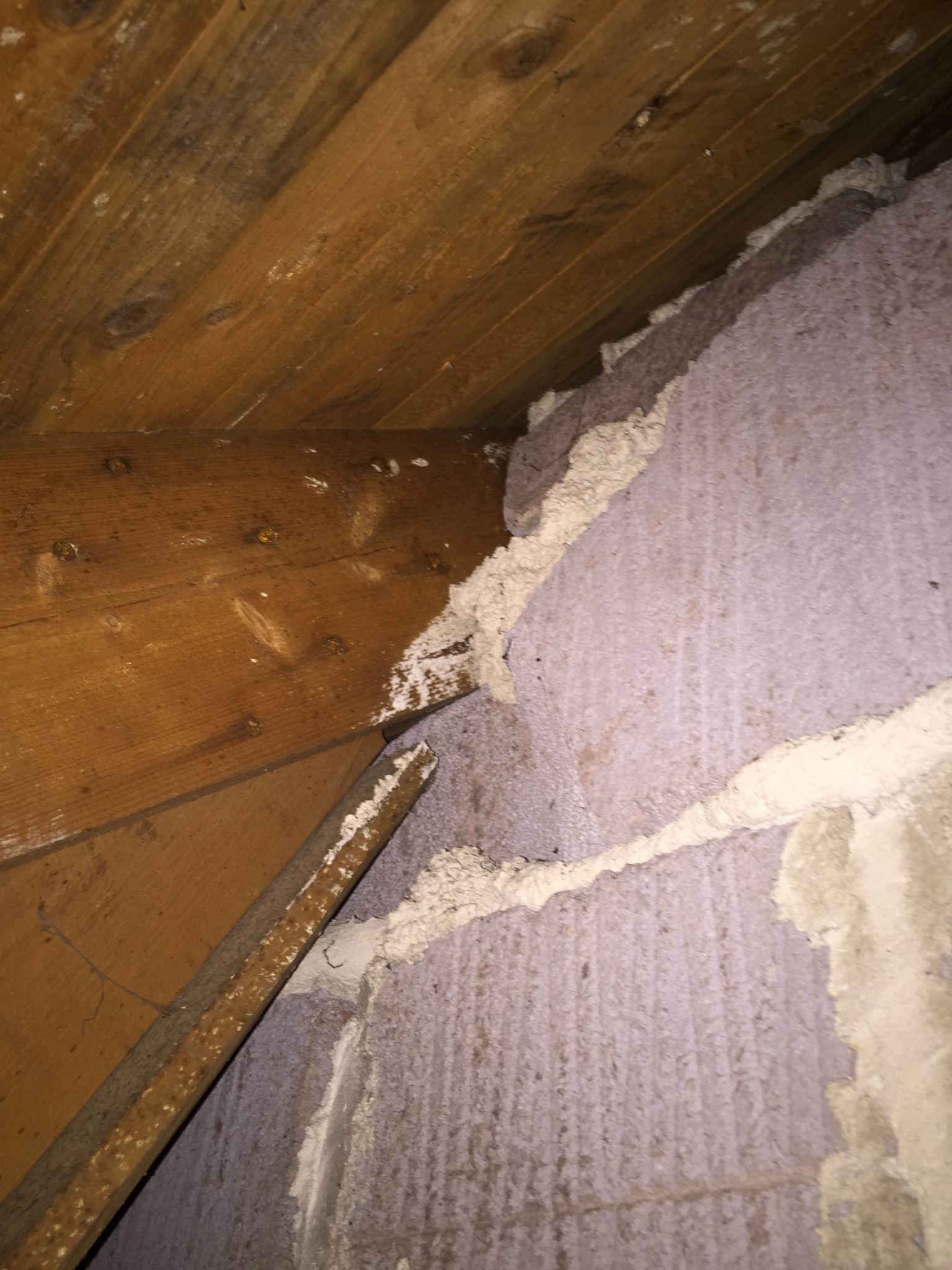
  • Lightweight concrete wall in attic space with visible wooden structure, part of Ytong house renovation project to reduce radon levels, 1957 construction.
  • Wall made of Ytong light concrete blocks supporting a wooden ceiling, part of a 1957 house renovation project to reduce radon levels.
  • Close-up of a wooden roof support and Ytong concrete wall, showcasing construction details in an attic space.
  • Wooden roof supports and a light concrete block wall in an attic space.
  • Cracks visible in concrete wall beneath wooden ceiling beams, with nails protruding, inside an attic space.
  • Cross-section technical drawing of a 1957 Ytong house wall construction, showing 20 cm Ytong blocks and structural details for renovation discussion.
  • Like
Mapet890
  • Laddar…
If it is true that the wall is 7 cm thick, then I don't think it is load-bearing.
 
T
A anaitis said:
If the wall is indeed 7 cm thick, I don't think it's load-bearing.
thanks for the reply but it's the left wall towards the kattvind in the drawing
 
Åsa Lund
T Tobbe_G said:
thanks for the answer but it is the left wall towards the kattvind in the drawing
Since it connects to the råspont and is not detailed to connect to the trusses, I would say it is 20 cm thick to provide thermal insulation. Additionally, the lambda value is specified, which indicates that this property is important.
 
T
Åsa Lund Åsa Lund said:
Since it connects to the tongued and grooved sheathing and is not specifically designed to connect to the rafters, I would say it is 20 cm thick to provide thermal insulation. Additionally, the lambda value is specified, indicating that property is important.
Thanks for the reply. Made the same interpretation :)
 
  • Like
Åsa Lund
  • Laddar…
T
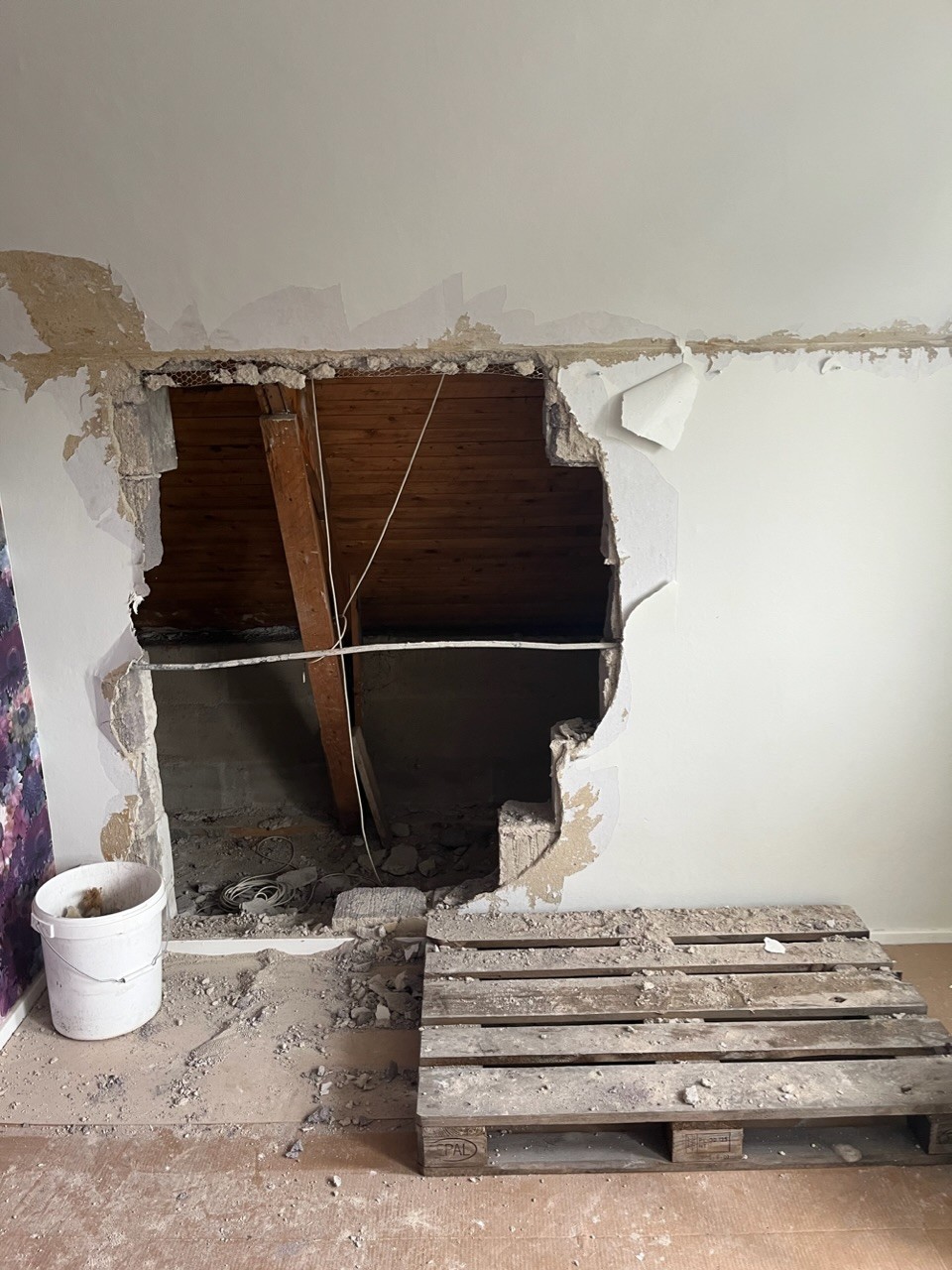
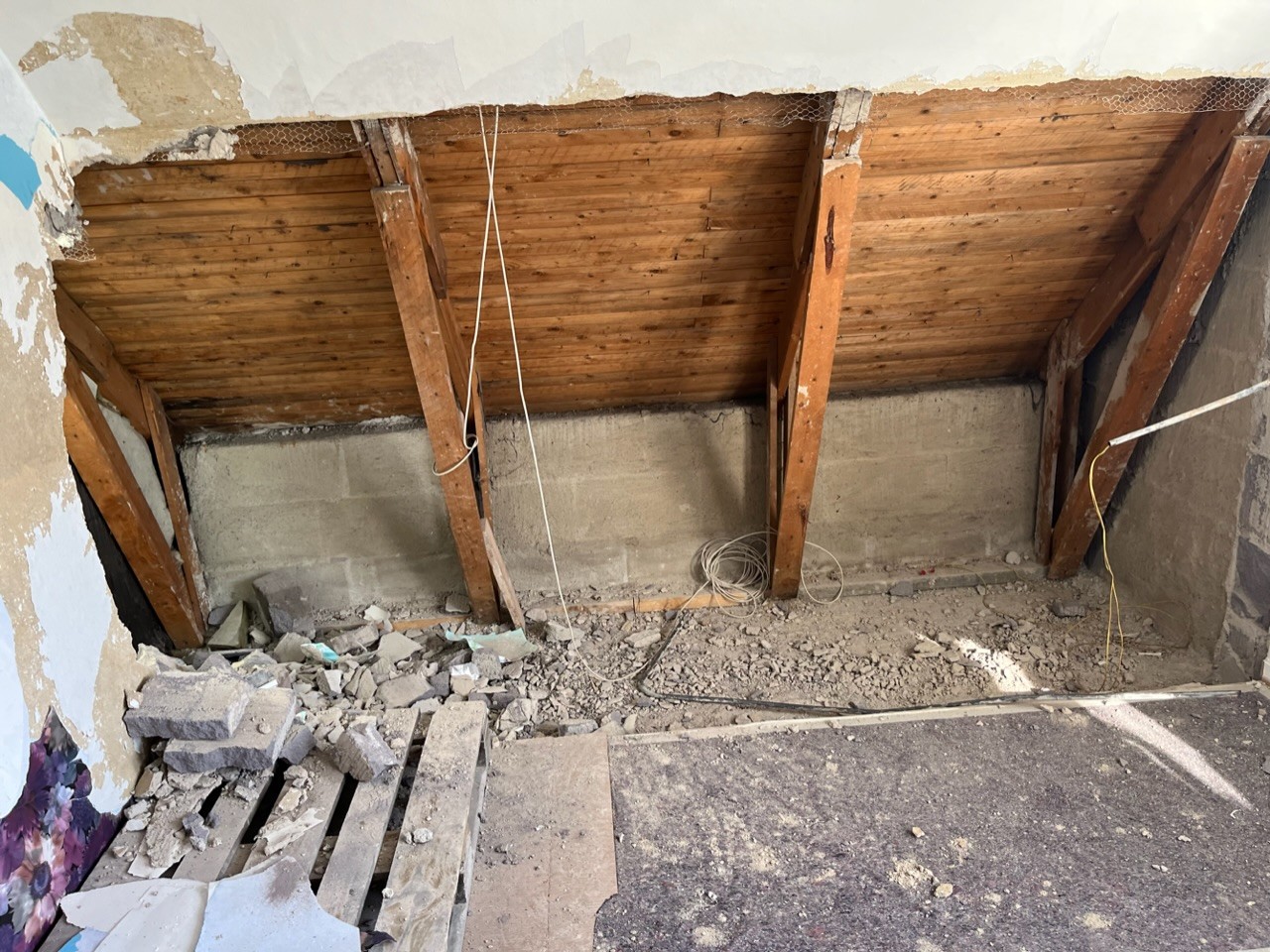
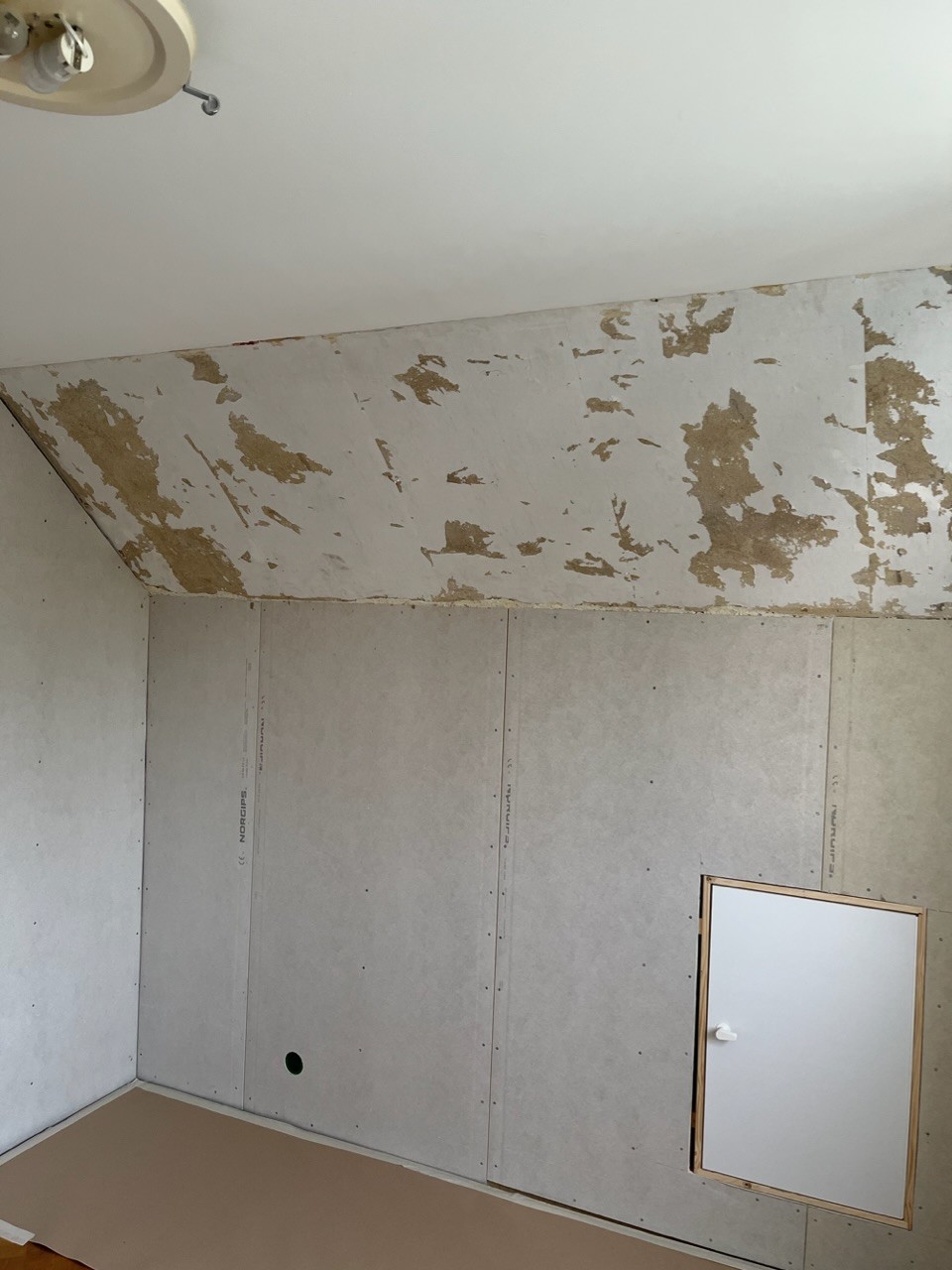
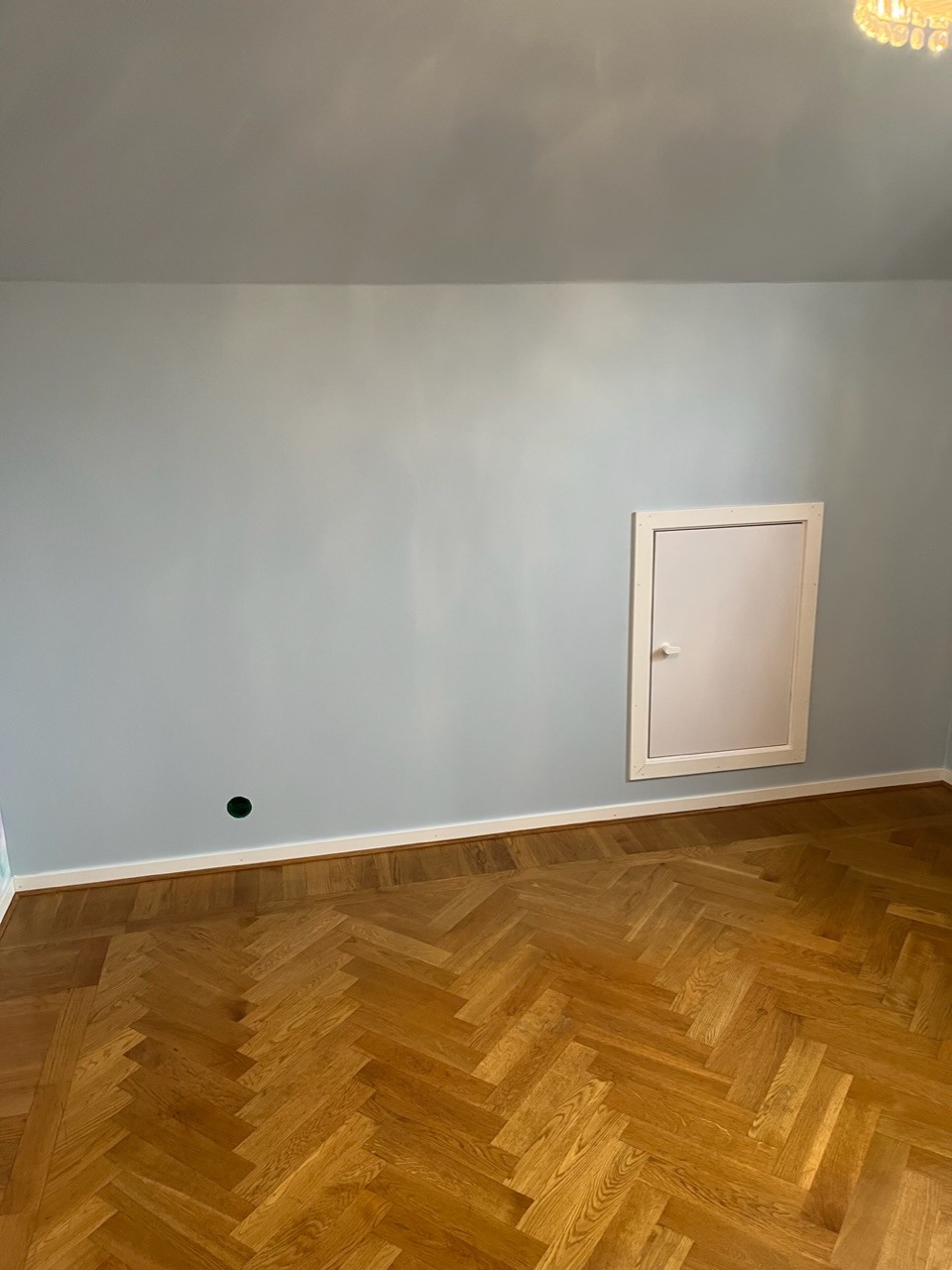
Said and done. And the house is still standing. :)

Fantastic feeling to know that the kids now have their pillows against a stud wall and no longer blue concrete.
 
  • A damaged plaster wall exposing wooden beams and insulation, with a wooden pallet and bucket on the floor, suggesting renovation work.
  • Attic renovation scene with exposed wooden beams, rubble, and construction debris on the floor.
  • Renovering pågår, isolerade väggstommar syns, elinstallationer framme, oputsad yttre vägg, litet fönster i centrum.
  • Corner of a partially renovated room with exposed drywall, a slanted ceiling with peeling wallpaper, and a small access panel on the wall.
  • A room with light blue walls, parquet flooring in a herringbone pattern, and a small white door on the wall.
  • Like
TheBigCheese and 2 others
  • Laddar…
Click here to reply
Vi vill skicka notiser för ämnen du bevakar och händelser som berör dig.