Hello.
In February, I bought a condominium (2-room) that was built in 1949. I live on the top floor of the 3rd story.
In the middle of the kitchen, I have a wall that I plan to tear down.
I hired a construction company, and they were 95% sure that the wall was not load-bearing.
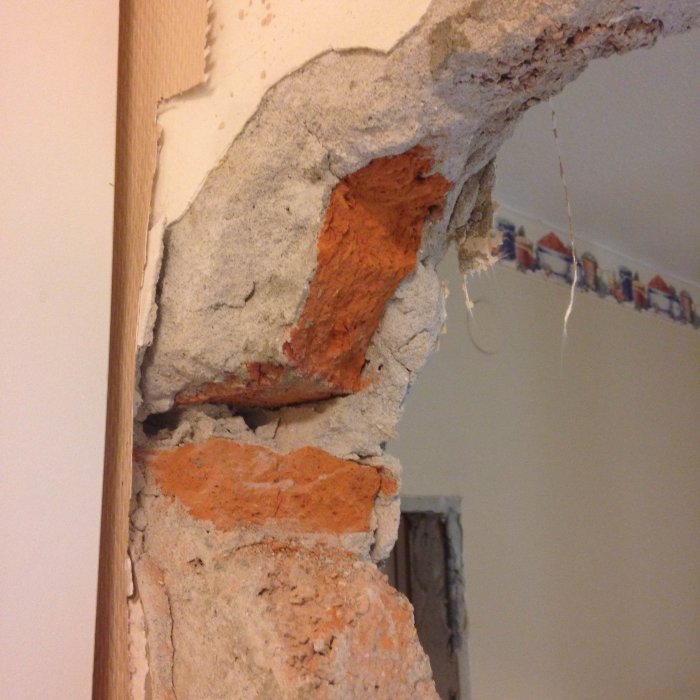
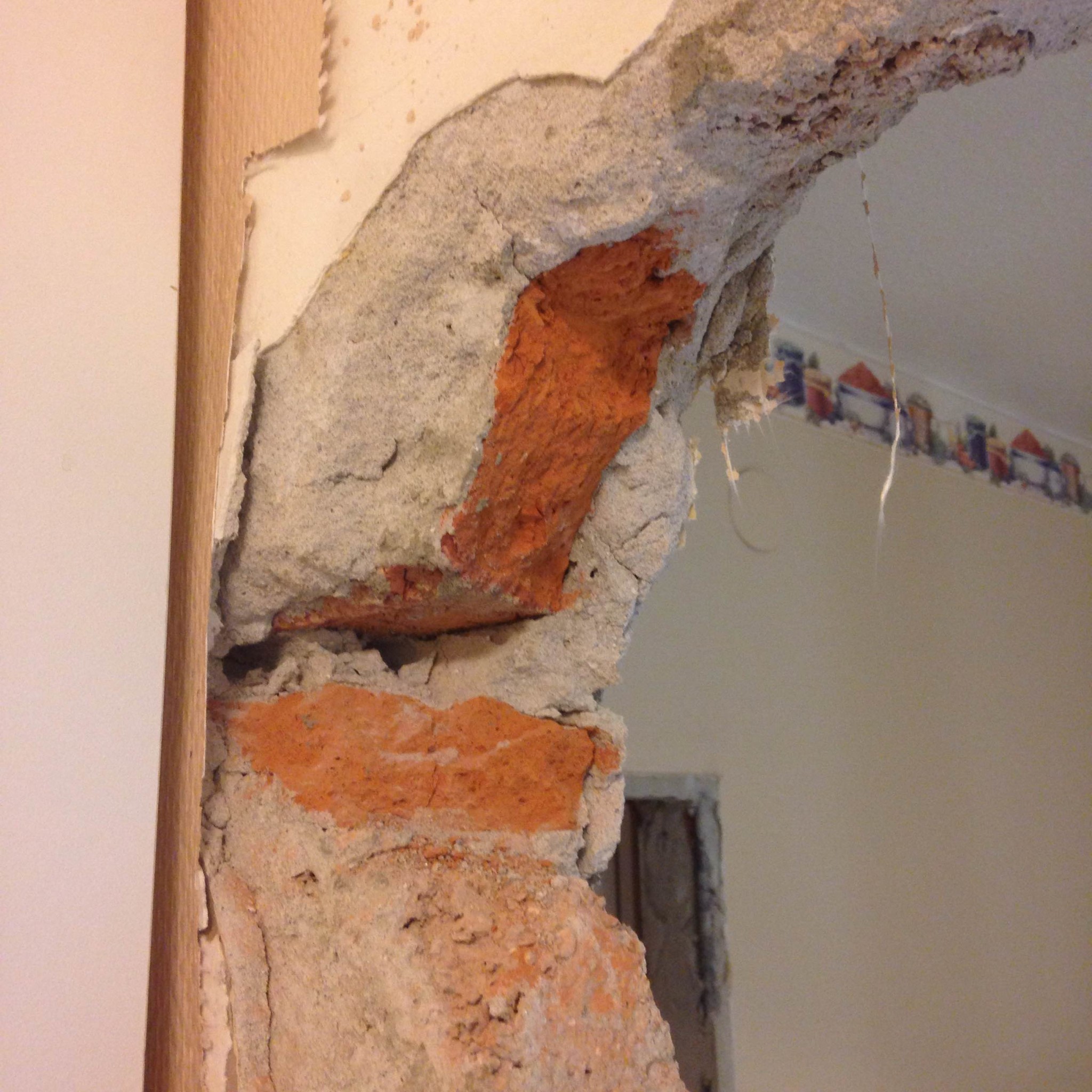
When they found out that the wall contained a bit of red brick, it became 100%.
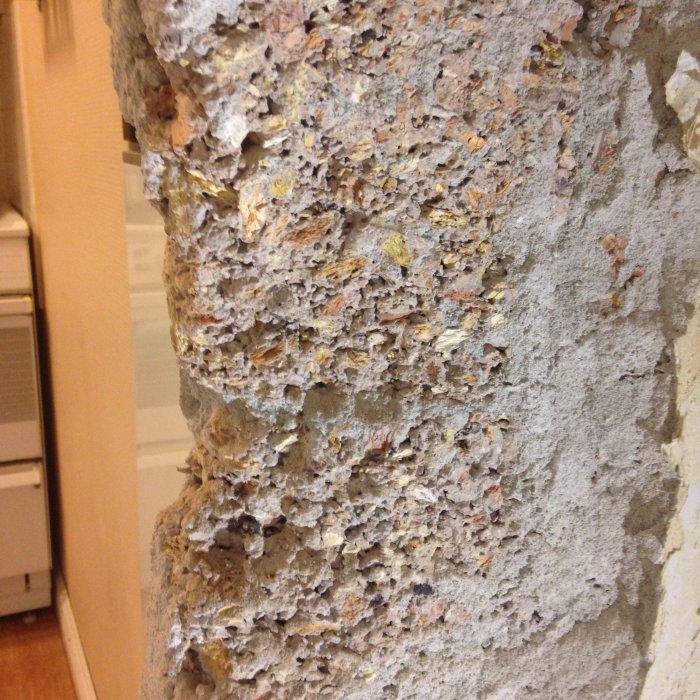
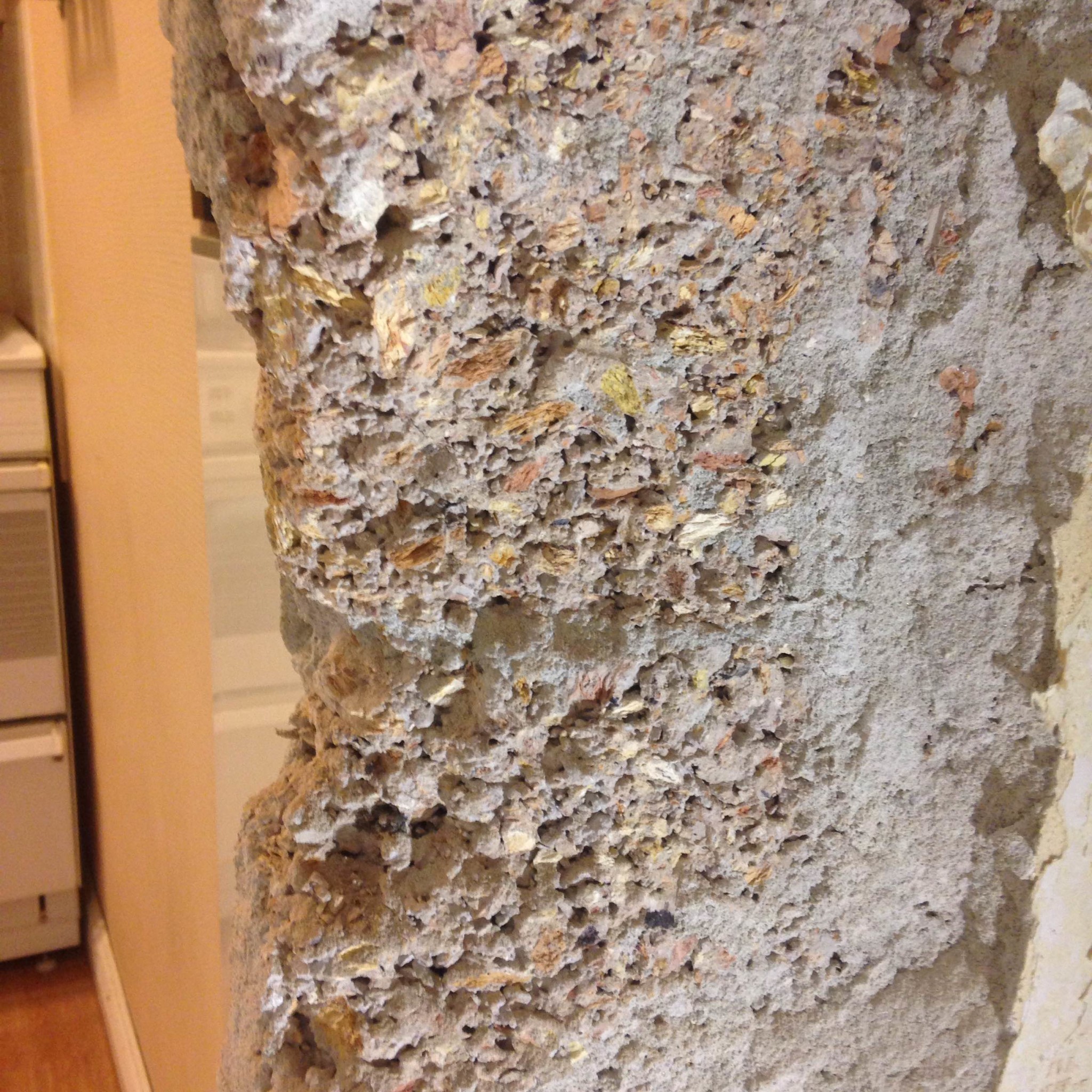
What makes me uncertain is that they didn't know what the wall was made of. It could either be lightweight concrete or other mix. I am attaching pictures so you can see. NOTE: it was quite easy to drill through the wall.
The wall is plastered with about 2cm on each side!
Do you know what is inside the wall?
Do you think the wall is load-bearing?
Can the ceiling collapse if I tear down the wall?
The wall does not appear to be load-bearing, it is probably a maximum of 10-12 cm thick including plaster. However, the ceiling may be plastered against the wall, so there is a risk that something could come loose. In any case, there is no plaster above the wall towards the ceiling, so there you can either repair it or frame the ceiling and put gypsum/panel huntonit. Then you can also take the opportunity to install LED spots that don’t need much air above!
When it comes to whether the wall is load-bearing, this should be possible to find out from the association. But this looks like my non-load-bearing walls in the apartment from 55. A slab of "tegelspill" from the construction was cast which was then erected as interior walls.
When it comes to whether the wall is load-bearing, this should be possible to find out from the association. But this looks like my non-load-bearing walls in the apartment which is from 55. They cast a slab of "brick waste" from the construction which they then raised as interior walls.
Regarding whether the wall is load-bearing, this should be possible to find out from the association.
But this looks like my non-load-bearing walls in the apartment that is from 55. They cast a slab of "brick waste" from the construction, which was then erected as interior walls.
Thanks for this. I live in a house from 1936, and your post explains the varying content of the interior walls.
Click here to reply
Vi vill skicka notiser för ämnen du bevakar och händelser som berör dig.