Hello!
I was wondering if anyone could give tips or advice on how we can proceed.
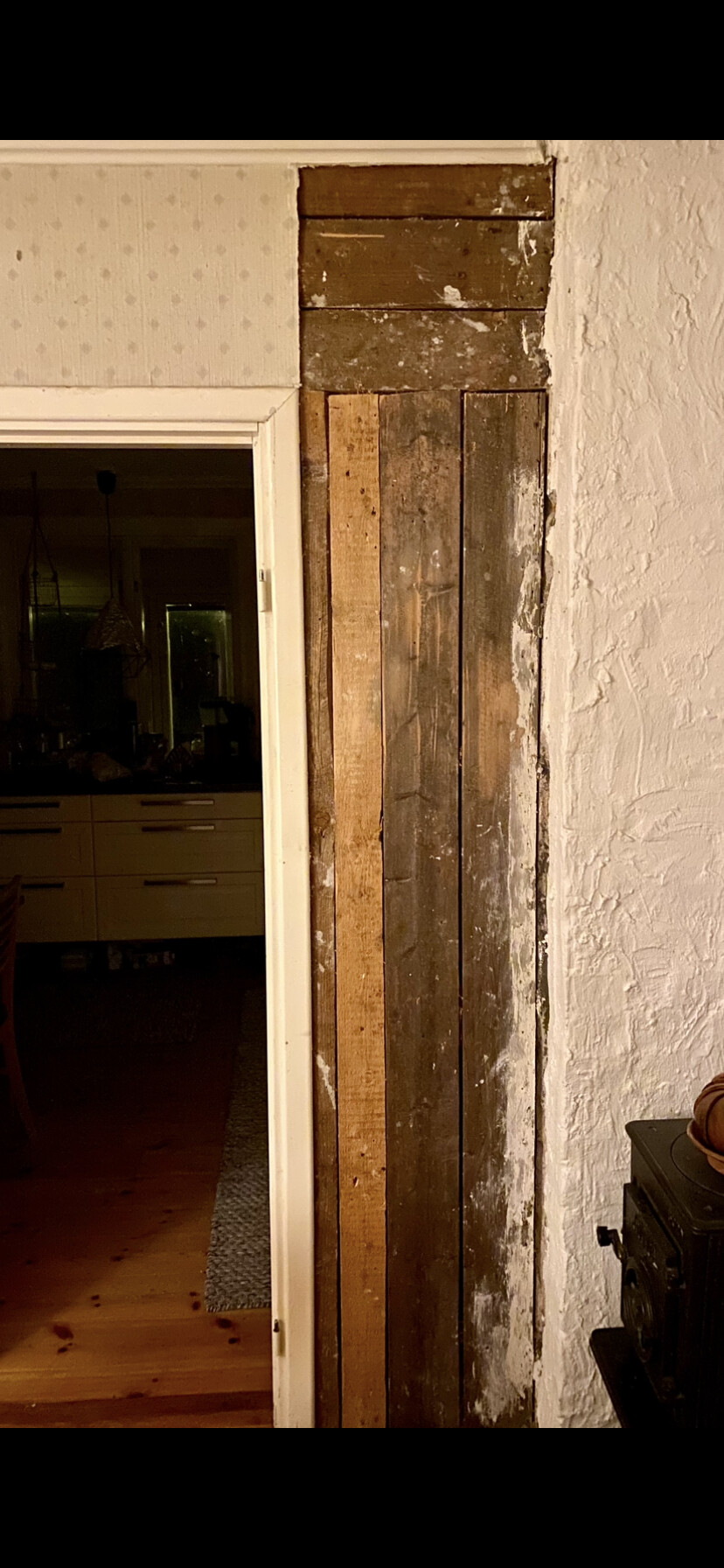
We want to demolish a wall between the kitchen and the adjacent room. The house was built around 1900. We believe the wall is load-bearing but are a bit uncertain. If you stick a knife between the horizontal and vertical beams, it's mostly air, but at some (uneven) points, it meets resistance.
What do you think, can we tear down the vertical beams? Do we need to bring in a professional for the work?
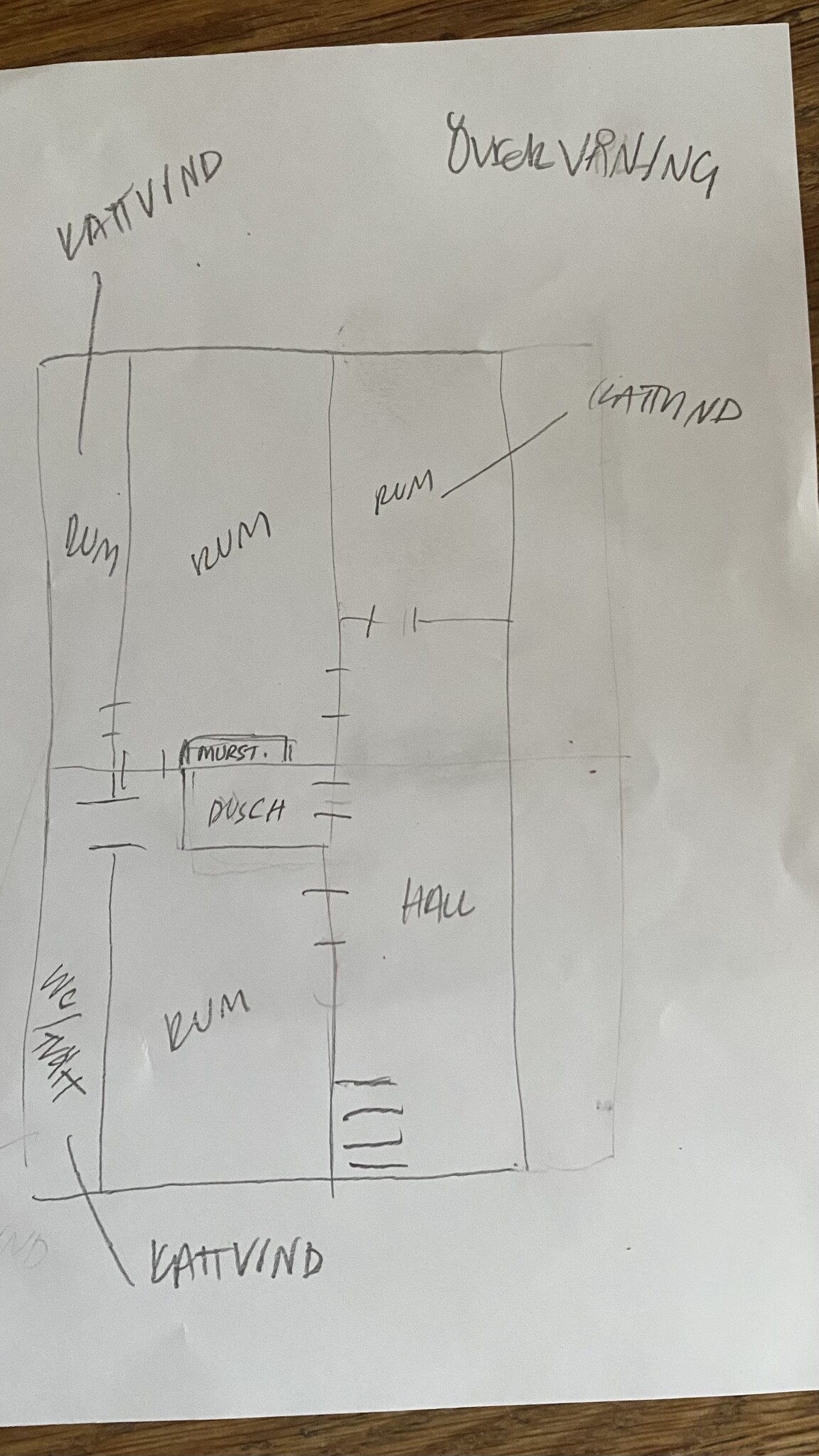
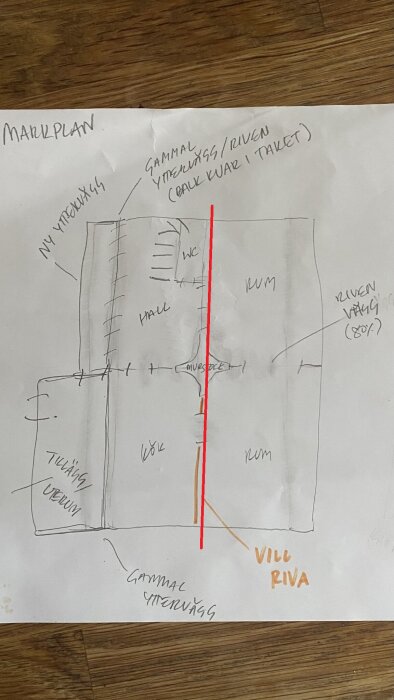
Start by uploading a drawing of the house, then with the forum's combined knowledge, we can assess how likely it is that the wall is load-bearing.
Do not tear down anything at this point!
If my red line corresponds to the ridge of your house, the wall you want to tear down is most likely load-bearing.
Additionally, there is a wall in the same place on the upper floor in your other drawing, which suggests that they are load-bearing walls.
It's not really the topic of the thread, but I can't help but wonder why you want to do this? In our house, we have no open floor plan, it's a bunch of walls and doors everywhere. I'm currently sitting in the living room, and I'm not thinking "damn, it sucks that I can't hear the dishwasher or the stove fan from here!". And when I'm in the kitchen cooking, it's quite nice that I'm not disturbed by the TV or the kids killing each other in the living room. But that's just me.
Yes, regarding the ceiling, I'm sure you're right. Anything else would be strange really.
It's true that it can be good to have the option to shut yourself in. But the rooms are so small, and the ceilings are low, making it very cramped, especially if you want to invite people over (you can have a maximum of 3-4 in a room at a time, and a larger dining table doesn't fit anywhere at the moment). On top of that, we have heating sources in the other rooms but not in the kitchen (which gets very cold in the winter), so we want to open it up to let in heat. Additionally, we now have new patio doors in the kitchen that let in a lot of light, which is really needed in the other rooms (which are quite dark).
So there are many reasons why we want to tear down the wall.
I think you should let it remain. That wall stabilizes the whole house.
What you need is thus a heat source in the kitchen and a table that is crafted to be as large as possible for the available space and that has an extension leaf at the end so it can be extended further for occasions when there are many people.
Can the patio door contribute to it being cold in the kitchen?
I think you should let it remain. That wall stabilizes the entire house.
What you need is a heat source in the kitchen and a table that is crafted to be as large as possible for the available space and has an extension leaf at the end so it can be extended further for occasions when there are many people.
Can the patio door contribute to it being cold in the kitchen?
There was a wood oven in the kitchen, but it was removed by previous owners who installed cabinets and a dishwasher instead (they used it as a summer house and didn't understand the necessity of a wood oven in winter...). Installing a new one would unfortunately mean demolishing half the kitchen.
We currently have a drop-leaf table, but seating 6 in the kitchen (the table's max) isn't so fun.
If anything, it has actually become a bit warmer thanks to the door (triple-glazed patio door replaced rotten double-glazed windows).
Of course, I don't want to risk the house's stability. I'll have to think further on the matter and bring in a carpenter to take a closer look.
Rebuilding the house to remove the partition wall is a multiple times larger task and multiple times more expensive than completely remodeling the kitchen and installing a wood stove and custom-making a dining table with the best possible dimensions for the space.
Hello!
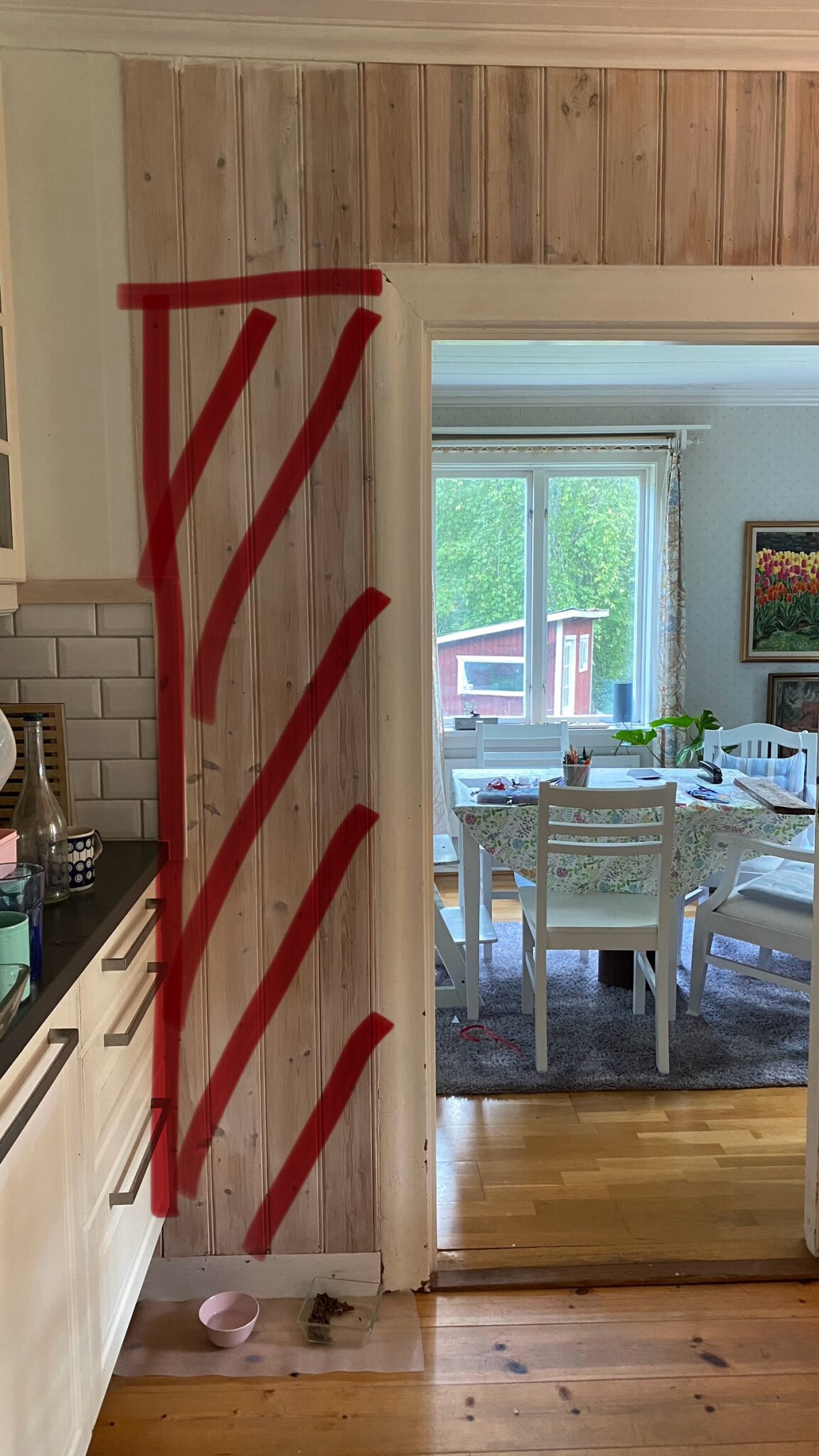
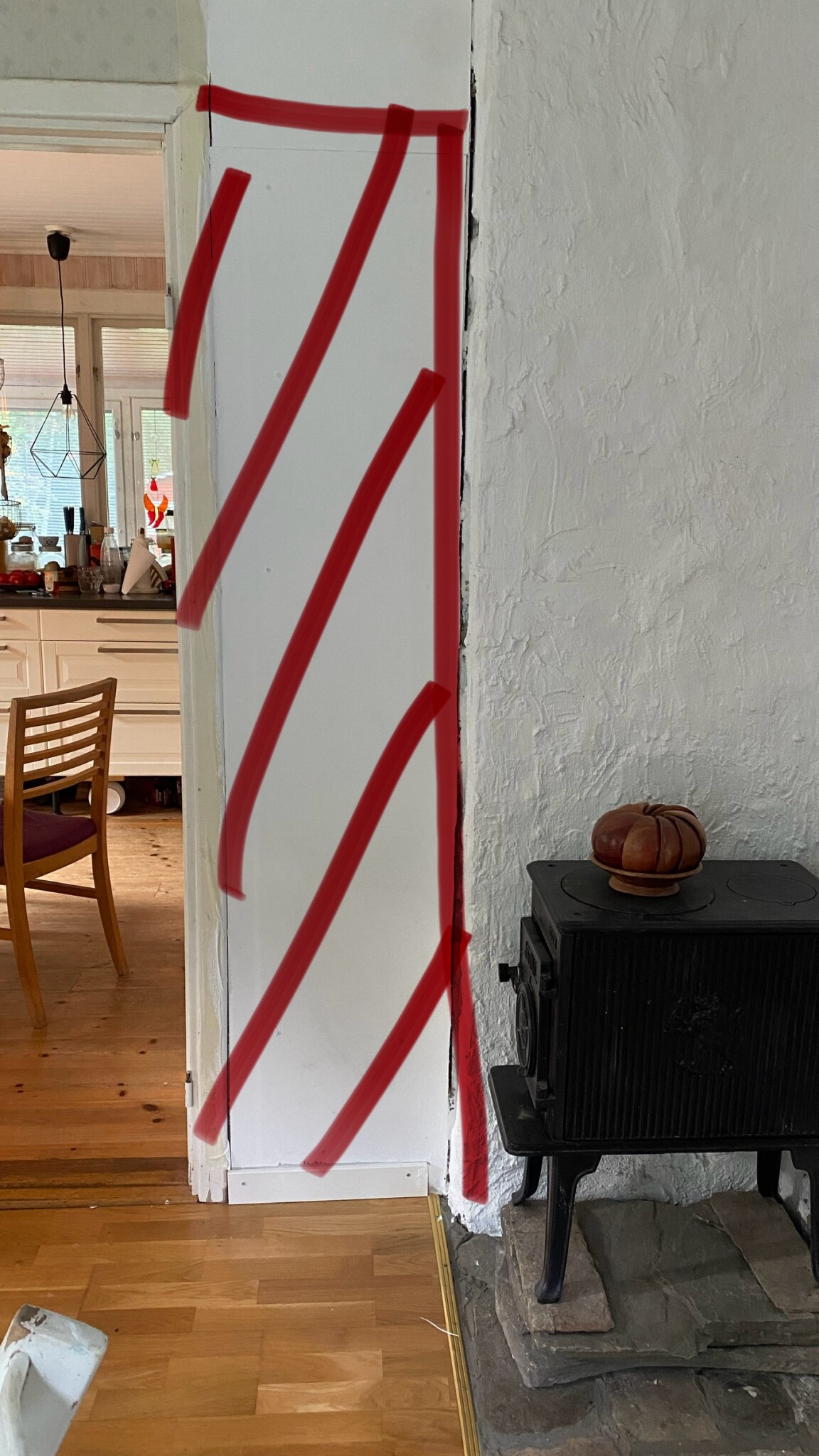
Thank you for all the good advice last time. I have reconsidered the matter and now want to only demolish a small part of the wall. Mainly to let heat into the kitchen from the adjacent room where there is a stove. (The wall is also not fireproof, so the stove cannot be used as long as the wall section remains.)
If I were to demolish according to the marked area, is it risky for the stability of the house? How large/invasive/complicated would it be to do?
A big thank you for any tips or thoughts anyone wants to share!
Best regards, Erica
If the wall has a load-bearing function, it is very likely that studs go down into that wall section to support what is above. They must be relieved somewhere, probably at the ends and somewhere in the middle.
In my house from 1926, really coarse timber goes down into the small wall sections around the chimney stack in the middle of the house. I noticed this when I was pulling electrical cables. Solid wood around 15-20 cm thick.
However, old houses are different, so it must be investigated in each individual case. It's nothing you cut off without determining its function.
If the wall has a load-bearing function, it's very likely that there are studs going down into that wall section which supports what is above. They must be relieved somewhere, likely at the ends and somewhere in the middle.
In my house from 1926, there is really thick timber going down into the small wall sections around the chimney in the middle of the house. I noticed it when I was pulling electrical cables. Solid wood around 15-20 cm thick.
But, old houses are different, so it must be investigated in each individual case. It's definitely not something to cut without determining its function.
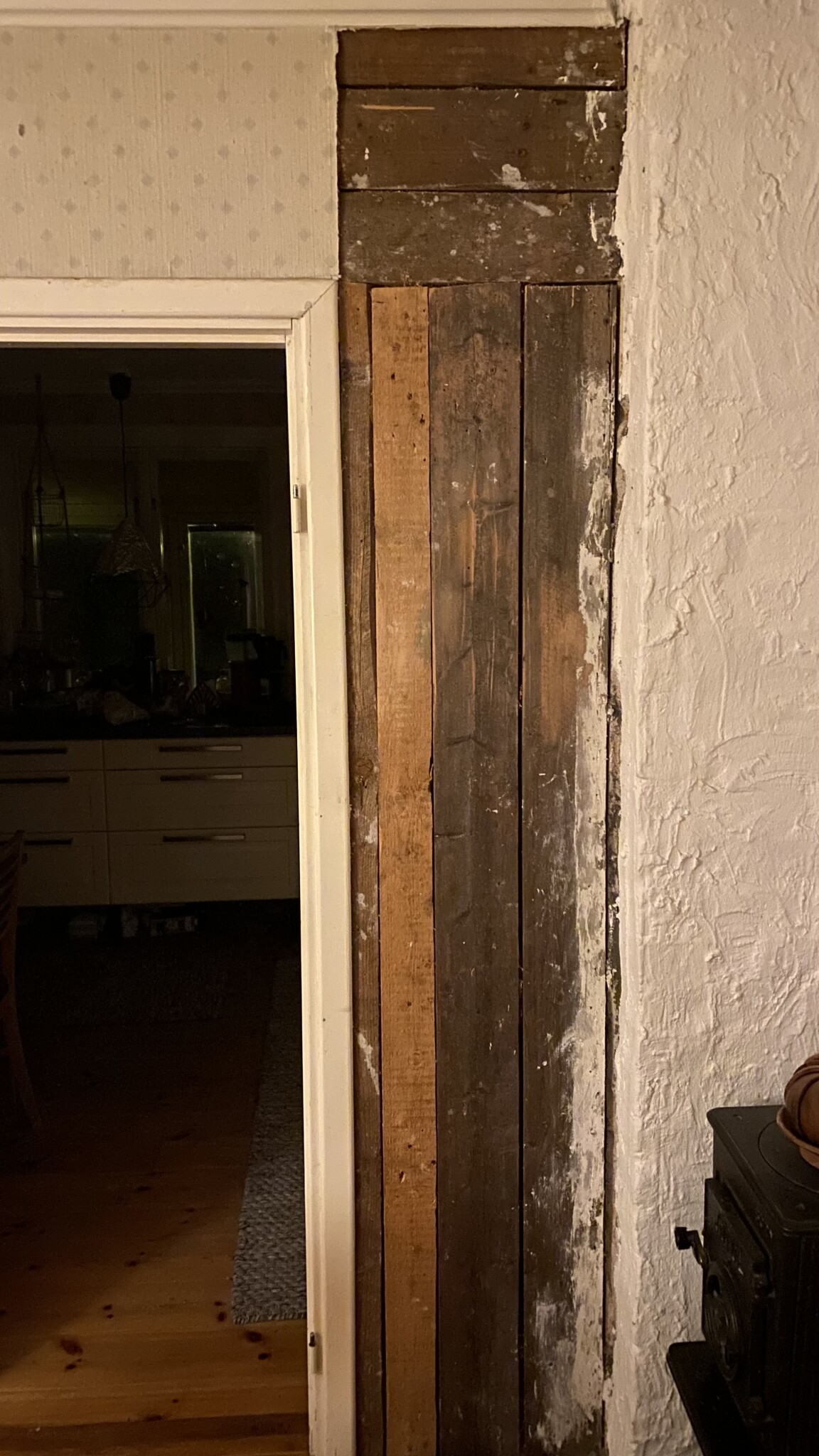
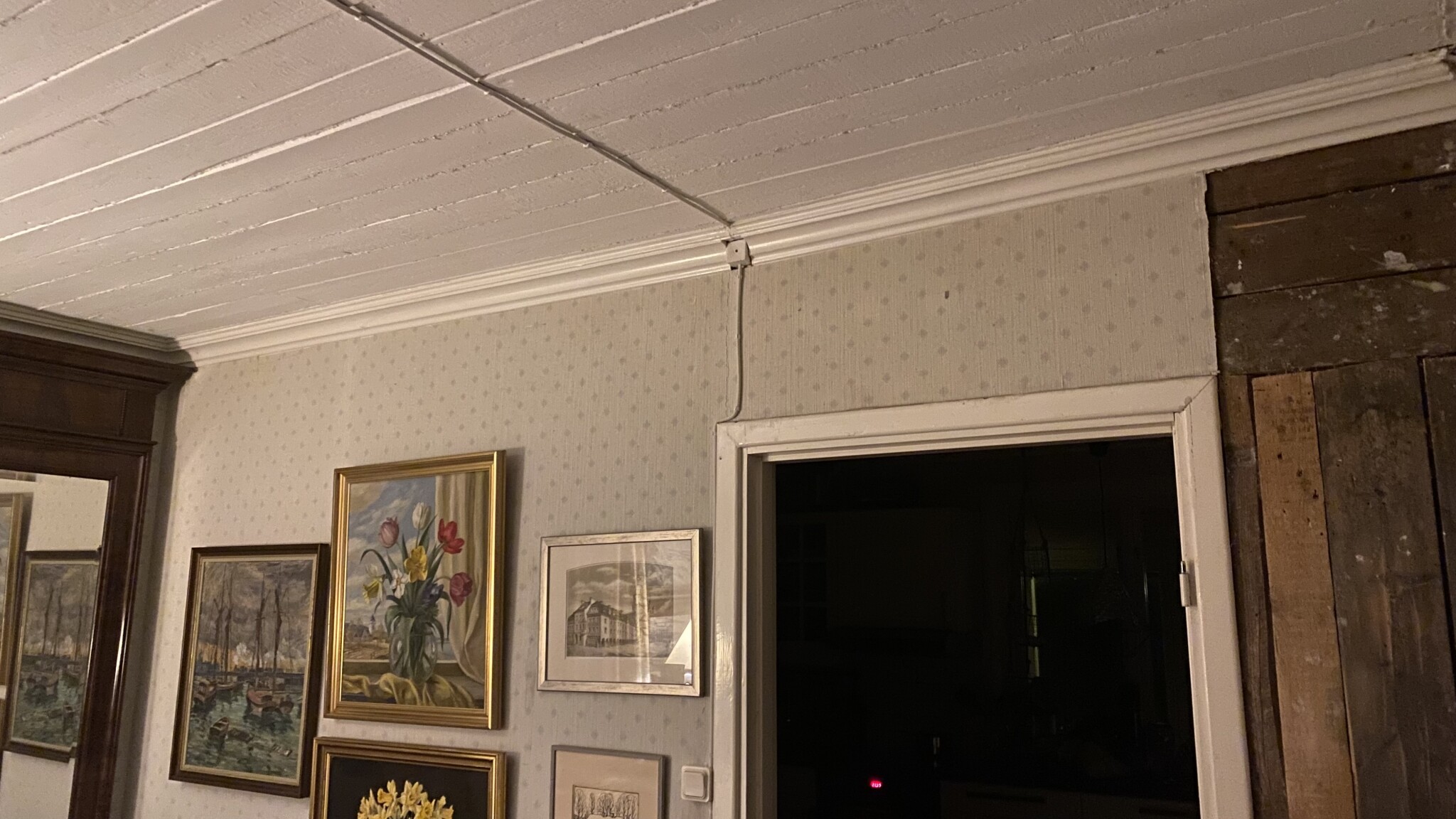
Thanks for the reply! This is what it looks like underneath.
You must ask someone who is knowledgeable in the subject and on site.
Anything can happen if you remove that, and there are all possibilities to make it work.
Then I think you should change the stove to one with more efficiency and that is more economical on wood.
/W




MultiMan said:
If the wall has a load-bearing function, it's very likely that there are studs going down into that wall section which supports what is above. They must be relieved somewhere, likely at the ends and somewhere in the middle.