I have just started getting into the world of sill replacement. I have bought a house from '76 where the pressure-treated sills are mildly water-damaged (10%). The house is situated on an uninsulated concrete slab. The whole house smells, and it sticks to the clothes. It's noticeable when we get back to the apartment, so I'm thinking of trying to replace the sills in one room myself to see how long it takes and what it actually involves.
I've researched a lot about the correct procedure and my plan looks as follows (please correct me if anything looks odd):
(will replace from the inside)
1. Saw off the drywall (reciprocating saw?) as little as possible that's accessible, 10-20cm should be enough?
2. Support the ceiling with a prop under the nearest roof truss
3. Trim 1-2cm off all the standing studs holding the horizontal sill in place so I can replace a whole sill at a time. Planning to lean the blade against a plywood board for good support.
4. Remove the sill
5. Clean the concrete where the sill has been, maybe even use some self-leveling compound? Is that necessary?
6. Lay sill paper where the new sill will lie.
7. Place construction plastic at the front edge between the sill and the sill paper.
8. Place the new sill and secure with angles and screws. Is this unnecessary, you think? Do you need to fasten the new sill if the old one wasn’t fastened?
9. Repair the joint in the standing stud. What's best here? I have read you can use everything from 2 wedges glued together to much more complex solutions.
10. Mount a T-profile over the old drywall and old construction plastic.
11. Fold out the plastic and mount a new drywall piece. Cut off excess plastic.
What do you think? Do you need to do anything with the facade board? I've read that some replace it at the same time.
I just ventured into the world of sill replacement. I bought a house from -76 where the pressure-impregnated sills are mildly moisture damaged (10%). The house stands on an uninsulated concrete slab. The whole house smells and it clings to the clothes. It's noticeable when we get back to the apartment, so I thought I'd try replacing the sills in one room myself to see how long it takes and what it actually involves.
I've researched a lot on the right method and my plan is as follows (please correct me if something seems off):
(replacing from the inside)
1. Saw off the drywall (reciprocating saw?) as little as possible that you can reach, 10-20cm should suffice?
2. Support the ceiling with a prop under the nearest rafter.
3. Cut 1-2cm from all the standing studs holding the horizontal sill so I can replace an entire sill at once. I thought of leaning the blade against a plywood board for good support.
4. Remove the sill.
5. Clean the concrete where the sill was, maybe even use some self-leveling compound? Is it needed?
6. Place sill paper where the new sill will lie.
7. Place construction plastic along the front edge between the sill and sill paper.
8. Lay down the new sill and secure with brackets and screws. Is this unnecessary, you think? Do you need to secure the new sill if the old one wasn't fastened?
9. Repair the notch in the standing studs. What's best here? I've read you can use everything from 2 wedges glued together to much more complicated solutions.
10. Install a T-profile over under old drywall and old construction plastic.
11. Unfold the plastic and install a new drywall. Trim off excess plastic.
What do you think? Do you need to do anything with the facade board? I've read some people replace it simultaneously.
But:
1: I would have removed all the drywall from the wall.
2: If necessary, good idea.
3/4: Then I would just remove the sill without having to saw off the wall to fit the new sill.
5/6: Better to shim up under the new sill with several layers of sill paper/other if needed.
7: Not sure what you mean here?
8: Brackets? Where are you going to secure them? To the slab?
9: If necessary (I would try to avoid this as much as possible).
1: I would have torn all the plaster off the wall.
2: If it's necessary, good idea
3/4: Then I would have just removed the sill, unless I have to saw off the wall to make room for the new sill.
5/6: Better to shim up under the new sill with several layers of sill paper/other as needed
7: I don't understand what you mean?
8: Angles? Where are you going to attach them? In the slab?
9: If necessary (I would have tried to avoid this as much as possible)
10/11: I don't follow here.
3/4: The vertical studs rest on the sill, right?
7: I mean that you place the plastic between the paper and the sill so that it sticks out from the wall, so you can easily cut it after installing the drywall.
8: Unsure, hence my question.
9: Yes, it probably depends on whether you saw the vertical stud or not.
10/11: I don't think this is relevant, but it is
To facilitate putting on a new drywall later. I'm thinking of screwing a T-profile into the upper drywall so that there is a piece sticking out where you can attach the new drywall.
I saw it, but unfortunately that does not mean that it cannot also be embedded..
I have also heard that some constructions in the 70s and 80s used a type of paint that evaporates and creates odors in houses and homes. Maybe you should take a piece and send it for analysis? I believe it was cuprinol paint that was not entirely 100....
7: Means that you place the plastic between the paper and the sill so that it sticks out from the wall, so you can easily cut it after you have mounted the gypsum board.
8: Uncertain, hence my question.
9: Yes, I guess it depends on whether you saw the vertical stud or not.
10/11: I don't think this is very relevant, but it's
to make it easier to attach a new gypsum board later. Thinking that you screw a T profile into the upper gypsum board, so that you have a piece sticking out that you can attach the new gypsum board to.
3/4: I understand how you're thinking, but normally you lift the house a little bit, right?
7: Don't you mount the plastic first when you're done?
10/11: I still don't quite get it (I think), won't there be a big edge then?
10% moisture according to the inspector. It smells as I wrote in the thread start. Several in the area have replaced.
If it smells, then the case is clear. Just thought to ensure that nothing is done unnecessarily, as in many cases no problems arise despite risk constructions.
10% is otherwise not particularly high...
If it smells, then the case is clear. Just wanted to make sure nothing is done unnecessarily, as in many cases no problems arise despite risk-construction.
10% isn't particularly high otherwise...
No, it's mostly the smell that bothers me. However, it barely smells now after we've torn out all the plastic and carpet. Maybe they were smell-contaminated. Or maybe I'm just used to the smell now.
We are also going to install Jape ventgolv, so that might be enough to keep the smell away from the future parquet floor. No idea 🤷♂️
Vi vill skicka notiser för ämnen du bevakar och händelser som berör dig.

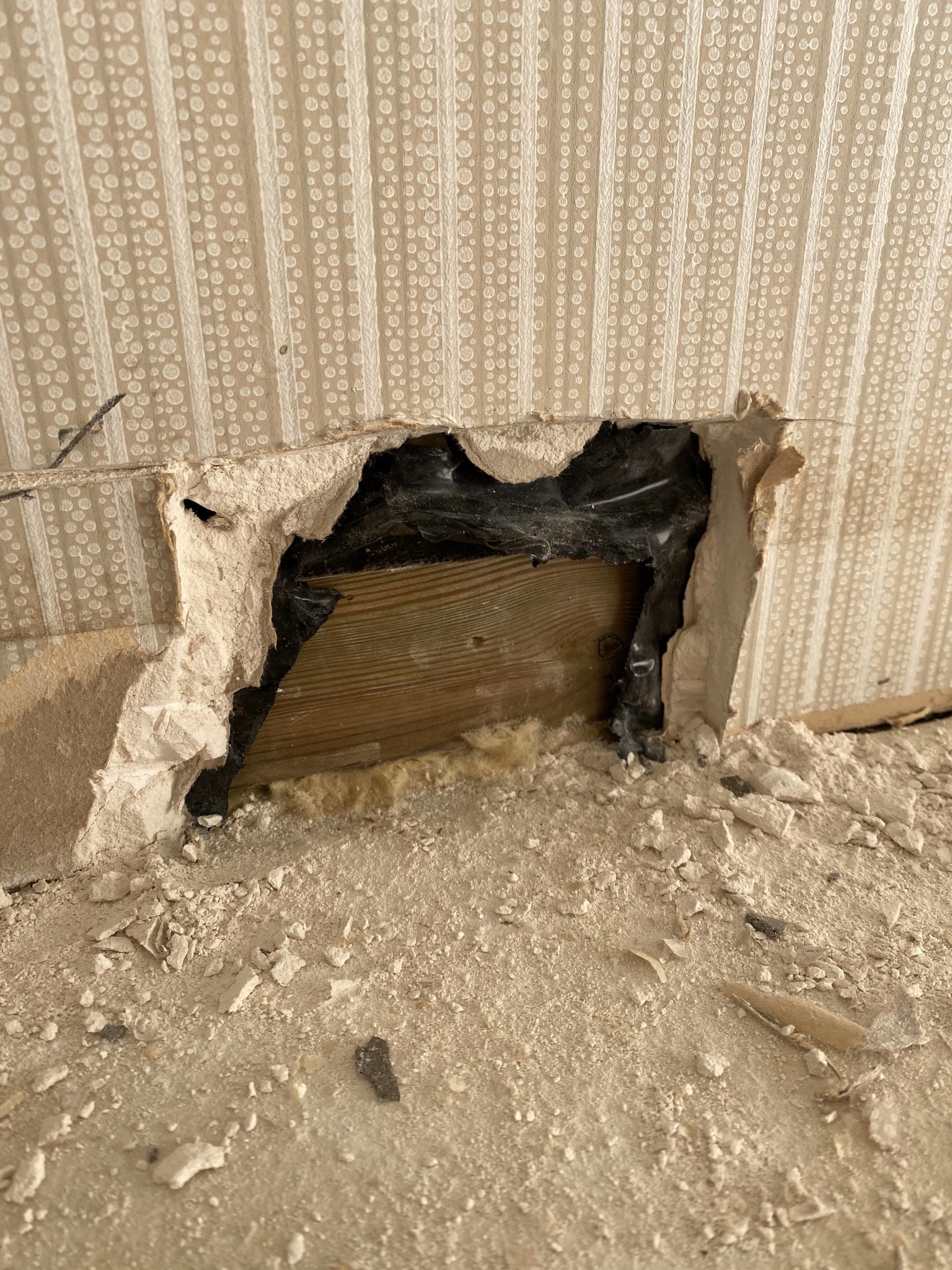
 Do you need to do anything with the facade board? I've read that some replace it at the same time.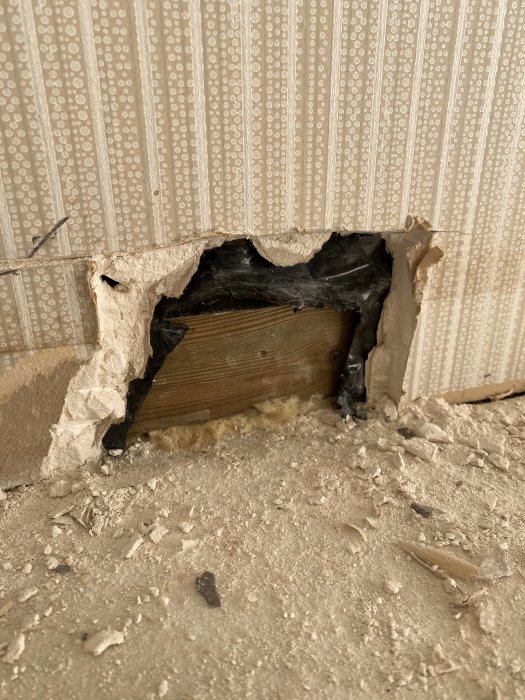
Violina said:
But:
Huddingebo said: