
6,913 views ·
25 replies
7k views
25 replies
Switch from U-staircase to L-staircase - does it require more space?

Construction rookie
· Göteborg
· 60 posts
We currently have a U-shaped staircase down to the basement. To improve the layout flow, we are considering changing to an L-shaped staircase, but I can't figure out if it requires more or less space. Today, it feels like you almost hit your head on the last steps.
The floor opening is 232*100 cm. The distance between the upper floor and basement floor is 250 cm. I would like to switch from a staircase that goes straight down and turns at the end. Can anyone explain if it's possible?
The floor opening is 232*100 cm. The distance between the upper floor and basement floor is 250 cm. I would like to switch from a staircase that goes straight down and turns at the end. Can anyone explain if it's possible?
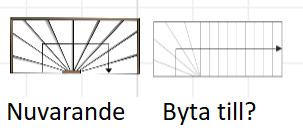

Have you calculated what step height/step depth you can get for a staircase in the space you have available?
(And what distance you will get between the steps and the ceiling where it becomes the shortest)
(And what distance you will get between the steps and the ceiling where it becomes the shortest)
Construction rookie
· Göteborg
· 60 posts
Construction rookie
· Göteborg
· 60 posts


In another thread, someone used the following website to calculate their stairs,
http://www.zhitov.ru/sv/
http://www.zhitov.ru/sv/

Is there a sloping roof or full ceiling height on the upper floor?We currently have a U-shaped staircase leading down to the basement. To make the floor plan flow better, we're considering switching to an L-shaped staircase, but I can't figure out if it requires more or less space. Today it feels like you almost hit your head on the last steps.
The floor opening is 232*100 cm. The distance between the upper floor and the basement floor is 250 cm. I would like to switch from a staircase that goes straight down and turns at the end. Can anyone explain if that's possible?


Where are you hitting your head today?
@Trollskidan it was not a straight staircase TS wants to build but an L-staircase, and I have already linked to the main page of that website a few posts earlier.
Edit:
Since you haven't explained anything about the link, many may hesitate whether they should click on the link at all; there are "people" who insert links to "all sorts of stuff" that (can) spread viruses, etc.
Edit:
Since you haven't explained anything about the link, many may hesitate whether they should click on the link at all; there are "people" who insert links to "all sorts of stuff" that (can) spread viruses, etc.
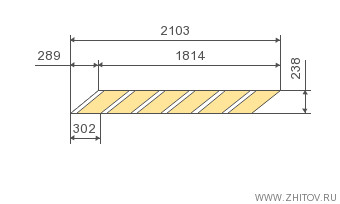
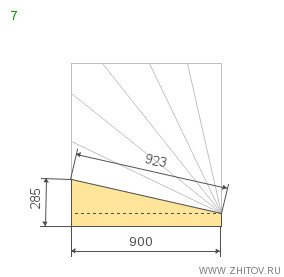


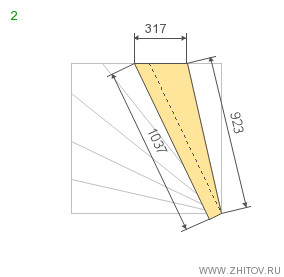

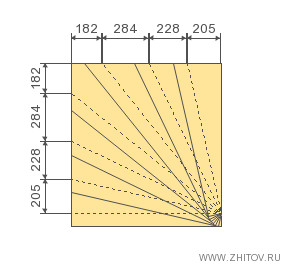
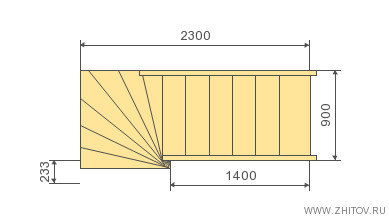



As I said, it's the thickness of the floor structure along with the step height that will be decisive. Let's say the floor structure is 30 cm thick... Then you get 2500-300 mm = 2200 in headroom. Then if you have the first step just touching at the opening of the floor structure hole, the headroom will be the height when you're standing on the first step minus 2200 mm. Say you have a step height of 185 mm, then you will have 2015 mm in headroom. I would spontaneously think that must still be an approved headroom down into a basement. But if it's only step 2 that's at the edge of the floor structure opening, then the headroom will be 1830 mm... That's too tight!
Construction rookie
· Göteborg
· 60 posts
Construction rookie
· Göteborg
· 60 posts