
1,529 views ·
9 replies
2k views
9 replies
Submersible pump or waterproofing membrane as a solution?
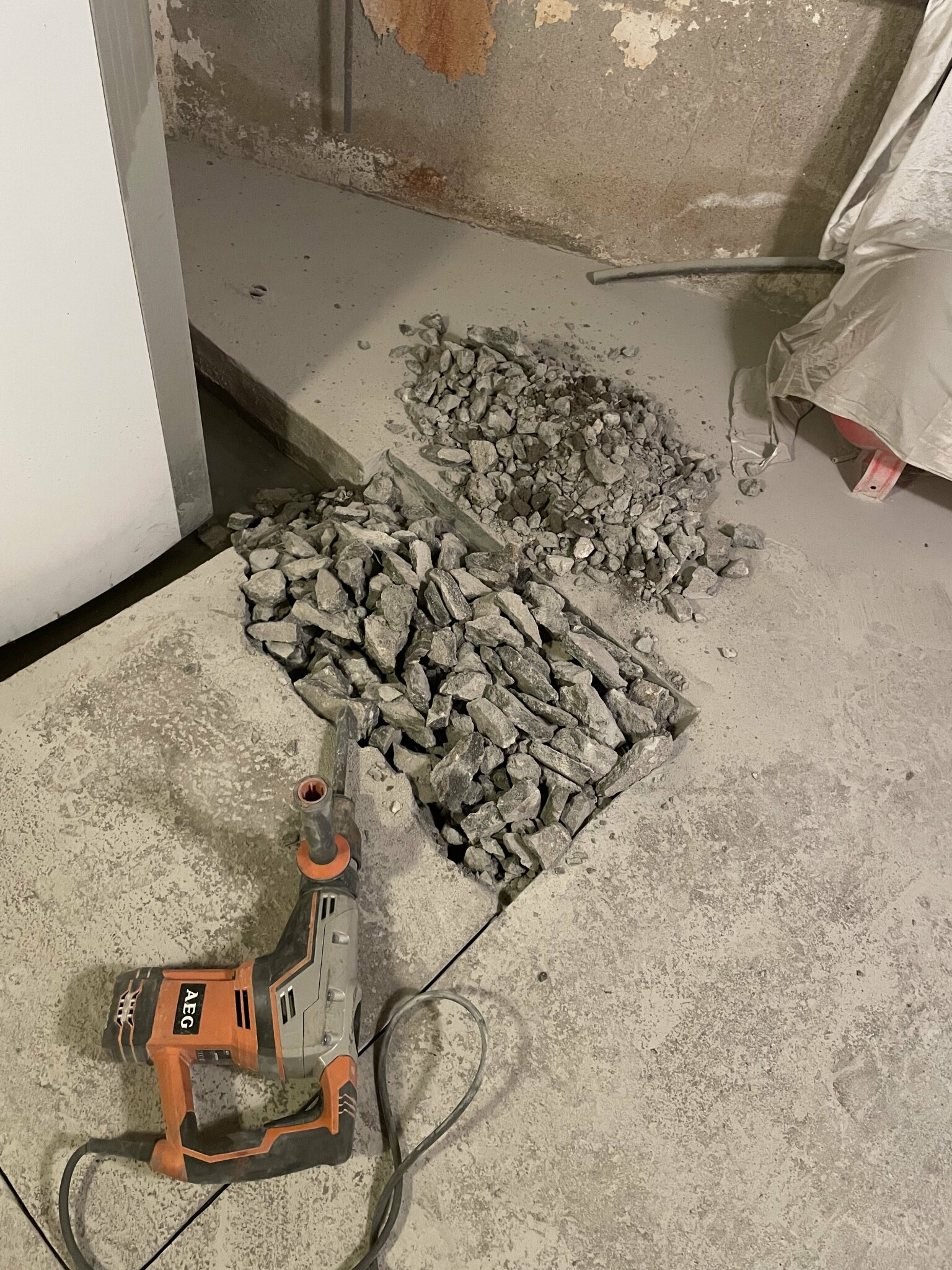
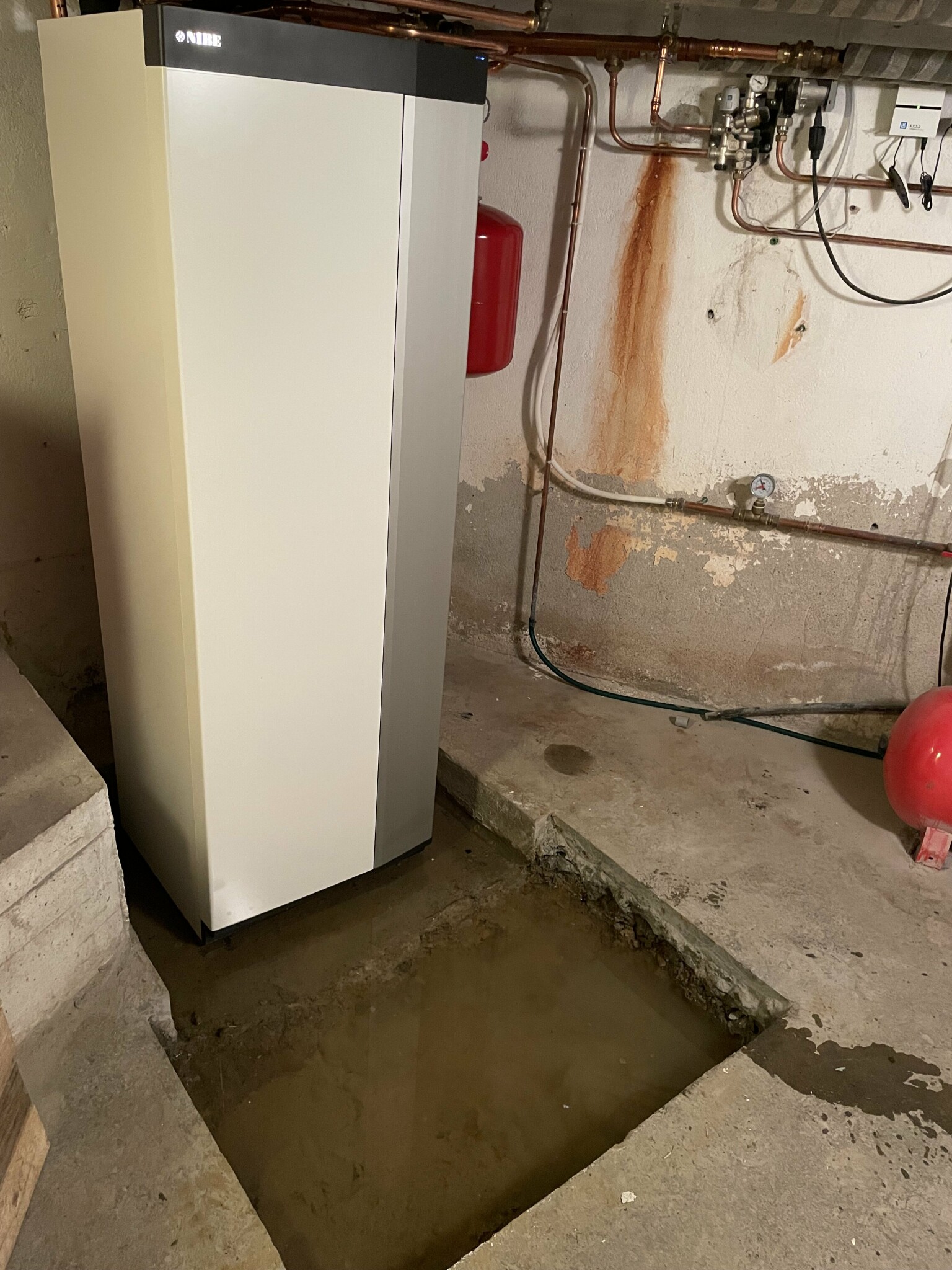
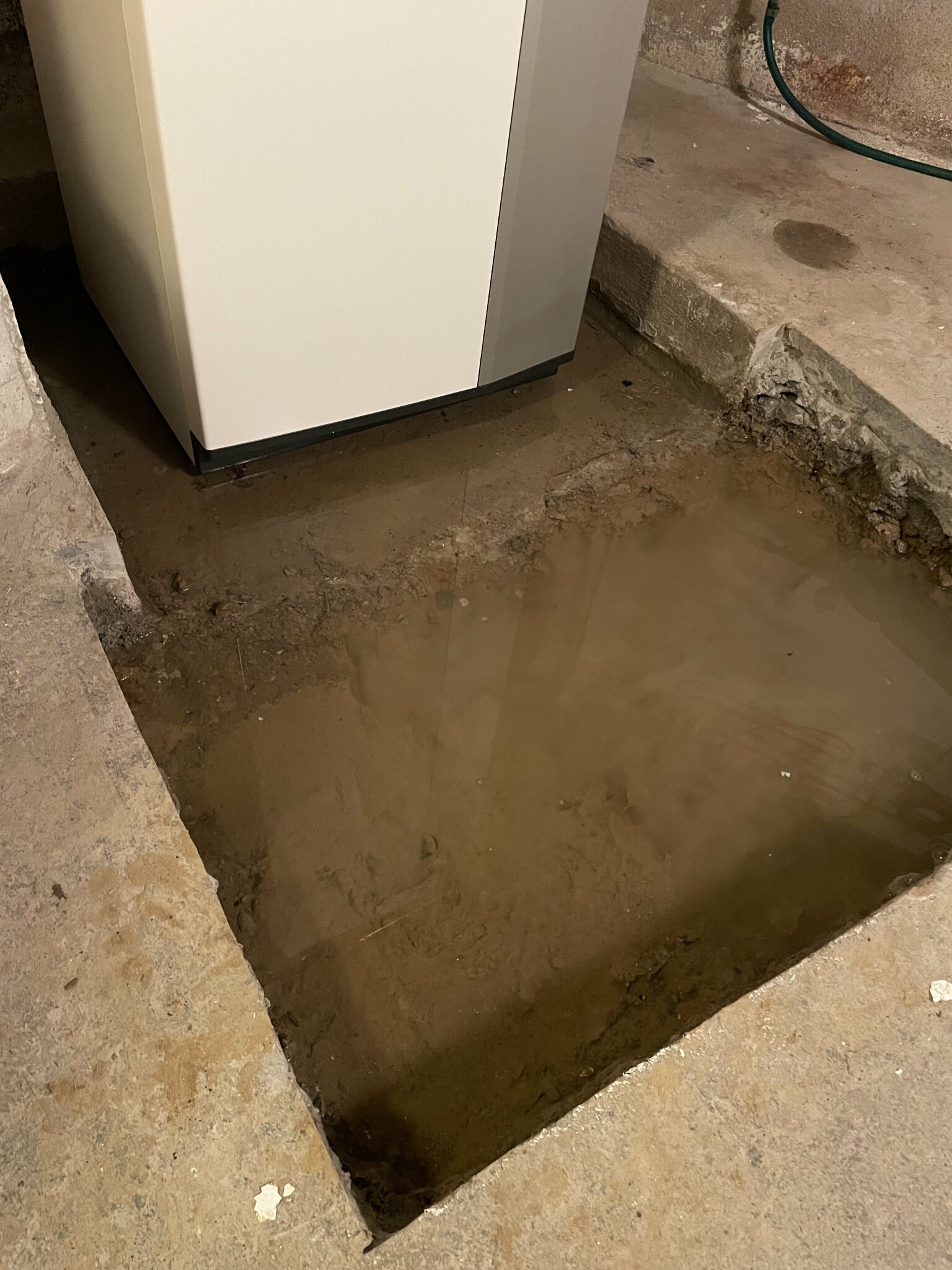
Our heat pump is located in a dug-out hole in the basement, about 1x1 meter. Water has entered once or twice in four years.
Now we have installed a new heat pump, and since Nibe apparently is serviced from the front, I was advised to enlarge the hole, which I did before the pump was installed (to avoid dust once the new heat pump was in place).
The plan is one of two alternatives:
1. When it's drier and no water seeps in, build up the floor and edges with a bucket sunken and secured in one corner. Have a slope towards it and easily lower a submersible pump.
2. When it's drier and no water seeps in, build up the floor and edges but without a sunken bucket. Instead, apply several layers of waterproofing to create a sealed hole/pit to prevent water from seeping in.
What do you think is preferable, and if you have better ideas, they are welcome 😀
Thank you in advance.
Now we have installed a new heat pump, and since Nibe apparently is serviced from the front, I was advised to enlarge the hole, which I did before the pump was installed (to avoid dust once the new heat pump was in place).
The plan is one of two alternatives:
1. When it's drier and no water seeps in, build up the floor and edges with a bucket sunken and secured in one corner. Have a slope towards it and easily lower a submersible pump.
2. When it's drier and no water seeps in, build up the floor and edges but without a sunken bucket. Instead, apply several layers of waterproofing to create a sealed hole/pit to prevent water from seeping in.
What do you think is preferable, and if you have better ideas, they are welcome 😀
Thank you in advance.

Hi,J jonaserik said:
Thanks for the response.
Do you mean that you've made holes in the bucket to let in water (making it kind of like drainage) with a submersible pump in it? My idea was not to make holes in the bucket to collect less water that needs to be pumped away, but maybe I'm thinking wrong?
The water comes from below when the ground is very wet. It seeps up through the concrete where it is 20 cm deeper than the rest of the basement floor, yes.J jonaserik said:
But with some holes in the sunken bucket, it becomes a partial drainage of the moisture under the basement floor. Just as long as it doesn't lead to any subsidence if the water is pumped away.
What do you think?
Forget about any settling, the house has probably stood for many years and remains standing. Then how often you have to pump was another issue, but as can be seen, the level rises high and is probably the same under the entire floor. When you make a pit, it collects there first. If you have a drain nearby, perhaps a constant pump there with a deeper hole down and a hose to the drain. If you have a private drain, it should not be pumped there but away elsewhere. But you have to decide everything yourself.
I don't know how you use your basement, but I would definitely kill two birds with one stone and install a pump with a float that activates at a level lower than the bottom of the slab.L Luftskeppet said:Our heat pump is located in a hollowed-out hole in the basement, about 1x1 meter. Water has come in once or twice in four years.
Now we have installed a new heat pump and since it apparently needs to be serviced from the front, I was advised to enlarge the hole, which I did before the pump was installed (to avoid dust when the new pump was in place).
The idea is one of two options:
1. When it's drier and not letting water in, build up the floor and edges with a bucket recessed and cast in one corner. Have it sloped there and be able to easily lower a submersible pump.
2. When it's drier and not letting water in, build up the floor and edges but without a recessed bucket. Instead, paint a few layers of sealing material to create a tight hole/pit where water does not seep in.
Which do you think is preferable and if you have better ideas, they are welcome 😀
Thanks in advance.
It doesn't necessarily cause damage with moisture in the basement floor slab and walls, but all water in contact with the slab and walls is led capillarily into the floor/wall over quite long distances, and creates a more humid basement. So, gravel and a bucket with lots of holes to get as much water as possible into the pump pit. I might have finished at the top with geotextile and EPS concrete for some insulating effect. Then connect the pump water to the stormwater system or a gravel-filled trench. If there's less water, I might have considered connecting it to the sewer, even though it's not by the book..//
I have a well next to it, so just as you say, I plan to pump with a hose to it.J jonaserik said:Forget about any settlement, the house has probably stood for many years and is still standing. How often you need to pump is another matter, but as seen, the level rises high and is likely the same under the entire floor. When you make a pit, it gathers there first. Do you have any drainage nearby, maybe a constant pump there with a deeper hole down and a hose to the drainage. If you have your own drainage, it shouldn't be pumped there, but away elsewhere. But you have to decide everything yourself.
Yes, it has stood here for 160 years.
But then you also think that I should drill holes in the bucket I lower before the casting to pump from?
Thanks for the response.
Yes, that's exactly what I'm thinking.P pette said:Now I don't know how you use your basement, but I would definitely kill two birds with one stone and install a pump with a float that activates at a lower level than the bottom edge of the slab.
It doesn't necessarily damage itself with moisture in the basement floor slab and walls, but all water in contact with the slab and walls is conducted capillary through the floor/wall quite long distances, creating a more humid basement. So gravel and a bucket with lots of holes in it to get as much water as possible into the pump sump. I would probably finish at the top with geotextile and EPS concrete to get some insulating effect. Then connect the pump water to the stormwater system or soakaway. If there was less water, I might consider connecting to the wastewater, even though it's not strictly by the rules..//
Okay. Then I will do that to help the slab stay a bit drier in the future.
Thanks!
Click here to reply