
2,324 views ·
2 replies
2k views
2 replies
Strange pattern in leveling compound.
Hello.
I have a house from the 70s with floating floors and an uninsulated concrete slab.
The construction is concrete, plastic foil, polystyrene about 80mm, chipboard.
When we redid the floor, a larger area was leveled with self-leveling compound on top of the chipboard, and according to instructions, I applied plastic on the self-leveling compound so that the wood floor wouldn't absorb moisture.
I looked at the self-leveling compound a couple of years later and saw this?
Strange? Is it normal?
I have a house from the 70s with floating floors and an uninsulated concrete slab.
The construction is concrete, plastic foil, polystyrene about 80mm, chipboard.
When we redid the floor, a larger area was leveled with self-leveling compound on top of the chipboard, and according to instructions, I applied plastic on the self-leveling compound so that the wood floor wouldn't absorb moisture.
I looked at the self-leveling compound a couple of years later and saw this?
Strange? Is it normal?
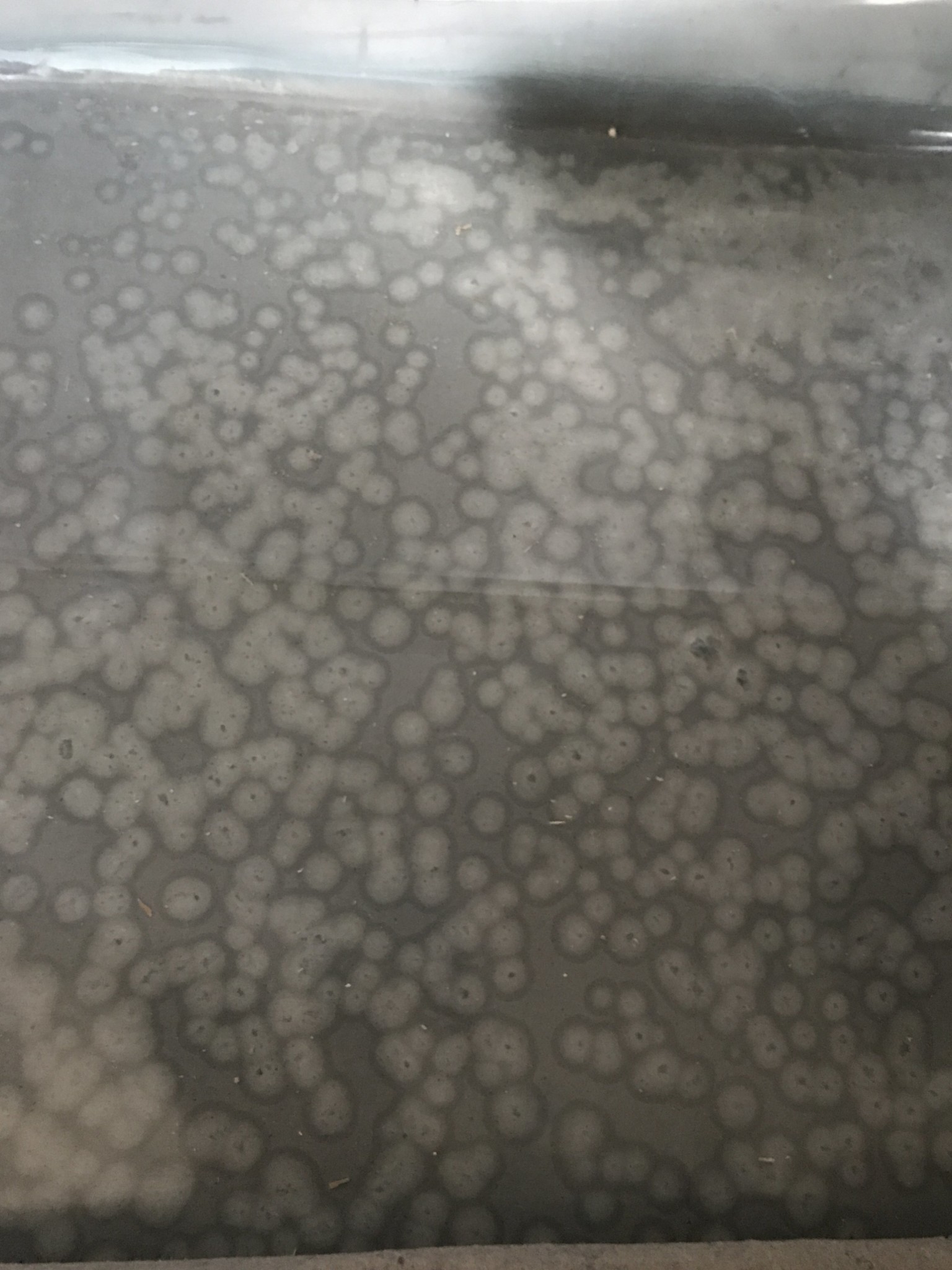
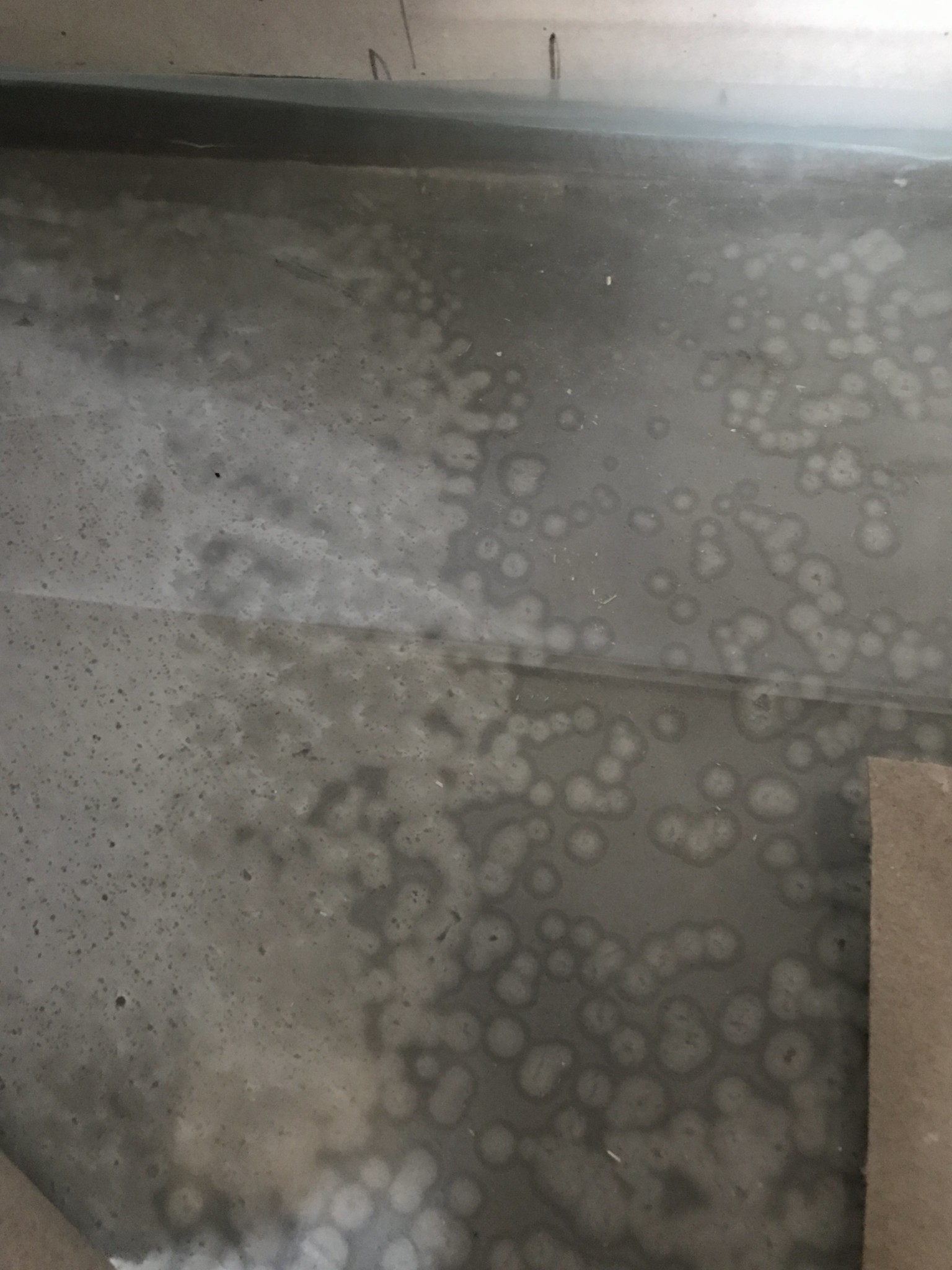

It looks like lime efflorescence, but it could also be salt efflorescence. Is there moisture seeping in under the putty? If so, it's likely salt that has come up with the seeping moisture. If it's salt, you can wash it off with water and a scrubbing brush. Lime efflorescence is harder and won't wash off... If you've had plastic on it and it didn't dry properly before, or if there is seeping moisture from underneath, it's common for efflorescence to occur.
There is no rising moisture from underneath because it is chipboard underlay glued on 80mm polystyrene which is on top of a vapor barrier and then concrete.
I think I laid the floor a couple of days after levelling with self-leveling compound, so moisture was probably still in the compound when the plastic was placed there.
The pattern looks "microbiological" like an agar plate.
I think I laid the floor a couple of days after levelling with self-leveling compound, so moisture was probably still in the compound when the plastic was placed there.
The pattern looks "microbiological" like an agar plate.
Last edited:
Click here to reply