Hi!
Maybe I'm posting in the wrong thread now, but I'll give it a try. I've seen numerous threads about similar issues, but mine seems to be uniquely problematic.
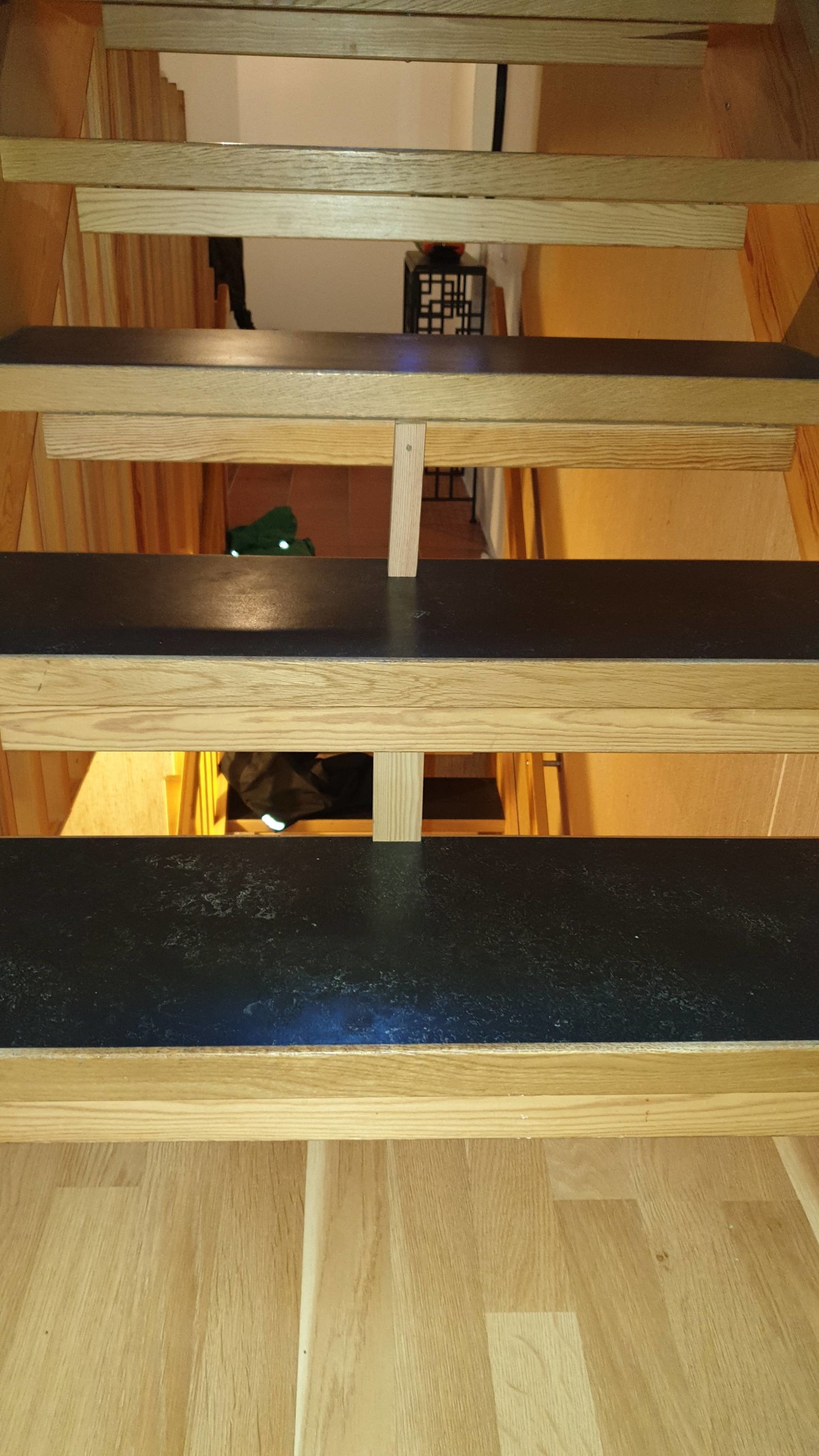
According to the pictures, I have an open staircase, and every step creaks loudly when walked on. I have a theory that the balustrade contributes to the sound, as there is a noise coming from the attachment point in the joist on the side.
The step itself makes the most noise, and if you silence it by placing lots of wood scraps between the steps, it becomes completely silent. But that's obviously not a viable solution!
The steps attached to the stringer don't have any screws that can be tightened; they're secured with some kind of flat bolt.
1. Is the balustrade important, does it support the staircase in any way?
2. How can I make the steps silent without angle screwing or closing off the staircase?
Thanks in advance.
Maybe I'm posting in the wrong thread now, but I'll give it a try. I've seen numerous threads about similar issues, but mine seems to be uniquely problematic.
According to the pictures, I have an open staircase, and every step creaks loudly when walked on. I have a theory that the balustrade contributes to the sound, as there is a noise coming from the attachment point in the joist on the side.
The step itself makes the most noise, and if you silence it by placing lots of wood scraps between the steps, it becomes completely silent. But that's obviously not a viable solution!
The steps attached to the stringer don't have any screws that can be tightened; they're secured with some kind of flat bolt.
1. Is the balustrade important, does it support the staircase in any way?
2. How can I make the steps silent without angle screwing or closing off the staircase?
Thanks in advance.
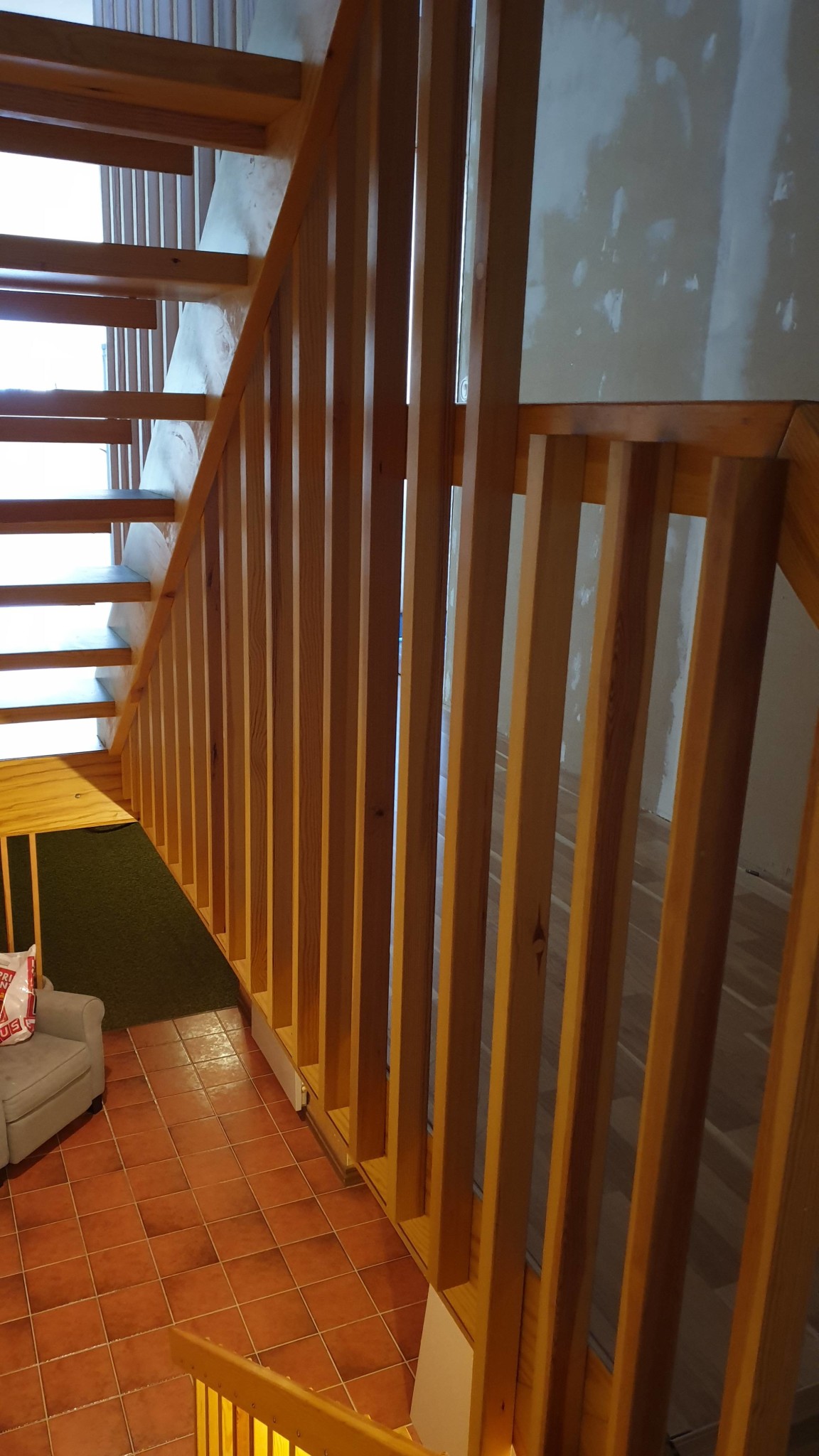
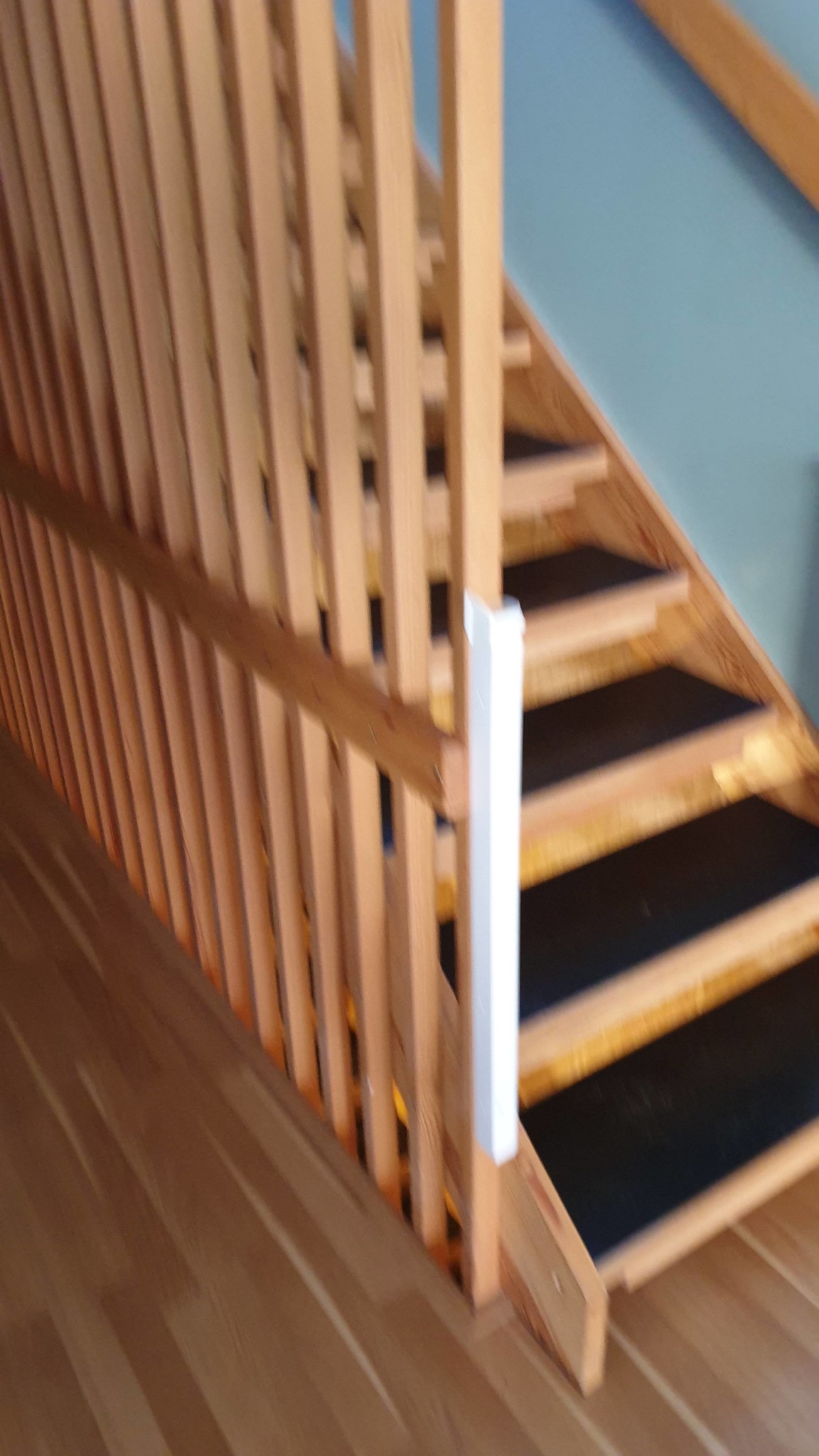
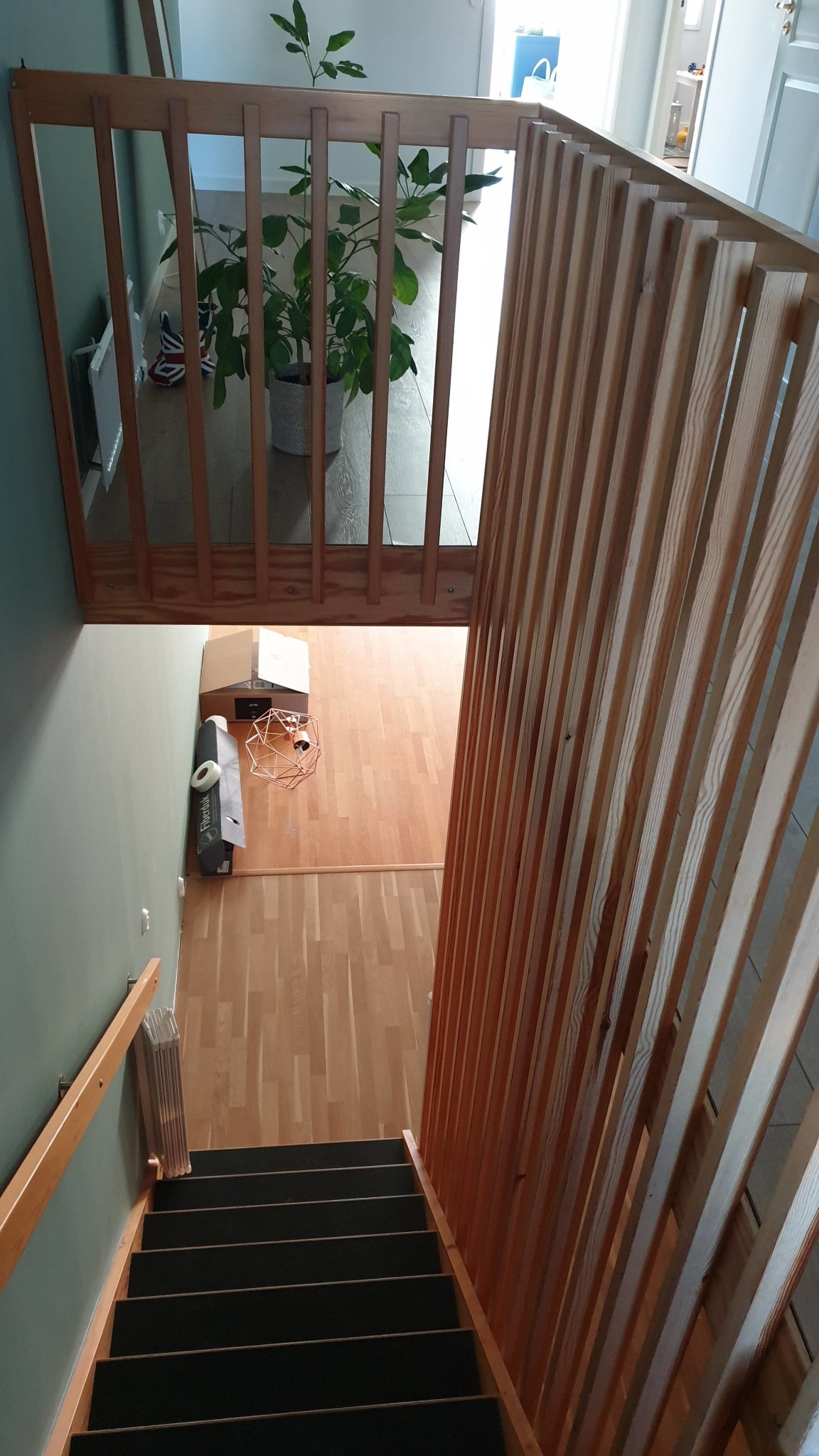

The trellis has no load-bearing function whatsoever. The staircase itself does not appear to be under-dimensioned either. Most indications point to some form of installation error. There is a mini beam under each step that is supposed to provide reinforcement. There seems to be a gap between the step and the mini beam. If that's the case, it's wrong. These two parts should ideally be glued to each other.
HiJ justusandersson said:The trellis has no bearing function whatsoever. The staircase itself also doesn't seem to be under-dimensioned. Most likely, it's some form of installation error. There is a mini-beam under each step that is supposed to stiffen it. There appears to be a gap between the tread and the mini-beam. If that is the case, it is wrong. These two parts should ideally be glued together.
Isn't it just meant to protect small curious children from crawling through? Like a child safety list or whatever it's called. I have also read that there should be a gap (spacer exists) precisely so it doesn't creak. But you mean it could be the other way around too, i.e., glued directly to prevent creaking.
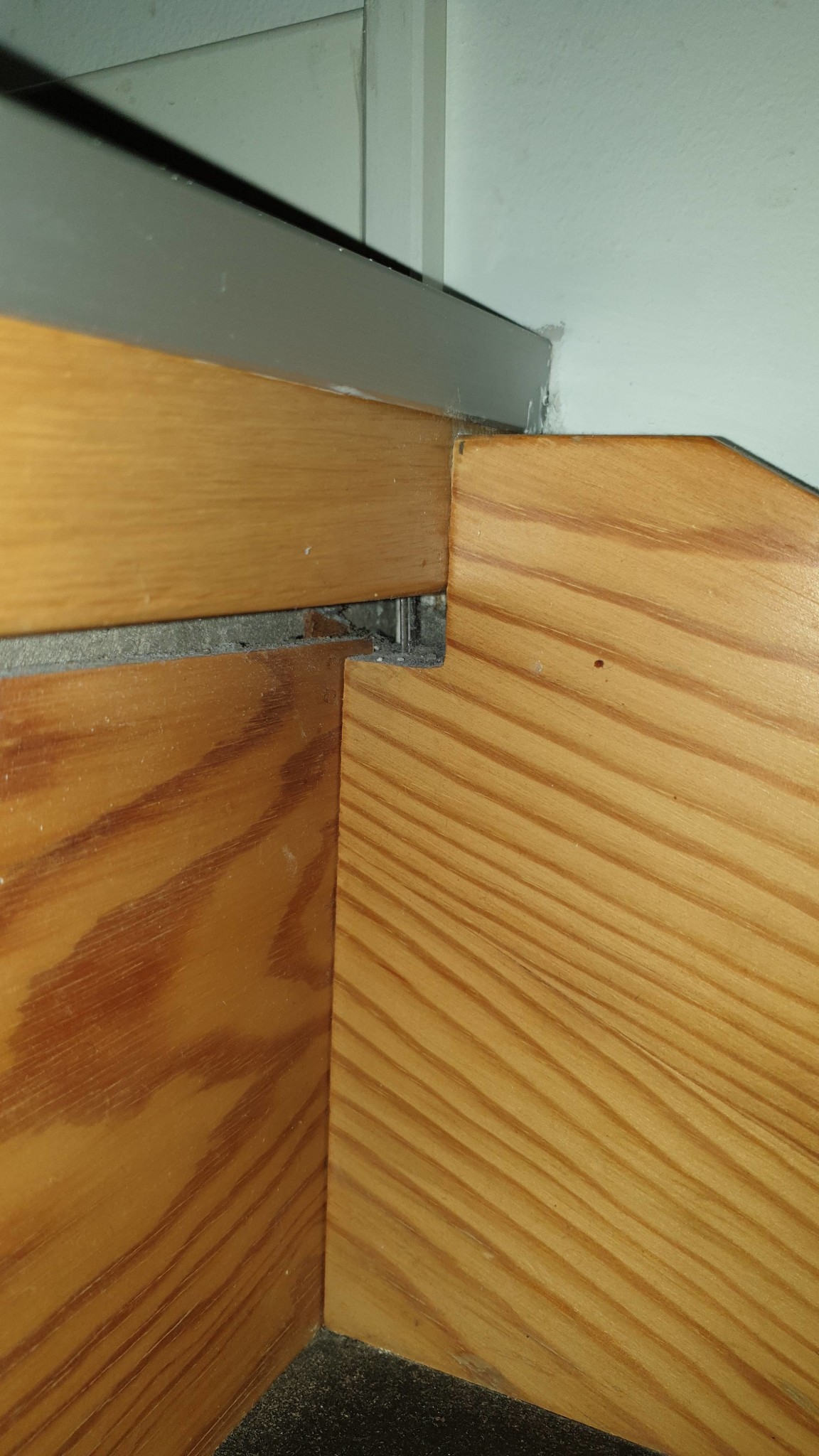
It depends on the dimensions of the treads. It can be a child protection strip or a reinforcement. If it is a child protection strip, it should be placed at a distance. Stairs without risers are sensitive. The best thing is to first rule out the dimensions of the treads. Then you can consider other causes. What are the dimensions of the treads? Is it solid wood?
The steps measure 285x40x850. No idea about the type of wood. Could it be the nose or the black top layer rubbing against the stringer?J justusandersson said:It depends on the dimensions of the treads. It could be a child protection list or it could be reinforcement. If it is a child protection list, it should have a spacer. Stairs without risers are sensitive. The best thing is to first rule out the dimensions of the treads. Then you can consider other causes. What are the dimensions of the treads? Is it solid wood?
Construction veteran
· 2 787 posts
Everything that moves can creak; the more you stiffen things up, the fewer movements you have that can cause noise.
Regardless of what we call the strip under the step, if you glue and screw it to the step, the movement is reduced.
It may not silence everything, but it will certainly get better.
Regardless of what we call the strip under the step, if you glue and screw it to the step, the movement is reduced.
It may not silence everything, but it will certainly get better.
The step dimensions are completely adequate. A 100 kg person causes a deflection of 0.75 mm which is perfectly acceptable. The problems likely lie in the attachment of the steps.
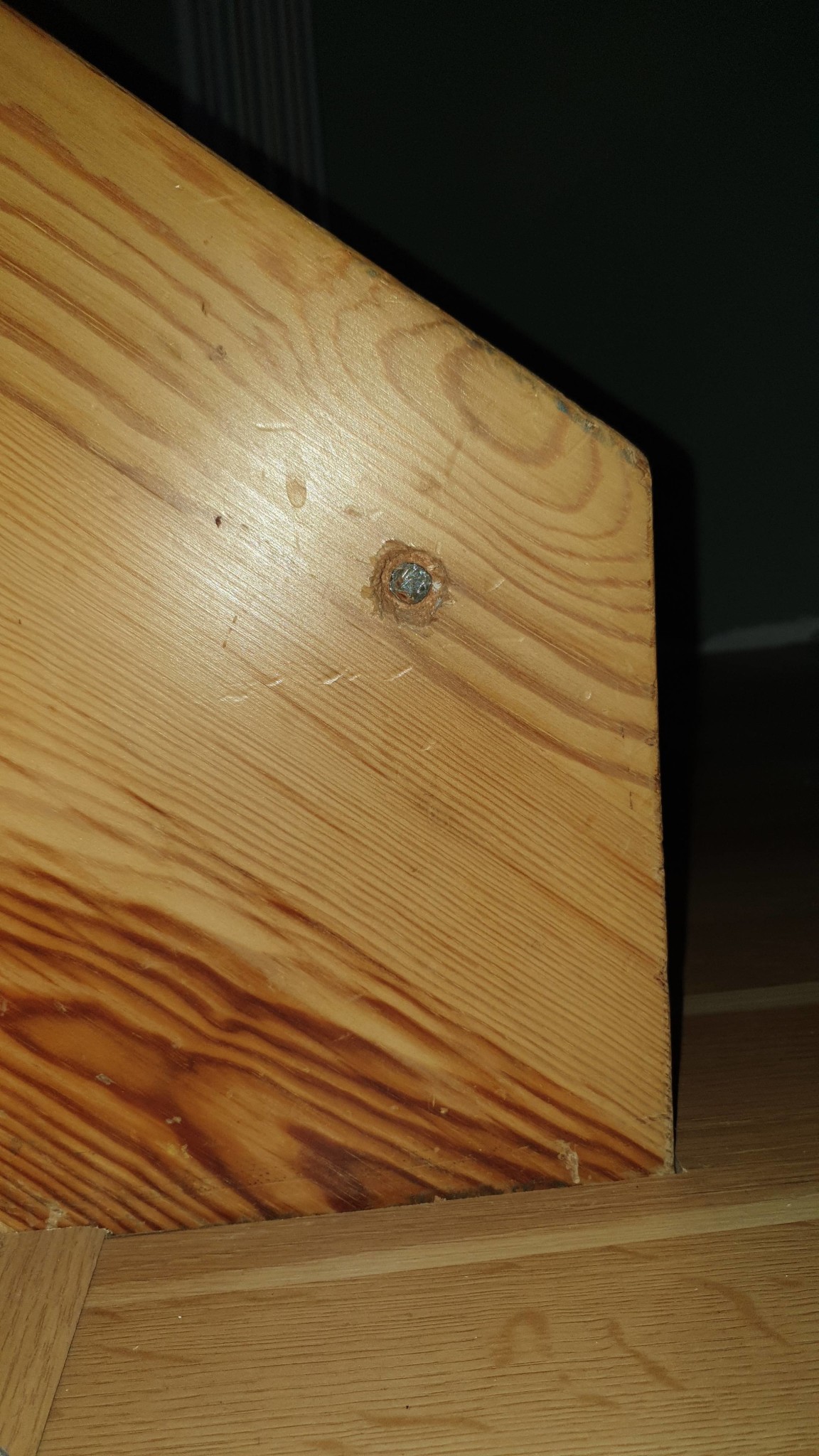
My knife is the culprit for the screw head. Attaching the stringer will have to be done by someone more experienced. There's only drywall on that side, and a few studs of course.Immobil said:
All of them creak, I can try screwing obliquely a bit, as long as the screw hides in the step. Now I've set up the steps according to the picture and find it hard to believe that a screw in the sides will silence the wood.