Hi! I have just bought a townhouse built in 1984. After signing, I hired an inspector for moisture measurement on the lower floor, the wall against the soil mass. It is a clad basement wall and otherwise a slab on grade.

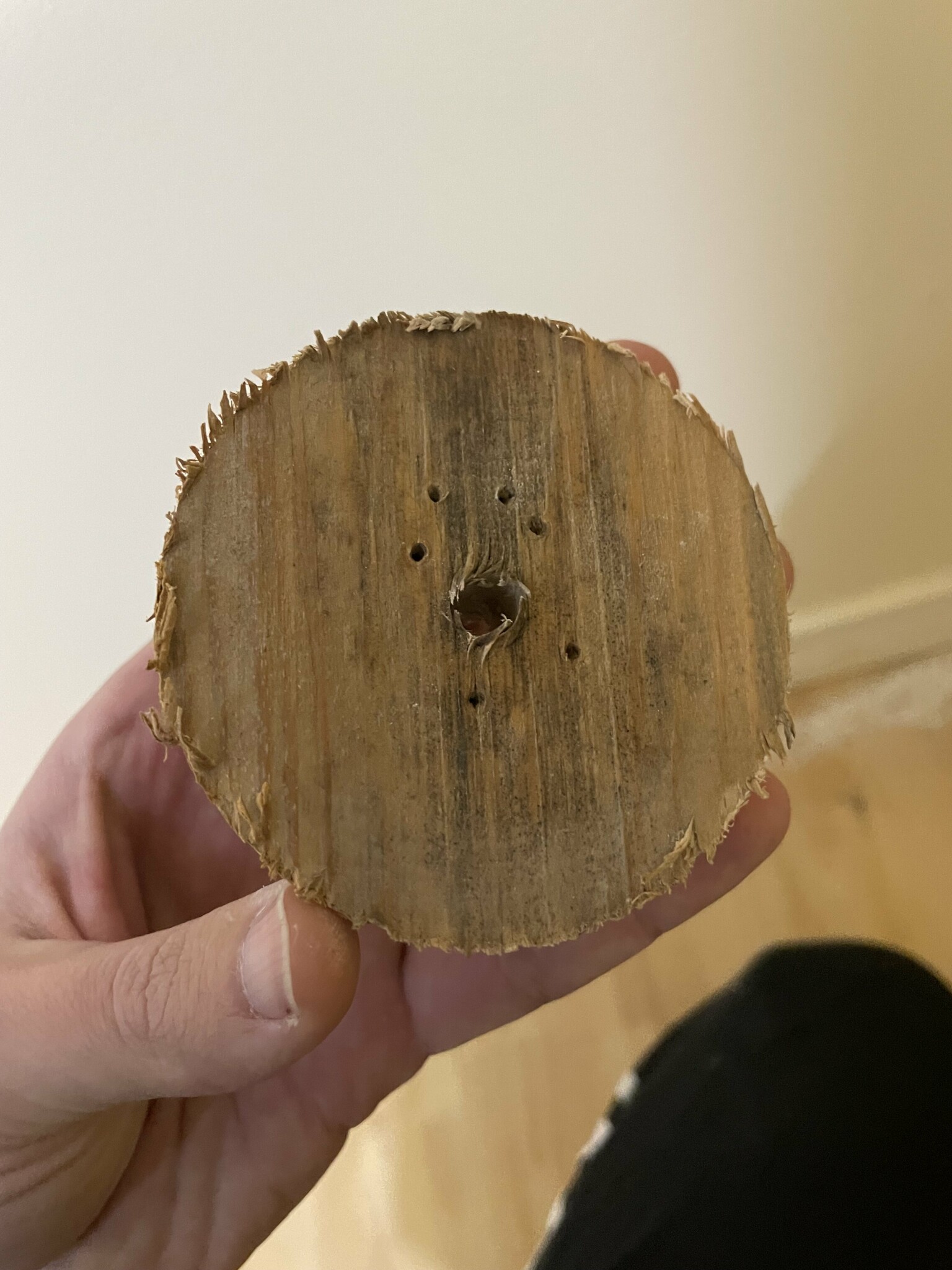
In the clad wall against the concrete (only a total of 7m wall against the soil mass), a moisture content of 19.9% was measured in some form of 50-board that was behind the drywall. Further into the room about 2 meters, we did a measurement against the sill, showed only 11.8.

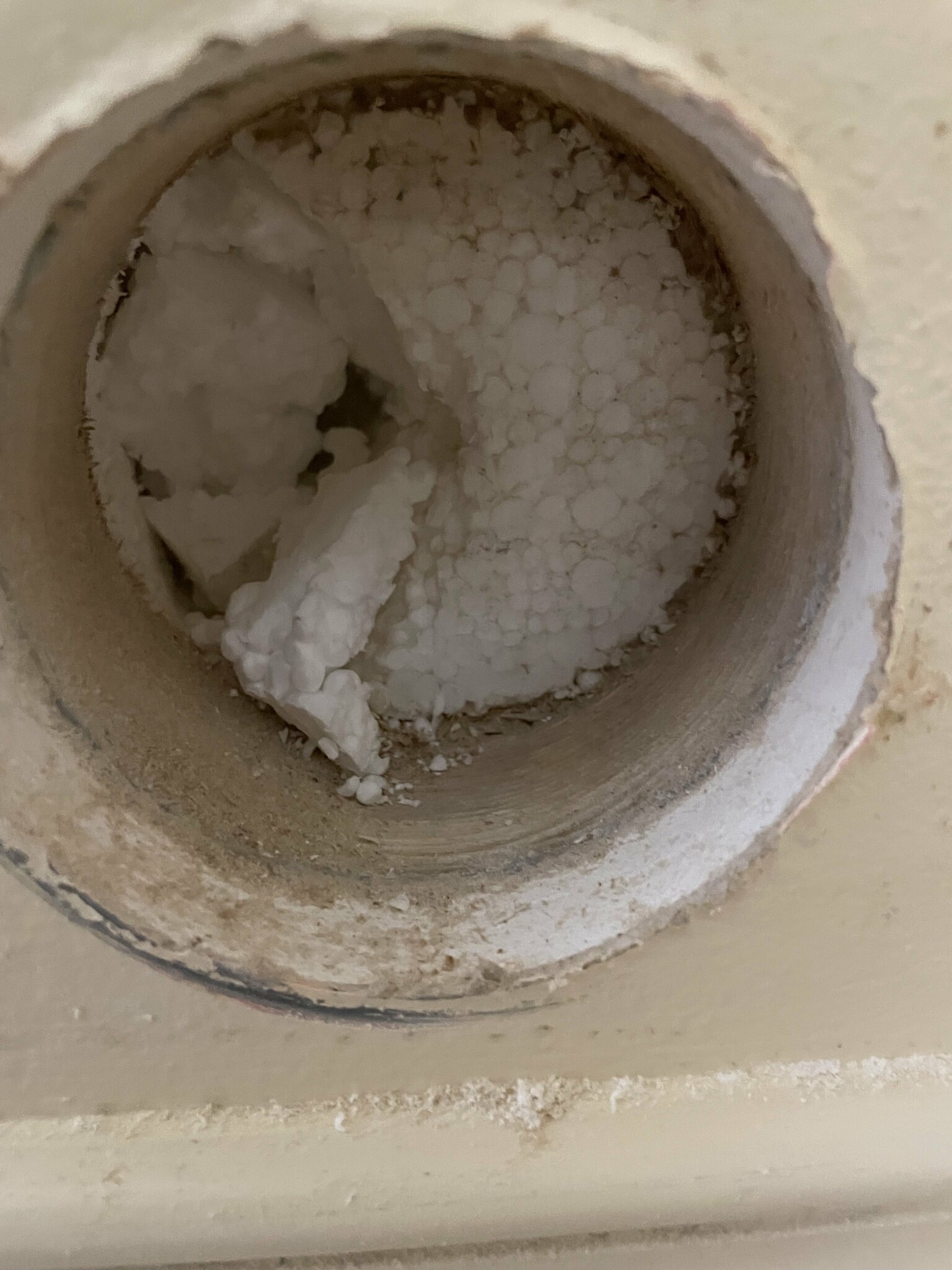
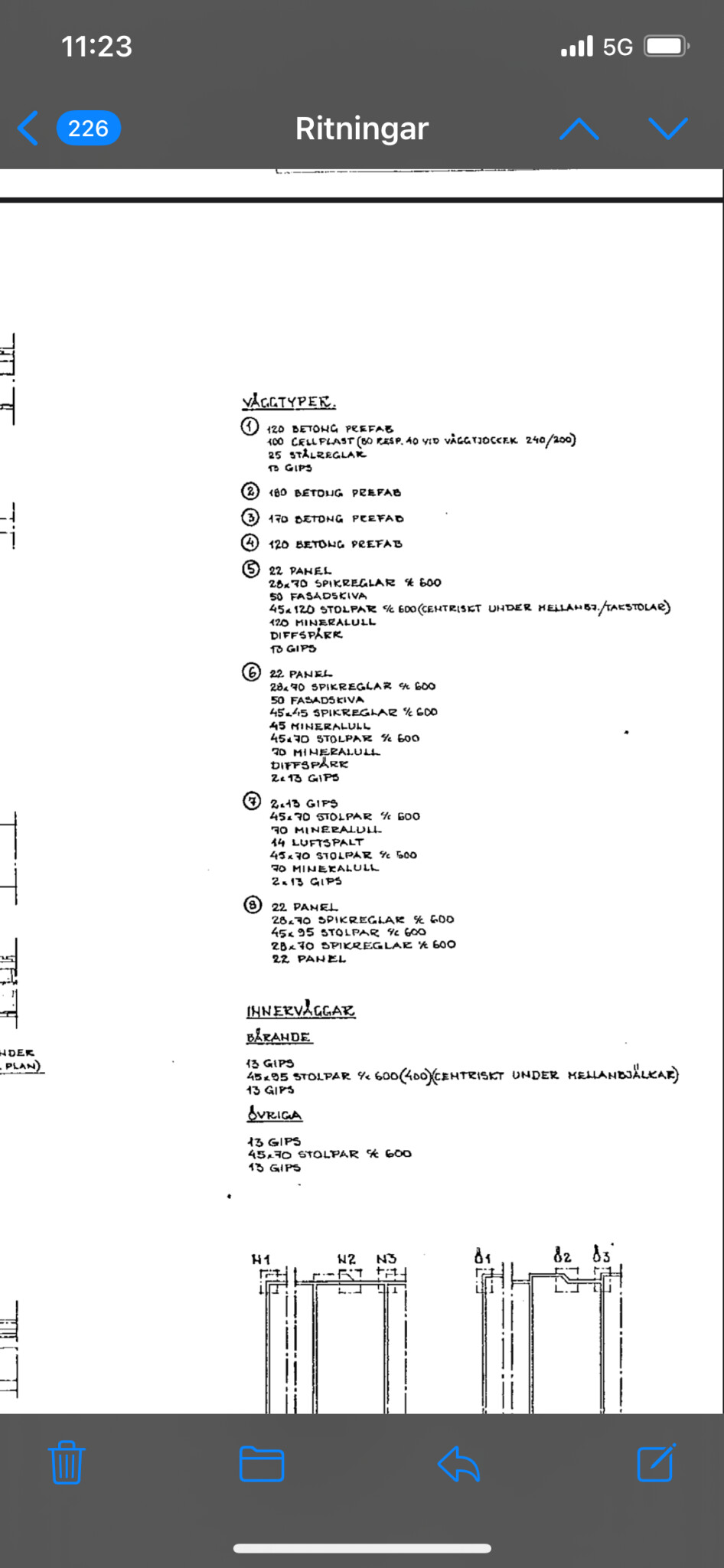
I have received construction drawings but can't make sense of it. According to the picture, it's drywall, plastic, 50-board, and then styrofoam? I don't see that setup under wall types. Note that it was drilled at the very bottom in one corner.

Drainage is not done. Otherwise, no remarks, stone slabs outside, slope nicely downwards, no water pooling. Nice gutters and downpipes. What action is recommended?
 
  • Close-up view of a drilled hole in a wall showing exposed polystyrene insulation material behind plaster, related to moisture measurement concerns.
  • A hand holding a round piece of wood with drilled holes, showing the wood's grain and texture.
  • Moisture meter reading 19.7% next to a drilled hole in a basement wall; shows elevated humidity in the structure.
  • Blueprint showing wall types, including prefabricated concrete, panel with studs, fiberboards, and gypsum, related to moisture issues in a 1984 row house.
Farstatjej90
It is quite expected that it is humid there, right? It corresponds to a basement. What problems has the humidity caused since 1984 then? So what, apart from the value on the meter, are you supposed to address?🤔
The simplest answer is to tear out what is damp.
 
  • Like
Dilato
  • Laddar…
Click here to reply
Vi vill skicka notiser för ämnen du bevakar och händelser som berör dig.