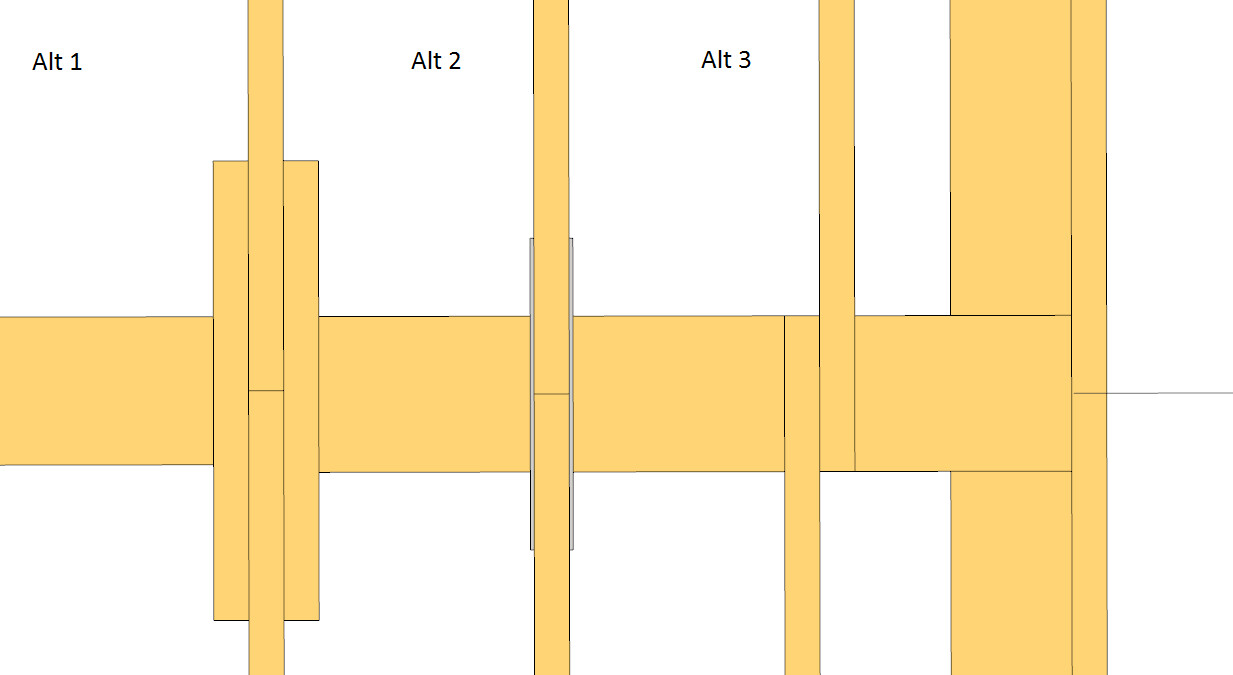
I know that there are similar threads on the forum already, but after reading them, I still can't figure out which option is best or good enough. I'll show my example and some suggestions I've found.
I am going to build a ground floor structure for a house in loose timber. I have previously built a similar house once and then overlapped the floor joists over the support beams and nailed generously. This time I'm considering whether I can butt them edge to edge over the support beams and use nail plates/scrap pieces on the sides. This is to ease the installation of the chipboard flooring and to avoid a lot of scrap pieces.
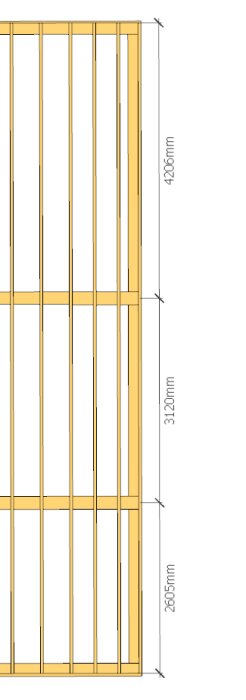
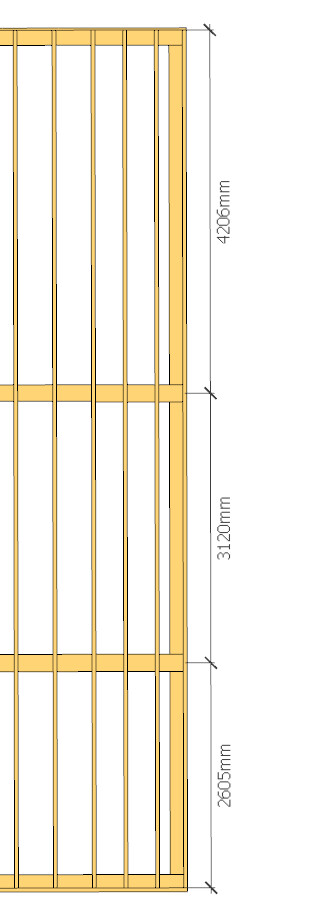
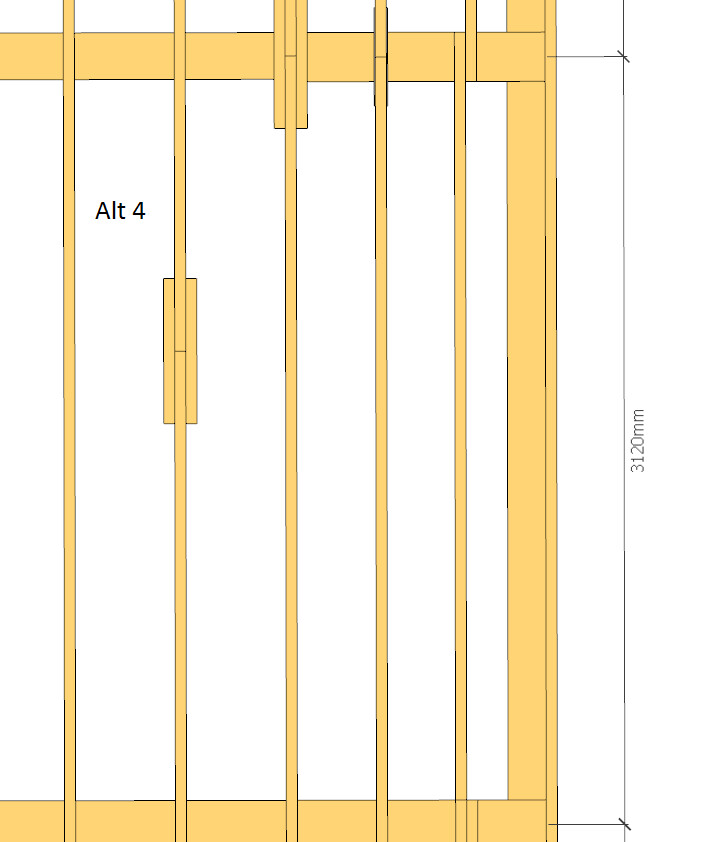
This is what the floor joist structure will look like.
For those wondering why the support beams are not evenly distributed, I can inform you that it will be a 1.5-story house, and I need two load-bearing interior walls. I plan to place the support beams directly under these two load-bearing interior walls.
Which option is best or good enough in my case?
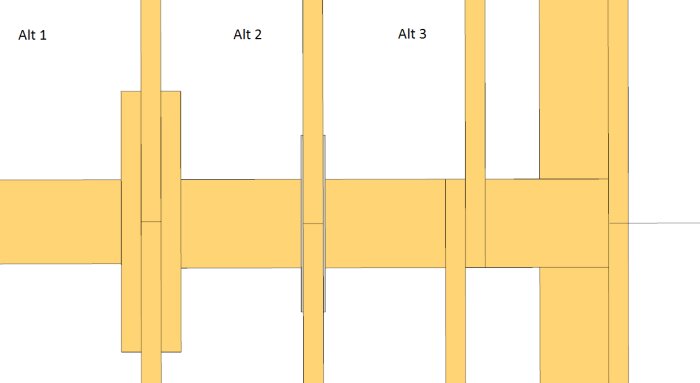
Option 1: Butt edges in the middle of the support beam with scrap pieces on each side.
Option 2: Butt edges in the middle of the support beam with nail plates on each side.
Option 3: As I did before, overlap over the support beam with offset joists.
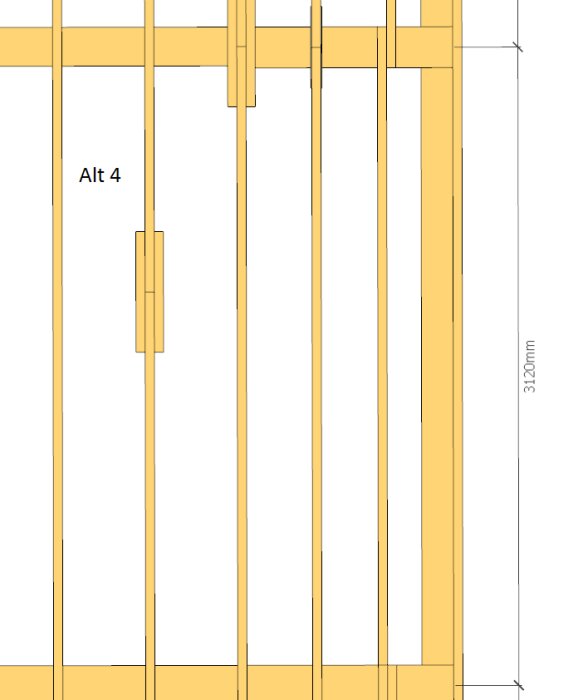
I have also considered another option that has been discussed, where it is claimed to be better from a structural strength perspective not to have the joint over the support beam, but between the support beams. Then I could start with two joists that are joined somewhere over the central section. Is it a viable option not to join over a support beam? Which method of joining is best when joining in the middle of a section, and where is it best to join, in the middle of the section or closer to one of the support beams?
Option 4: Join somewhere over the central section.
Made a floor structure with a 405cm and a 105cm piece, albeit with pressed sheets, then it seems that it doesn't matter where the joint is. Not sure if it's the same with screwed sheets. Have also heard that it's stronger not to join over a support.
Order lightweight beams like Masonite beams. This way, you get complete beams in the right length without joints. They are lighter compared to regular joists, and you can more easily increase the size to achieve better insulation. Otherwise, if you use overlapping joints, when you buy good quality flooring chipboards, they don't need to be jointed on the joist.
From the strength of materials, it is learned that beams should be spliced 1/4 to 1/3 of the span from the support. This is because the moment forces are low but the shear forces are high at that point. A nail plate is good at handling shear forces but not moment forces. Directly over the support, the shear forces are low but the moment forces are high, therefore it is less suitable to splice studs over the support.
Click here to reply
Vi vill skicka notiser för ämnen du bevakar och händelser som berör dig.