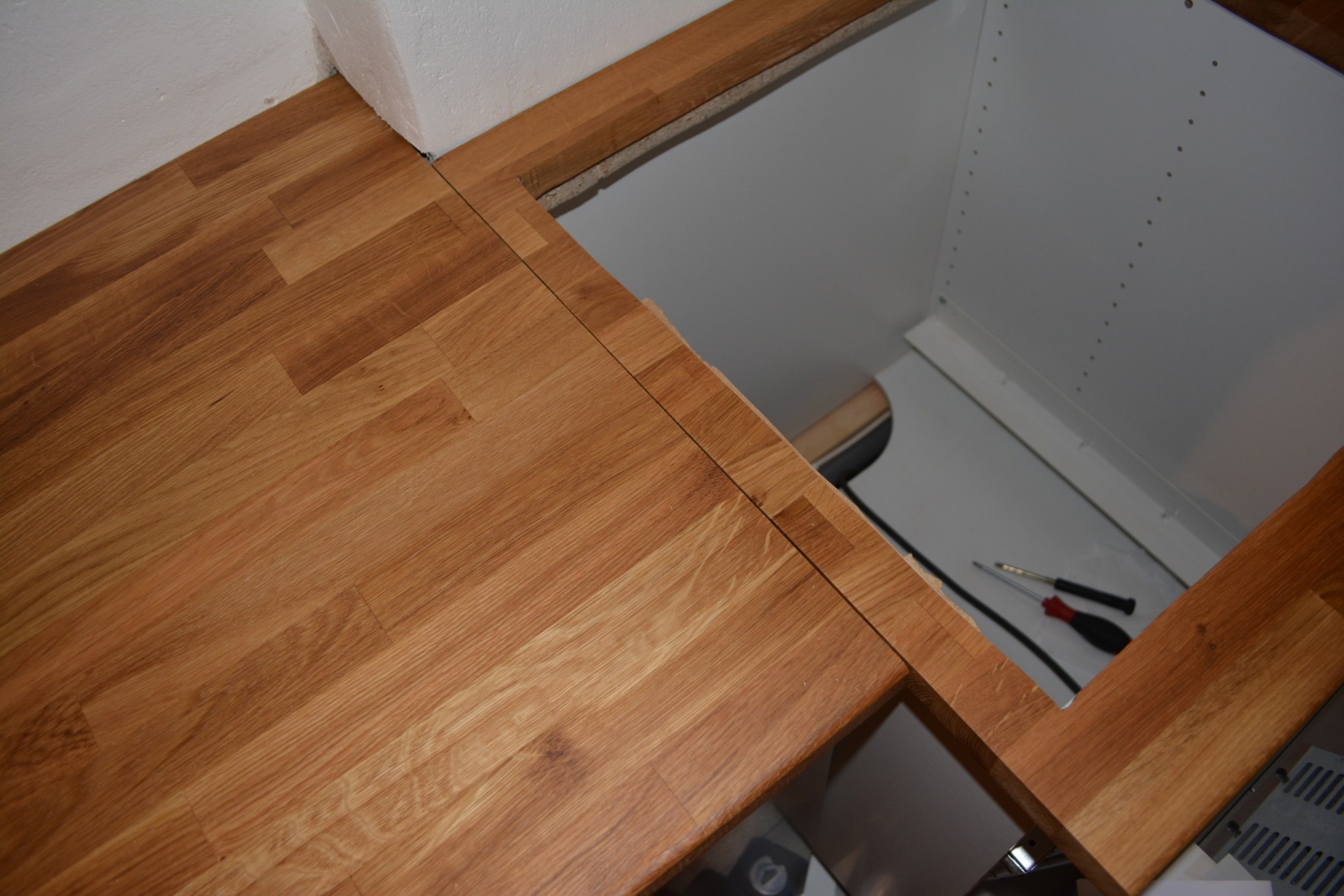
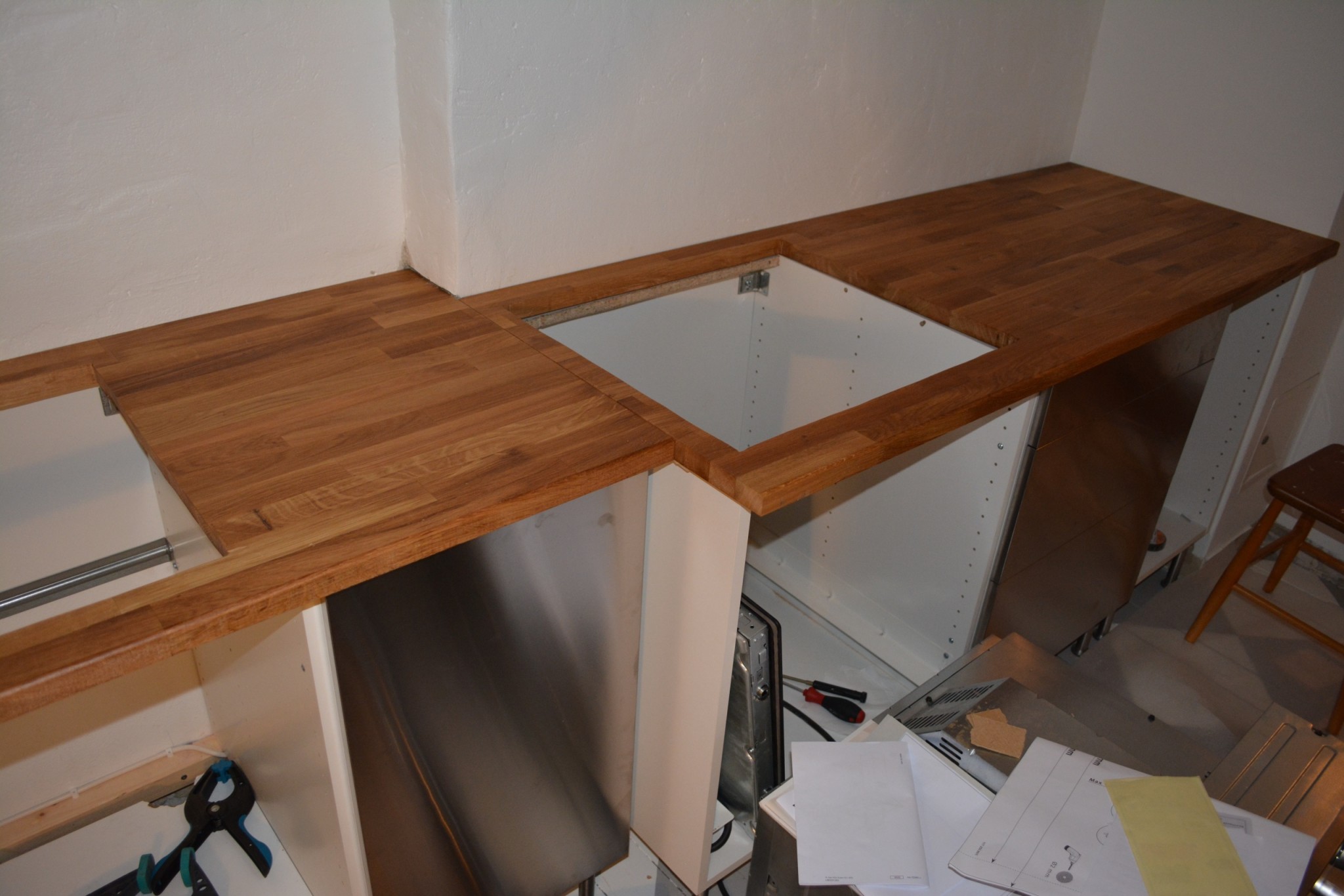
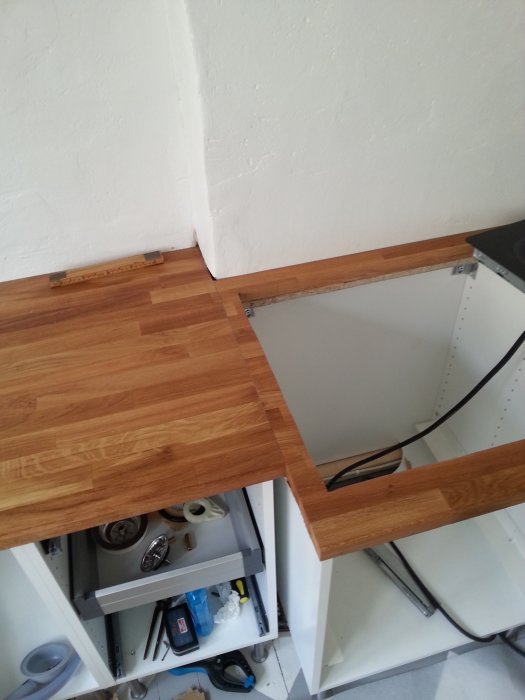
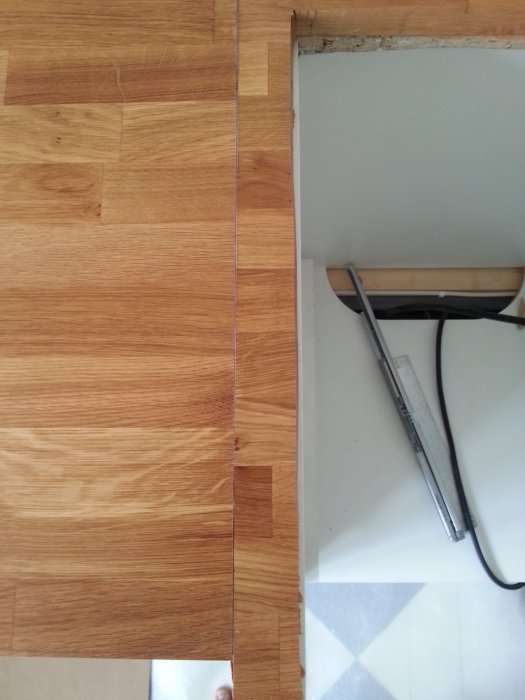
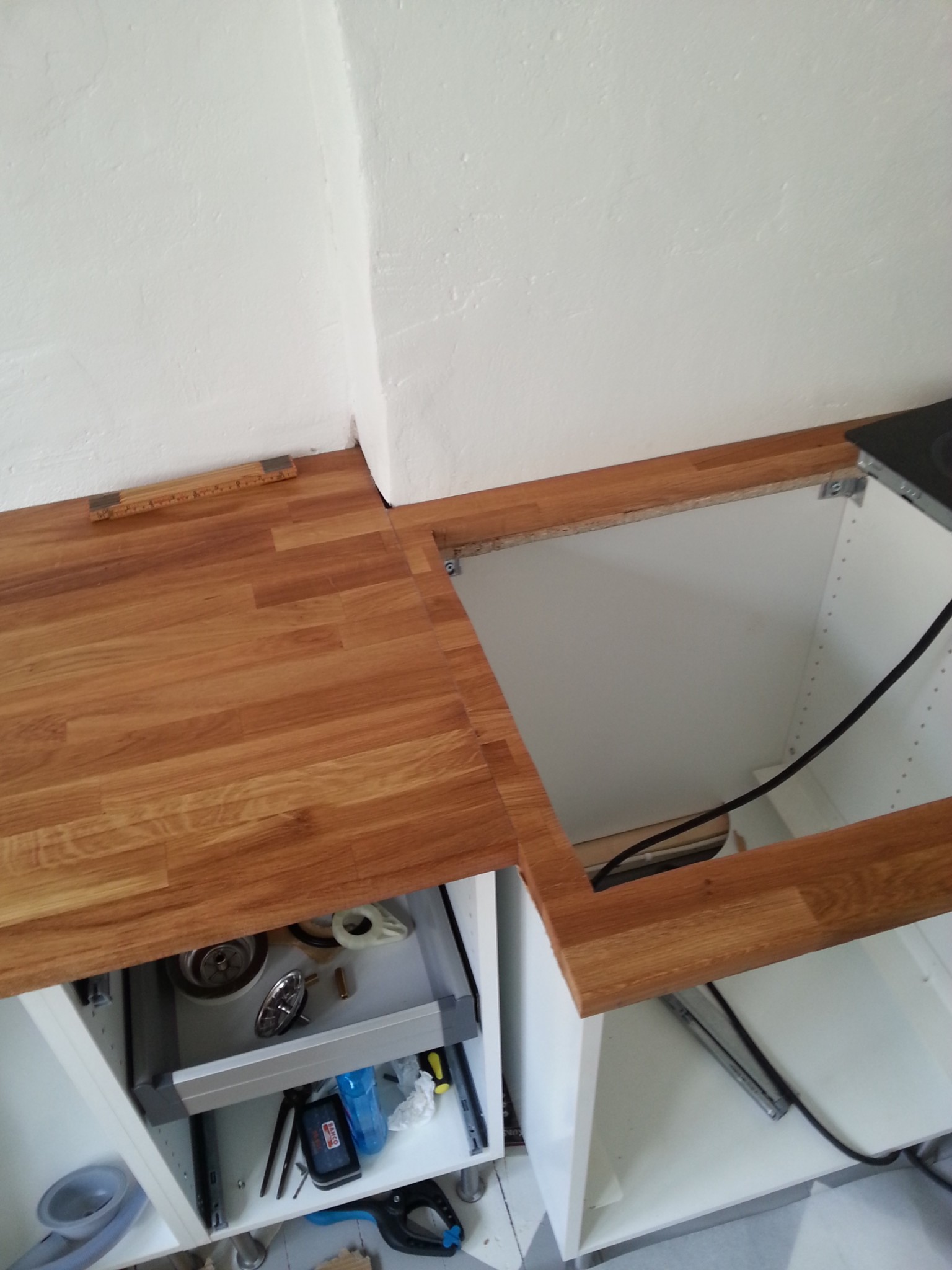
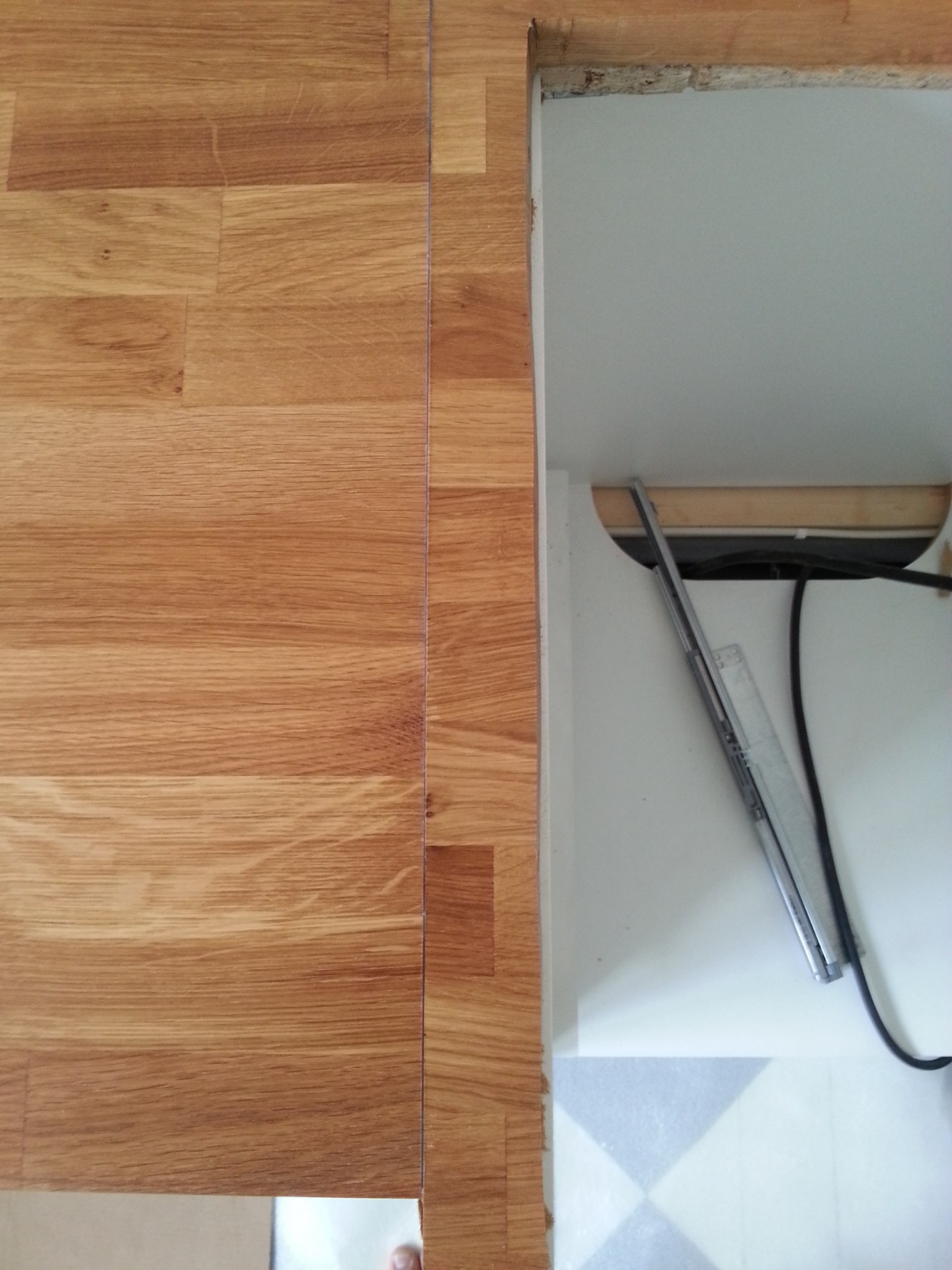
How to solve it in a good way, I wonder? Is a laminate cutter the way to go? Is there a good alternative? I would rather not have to wait until Monday to get it solved. Tips are welcome! /Best regards, Olof
Maybe one could drill and screw from the side into the hole that is cut out on one of the boards. However, there is worryingly little material left to the edge, so there is a risk that it might crack.
If you have a router, you can create slot joints with a rebate cutter and glue these with a dowel.
If you buy long clamps at the same time, you can squeeze the boards together. http://www.jula.se/sidfalsfras-3-2mm-186120
If you live near Hornbach or Bauhaus, I believe they have the fittings commonly used at home, but as lordi said, there's quite a bit of material left in one of the boards.
Yes; the fact that there's so little material left means I have to choose the "safest" good method. How many tracks can you get away with if you choose to kexa?
Would mill out on the "hole side" about half a cm below the top edge and all the way down. Then glue in a strip of birch plywood. Then it's just a matter of screwing it together.
I might as well follow up on the thread. I ended up using what I had at home, and I thought it turned out pretty well in the end. It certainly would have been better by milling and biscuit joining, but with varying wall depths and boards that have warped a bit, you can't really magic away the fact that there are indeed two boards. Anyway! I placed the boards at the same height, masked up to the edges, drilled 2 holes of 8mm each from the cutout by the stove into both boards, applied some wood glue in the holes and silicone along the depth, hammered in wood plugs so they were about 2cm into each board, and then put on 2 clamps from the sink cutout and stove cutout, and then applied silicone along the seam.
Last edited:
Click here to reply
Vi vill skicka notiser för ämnen du bevakar och händelser som berör dig.