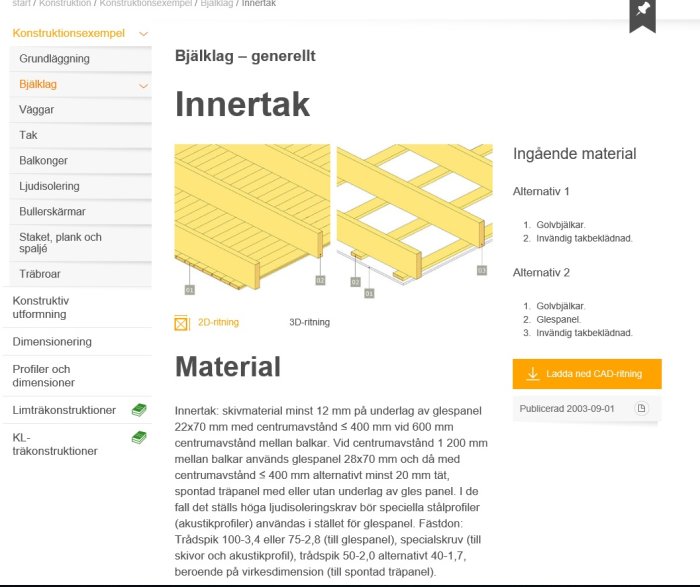
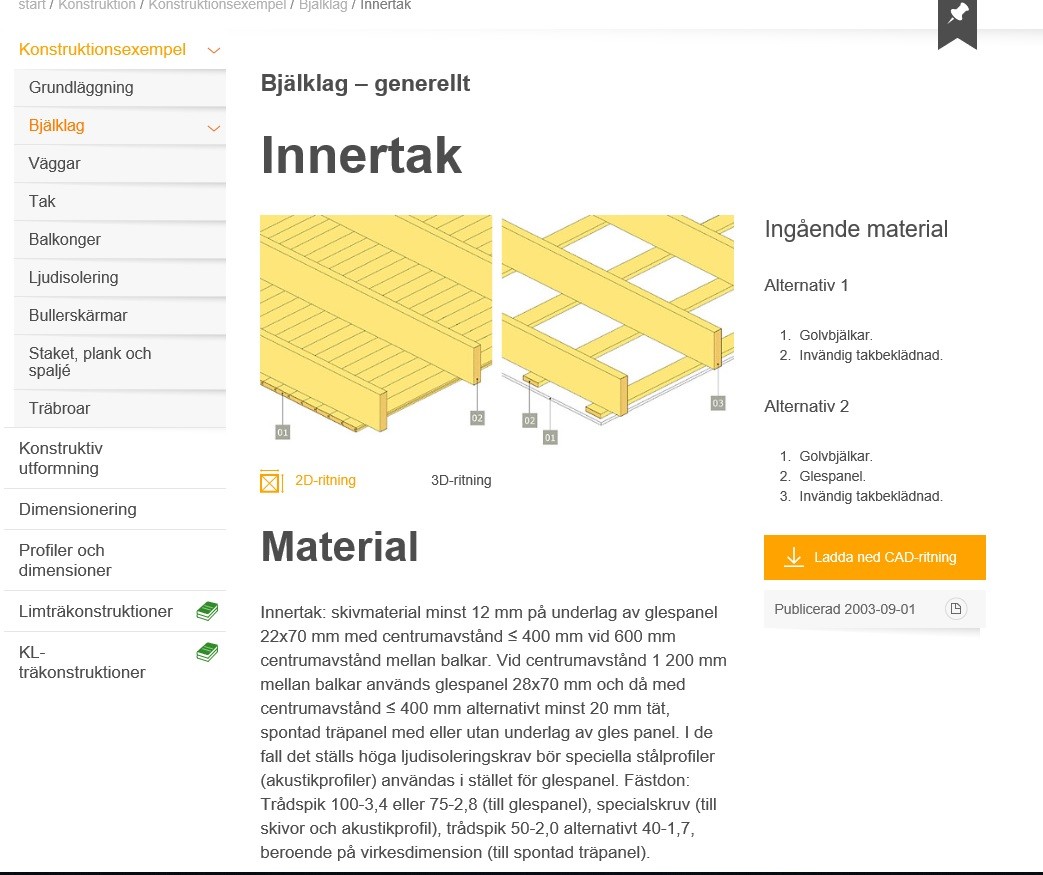
Sitting and reading the wood guide, where they recommend 22 x 70 if it's cc60 between beams, then the spacing is cc40.
I have installed a ceiling sometime with 22 x 70 but can't remember if it was in the kitchen or upstairs
Both look good. It was probably the kitchen as I wanted 100 cabinets and wanted to save some space against the ceiling.
Then the VP pipes shouldn't be a problem.
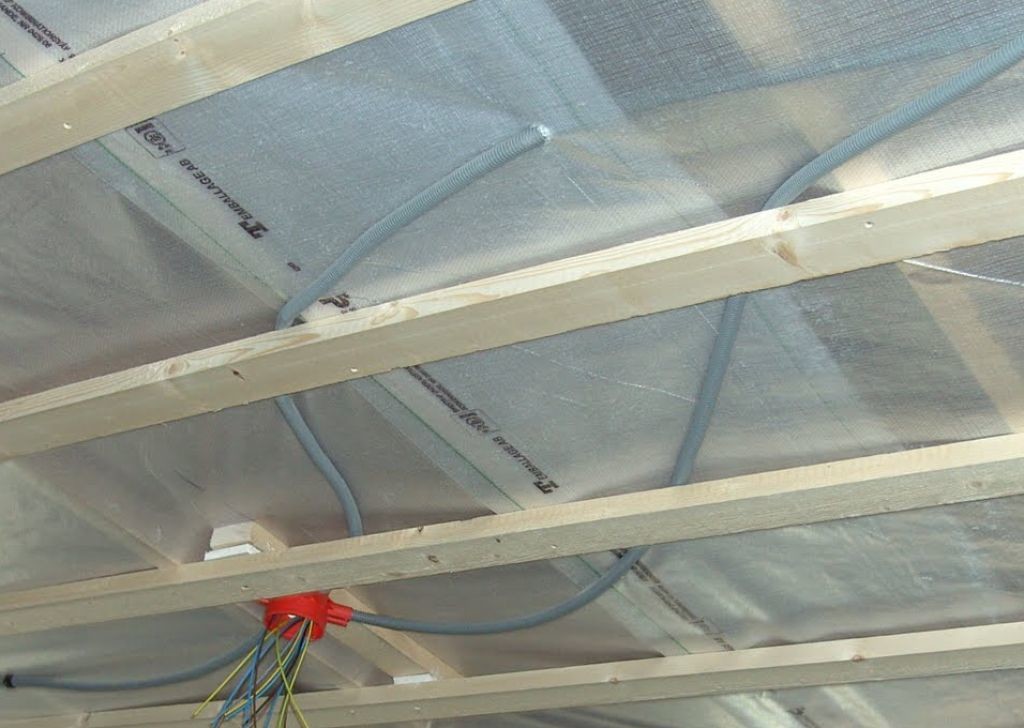
You just thread them forward, under rafters and over batten. You might have to move a clamp (+ pipe) at some place if it happens to be exactly where a batten should be.
In the worst case, you might need to pull out the conductors, cut the pipe, and splice in some extra pipe/flex hose, and then pull in new wires.
This is how it might look (here it's a flex hose, but the same principle)
Yes, then the VP pipes shouldn't be a problem.
You just thread them forward, under the rafters and over the battens. You might have to move some clips (+ pipes) if they're exactly where a batten needs to go.
In the worst case, you may need to pull out the wires, cut the pipe, and splice in some extra pipe/flex tube, then pull in new wires.
This is how it might look (here it's flex tube, but the same principle)
[image]
I did that in the kitchen, and it involved quite a bit of moving. This is the bedroom, and there aren't that many VP pipes actually. Then I can batten as usual with 28x70 directly on the rafters and then I need something 16mm under the battens inside the wall, under the battens so that it comes at the correct height and screw into the header. There used to be raw boards that were 16mm before, but now they only make 17 and 20.
Hello
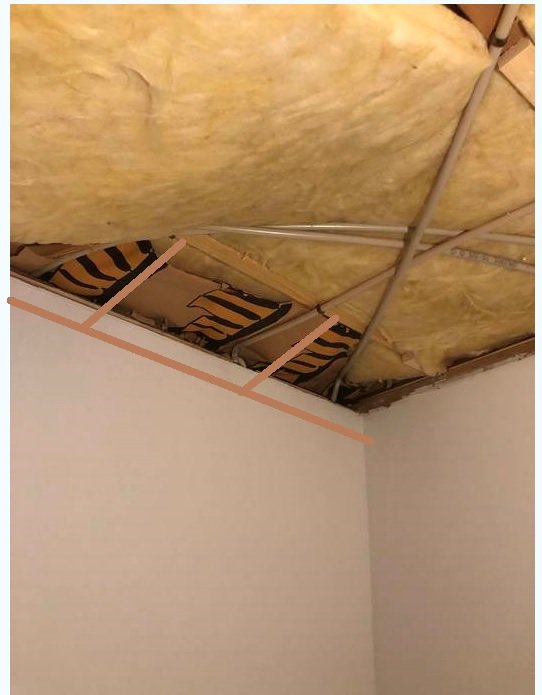
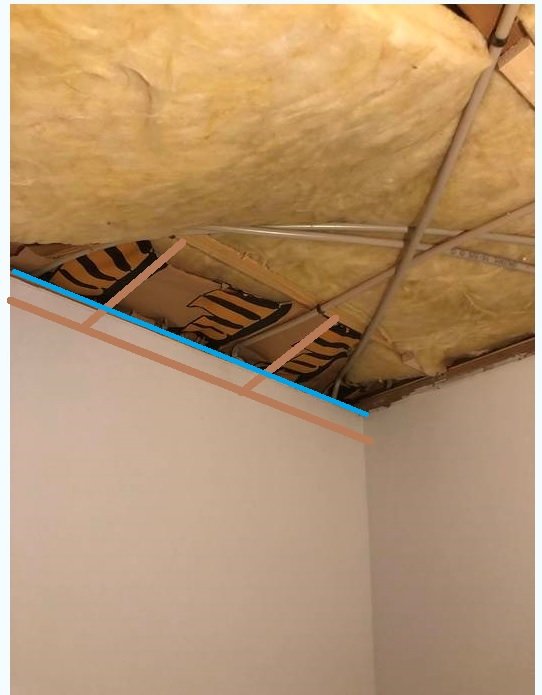
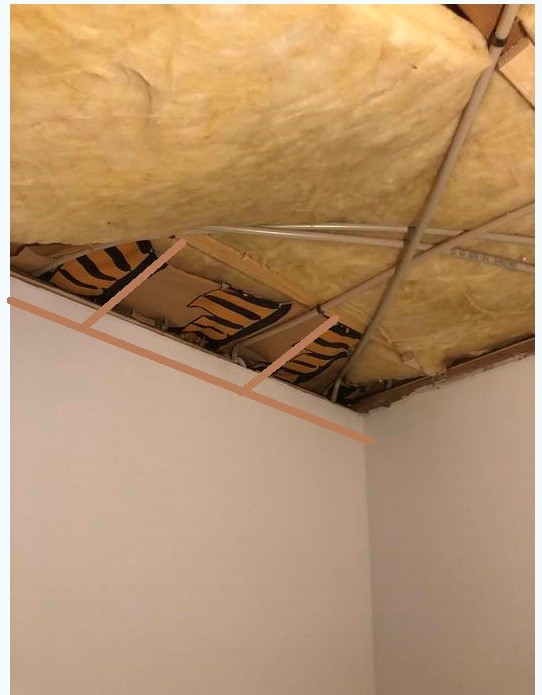
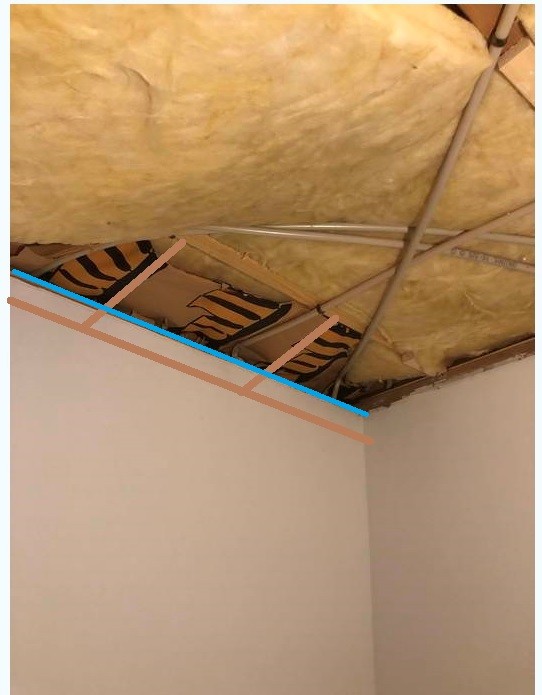
I wanted to inform you that it went to h*ll with screwing in the hammarbandet. There is a 22mm board that is nailed only on one side! The other side against the wall in the picture is loose! I could screw the board through the wall to stabilize it, but it's hardly flat. There is a difference of up to half a cm in some places. I don't want to attach the glesen on one side either, as it makes it difficult to level the ceiling when I use a laser. It becomes impractical to get through a 30 cm gap and adjust the glesen above the hammarbandet.
Therefore, I have come up with new thoughts. I was convinced by Mikael_L to use 28x70 gles and screw directly to the rafters. I will move the vp pipes here and there so they don't get in the way. Then I thought of adding cross braces between the rafter visible in the picture and the rafter that is inside the wall to the left of the hammarbandet. It is about 30 cm inside the wall. Since it is difficult to access the rafter, I thought of using joist hangers. Now the question comes: I was thinking of placing 45x45 as cross braces, 45 mm higher than the rafter's lowest level, then screwing on a 45x45 in line with the rafter by the wall to attach the glesen ends to it, picture 2 marked in blue. What do you think about that? Regarding cross braces, is cc 120 enough or should it be exactly cc60?
Anyway, another simple way when there are no studs is to use an angle plate 50x50 that is screwed to the wall (upside-down L). Then just screw the slats into the trusses and the end of the slats into the plate.
The small part of the plate that might become visible when the ceiling is in place is hidden by the ceiling trim.
I'm joining in! Does it feel a bit advanced with the angle when it is about 15cm from the end of the sparse panel to the first rafter you can attach it to? Skip or screw it in?
Click here to reply
Vi vill skicka notiser för ämnen du bevakar och händelser som berör dig.


Mikael_L said:
Yes, then the VP pipes shouldn't be a problem.