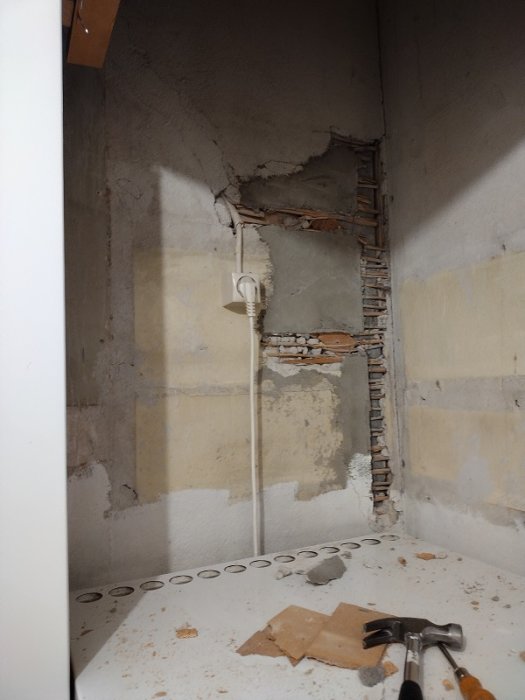
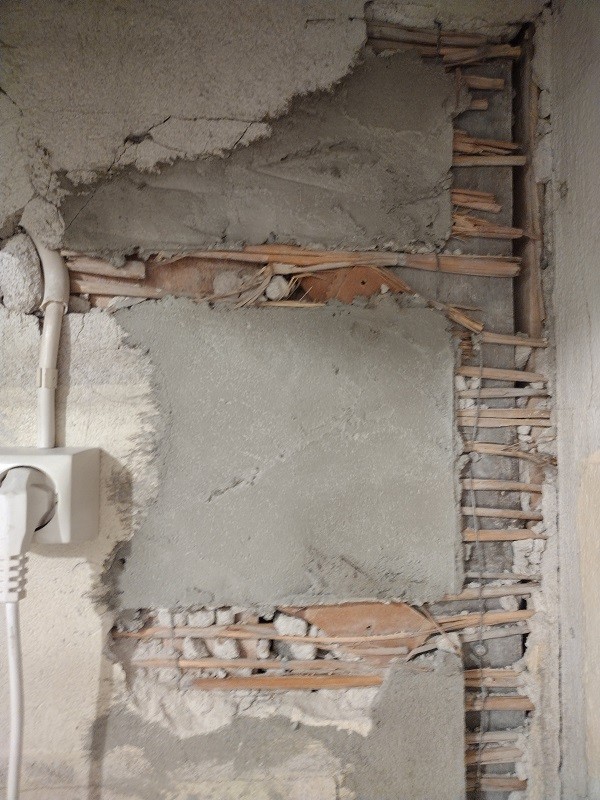
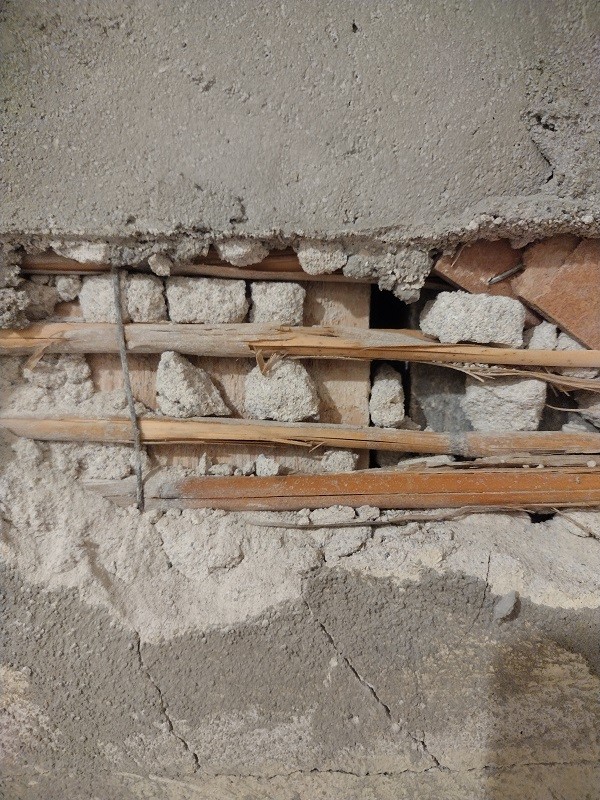
I have replaced the fridge-freezer in the kitchen. Here's how it looked after we removed the overhead cabinet.

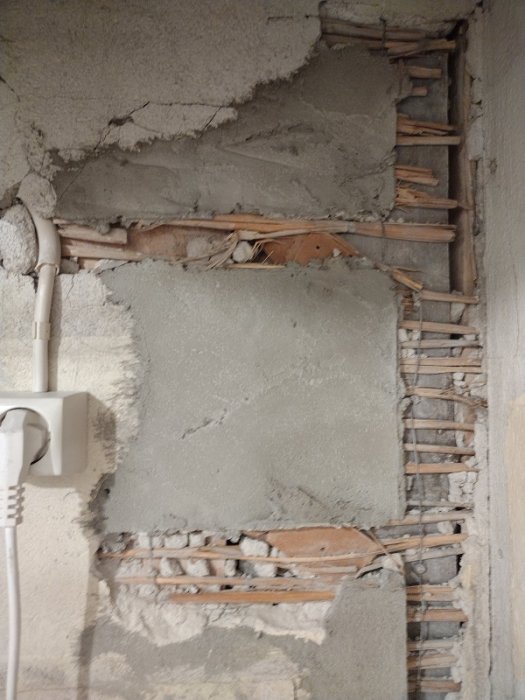
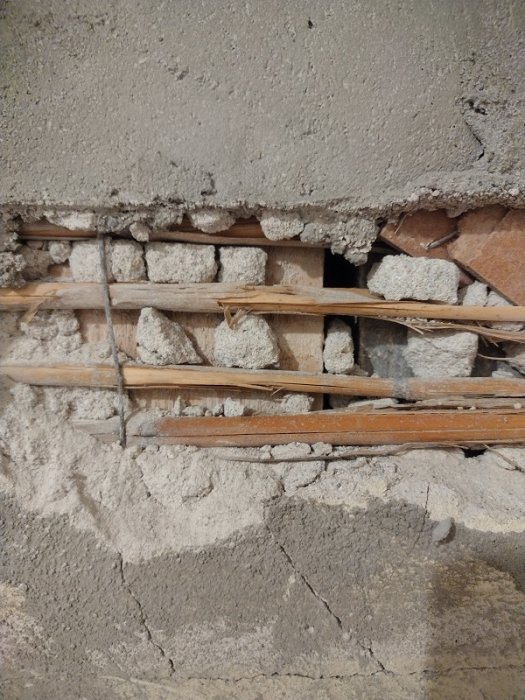
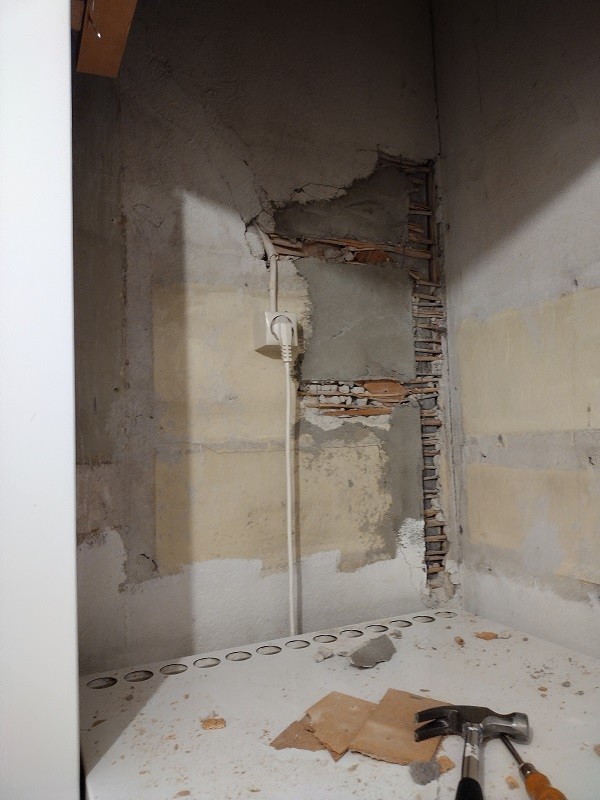
A kitchen wall with exposed plaster and lath, showing removed upper cabinet area, electric outlet, debris on surface, and tools including a hammer. Exposed lath and plaster wall in a kitchen after removing an overhead cabinet, with visible wiring and an electrical outlet on the left side. Exposed plaster wall with visible wooden lath and rough brickwork after removing an overhead cabinet in a kitchen renovation project.

My plan is as follows:

1. Buy plaster.
2. Mix the plaster with water in a bucket.
3. Moisten the wall a little with a wet sponge.
4. Apply with a putty knife.

Questions:
1. Is this an OK plan?
2. Which plaster can you recommend? Some say it's only for small holes and not to be used over wood. Here I think there are wooden walls.
 
Unscrew the electrical outlet first.
You'll have easier access with the wide putty knife and reduce the risk of getting damp mortar in it.
It might be a good idea to remove the fuse as well...
 
I have good experience with Bostik filler v28 but probably any gypsum mortar will work.
 
  • Like
Rofaj
  • Laddar…
C
Sounds like an excellent plan. I would use regular plaster mix/render that you can buy cheaply in a bag at the building supplies store.
 
I like casco wallfiller, but there is probably no significant difference between different brands, plaster is not a unique product directly.
When repairing such deep damages, it's easiest to do it in two rounds and let it dry in between.
 
  • Like
Rofaj
  • Laddar…
Use a spray bottle to moisten the vännen.
 
  • Like
Rofaj
  • Laddar…
If I moisturize first and then apply putty and let it dry, should I also moisten the putty a little for the next round of putty?
 
Click here to reply
Vi vill skicka notiser för ämnen du bevakar och händelser som berör dig.