
13,437 views ·
4 replies
13k views
4 replies
Soundproofing for the stairs? Like a drum when people walk.
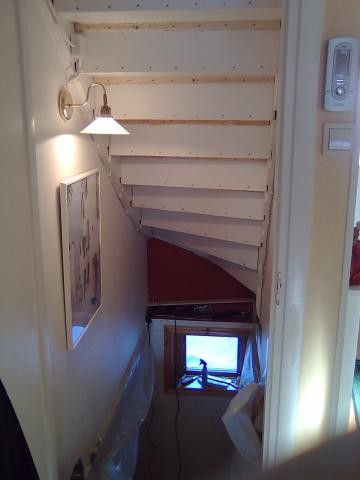
Hi! I have a creaky staircase at home which I live under. I live in the basement, and to go down, you walk under the staircase to the upper floor. The staircase is L-shaped and turns at the bottom. It's an enclosed staircase that is accessible from beneath. I've eliminated almost all the creaking by gluing and screwing strips between the tread and riser.
The problem now is that it sounds like a drum when people walk on it. I have considered enclosing it and squeezing in insulation or felt, but since it turns at the bottom, I can't figure out how to fit a panel. I can't build too much because I need to be able to walk under it, and the underside is visible. How can I soundproof it more?
Glue on a felt? Like this http://www.biltema.se/products/product.asp?iSecId=1341&iItemId=148056
How do I make it look nice afterward?
Suggestions?
The problem now is that it sounds like a drum when people walk on it. I have considered enclosing it and squeezing in insulation or felt, but since it turns at the bottom, I can't figure out how to fit a panel. I can't build too much because I need to be able to walk under it, and the underside is visible. How can I soundproof it more?
Glue on a felt? Like this http://www.biltema.se/products/product.asp?iSecId=1341&iItemId=148056
How do I make it look nice afterward?
Suggestions?

Unfortunately, I think it will only help temporarily. You should never glue a staircase! Instead, you should have done the following:Andreas083 said:
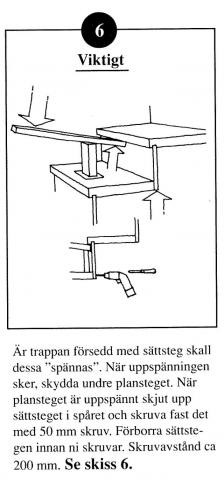
- Loosen the risers
- Then tighten the treads, see attached sketch
- Push the riser up as high as you can
- Screw it to the tread
To eliminate the drumming sound, you can fill the underside with insulation, such as Isover. It's a bit tricky to hold it in place. If you stretch some threads using a stapler, it usually works. Then cover it with gypsum, masonite, or paneling.
If you want to use Biltema's products, I think this one is best:
http://www.biltema.se/products/product.asp?iSecId=1341&iItemId=83277
I followed the instructions here: http://www.dinbyggare.se/artiklar/artikel.asp?docid=15
method moldings + screwed the riser to the lower tread.
It's really good right now anyway. Became silent.
However, I don't understand the difference between supporting on the molding or raising the riser. If I glue and screw the molding, the tread and riser will be joined by it. Why is it better to raise the riser?
method moldings + screwed the riser to the lower tread.
It's really good right now anyway. Became silent.
However, I don't understand the difference between supporting on the molding or raising the riser. If I glue and screw the molding, the tread and riser will be joined by it. Why is it better to raise the riser?
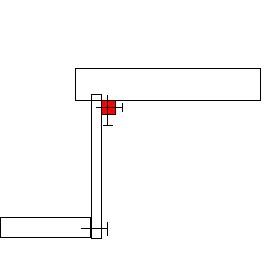
You get a much more stable attachment between the steps. Since the step is over-tensioned, it also affects the step below.
The type of solution shown in the link will not provide a lasting result. When the glue has dried and the nail starts to work loose, the stairs will creak again. OK, it may hold for a year at best.
As I mentioned in my previous post, glue is banned in stair contexts. The same goes for silicon and nails!
The type of solution shown in the link will not provide a lasting result. When the glue has dried and the nail starts to work loose, the stairs will creak again. OK, it may hold for a year at best.
As I mentioned in my previous post, glue is banned in stair contexts. The same goes for silicon and nails!
Click here to reply