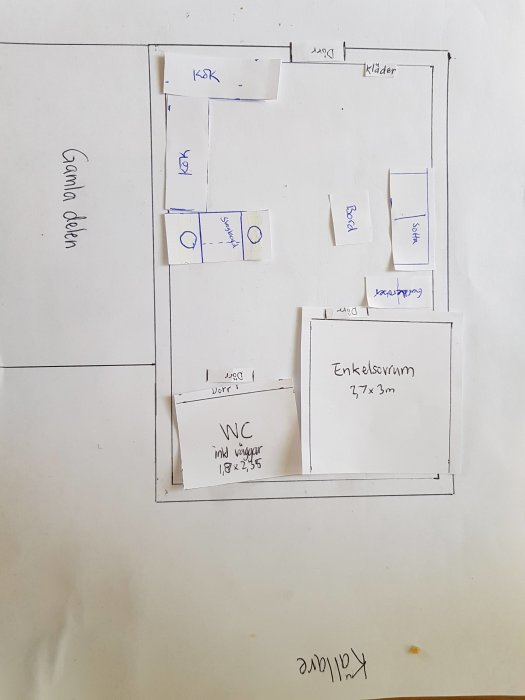
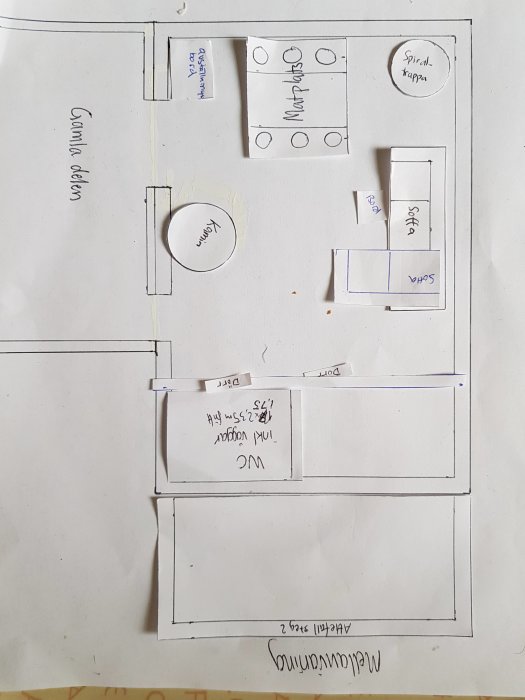
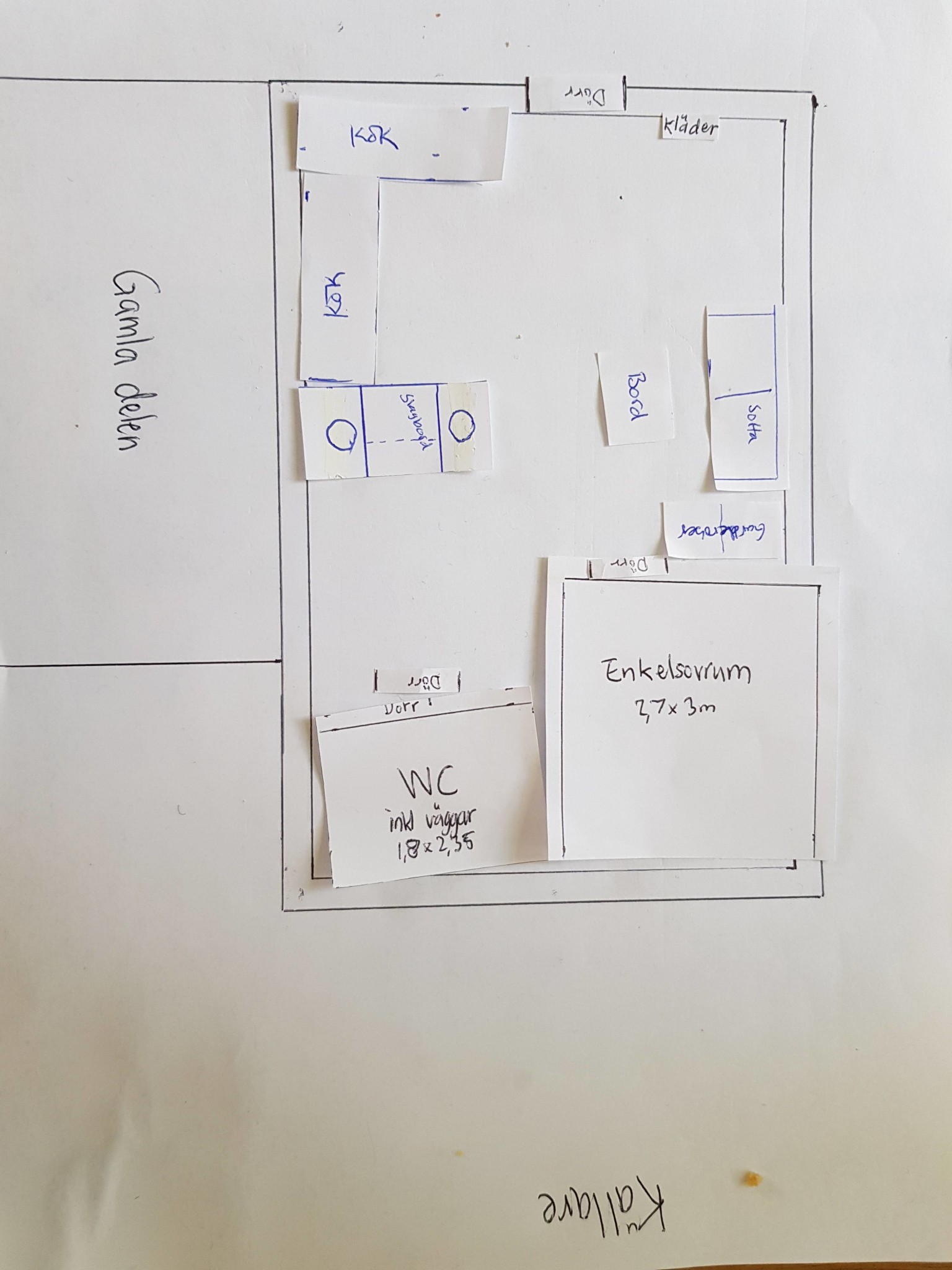
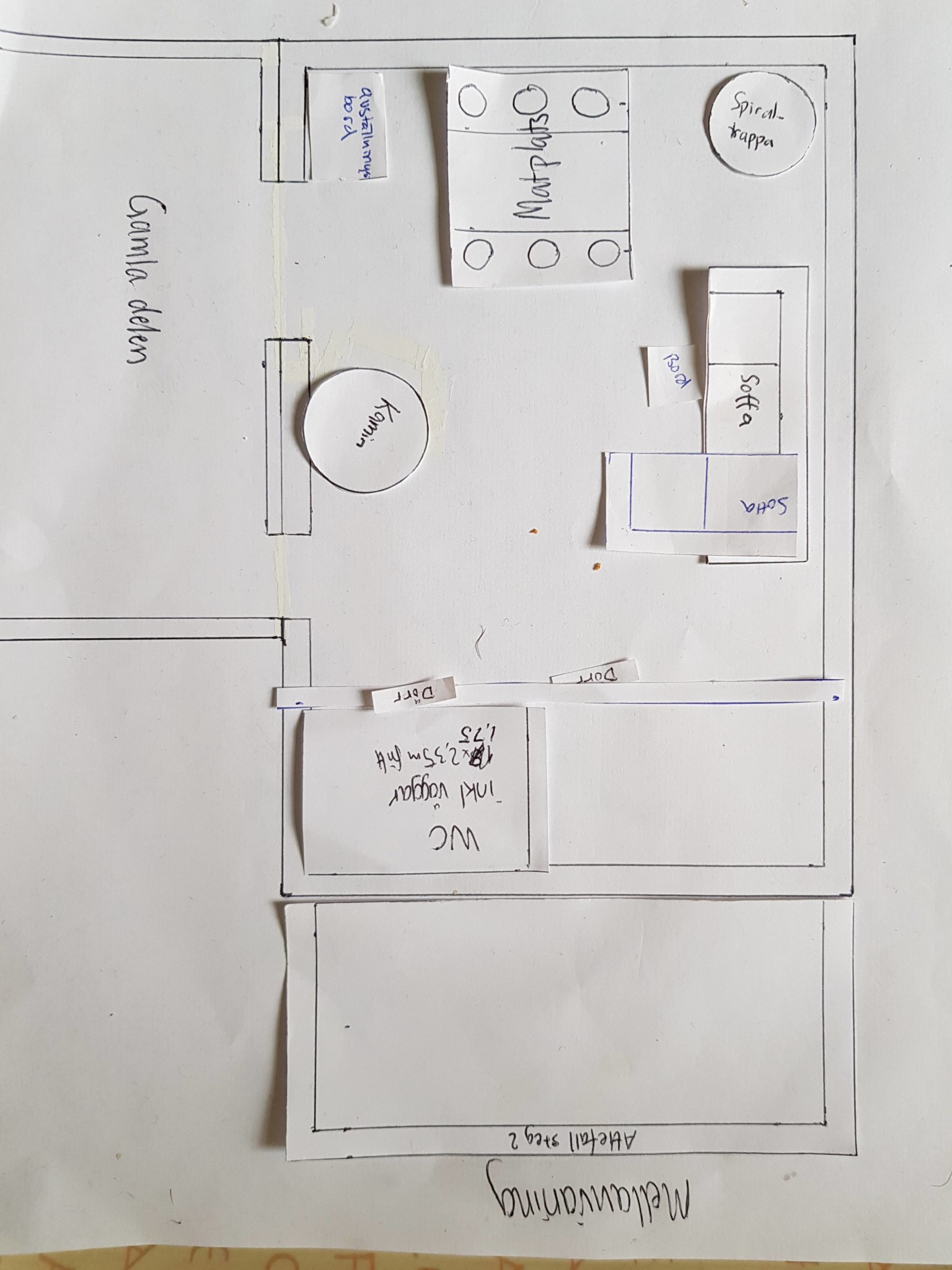
I plan to build about 70 sqm on the entrance level and 50 sqm in the basement. The basement is intended to be a rental apartment. According to BBR, it requires a maximum impact sound level of 56 dB and airborne sound insulation of over 52 dB.
The basement is planned to consist of 300 mm leca for everything below ground, outer walls, and 200 mm leca for the inner walls. Above ground, isoleca 300 mm. Ceiling of filigran ceiling 160 mm. I plan to cover all leca with the ceiling all the way to the edge to avoid flank transmissions.
Entrance level with light walls, i.e., wood with 320 mm thickness including paneling.
1. The airborne sound insulation should be covered by the concrete in the ceiling, even if it's tight. 53 dB according to Rockwool's website with just raw concrete. With the below, a few more dB should be achievable...
2. How would you build up the ceiling? I thought about approximately 50% of the ceiling with glued acoustic panels about 20 mm thick. Then concrete 160 mm. Thereafter floor heating Floore 25 mm. Then possibly leveling compound 30 mm. Alternatively, foam 5 mm and floating parquet 15 mm. Would preferably avoid leveling but maybe it can't be done?
3. Do these foams really work so well even though they are so thin? 22 dB on the impact sound alone isn't sufficient to reach a maximum of 56 dB for me (basic condition around 79-81 dB with raw concrete, i.e., must reduce at least 24 dB), but pretty good... https://www.bauhaus.se/underlag-proacoustic-strong
All input is gratefully received! I've read so many reports/websites now but feel it's time for some other input
Forgot that the basement floor should consist of a similar construction. Considering replacing all the interior walls in the basement except for a few load-bearing points with light frame walls (wood) to spread the sound over a larger area (increased span, lower airborne sound). The slab already consists of 300 mm insulation.
Hey!
I know that 200mm concrete in the bjäklag for airborne sound, complemented with floating floor/soft carpet for impact sound, meets sound class C. If you then add radiation-reducing cladding like gypsum on the underside of the bjäklag, I think you're set. The basement will become a separate fire cell then, right? Then it might be good to have gypsum on the underside of the bjäklag for fire requirements.
Hey!
I know that 200mm of concrete in the flooring for airborne sound, complemented with floating floors/soft carpet for impact sound, meets sound class C. If you then add radiation-reducing cladding like gypsum in the lower flooring, I think you're good. The basement will become its own fire cell then, right? Then it might be good with gypsum in the lower flooring for fire requirements.
But I don't think your construction is bad!
Yes, concrete handles airborne sound well but impact sound poorly. But to get something that reduces impact by about 30 dB (from 80) and increases the reduction of airborne sound by 5 dB (from 53 to 48), I would go for it right away.
Yes, EI60 applies to the flooring, therefore it's good to have a complete flooring with fixation between the flooring and leca. Gypsum increases fire protection, but you can also reinforce a bit more since I only have a room with 25 cm flooring to not affect the window size in the basement too much