
25,765 views ·
24 replies
26k views
24 replies
Sizing of glulam beam for replacing a load-bearing wall

HEA 260 corresponds in this context to 115x540 mm glulam. HEA 220 is closest to 115x450. Steel and glulam do not have completely parallel properties, so one must consider the context. The comparisons assume glulam in the highest strength class, L 40.
An HEA 260 of this length costs in the order of 8000 SEK. A glulam beam with the dimension 190x360 is less than half. The steel beam is also a bit more cumbersome to get in place and needs to be encased with plasterboard for fire protection reasons. These are some aspects to keep in mind.
It only weighs around 300 kg or soJ justusandersson said:

Single gypsum for decorative reasons, double for fire protection reasons. It's about designing for evacuation, not for the house to remain standing. If the load-bearing wall that is being taken down is stud-framed and single gypsum, that's the level you're looking at.
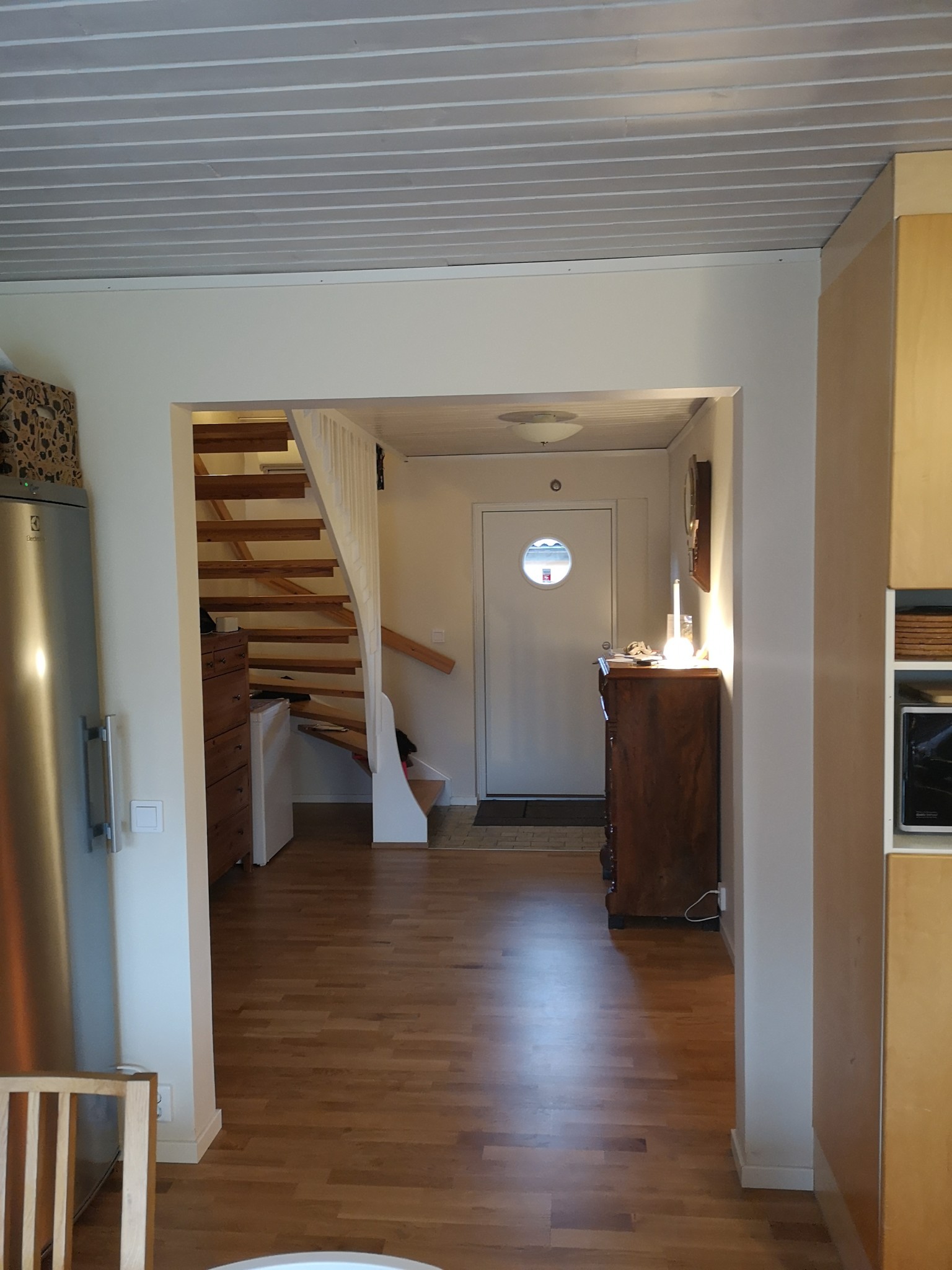
It is not primarily the weight of the steel beam that is the problem, but rather its attachment to columns, etc.

I hope I'm not complicating things for you now. IPE 220 is approved but, in my opinion, gives a bit too much deflection for a primary beam (i.e., a beam that other beams rest on). I would suggest IPE 270 instead. Then, of course, the IPE profile provides a greater height than an HEA profile with the same capacity, but perhaps that's something you have discussed.
Don't you need to consider the load distribution and reinforce the foundation beam when making such a conversion? There can be quite significant forces if there are many people on the upper floor at the same time..
The VKR column must have an end plate that distributes the pressure over a larger area, but otherwise, there shouldn't be any major issues.
Click here to reply