

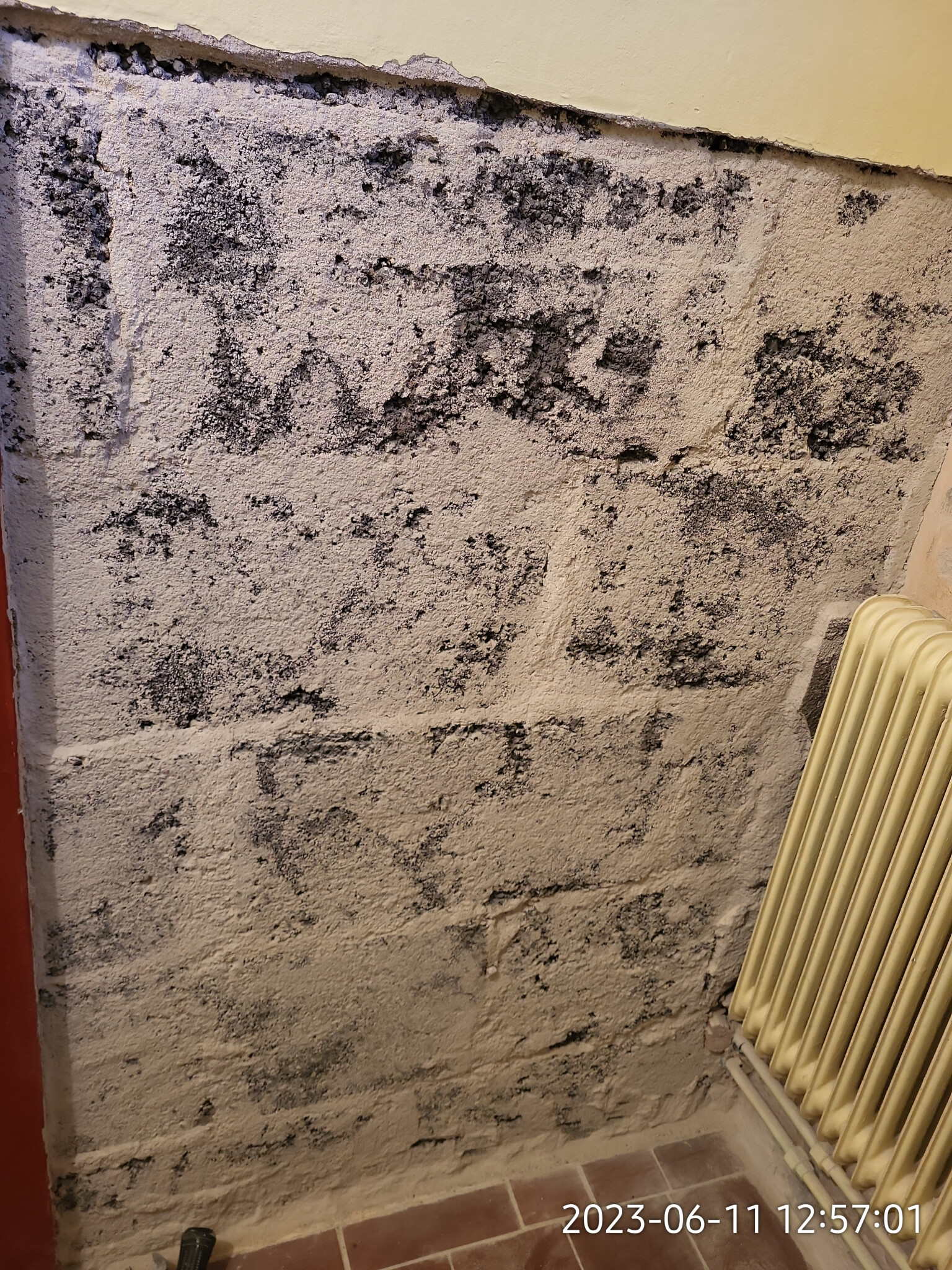
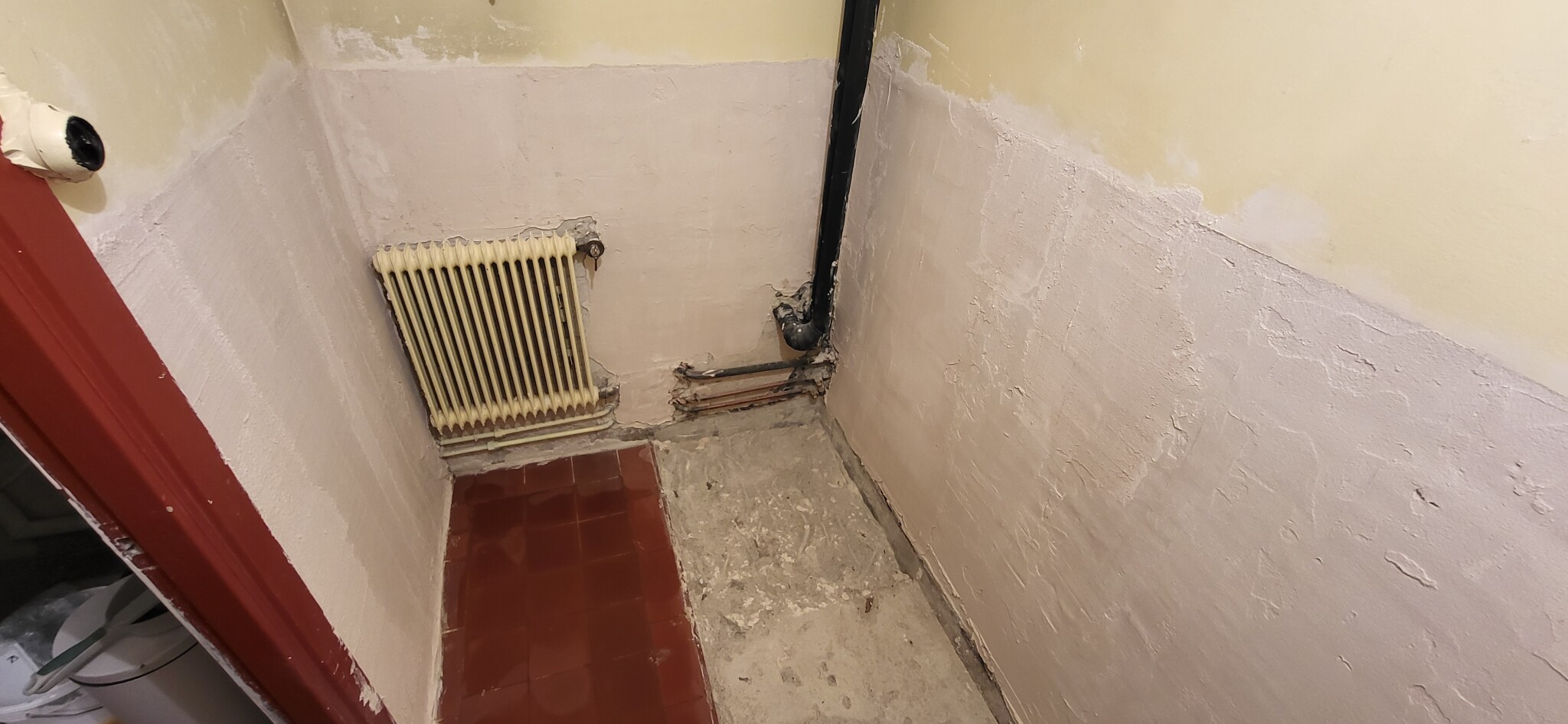
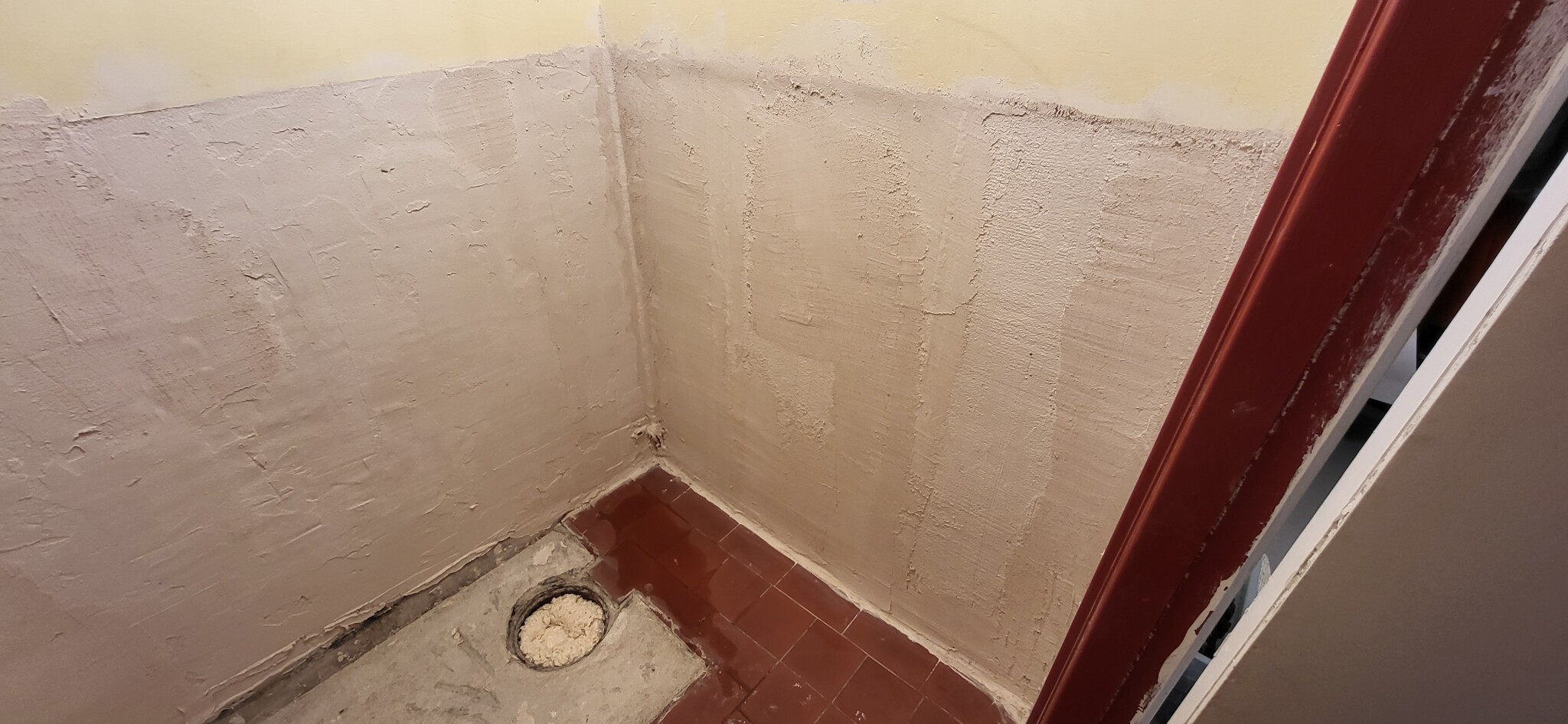
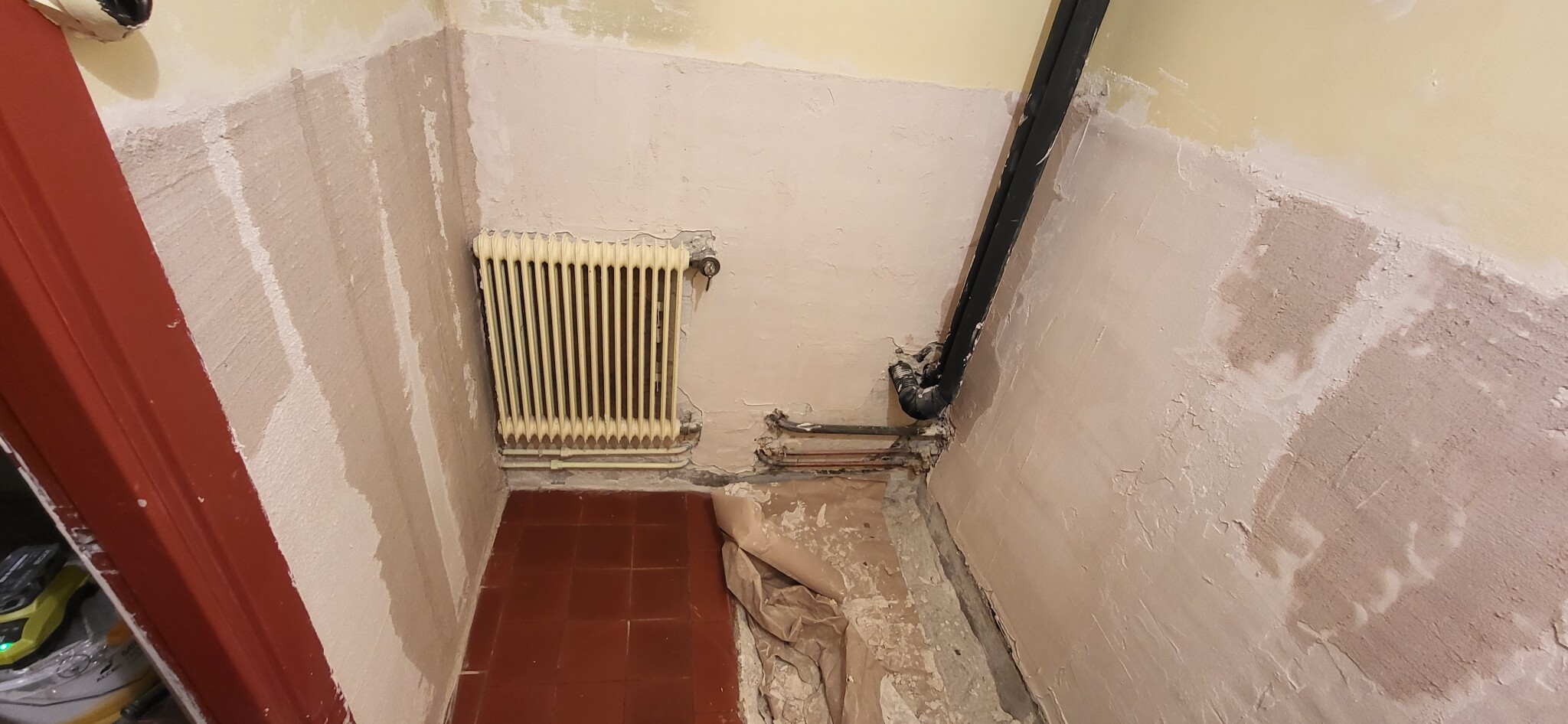
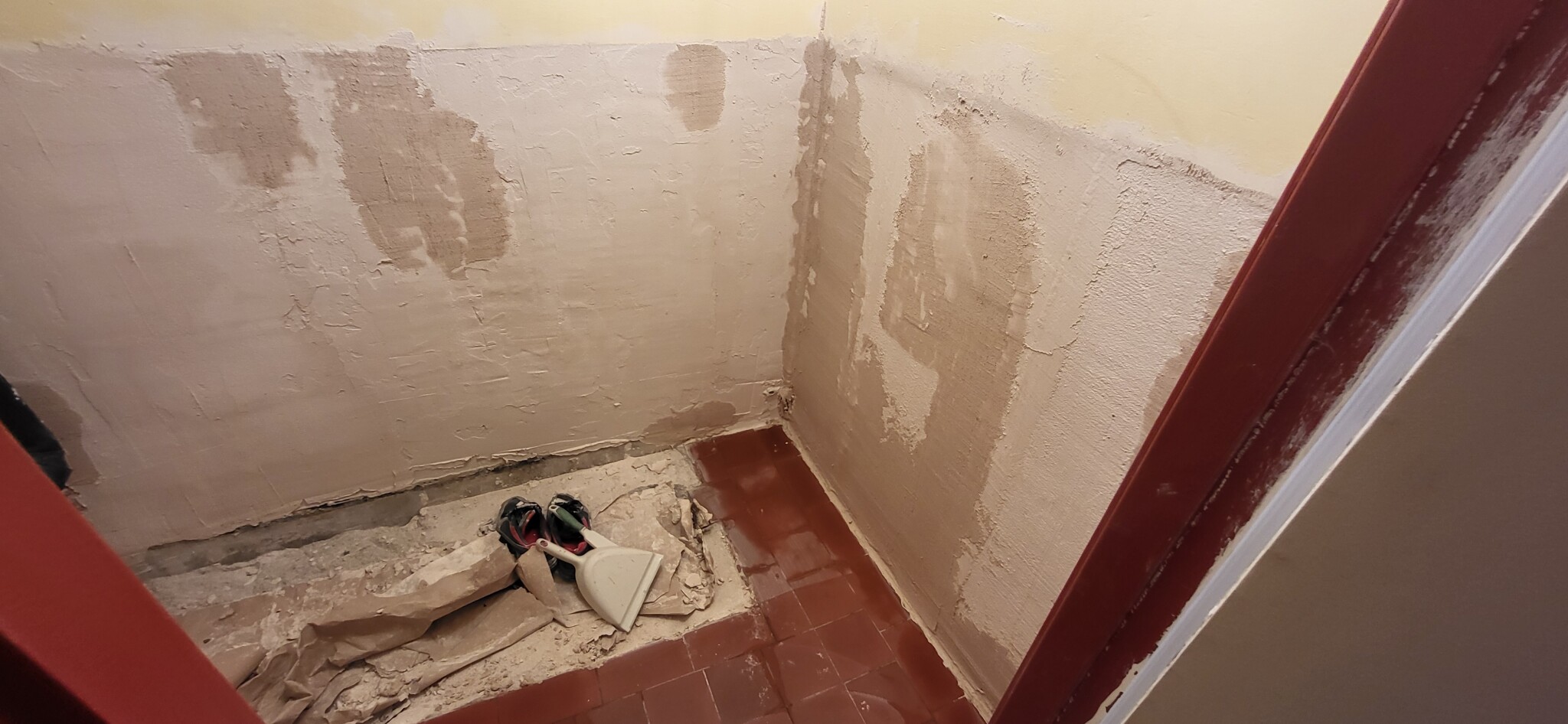
Planning to convert an old bathroom into a "man cave." I've removed tiles and tile adhesive as much as possible but haven't ground the walls and would prefer to avoid that.
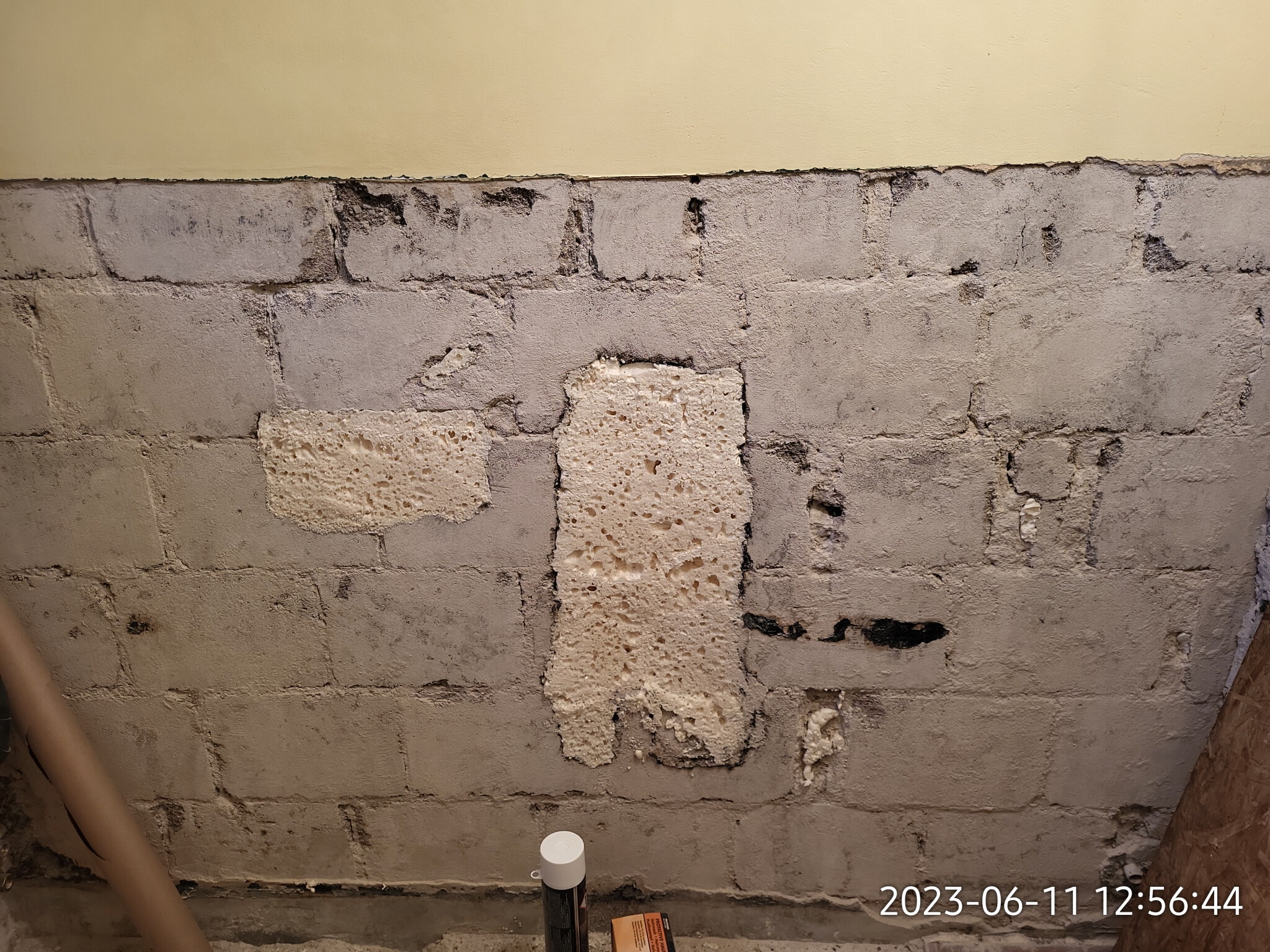
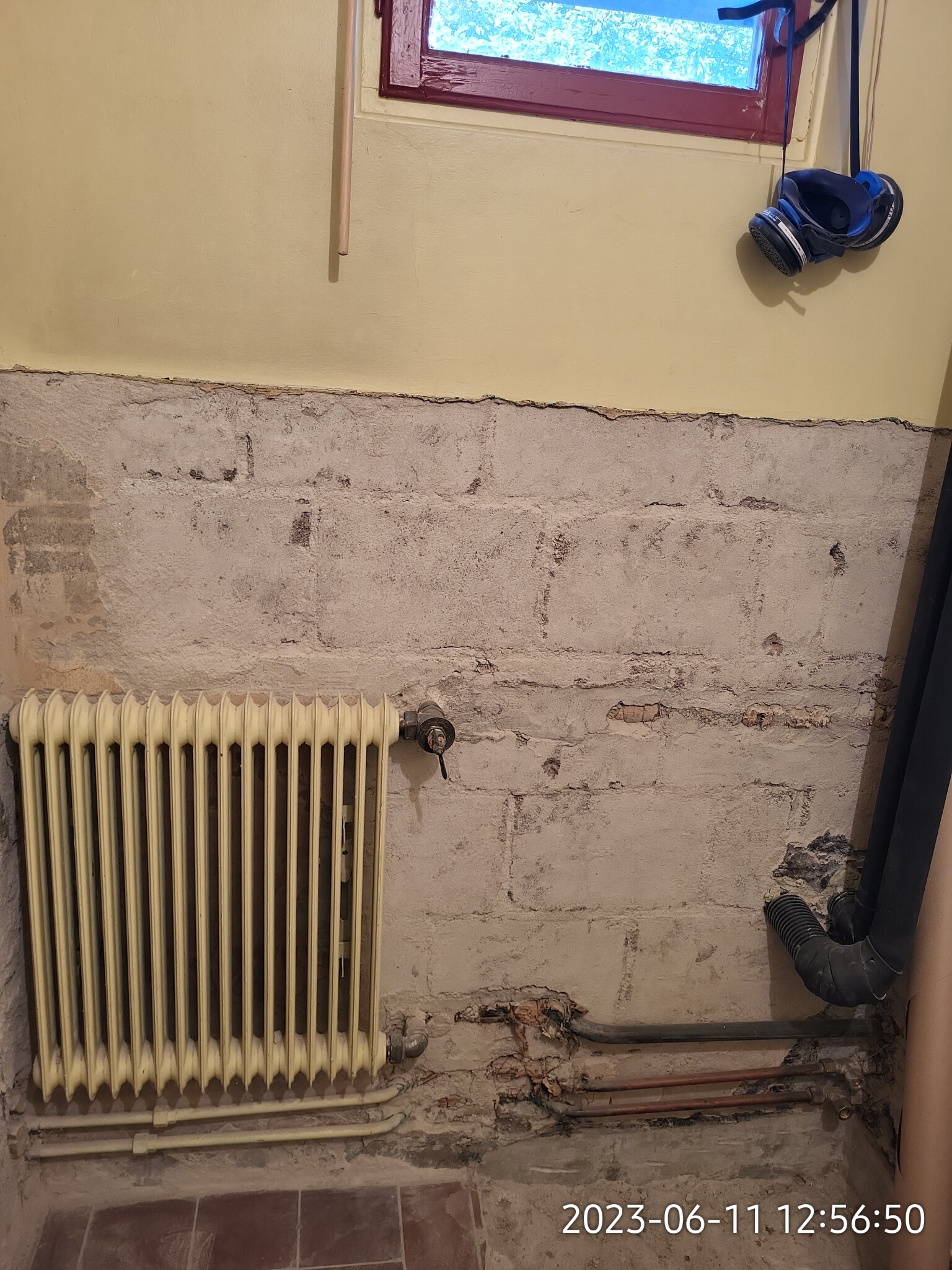
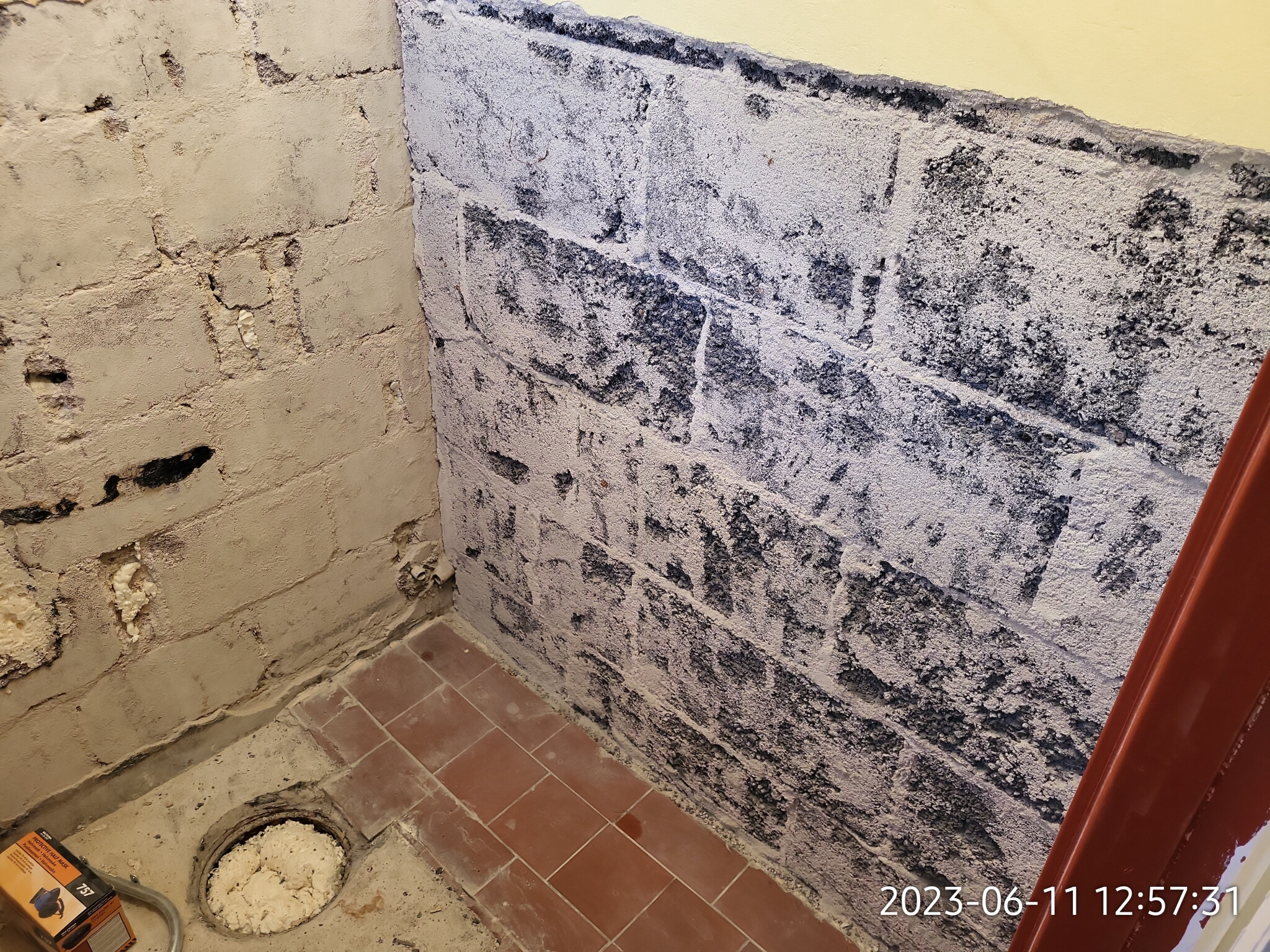
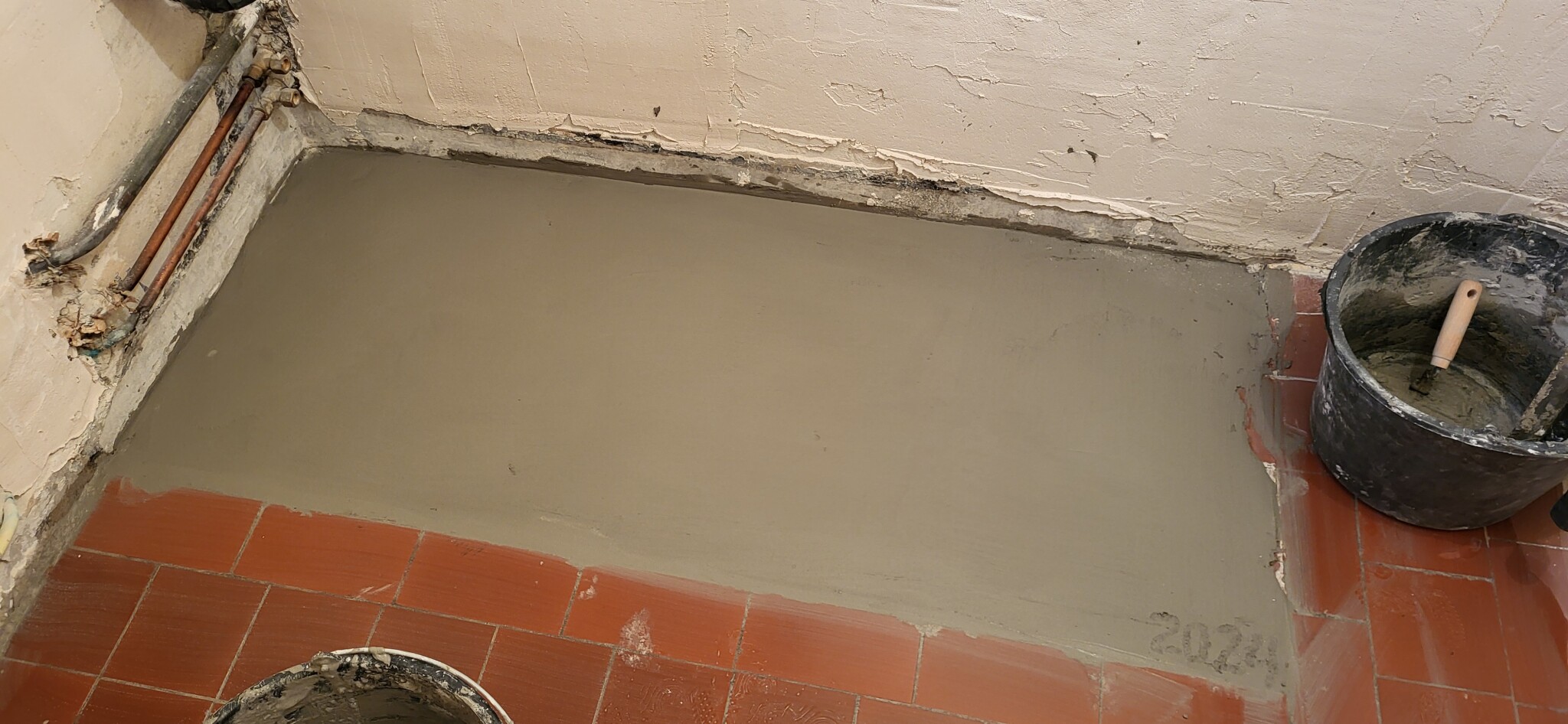
As you can see, the water is shut off and the drain plugged according to "tips." Filled gaps with foam that the "builder" had made for water pipes (we realized he liked to embed pipes in walls and floors).
I'd like to fix the wall so it matches the existing upper part, about 2-4 mm.
No new water lines will be run, and I plan to leave all pipes as untouched as possible.
What options do I have to solve this?
Renovation gypsum?
Widespread spackling?
Attach studs to all the walls and put drywall on them?
Another method?
How much prep work should I do before starting? Is grinding the only option? It's relatively flat right now.
I've probably forgotten many necessary answers to upcoming questions, but we'll address them as they arise.
As you can see, the water is shut off and the drain plugged according to "tips." Filled gaps with foam that the "builder" had made for water pipes (we realized he liked to embed pipes in walls and floors).
I'd like to fix the wall so it matches the existing upper part, about 2-4 mm.
No new water lines will be run, and I plan to leave all pipes as untouched as possible.
What options do I have to solve this?
Renovation gypsum?
Widespread spackling?
Attach studs to all the walls and put drywall on them?
Another method?
How much prep work should I do before starting? Is grinding the only option? It's relatively flat right now.
I've probably forgotten many necessary answers to upcoming questions, but we'll address them as they arise.
It looks dry and fine, great! I would have slightly softened the sharp edge and then applied regular plaster mix B.

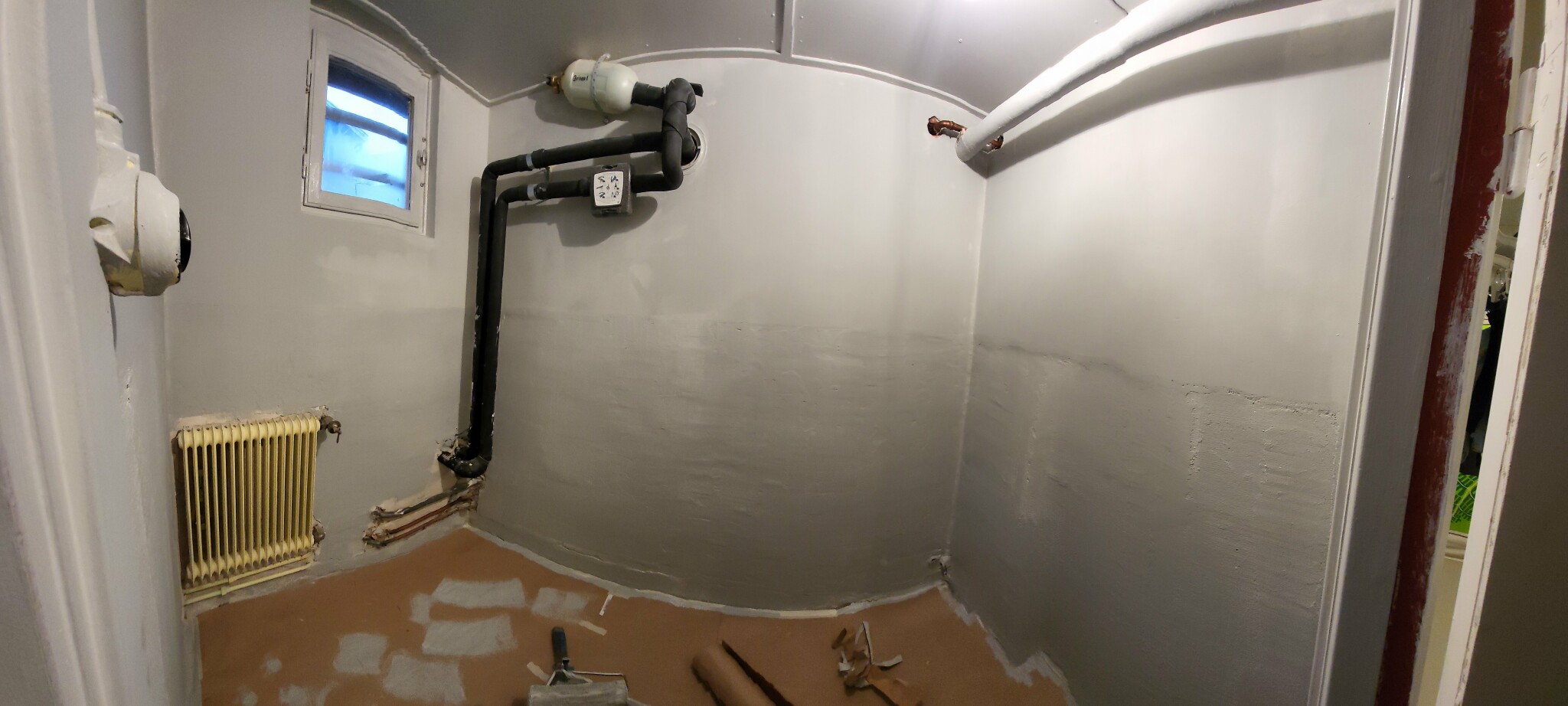
A tip is to only use diffusion-open and moisture-resistant materials. If you use gipsbruk and wall putty and then paint with plastic paint, the moisture coming from outside typically causes the paint to peel...
Click here to reply