
1,982 views ·
2 replies
2k views
2 replies
Semi-insulate cold attic - condensation problems?

Hello,
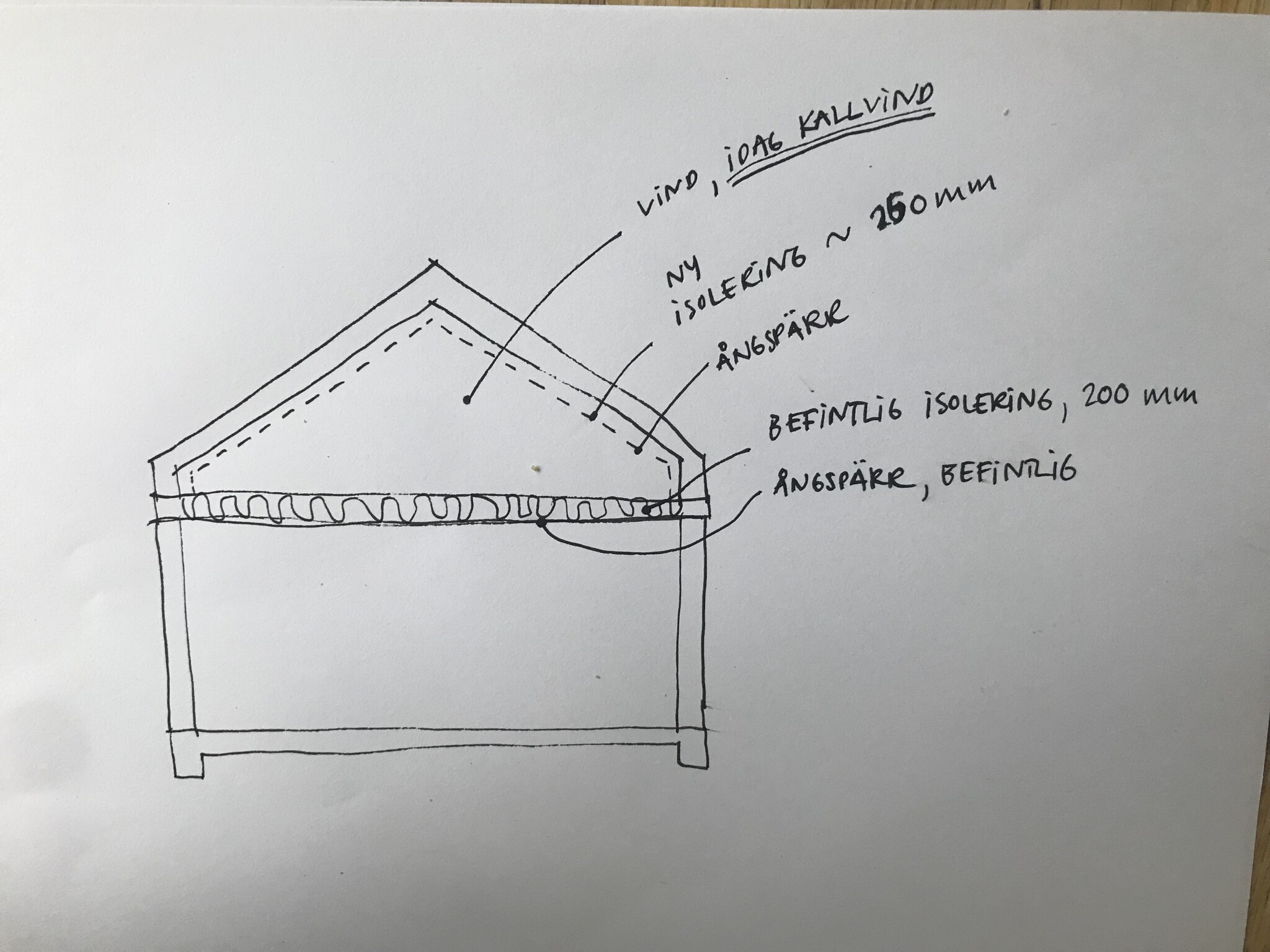
I have an old house with an attic that is currently uninsulated. There is currently about 300 mm of insulation plus a vapor barrier between the attic and the living rooms below. The attic is low, and I want to ensure that it will still be possible to stand (almost) at the peak.
I am going to insulate the attic, not fully, but as much as possible without making it too low. The space will be used for storage and will be accessed/opened daily, but it won't be a living area.
I'm thinking of removing 100 mm of insulation from the floor (which is on top of the joists) to gain a little height there, and placing new insulation below (100 mm) and between the rafters (air gap against the roof sheathing), total about 250 mm. I'm also considering a vapor barrier towards the attic space. So, the attic will be "partially insulated."
What I'm wondering is if anyone, knowledgeable in building physics, knows if this could lead to any moisture problems/condensation, for example, in the roof? There is no heating in the attic, so it will only be warmed by residual heat from the rooms below.
I have an old house with an attic that is currently uninsulated. There is currently about 300 mm of insulation plus a vapor barrier between the attic and the living rooms below. The attic is low, and I want to ensure that it will still be possible to stand (almost) at the peak.
I am going to insulate the attic, not fully, but as much as possible without making it too low. The space will be used for storage and will be accessed/opened daily, but it won't be a living area.
I'm thinking of removing 100 mm of insulation from the floor (which is on top of the joists) to gain a little height there, and placing new insulation below (100 mm) and between the rafters (air gap against the roof sheathing), total about 250 mm. I'm also considering a vapor barrier towards the attic space. So, the attic will be "partially insulated."
What I'm wondering is if anyone, knowledgeable in building physics, knows if this could lead to any moisture problems/condensation, for example, in the roof? There is no heating in the attic, so it will only be warmed by residual heat from the rooms below.

The principle is that if you insulate the roof, the attic will become warmer. This reduces moisture problems. Then there are certainly pitfalls as well. It is possible to insulate the roof from the outside if you want to maintain the height.
Yes, there should be less risk of condensation on any structural part this way. The moisture addition inside the attic will be small, and a vapor barrier should be installed. It might be more of a concern if there were ever a time when it's colder inside the attic than the outdoor air (with high humidity), then there could possibly be condensation on the outside. But won't the paper handle that? 🤔A Avemo said:
Insulating from the outside is unfortunately not an option in this case 😌
Last edited:
Click here to reply