
1,812 views ·
7 replies
2k views
7 replies
Self-leveling compound that seeps through joists
Hello,
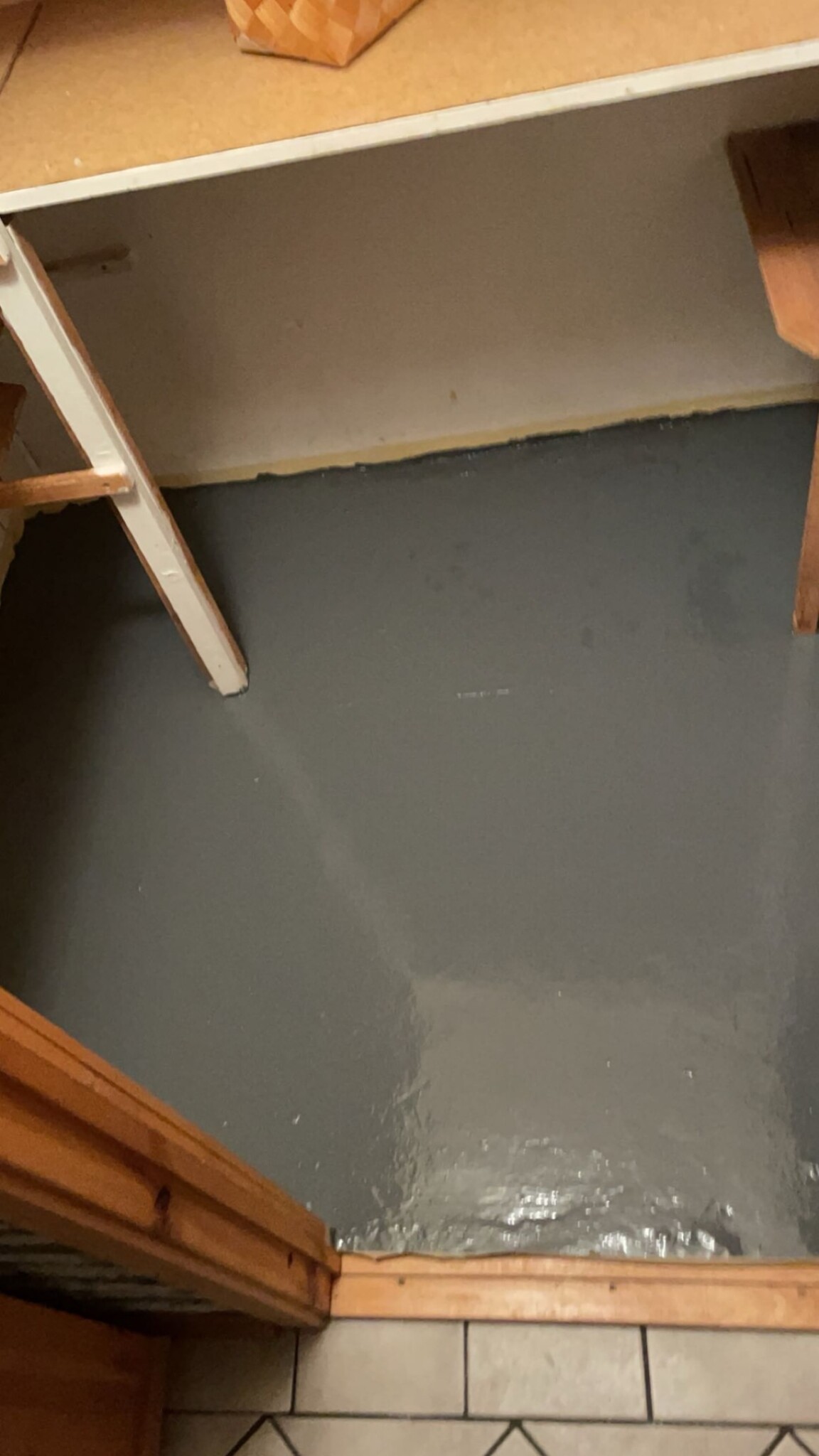
I've encountered an issue where I hired carpenters to renovate the house. When I happened to pass by, I realized that the carpenters poured self-leveling compound in the hallway where we are supposed to lay tiles and they didn't seal it adequately. Now we have water throughout the basement, and it's leaking through the ceiling and cavities down into the basement level.
What moisture problems can we expect? Should we tear up all the floors and ventilate?
Should we contact the insurance company, etc.? Will we have moisture problems or mold in the future because of this since it likely leaked through the entire floor structure with insulation, etc.?
I've encountered an issue where I hired carpenters to renovate the house. When I happened to pass by, I realized that the carpenters poured self-leveling compound in the hallway where we are supposed to lay tiles and they didn't seal it adequately. Now we have water throughout the basement, and it's leaking through the ceiling and cavities down into the basement level.
What moisture problems can we expect? Should we tear up all the floors and ventilate?
Should we contact the insurance company, etc.? Will we have moisture problems or mold in the future because of this since it likely leaked through the entire floor structure with insulation, etc.?
Last edited:


Since it is the carpenters who have messed up, it is their responsibility to fix all the problems. However, it may be appropriate for you to contact your own insurance company as well. The carpenters' or your insurance company should send out a surveyor who can measure moisture and determine how much needs to be removed before the drying process begins.
That's about as far as we've come in our thinking as well.
😅
😅
What is it then that you are wondering about?
If all the floors should be torn up?
That will be determined during the inspection, but insurance companies usually pay for a company to come in and do it.
It's only urgent destructive measures that should be done without checking with the insurance company. Placing buckets and scooping out water is appropriate. But I wouldn't start tearing things up.
If mold develops in the future?
Hardly, because the moisture content will be measured several times and the drying won't stop until the levels are down to safe levels, including levels inside the joists.
If all the floors should be torn up?
That will be determined during the inspection, but insurance companies usually pay for a company to come in and do it.
It's only urgent destructive measures that should be done without checking with the insurance company. Placing buckets and scooping out water is appropriate. But I wouldn't start tearing things up.
If mold develops in the future?
Hardly, because the moisture content will be measured several times and the drying won't stop until the levels are down to safe levels, including levels inside the joists.

I wonder where the water is coming from?
Leveling compound is usually some fancy name that I can't remember, but it binds all the water you add, so compound in the joist isn't the end of the world—it dries/cures and then just stays there.
Now it seems to be free water that is dripping?
Leveling compound is usually some fancy name that I can't remember, but it binds all the water you add, so compound in the joist isn't the end of the world—it dries/cures and then just stays there.
Now it seems to be free water that is dripping?
It is self-leveling compound that was poured in a hallway where a tile floor is to be made. They probably used a bit too much water compared to the compound when mixing it all as well.
They likely did not seal sufficiently, and as a result, it has seeped everywhere and truly flowed through every hole. A significant amount of self-leveling compound was used over an area of about 15 square meters.
I am mostly afraid of the damage around it that can occur/has occurred.
They likely did not seal sufficiently, and as a result, it has seeped everywhere and truly flowed through every hole. A significant amount of self-leveling compound was used over an area of about 15 square meters.
I am mostly afraid of the damage around it that can occur/has occurred.

Click here to reply