
4,827 views ·
16 replies
5k views
16 replies
Seal cavity in the ceiling after exposing beams
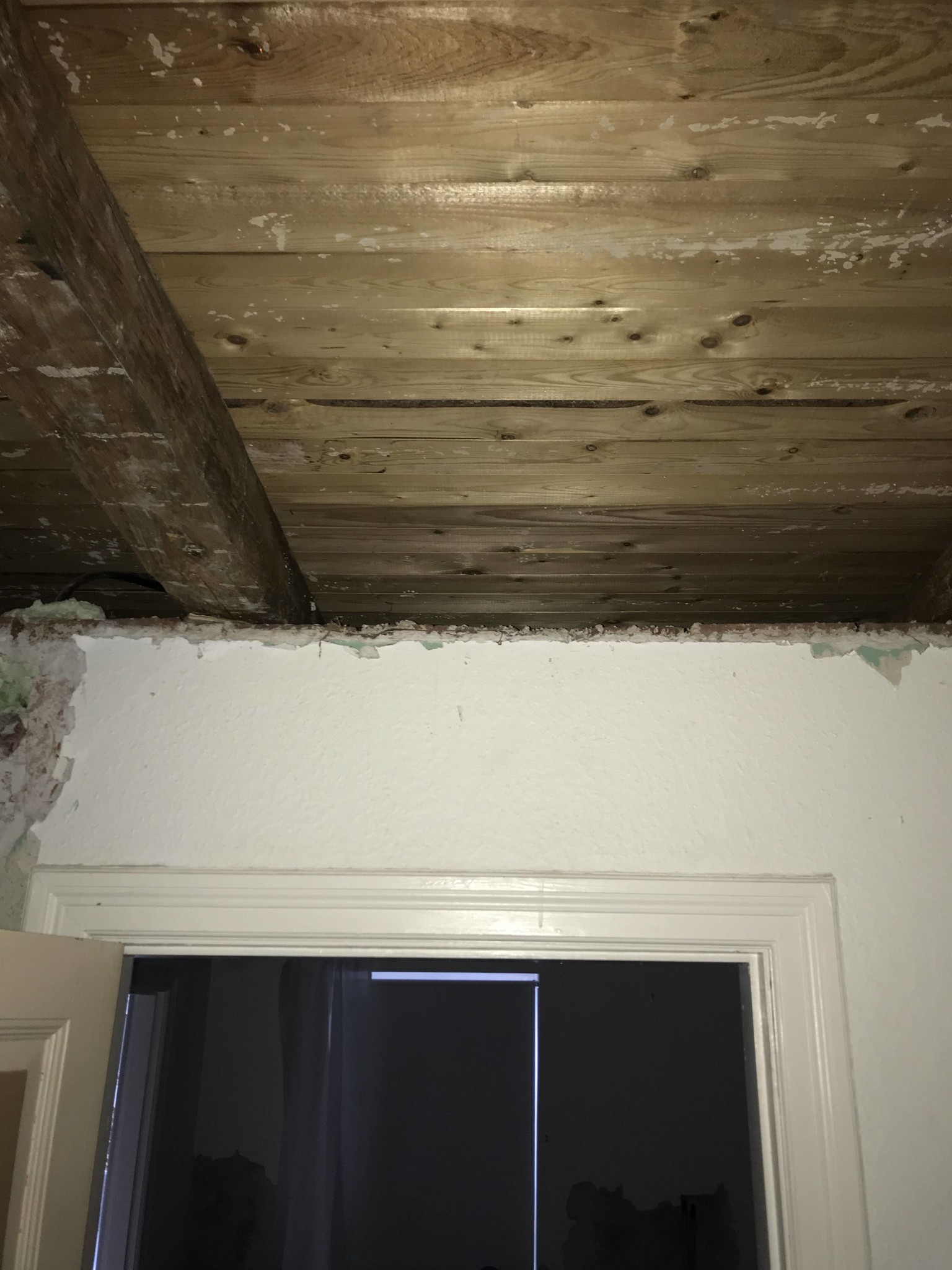
Have removed the ceiling in the future kitchen and exposed the beams.
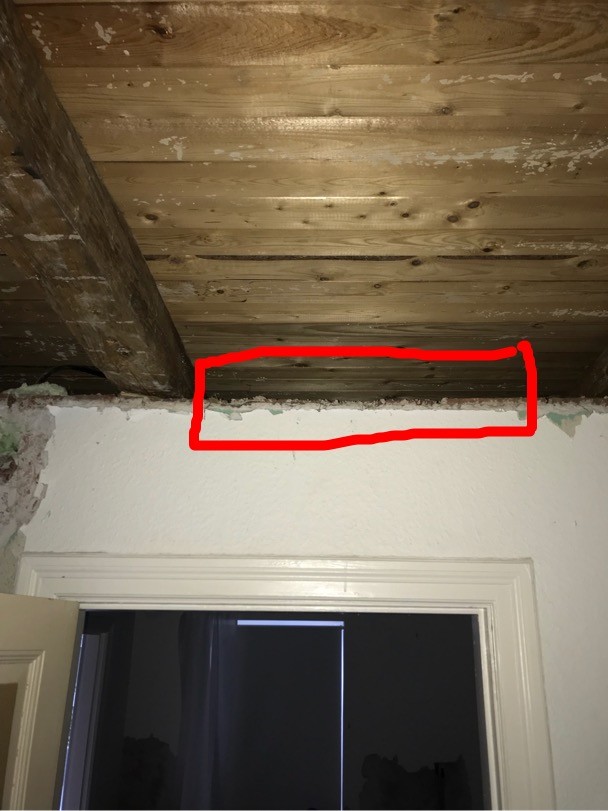
The gap between the ceiling and wall (see image) needs to be closed up somehow, what's the most suitable way to go about it?
Leca then plaster? Studs and drywall?
Grateful for all ideas and answers, preferably personal experiences! Thank you.
The gap between the ceiling and wall (see image) needs to be closed up somehow, what's the most suitable way to go about it?
Leca then plaster? Studs and drywall?
Grateful for all ideas and answers, preferably personal experiences! Thank you.
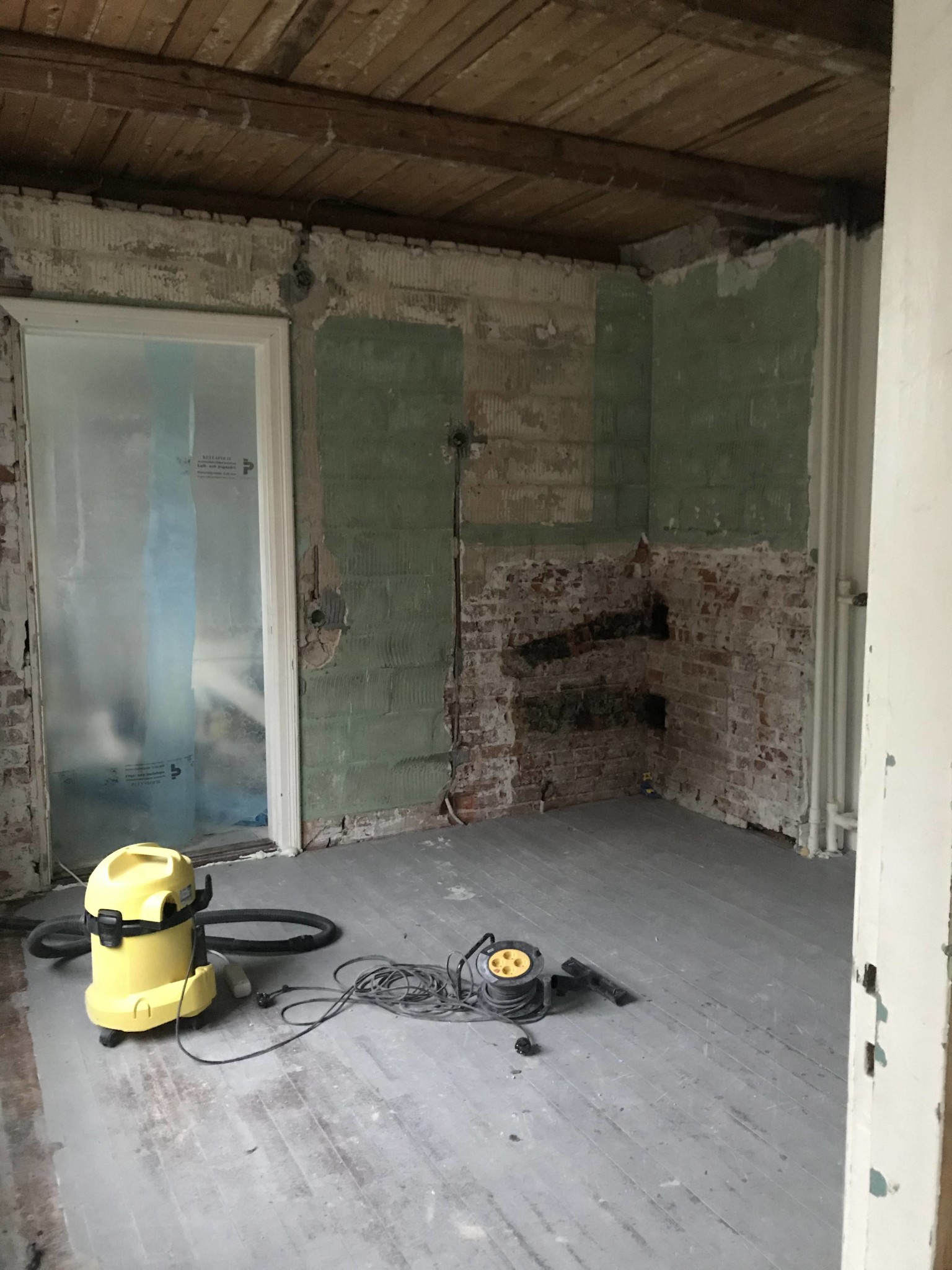
It wasn't built for an exposed joist, no, but now it looks like it does, happily. I'm debating whether I should put in nail strips and paneling between the beams or leave it as it is.J JohanLun said:
What you see is indeed the bottom of the second floor's subfloor, which is currently unfurnished and not in use.
But to the point, do you have any ideas or suggestions regarding sealing the cavity?

Do you need thermal insulation in the ceiling?
Then you just need to nail up a new panel onto the old beams. You might need to nail guide boards on the sides of the beams first. Use a sturdier type of tongue and groove panel considering the c/c distance. Consider placing a 50 mm mineral wool board on top of the panel for sound insulation.
Maybe I misunderstand or have expressed myself unclearly. I want the beams to be visible, it's the cavity, or "shelf" between the ceiling and wall that needs to be closed so that the wall goes all the way up to the ceiling, if you understand?J justusandersson said:
Aha! Then something you can polish might be suitable, for example, lecasten. They do come in quite thin variants, 9 and 12 cm wide, if I remember correctly.
It depends a bit on the measurements. Lecasten is easier to work with than brick, but if brick fits in terms of height, then why not. Håltegel doesn't have much use here, but it is somewhat lighter.
are the walls brick? It's probably best, as Justus writes, to plaster (with the same type of plaster) as the walls, and you could also just attach a piece of wood with plaster mesh to plaster against if bricklaying becomes cumbersome.
But something to consider is to ensure that no debris falls from the ceiling; maybe a paper and panel directly against the joist bottom? Or lift out the insulation from above, lay paper, and use something like flax insulation that doesn't release debris...
But something to consider is to ensure that no debris falls from the ceiling; maybe a paper and panel directly against the joist bottom? Or lift out the insulation from above, lay paper, and use something like flax insulation that doesn't release debris...
Thanks for the response and interesting thoughts!J JohanLun said:are the walls built with bricks? It is probably best, as justus writes, to plaster (with the same type of plaster) as the walls, you could also just put a piece of wood with a plaster net to plaster against if bricklaying becomes tricky?
but one thing to consider is making sure that debris doesn't fall from the ceiling, maybe a paper and panel directly against the subfloor? Or lift the insulation from above, lay paper and use something like flax insulation that doesn't shed debris...
Exactly, the walls are built with bricks. Plastered with lime mortar, I would guess. I've never laid bricks so wood and net certainly sounds easier. On the other hand, using bricks feels more "authentic."
I've also thought about cladding with rough-sawn planks between the beams, but since the planks look so nice and beautifully weathered, it would be nice to leave them visible and just whitewash them or something similar.
I had planned to wait with the upper floor, but perhaps it's an idea to go up and dig out the subfloor from above (roofing paper, sand, lime) and then insulate with flax wool. It's just a really dusty job with many bags to move down.
What do you think about notching the gaps in the ceiling from below and then sanding? Should hold tight, right?