
4,068 views ·
12 replies
4k views
12 replies
Screw and plug for bedside table
Hello!
My partner and I are going to put up nightstands on the plaster wall and I discovered that the screws and plugs we have won't be sufficient.
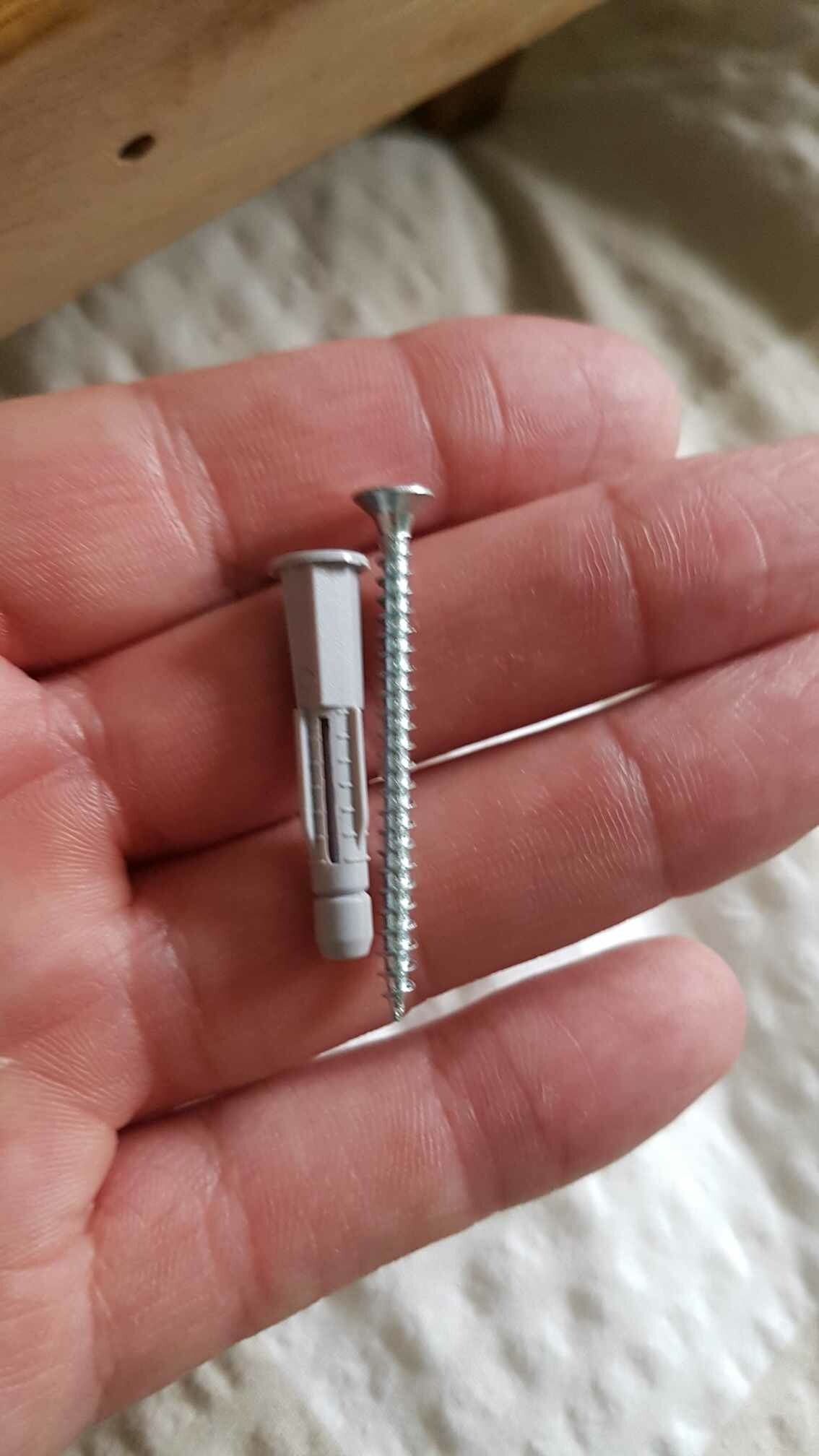
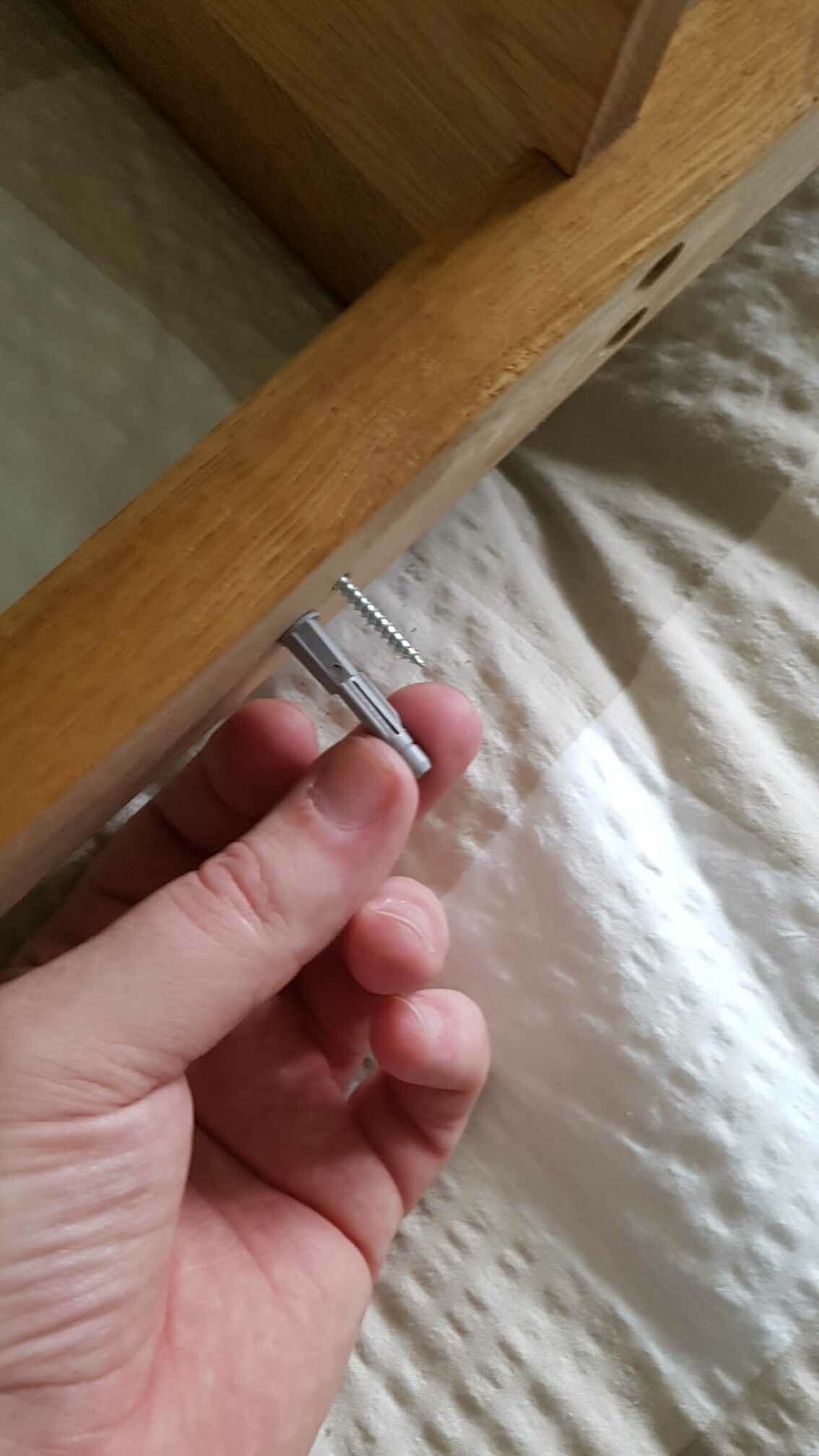
The screws/plugs we have now are universal from BILTEMA, 3.5 x 40mm.
For the screw to reach through the table and the plug, we need a screw of at least 60mm, but then I'm not sure if the plug we have will be enough.
Do you have any tips on screws & plugs we can use to ensure it sits properly?
My partner and I are going to put up nightstands on the plaster wall and I discovered that the screws and plugs we have won't be sufficient.
The screws/plugs we have now are universal from BILTEMA, 3.5 x 40mm.
For the screw to reach through the table and the plug, we need a screw of at least 60mm, but then I'm not sure if the plug we have will be enough.
Do you have any tips on screws & plugs we can use to ensure it sits properly?
I don't think we'll need a molly anchor, the weight won't be too much, even though the center of gravity is far out since it's 25mm thick.zarkov said:
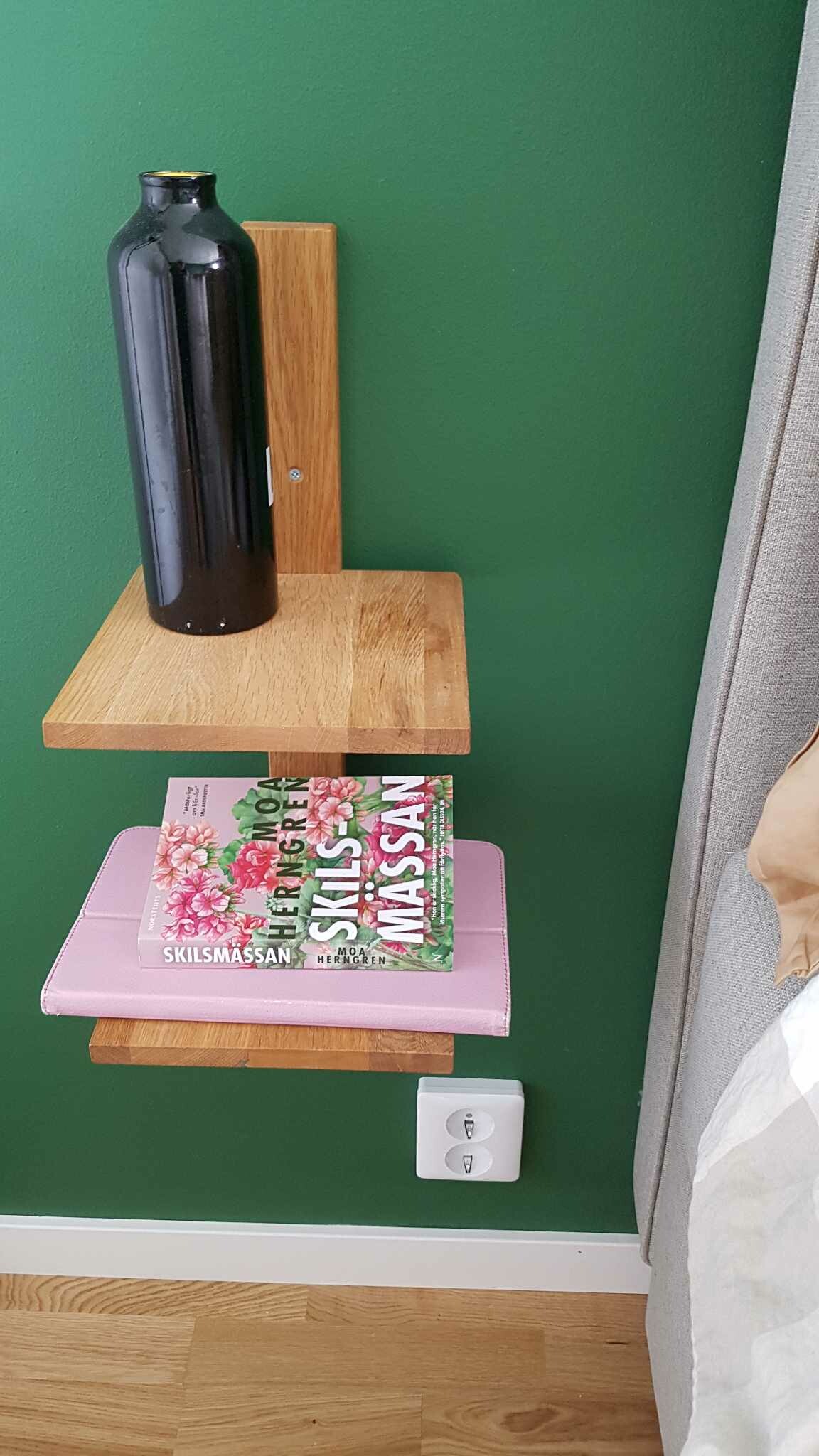
It's a pilaster shelf with two levels.
We installed one with the existing screws and anchors, but it's not 100% secure.

If it's just plaster and nothing more, you need some gipsankare, duomax, or molly bolt. There's probably something else as well.
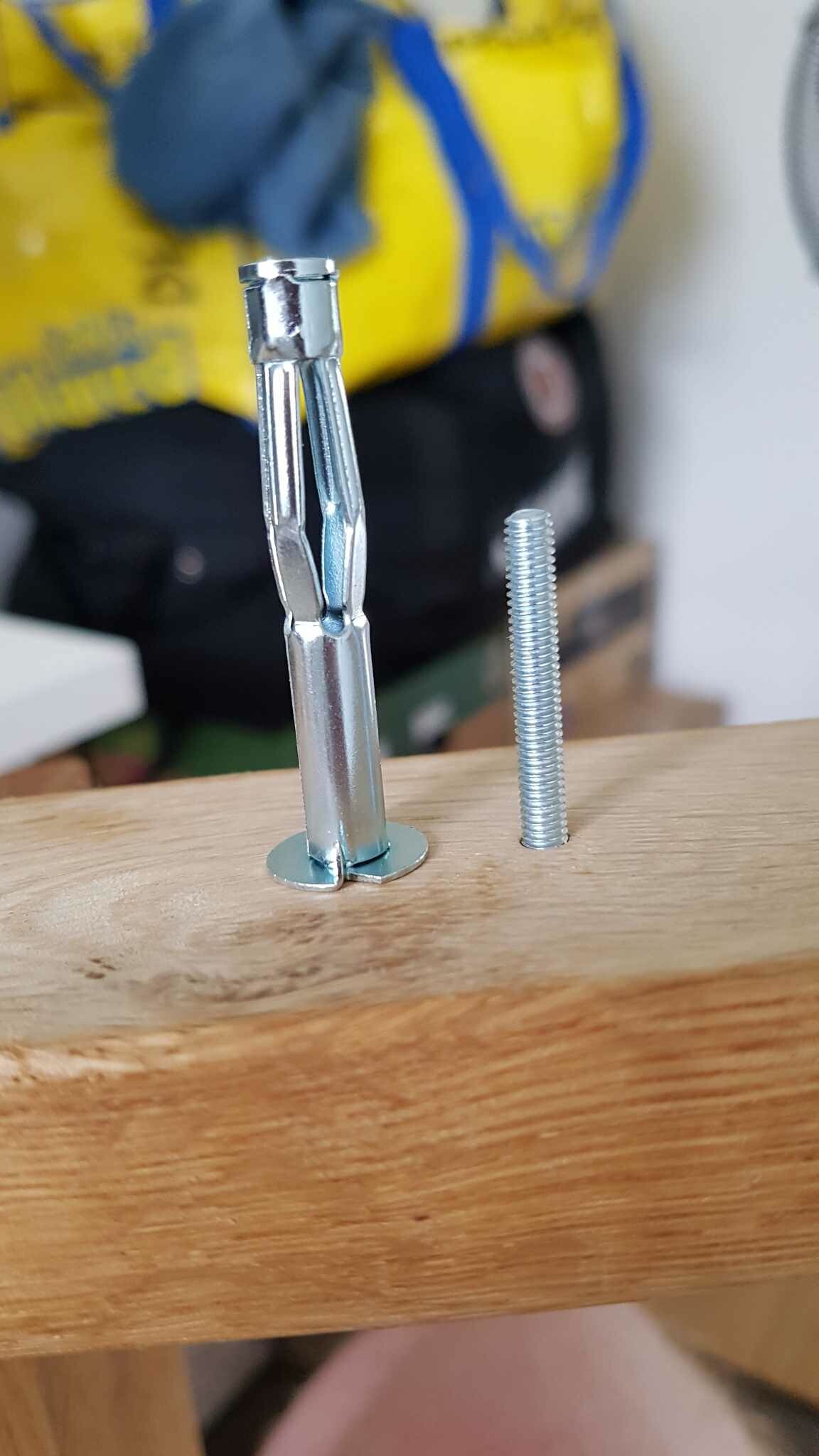
I looked around at home and found some mollyplugs, but the largest I found was about 55mm. Which I think will be too short once the plug is tightened and the screw is fastened. Tomorrow I'll have to go down and buy some larger variants. But it feels like overkill to have to use a mollyplug with such high load capacity.
How to easily find out if there are OSB boards behind the plasterboards.
We live in a newly built house and moved in now in June.
If there are OSB boards, then I shouldn't need to use molly plugs.
The reason I prefer not to use molly plugs is because the holes become so large and ugly.
We live in a newly built house and moved in now in June.
If there are OSB boards, then I shouldn't need to use molly plugs.
The reason I prefer not to use molly plugs is because the holes become so large and ugly.


You can drill and see if the drill emerges into a void after going through the drywall or if it instead comes out with wood dust from the drill hole. Or ask the board/landlord.
Addition: Or if it is your own house, the information should be in the documents.
Addition: Or if it is your own house, the information should be in the documents.
Last edited:

An option to see how the wall is built should be to look into the electrical outlet's recess and check how deep it is. If you still need to conduct a survey with drilling, it is hidden under the outlet...
It's not about load-bearing capacity. It's about attachment. Most "ordinary" screws don't get a grip in the plaster, so you don't even have to load the shelf, often the weight of the shelf itself is enough for the screw to come off the plaster. Hence you need drywall anchors (molly plug is a variant of that). The plug in the picture is not intended for plaster.Rewston said:
I looked around at home and found some molly plugs, but the largest I found was about 55mm. Which I think will be too short when you tighten the plug and need to attach the screw. Tomorrow I will go down and buy myself some larger variants. But it feels like overkill to have to use a molly plug that has such high load-bearing capacity.

Member
· Västerbottens län
· 18 090 posts
It's not a bigger anchor you need but a longer screw. Screws are available at Biltema, etc. The anchor must be for one or two gypsum boards. If there's plywood/OSB behind it, no anchor is needed. Protte
Click here to reply
Similar threads
-
Choice of screw and plug for IKEA's suspension rail for wall cabinets?
Building Materials and Construction Technology -
Screws and plugs for lightweight concrete
Building Materials and Construction Technology -
Which plug for screw to floor trim in aerated concrete wall
Building Materials and Construction Technology