We need to extend a deck over a water's edge. We will dig down a bit to reach the bedrock. The idea is to use steel tubes as posts (that can withstand being underwater for periods) and then build a wooden frame, followed by the decking.
After looking at various options, we're considering the following:
- Scaffolding foot with a 150x150 plate bolted to the rock (or on a concrete casting)
- Hot-dip galvanized burton tubes cut to the right length
- Inverted scaffolding foot fastened to the wooden frame from underneath
Could this work in practice? Do you think the burton tubes can withstand the stress and resist corrosion well enough?
Do you think the Burton pipes can withstand stress and resist corrosion well enough?
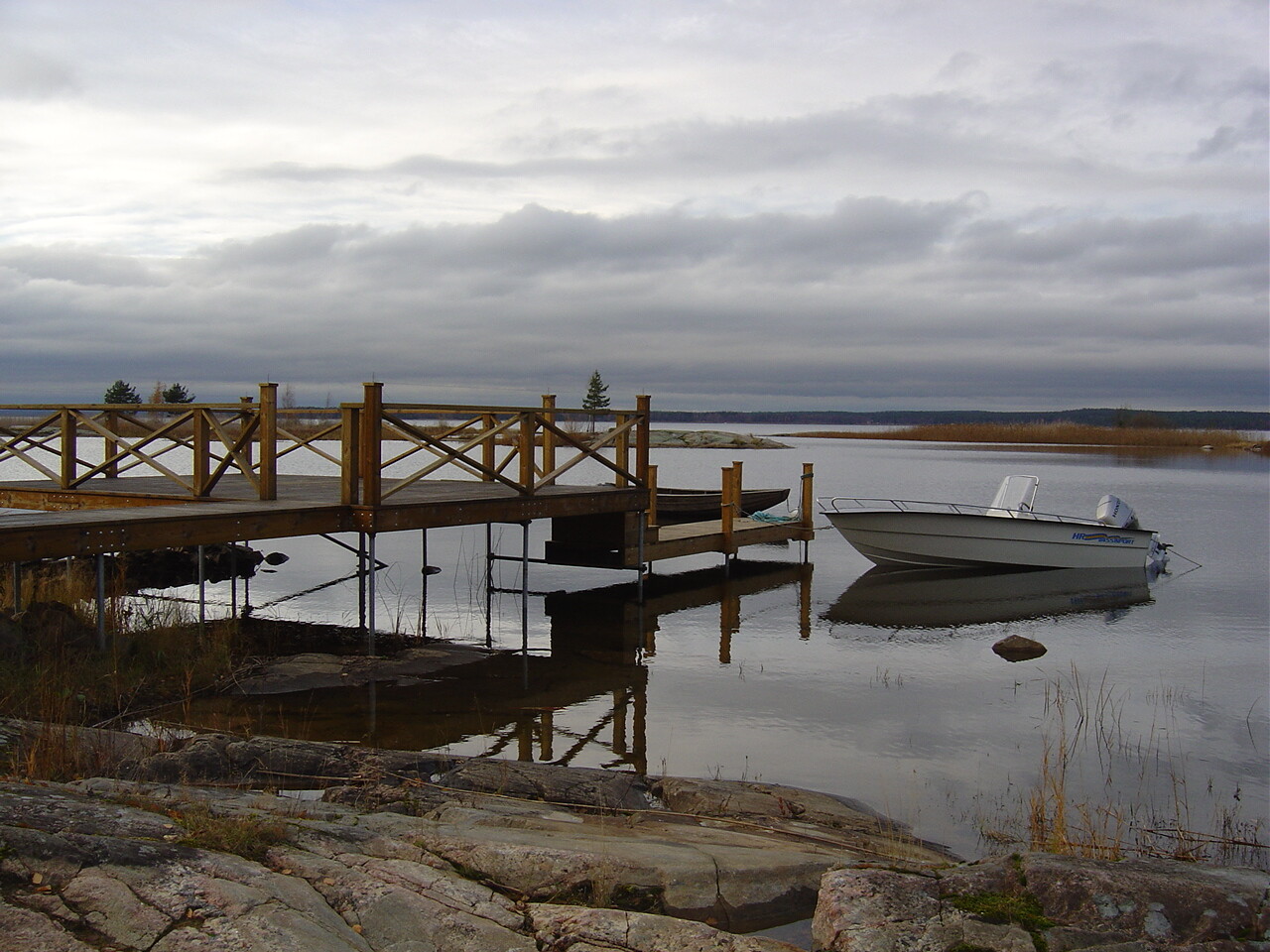
I have a seaside veranda at our summer place by Lake Vänern that rests on 50mm Burton pipes at the bottom, built in 2003. It stands completely over the water (at normal water level), about 6X6 meters + extending dock section about 1.5X5 meters. Sure, there's a bit of surface rust on the part that's constantly underwater, but it will easily last another 30 years, at least The posts are also filled with concrete for increased stability.
I have a lakefront veranda at our summer place by Lake Vänern that rests on 50mm burton pipes against the bottom, built it in 2003. It's completely over the water (at normal water levels), about 6x6 meters + protruding dock section about 1.5x5 meters. Sure, there's a bit of surface rust on the part constantly underwater, but it'll easily last another 30 years, at least The posts are also filled with concrete for increased stability.
An image showing the lakefront veranda:
[image]
That’s exactly what we’ve been thinking, how fun.
Did you also use "feet" at both ends? Is there anything you would pass along that you would have done differently?
What are the "connector plates" attached to the side?
- It was extremely low water when I made the lakefront veranda, so most of the posts are cast directly into the rock or gigantic stones. Drilled down a galvanized bolt in the middle where the pipe would stand, fixed the pipe and plumbed it, filled it with concrete. Those pipes haven't moved a millimeter.
- Some of the outer pipes are driven into the bottom, and some of them move slightly upward during harsh ice winters, but easy to drive down again.
Ppjop said:
What are the "hole plates" on the side?
- What you interpret as hole plates are carriage bolts The fascia consists of double 45X200, they are "clamped" on each side of the Burton pipe, which is then in the middle. To prevent the fascia from sliding downward, there is an angle iron welded to the Burton pipe under each "clamping point."
- The construction is adjustable (with some effort I have adjusted the center bracket in the middle of the veranda once, had to lower it by about 2 cm there.
- I had to lower the outer fascia by about 2 cm in the middle about 5 years ago. I had made a design error there with a pipe that turned out to be unnecessary, so I removed it and straightened the outer fascia with the remaining 2 middle brackets.
- As you can see, the outer dock is completely adjustable depending on the water level, which can vary quite a bit in Vänern. You want the dock at the right height for swimming and getting into the boat
- I let all the Burton pipes protrude to the railing's top edge, so the railing posts you see are actually "faked," Burton pipes in the middle encased with 23X95, it looks nicer that way ;-)
- Another "feature" is that I can dismantle the entire deck on the lakefront veranda if there were to be as massive a flood of Vänern as in 2001(?). The water level then was about 20 cm above the lakefront deck... you can probably understand that it was extremely bad then. The islands you see in the background were completely under the water surface then, it was just the pine trees sticking up 😎
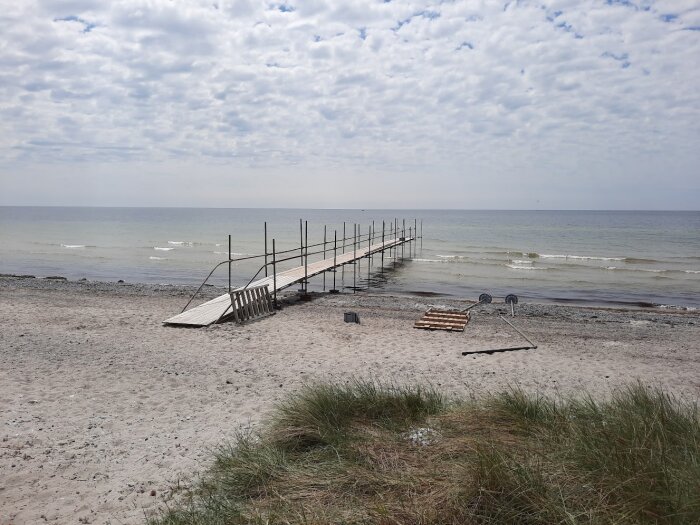
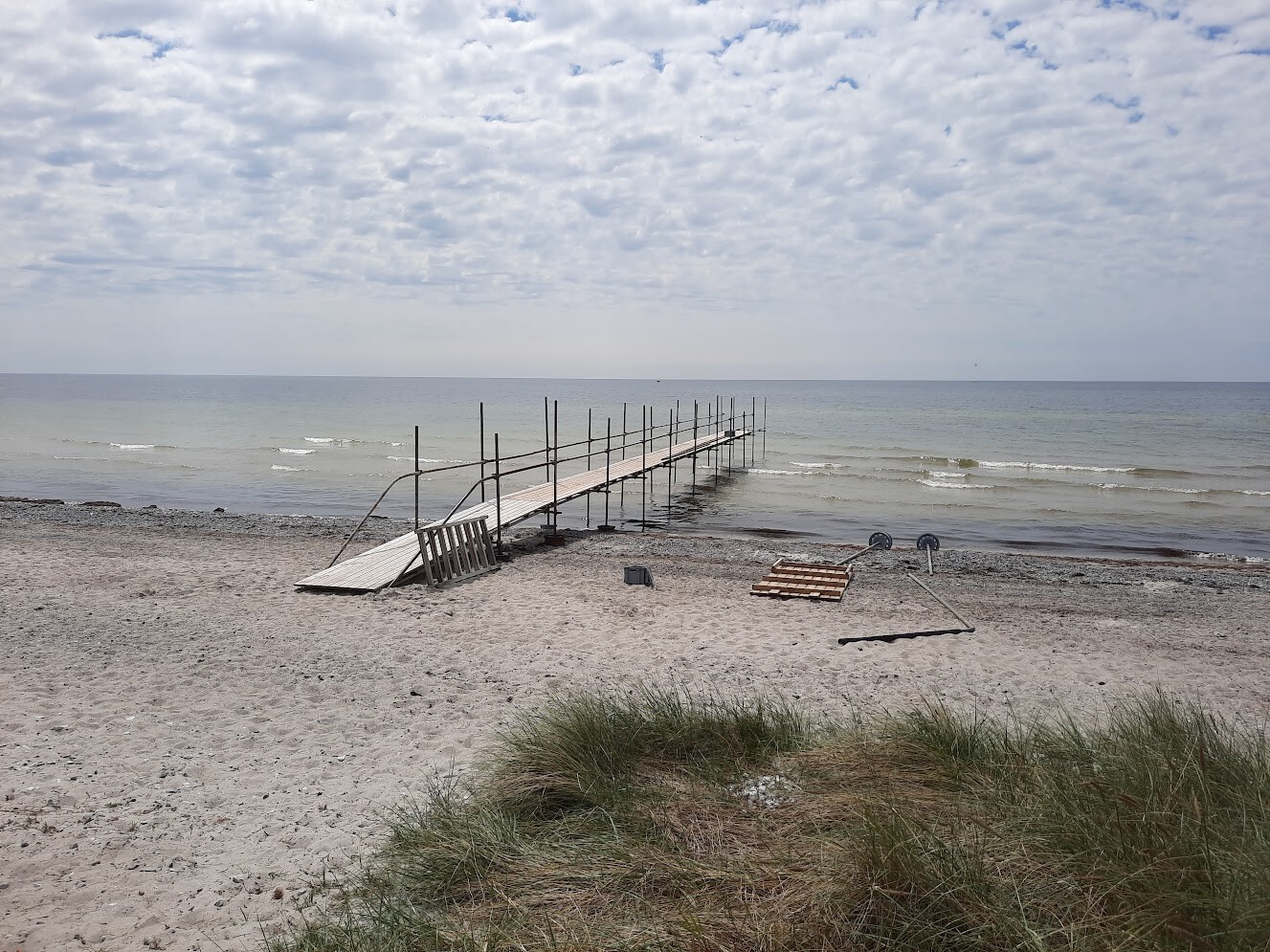
Based on burton pipes and stands for 5 months in salt water every year.
The pipes and such hold up well, the connections rust a bit, so we usually have to replace one every year, but that's mainly because we keep assembling and disassembling the whole thing.
Click here to reply
Vi vill skicka notiser för ämnen du bevakar och händelser som berör dig.


 The posts are also filled with concrete for increased stability.