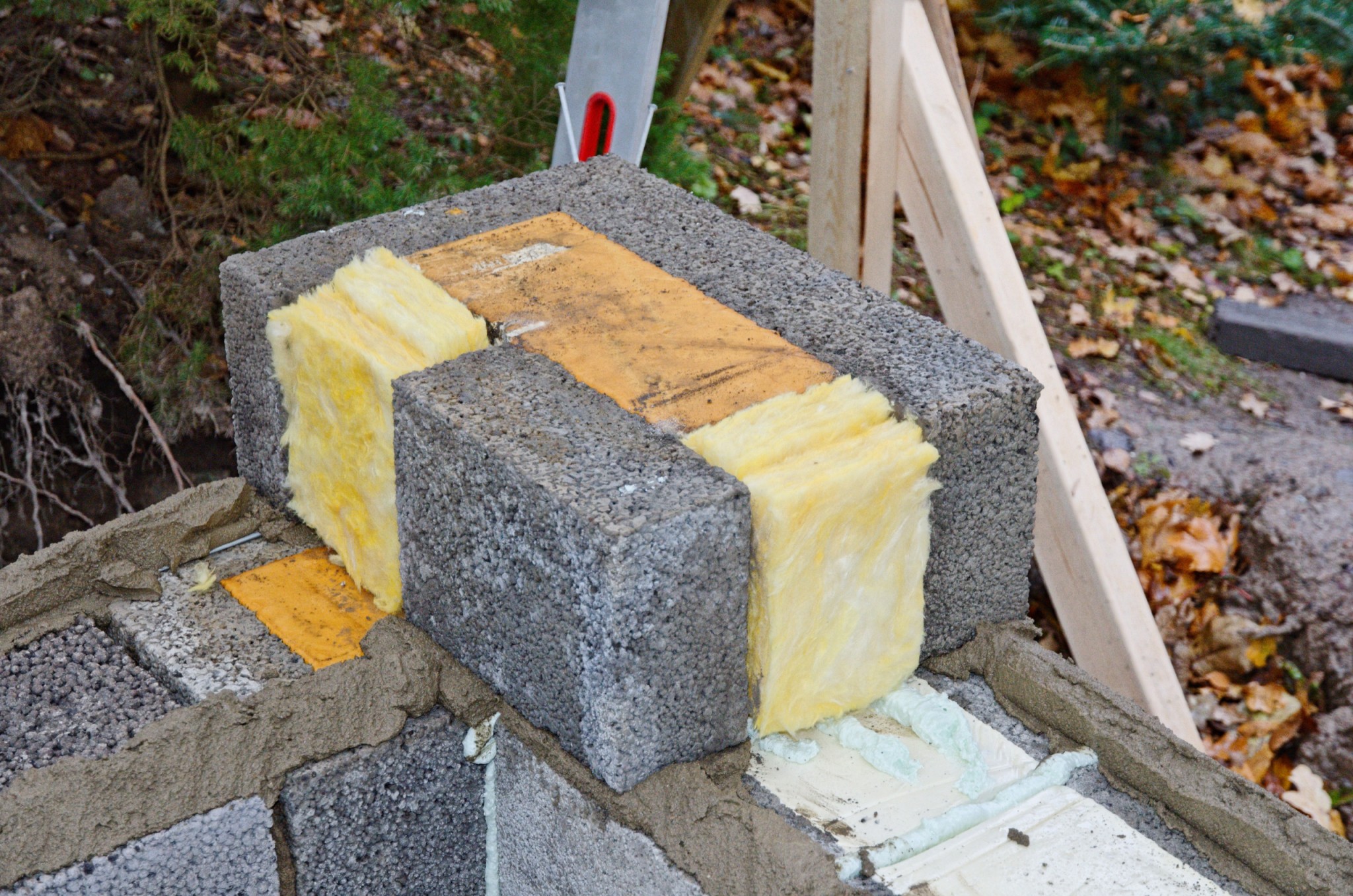
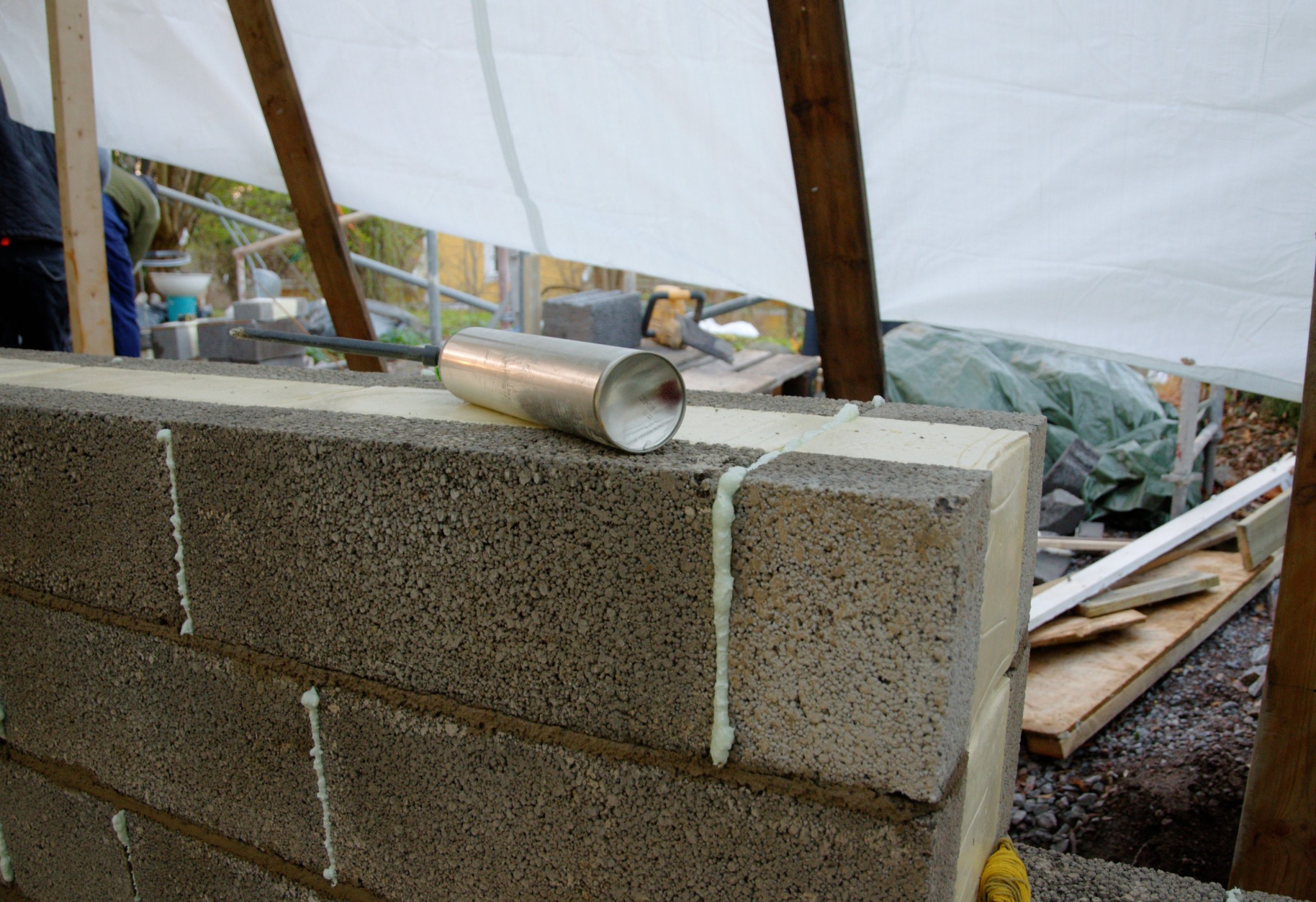
Leca in strength class 3 (3Mpa or about 30kp/cm2) is easy to cut, I used a DeWalt alligator saw with carbide-tipped blades, it cut like butter, with perfect cuts.
It was worse with Weber ISO-Leca blocks, they were in class 5 (5Mpa) and much harder.
The alligator didn't make nice cuts at all, it had to be an angle grinder with a diamond blade.
I didn't try, but the best option is probably a diamond saw on a stand, but they are expensive around 4-500 per day to rent, compared to a hundred for the alligator and 200:- to purchase a 23cm diamond blade for an existing angle grinder.
Leca in strength class 3 (3Mpa or about 30kp/cm2) is easy to saw through, I used a DeWalt alligator saw with carbide-tipped blades, it sawed like butter, with perfect cuts.
But it didn't go as well with the Weber ISO-Leca blocks, which were in class 5 (5Mpa) and much harder.
The alligator saw didn't make nice cuts at all, so I had to use an angle grinder with a diamond blade.
I didn't try it, but the best option is probably a diamond saw on a stand, but they're expensive, about 4-500 per day to rent, compared to a hundred for the alligator and 200:- to buy a 23cm diamond blade for an existing angle grinder.
I just built a garage myself with Weber's new Lecablocks that are 25 thick and I then used a blade that looked similar to this http://hitachi-powertools.se/produkter.aspx?cat=1302&c=10460&prodID=14813
And it worked very well and gave nice cuts. But I got mine from Jula, but can't find that product there anymore, only the other one I linked to.
I bought a "KWB" reciprocating saw blade with carbide teeth for my reciprocating saw, as a spare. But it cuts even worse than the alligator, as the blade flexes more sideways, the cuts are not completely flat and straight.
Also, IF you buy a reciprocating saw blade, make absolutely sure it has carbide tips, otherwise it wears out too quickly, and as mentioned, there is a difference between Leca and Leca, Byggmax blocks are softer (and weaker) and probably work well, harder blocks than class 3 don’t work very well...
Something I noticed when cutting is that you should make cuts on both sides before cutting through the stone completely, so that the blade follows the cut and produces a straight and smooth surface.
Why do you need clean, neat cuts on a lecablock? If, unexpectedly, you're making something nice with leca, you'll cover it anyway with, for example, plaster. When building with leca, it's perfectly fine to use an axe and turn the cut into the joint (unless you're a mason and use lecablock daily, then I think it's justified to buy a $100 blade for a reciprocating saw).
I built, for example, walls at a 45-degree angle, which meant there was a heck of a lot to cut diagonally. With a carbide blade for four hundred, this was undoubtedly the smoothest way.....
Hmmm.... It seems like I have to eat some of my post now
But for a regular wall/foundation/wall, there won't be that many cuts, max one per wall and layer.
But it also depends on how you perceive a lot, I don't think it's a lot while someone else might think that one stone per layer is unreasonably much to cut.
The number of cuts per shift depends on the construction, whether it's four walls (new house) or three (extension like mine), cutouts for doors and windows.
In my case, the problems first came with the harder ISO-Leca as well, where cutouts for corner blocks have to be made, otherwise there will be thermal bridges. So indeed, there will always be a lot of sawing.
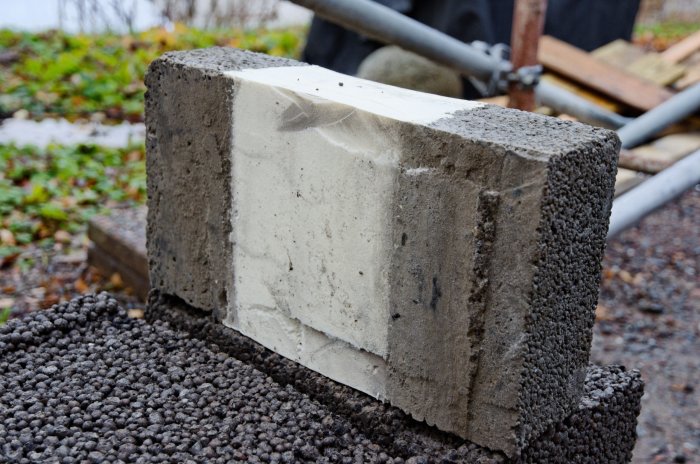
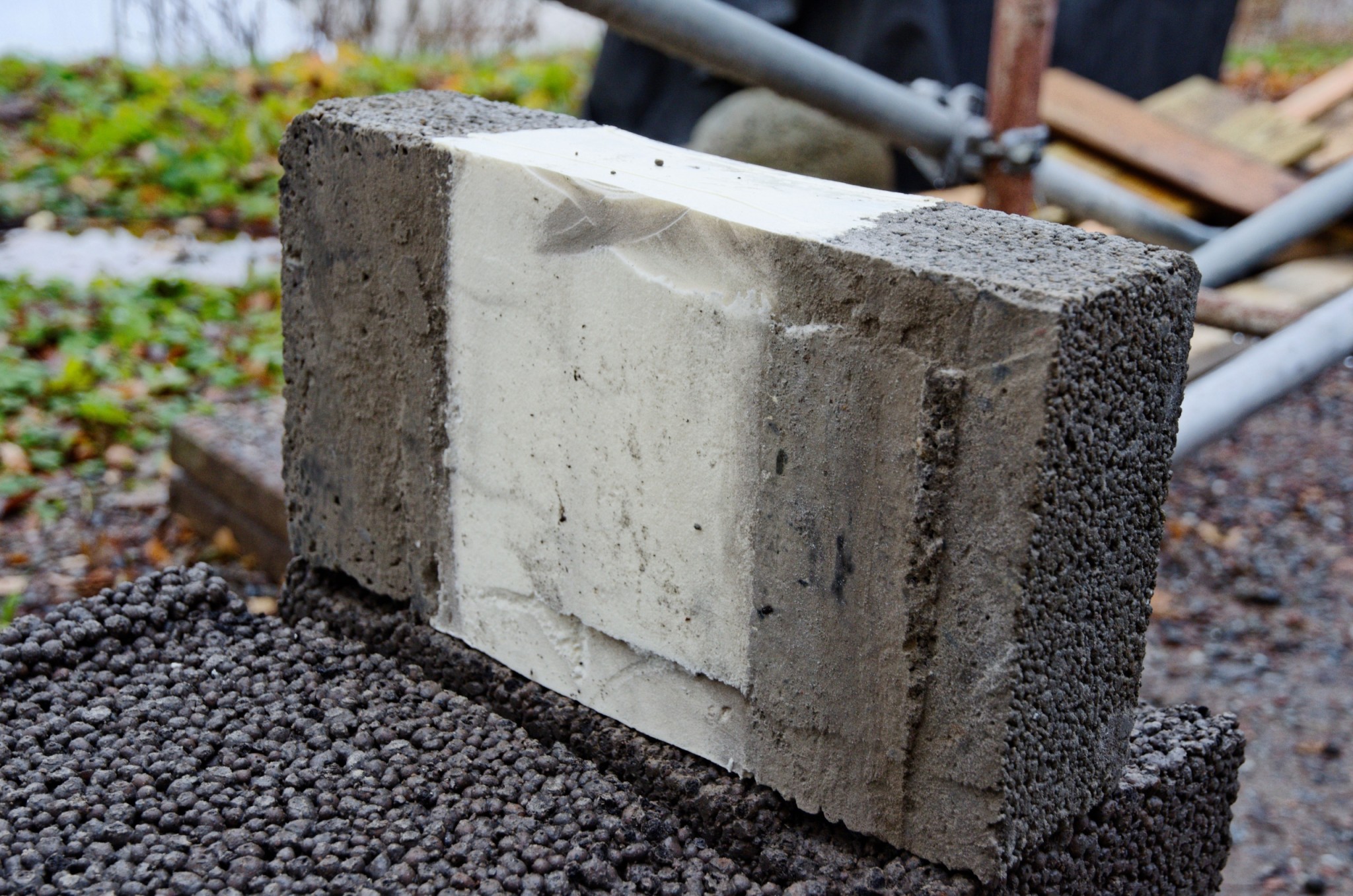
Attached is a picture of a "distorted" alligator cut in ISO-Leca and an example of how much sawing is needed in the ISO corner blocks, the last picture shows how tight I want the fit to maximize the insulation value, all non-load-bearing bed joints (isoyta against isoyta) and all butt joints (iso and lecaytor) are sealed with SPUF.
I have only cut some lecablock. But I used a regular circular hand saw with decent success. I have a saw purchased for 250kr that I use for "rough cutting."