
5,461 views ·
5 replies
5k views
5 replies
Sanding plywood with an orbital sander uneven?
Hello,
I have a piece of plywood the size of a kitchen cabinet door that is now sanded with a random orbital sander. When I run my hand over the surface, it feels smooth but still uneven. The wood has a certain texture with dark and light areas plus a couple of knots. It seems like the dark areas have resisted the sanding much better than the lighter areas?
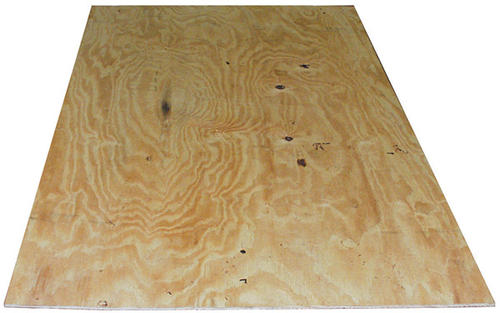
Knots are harder than the rest of the surface, which makes it reasonable to assume that the dark areas are softer than the knots but harder than the light areas.
The question is how to sand such a surface? Is it perhaps that the pad on a random orbital sander needs to be stiffer to solve the problem? Or do you need to use a completely different sanding method?
Best regards
I have a piece of plywood the size of a kitchen cabinet door that is now sanded with a random orbital sander. When I run my hand over the surface, it feels smooth but still uneven. The wood has a certain texture with dark and light areas plus a couple of knots. It seems like the dark areas have resisted the sanding much better than the lighter areas?
Knots are harder than the rest of the surface, which makes it reasonable to assume that the dark areas are softer than the knots but harder than the light areas.
The question is how to sand such a surface? Is it perhaps that the pad on a random orbital sander needs to be stiffer to solve the problem? Or do you need to use a completely different sanding method?
Best regards

Sanding provides a smooth but not necessarily flat surface. The darker parts are denser and therefore harder, so when you sand, it affects the lighter parts more. Additionally, I would argue that it's probably quite difficult to sand evenly with the same pressure across the entire surface using a handheld machine. A harder sanding pad can probably help to some extent, but the more you sand, the more the unevenness becomes apparent due to the surface's varying hardness. Therefore, it's important to sand as little as possible. A machine with a larger disc likely also gives a better result here than a smaller one.

Yes, unfortunately, I got hold of a really bad piece that needed a lot of sanding and filling. I tried to sand the dark areas a bit more, but there's quite a big difference in hardness. It took longer than I was prepared to wait to get these parts down.
So a stiffer board and coarser sandpaper might help a bit. Now, of course, it's too late in this case, but it's good to know for next time.
So a stiffer board and coarser sandpaper might help a bit. Now, of course, it's too late in this case, but it's good to know for next time.
Click here to reply