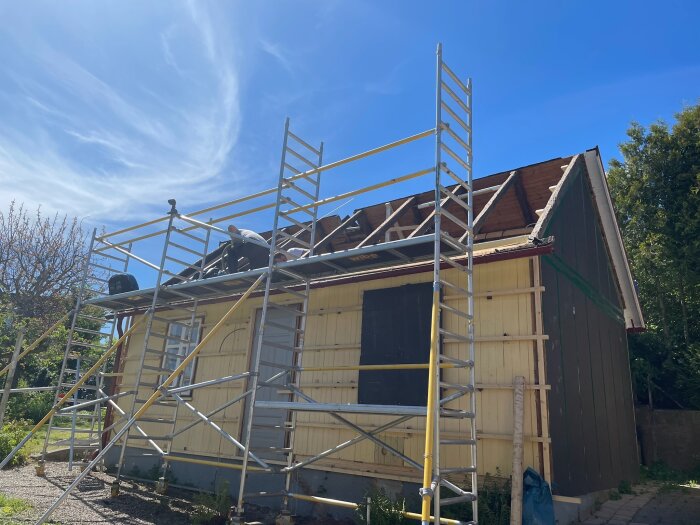
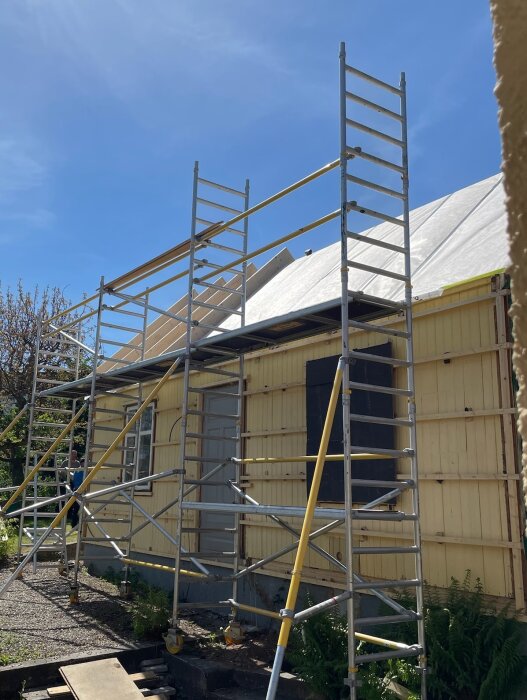
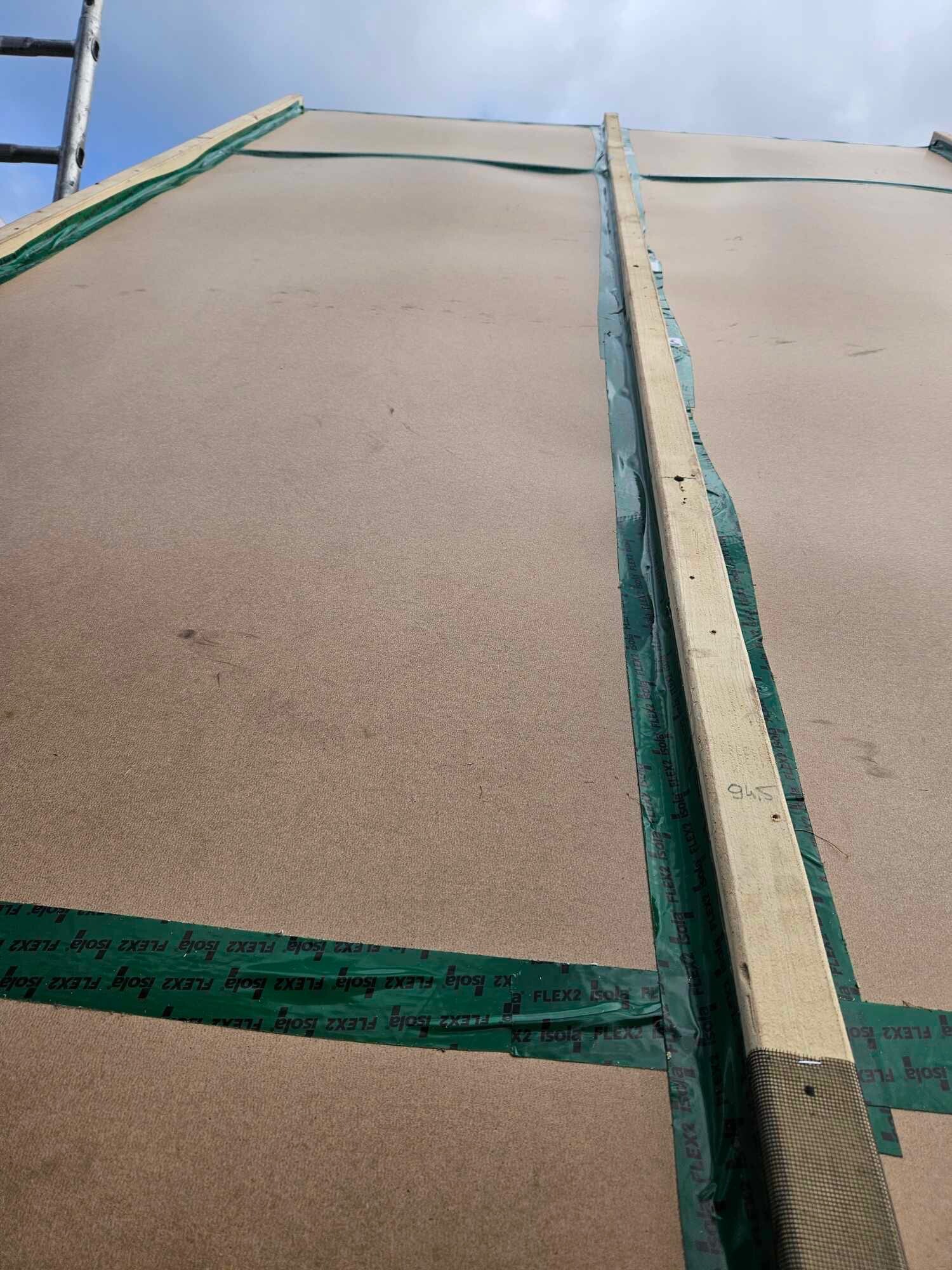
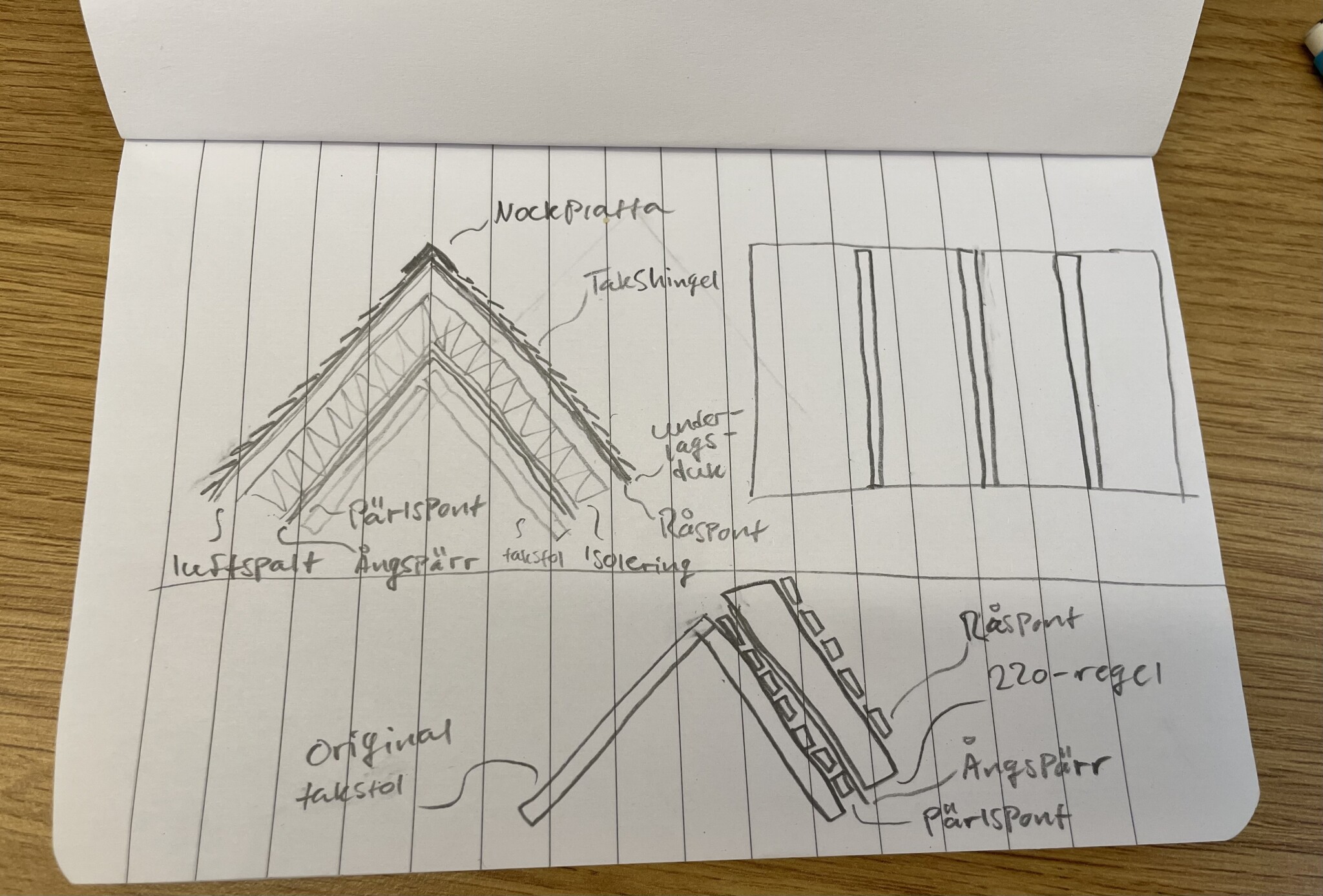
I have a cabin that was quite extensively renovated last year. It was previously uninsulated. Now it has a parallel roof with an air gap and eave ventilation. We installed a Mataki shingle roof but did not install ridge ventilation. Now I've been considering how big of a mistake that was, and I've probably concluded that it should be addressed. That is, to install Mataki's ridge ventilation afterward.
Does that sound sensible?
There is a vapor barrier in the roof, but there might still be moisture on the underside of the roof sheathing.
I am quite convinced that it's a good idea, but I would gladly welcome any input!
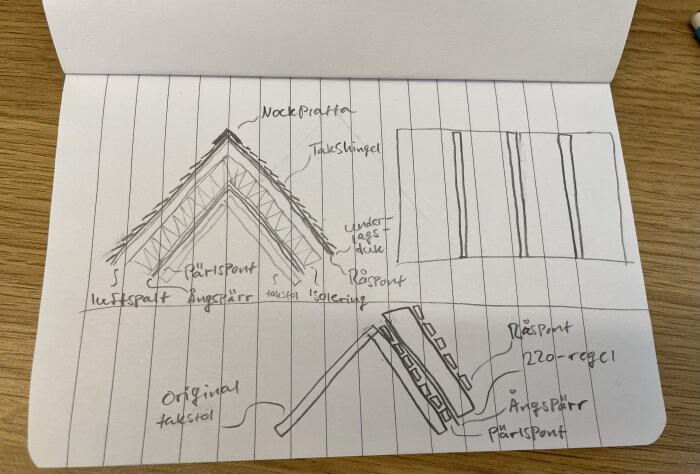
Attached are some pictures of how it looks and a sketch of the construction in cross-section.
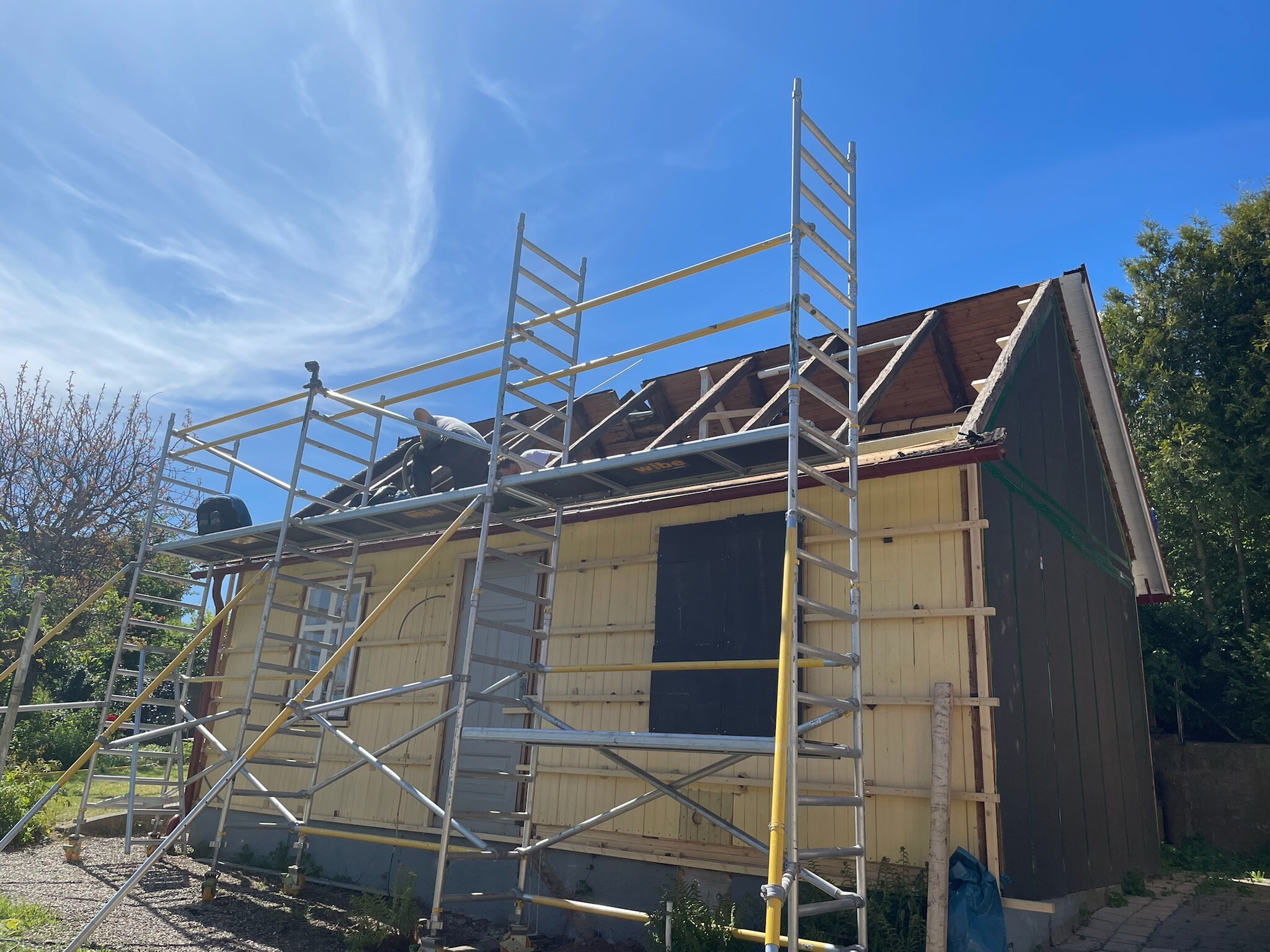
After the old roof sheathing was removed.
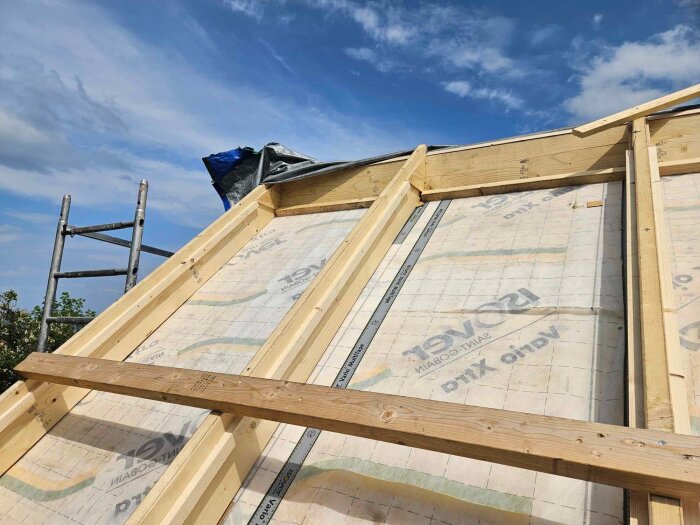
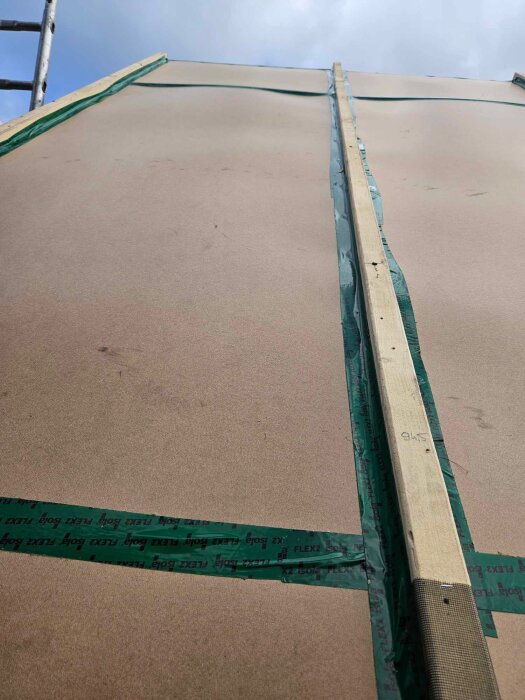
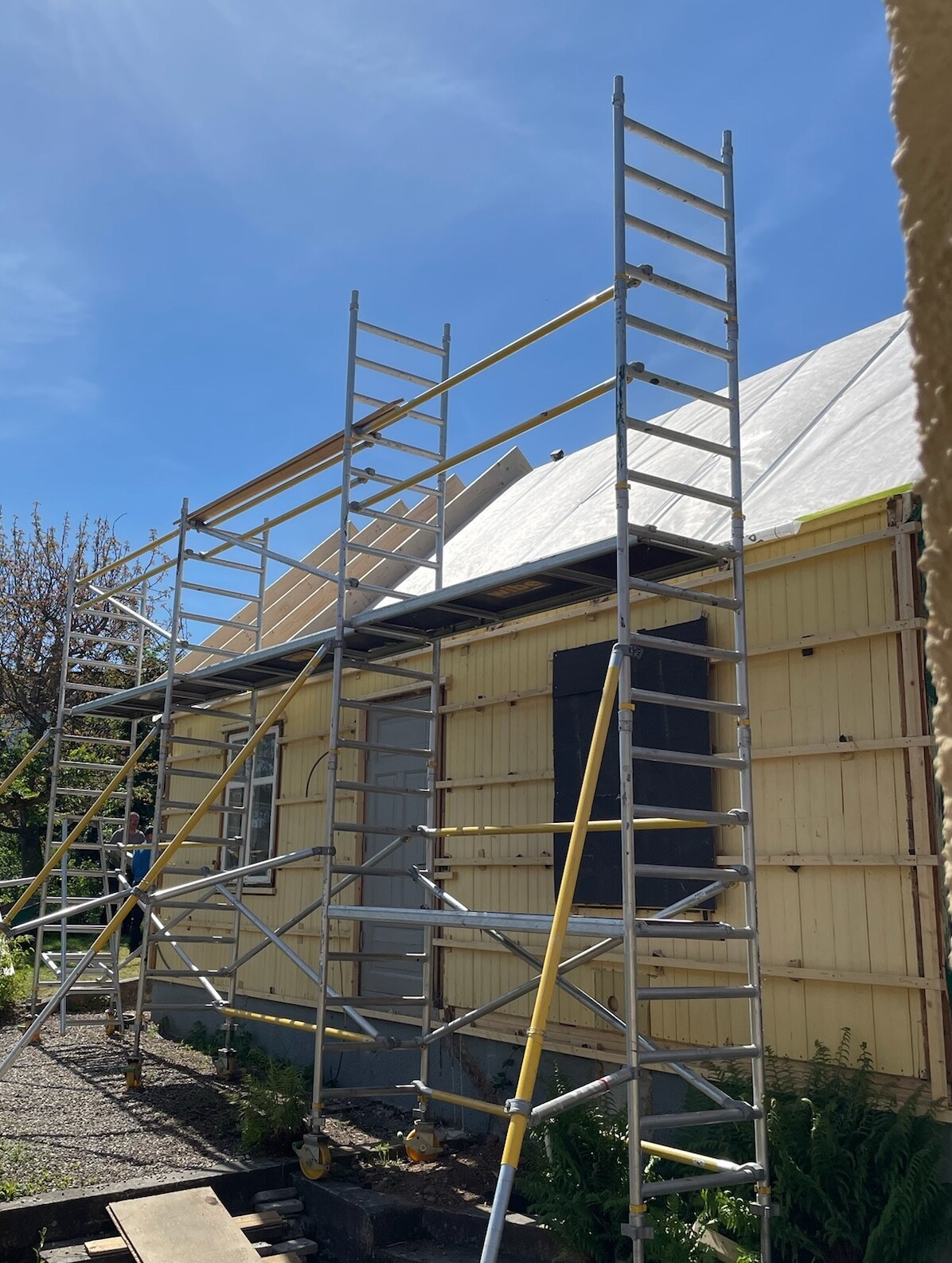
Here we have installed beadboard and a vapor barrier on the outside.
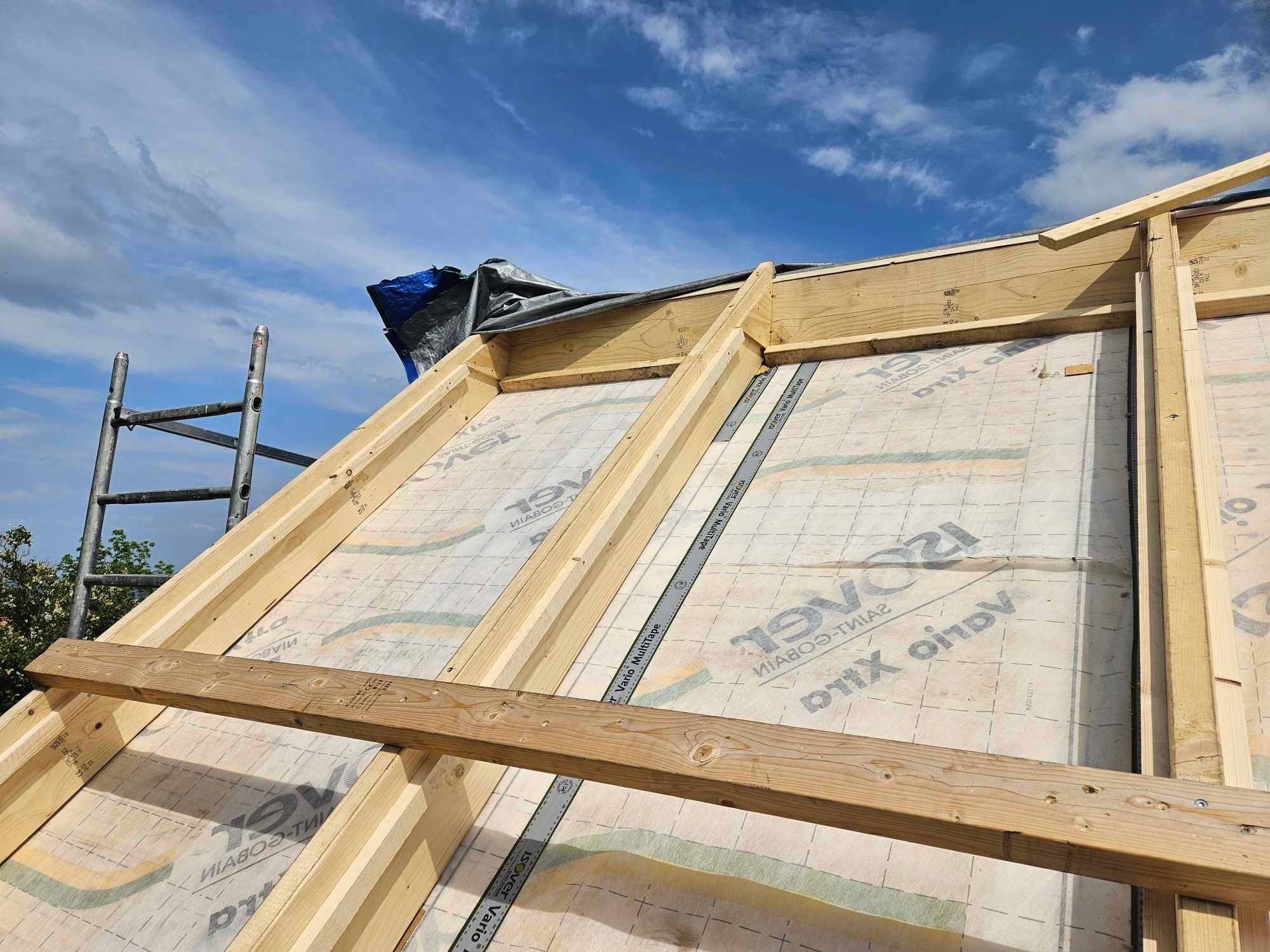
The vapor barrier is visible, and the compartments for insulation.
With the small roof, I would have been satisfied with an air gap down by the eaves, which is also a common solution. The important thing is that the air gap is there.
Yes, that might be enough. I would prefer to leave it as it is to avoid piercing a roof with the risk of leakage.
However, the roof is steep, 44 degrees.
Thank you for your response!
Click here to reply
Vi vill skicka notiser för ämnen du bevakar och händelser som berör dig.