
12,977 views ·
13 replies
13k views
13 replies
Replace fiberboard with gypsum
I'm planning to remove the tretex that is in the kitchen at home and put 13mm drywall directly on the roof decking instead.
Initially, I thought I would keep the tretex, but I won't get good results by painting+spackling or using renovation drywall. If you're going to do something, you want it to be good!
However, I'm now wondering if I'm making a mistake by removing the tretex that is on the outer wall (about 4m of wall in total) considering the insulating properties tretex has. In terms of insulation, maybe the difference between tretex and drywall is negligible since the house is additionally insulated on the exterior?
Initially, I thought I would keep the tretex, but I won't get good results by painting+spackling or using renovation drywall. If you're going to do something, you want it to be good!
However, I'm now wondering if I'm making a mistake by removing the tretex that is on the outer wall (about 4m of wall in total) considering the insulating properties tretex has. In terms of insulation, maybe the difference between tretex and drywall is negligible since the house is additionally insulated on the exterior?
Member
· Norrbotten
· 3 390 posts
If you're going to put plaster on the outside anyway, it's not quite as important to get rid of the flammable tretex. It will then be fire-protected by the plaster. BUT, just as you said yourself, it might not add anything special in terms of insulation, and you absolutely can't hang anything on it, not even a small picture. So the best thing would probably be to remove the tretex and then plaster. If you're going to plaster anyway?
Thanks for the response.norrbottenstorpet said:If you're going to attach gypsum on the outside, it's not really as important to get rid of the flammable tretex. It will then be protected by the gypsum. BUT just as you say yourself, it may not add much in terms of insulation capability, and you absolutely cannot hang anything on it, barely even a small painting. So the best thing to do would probably be to remove the tretex and then apply gypsum. If you're going to use gypsum?
Yes, exactly, I plan to replace the tretex boards with 13mm gypsum boards, as they add about the same thickness to the wall. What I was most concerned about was whether the room would become colder with only gypsum, but I believe, as you also confirmed, that the difference should be negligible.
Should you apply paper or something similar behind the gypsum against the outer wall, or is it just as good to attach it directly to the wooden wall? I've seen that there is paper behind the tretex boards.

In old summer cottages with completely uninsulated board walls, treetex made a difference when it came to insulation, but in something originally intended to be a residential house, it's more doubtful. It insulates about as well as modern insulation, and how many would add extra insulation with half an inch of fiberglass? Treetex insulates much better than plasterboard, but in both cases, it's too little to make a significant difference. I would remove the treetex.

When I did this maneuver a few years ago in a previous house, I used 13mm drywall over tretex. It went fast and turned out smooth and nice. I find renovation drywall difficult to work with; it rarely ends up as smooth and nice as standard drywall.
No, it's regular cardboard of a slightly thicker type. It can't serve any useful function as a vapor barrier.
The question now is whether I should install plastic before the gypsum board or if I should skip it? I should add that the house is from '36, did they even use vapor barriers back then?
It might be worth placing plastic against the sheathing when I'm already removing the fiberboard. It can't hurt, right?
The question now is whether I should install plastic before the gypsum board or if I should skip it? I should add that the house is from '36, did they even use vapor barriers back then?
It might be worth placing plastic against the sheathing when I'm already removing the fiberboard. It can't hurt, right?
I've seen many do that, but it poses problems for me due to both a window and a tretex board that has bowed, so the gypsum wouldn't lie flat against the wall right there.Gabbe1 said:
Then there's the less important reason that I simply want to remove the tretex because it feels shabby

If you are going to renovate a house with tretex, you can bet that the electrical and data wiring is seriously lacking. I would probably have routed channels into the tretex and installed a lot of new electrical and data wiring, then placed strips of OSB with CC 60 to straighten it out, and then new gypsum on top of that. If the tretex has warped, you can remove a bit there, or alternatively add masonite where the tretex bulges out so that the gypsum becomes straight.
The walls may feel colder if you replace the three-tex board with plaster, but that's because plaster is a non-reactive material with thermal conductivity.
But I would have removed all the three-tex and then plastered. It differs by 2mm, so you cut or saw it along the ceiling molding, and if you put on plaster, it will never show.
But I would have removed all the three-tex and then plastered. It differs by 2mm, so you cut or saw it along the ceiling molding, and if you put on plaster, it will never show.
It ended up being necessary to tear down all the tretex and go with 13mm gypsum. Unfortunately, there's a 4mm difference between the gypsum and the tretex, so a new ceiling molding will be needed.
I chose to install a vapor barrier against the outer wall, I don't know if it's unnecessary but at least it can't hurt.
I chose to install a vapor barrier against the outer wall, I don't know if it's unnecessary but at least it can't hurt.
I have a similar situation. Behind the fiberboards, however, there is timber, on which battens have been placed in the form of various paper strips, and they have also chiseled away protruding parts of the timber so that the boards sit straight. I have already started removing the fiberboard because it has large bulges in places. However, the room is quite large, about 6x5 meters. But I still think that drywall would be better, although the battens are not of the best kind.
There are also varying distances between them. On the dismantled surface, there is 110 centimeters to the first batten and then 120 centimeters to the corner. In the corners, there are remnants of what used to be over the timber and it was a few millimeters thick paper. This was probably torn off in 1947 and replaced with fiberboard with wallpaper.
Is it possible to install drywall and then wallpaper? I suppose it will be quite costly unless I continue the demolition myself.
There are also varying distances between them. On the dismantled surface, there is 110 centimeters to the first batten and then 120 centimeters to the corner. In the corners, there are remnants of what used to be over the timber and it was a few millimeters thick paper. This was probably torn off in 1947 and replaced with fiberboard with wallpaper.
Is it possible to install drywall and then wallpaper? I suppose it will be quite costly unless I continue the demolition myself.
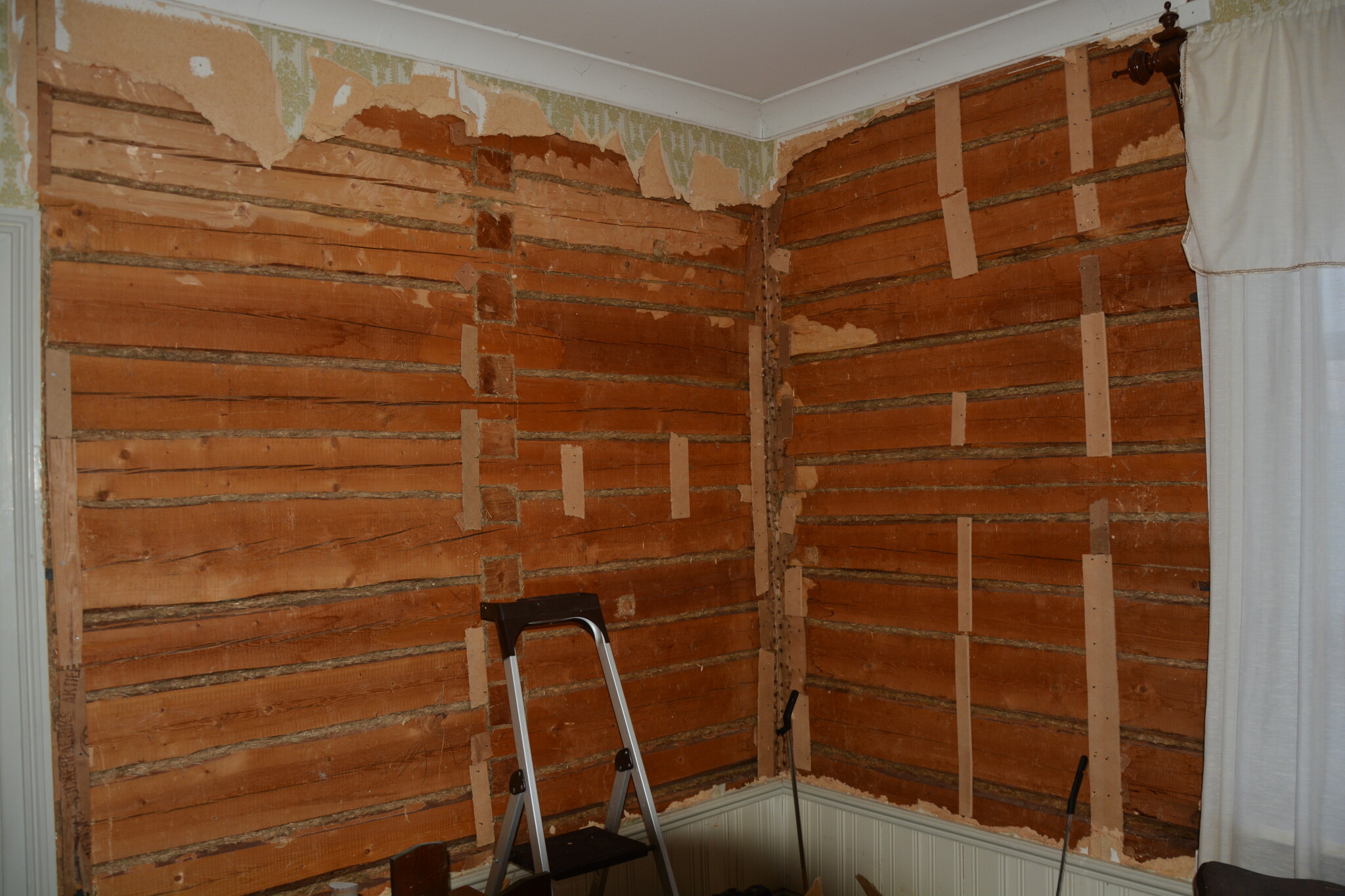
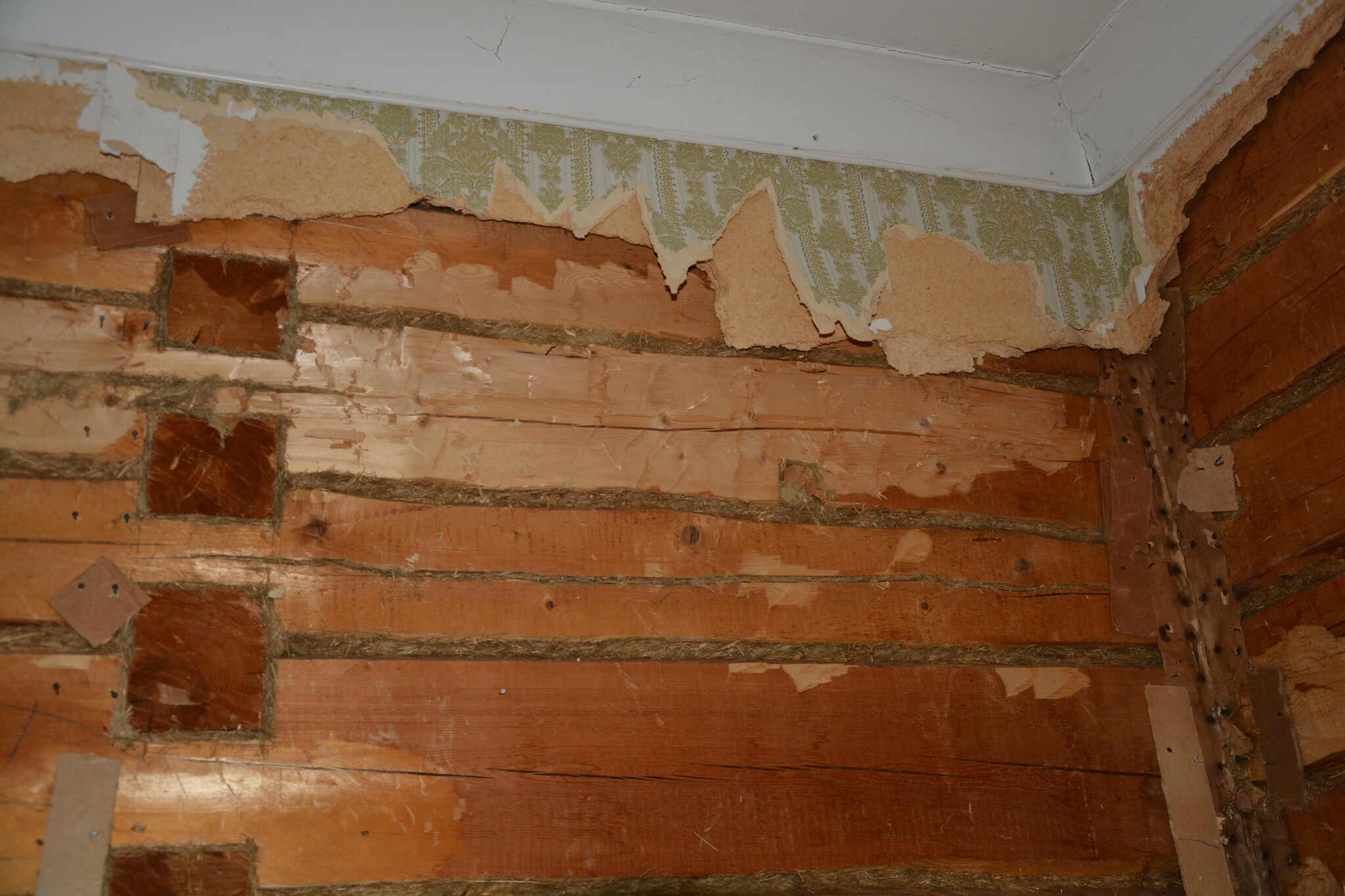
Just level with battens and put the boards up?P Pär Nordqvist said:I have a similar situation. Behind the Tretex boards, there is timber, which has been fitted with battens in the form of various paper strips and parts of the timber have been cut away to allow the boards to sit straight. I have already started removing the Tretex because it has large bulges in places. However, the room is quite large, about 6x5 meters. But I still think plasterboards would be better, but the battens are not of the best quality.
The distances between them vary as well. On the torn surface, there is 110 centimeters to the first batten and then 120 centimeters to the corner. In the corners, there are remnants of what was previously over the timber, and it was a couple of millimeters thick paper. This was probably removed in 1947 and replaced with Tretex with wallpaper.
Is it possible to mount plaster and then wallpaper? It will probably be quite costly, I suppose, unless I continue the demolition myself.
The problem is that the log wall is directly behind the boards, which are 12 mm. Not much room to maneuver. However, I don't have the skills to make battens; a carpenter needs to do that. I can tear it down out of sheer curiosity, but then making it new is more difficult.yoloboi said:
Yes, why am I doing this, one might ask. It stems from having torn down walls in other rooms that were wavy due to shoddy construction in the early '90s. That's done and turned out very well, with the help of a professional. Now you can hang things up without a problem. This "spread" to this room because the walls are so soft, and I wanted to see what was behind them and what materials were used. But maybe I bit off more than I could chew here; that can't be ruled out.
Click here to reply