
7,952 views ·
7 replies
8k views
7 replies
Replace corner boards - materials and technique
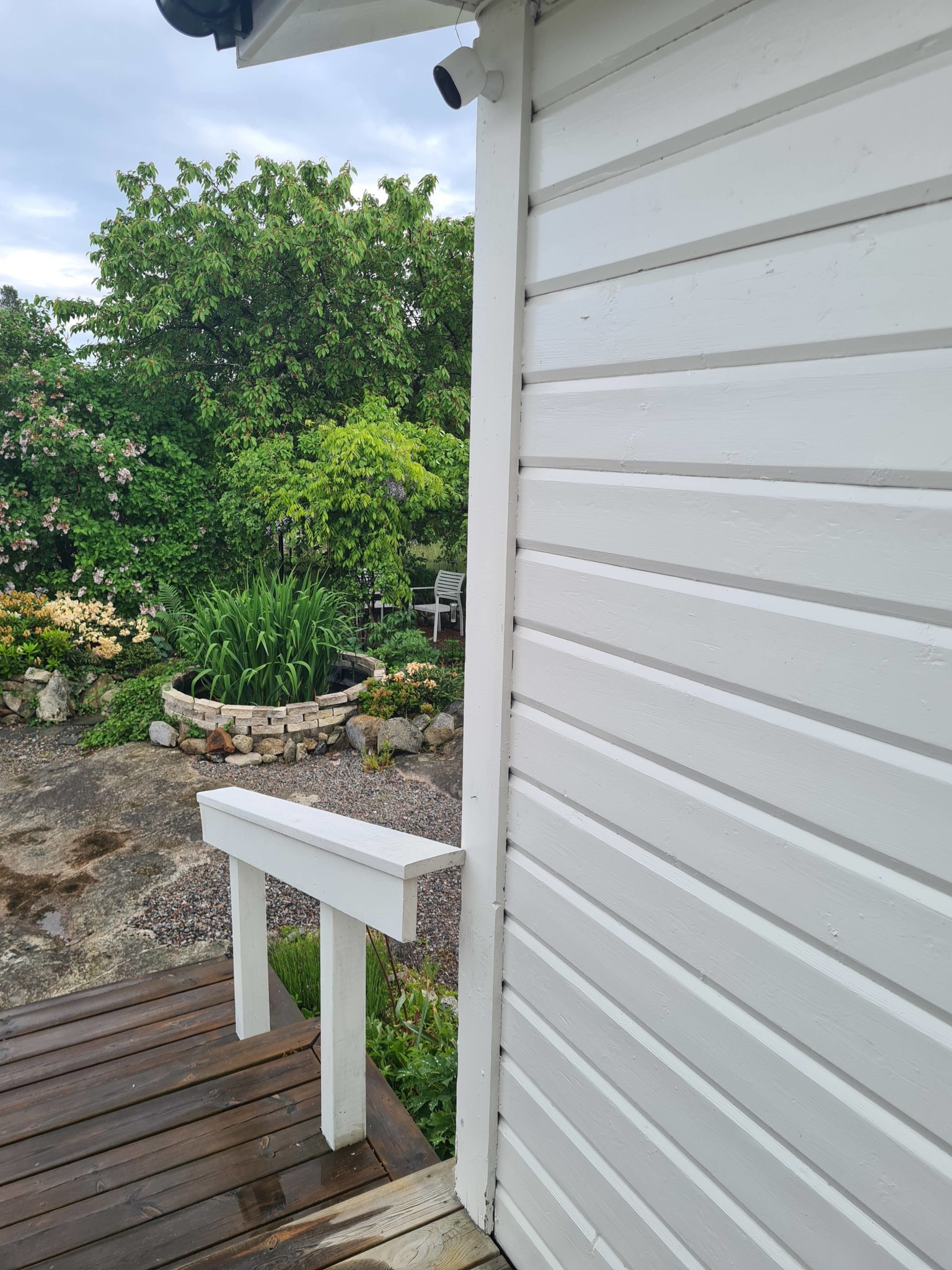
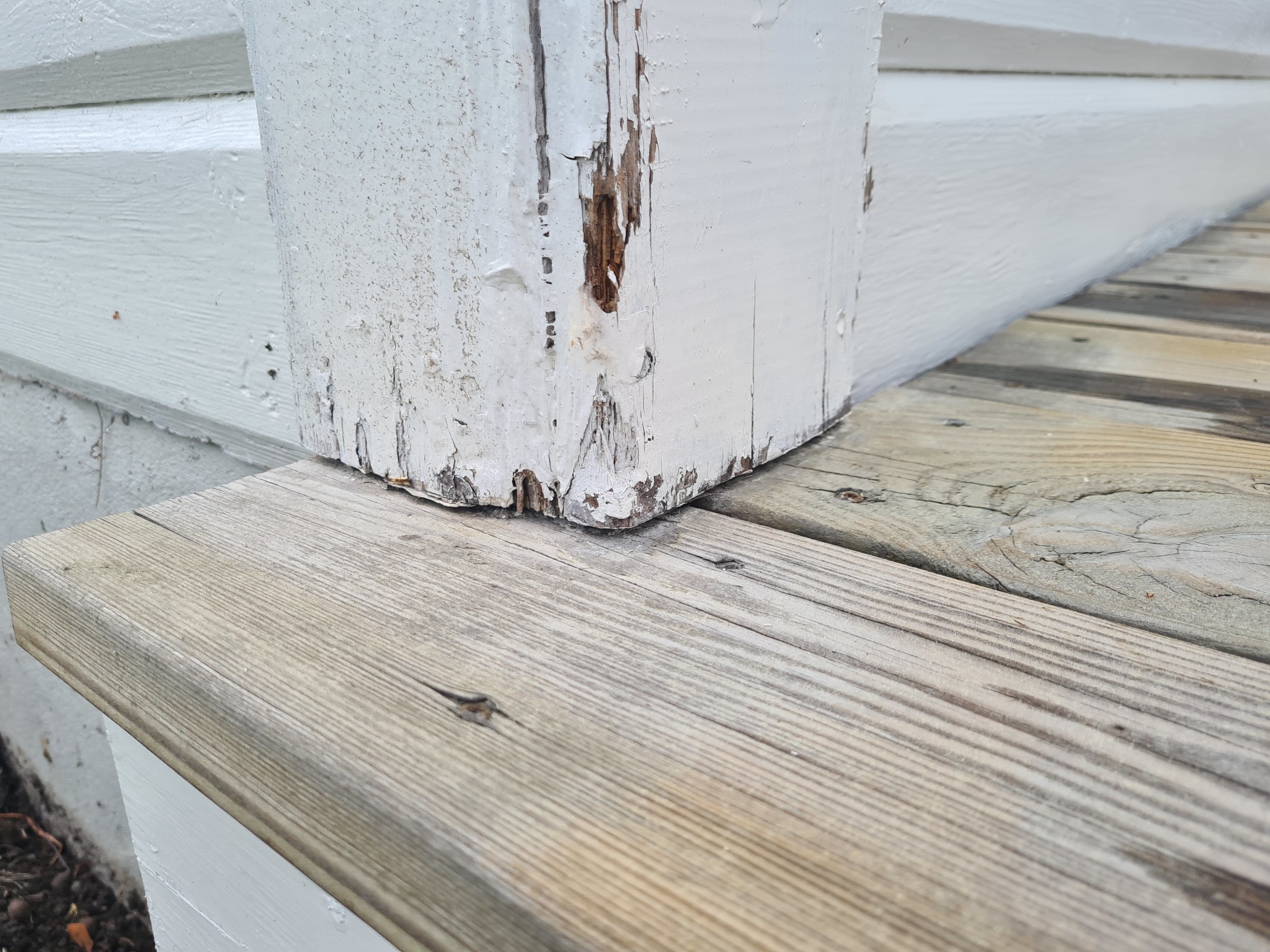
Hi, I will need to replace the knutbrädorna in They have started to rot at the bottom edge. I have the measurements of the boards but am wondering about the technique. Some say that the bottom edge cut should be straight, others say angled so the water drips off.
What can go wrong when I rip/replace? Which nails do you use? Yes, many silly questions... But you guys are usually nice in this forum )
)
What can go wrong when I rip/replace? Which nails do you use? Yes, many silly questions... But you guys are usually nice in this forum
)
The lower edge should be angled at approximately 15 degrees, for water runoff.
Panel nail or 3" nail hot-dip galvanized.
Can also be screwed with outdoor screws but it won't look as nice.
Leave some air at the bottom, so it doesn't rest on the surface shown in the picture.
Panel nail or 3" nail hot-dip galvanized.
Can also be screwed with outdoor screws but it won't look as nice.
Leave some air at the bottom, so it doesn't rest on the surface shown in the picture.

I always screw knot boards and trim outdoors. Screw them into the wall and together so they become tight. Keep in mind that they have different dimensions, often 22x170 22x145, and that you position them correctly so the knot looks equally wide.
Thanks, do you have a good trick for cutting the angle? Maybe you could ask the lumberyard to cut the boards.larsbj said:

Fascia boards are usually cut straight to achieve a neat bottom edge. Cutting a drip edge on them and making it look nice where they meet becomes unnecessarily complicated, in my opinion.
Yours probably haven't fared well being so close to the decking, so a few more millimeters of gap might be best for the cladding. Water splashes or wood resting against something are good ways to shorten the lifespan of the paneling, but sometimes you just have to live with it.
Yours probably haven't fared well being so close to the decking, so a few more millimeters of gap might be best for the cladding. Water splashes or wood resting against something are good ways to shorten the lifespan of the paneling, but sometimes you just have to live with it.
Yes, I can imagine otherwise there will be an up and down V right in the corner with angles on the boards at the bottom edge?Rickard.ag said:
Cladding boards are usually cut straight to get a neat bottom edge. It's unnecessarily complicated to cut a drip edge on them and make it look nice where they meet, in my opinion.
Yours have probably not fared well being so close to the decking, so an extra mm of space in between is probably best for the cladding. Water splashes or having the wood against something are good ways to shorten the lifespan of the panel, but sometimes you just have to live with it.
You just have to avoid sawing all the way out on one of them so it's not visible.Tobias Ferm said:
I have torn down the panel of many houses and the experience is that those with a straight edge have fared significantly worse.
Click here to reply