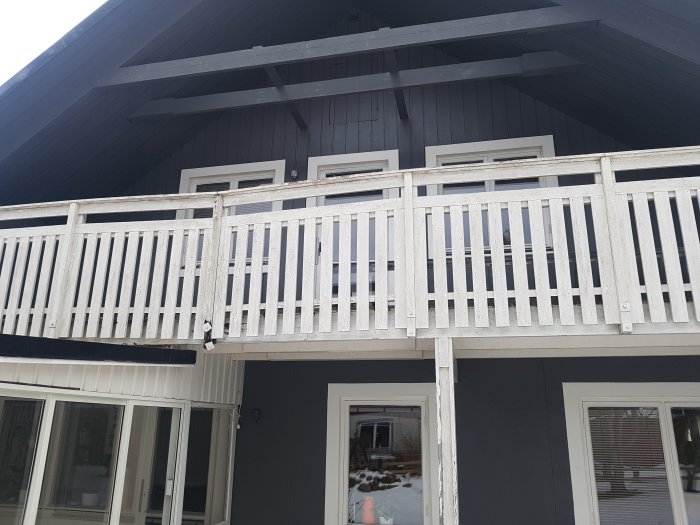
I've just acquired a 70s house with the inevitable yodeling balcony. One of the projects this spring will be to fix up the balcony, whose railing and the board where the railing is attached are rotten and awful. What I'm pondering now is how to proceed, whether it's possible to fix it myself, if it's just a matter of calling the nearest carpenter, and so on and so forth. Here are some pictures of the situation:
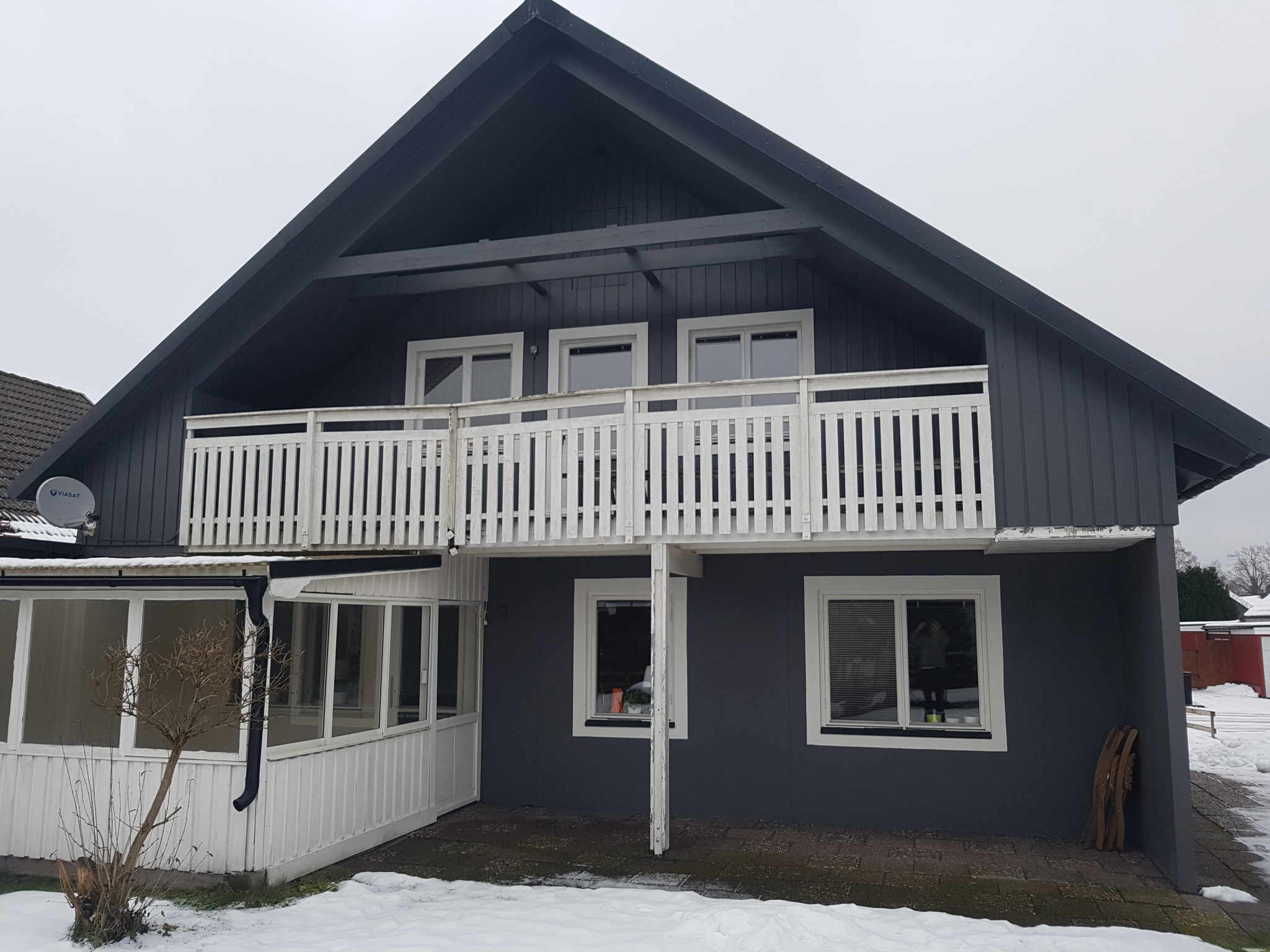
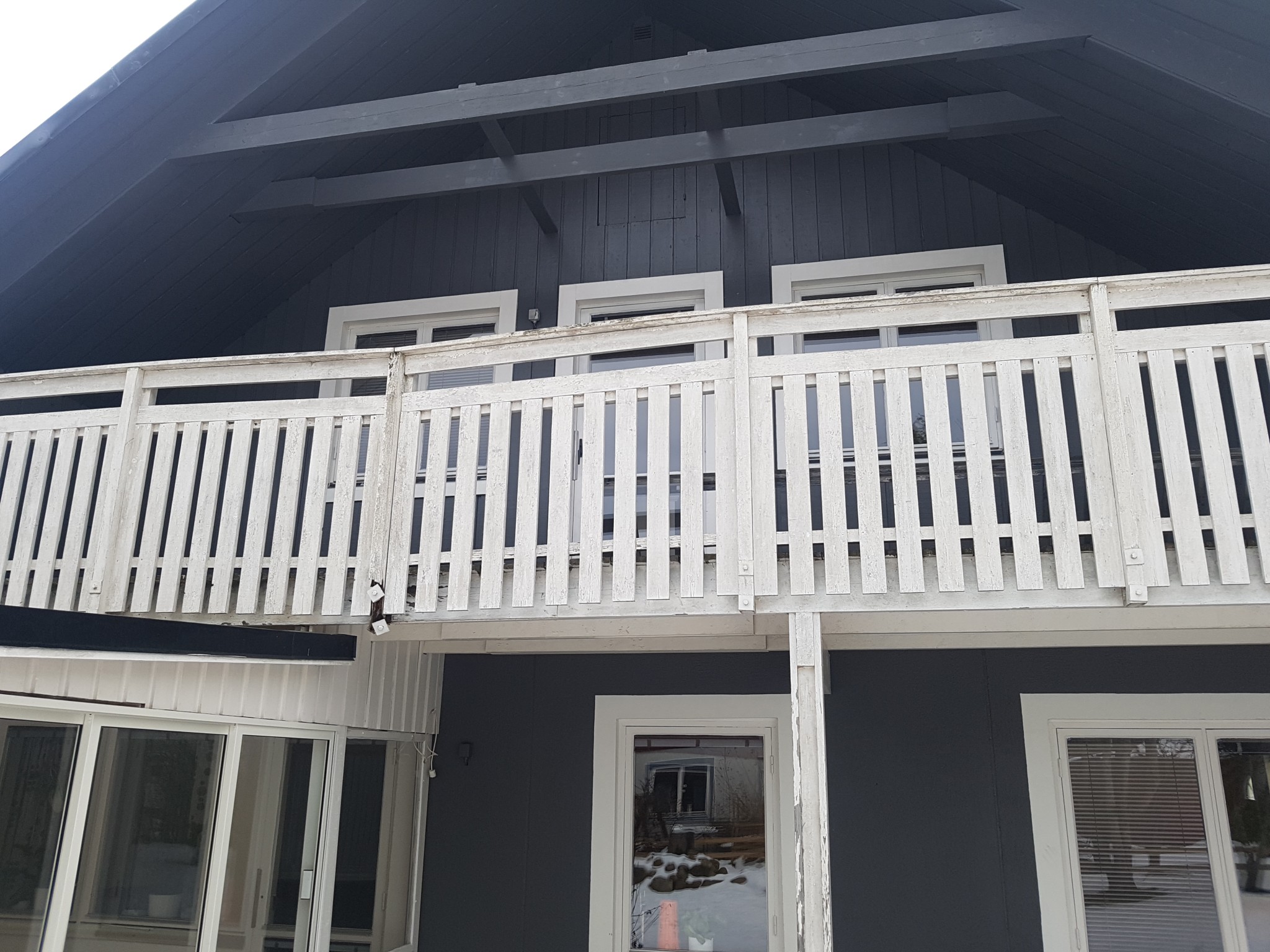
1. Overview, see how the railing is sagging where the attachment has completely broken
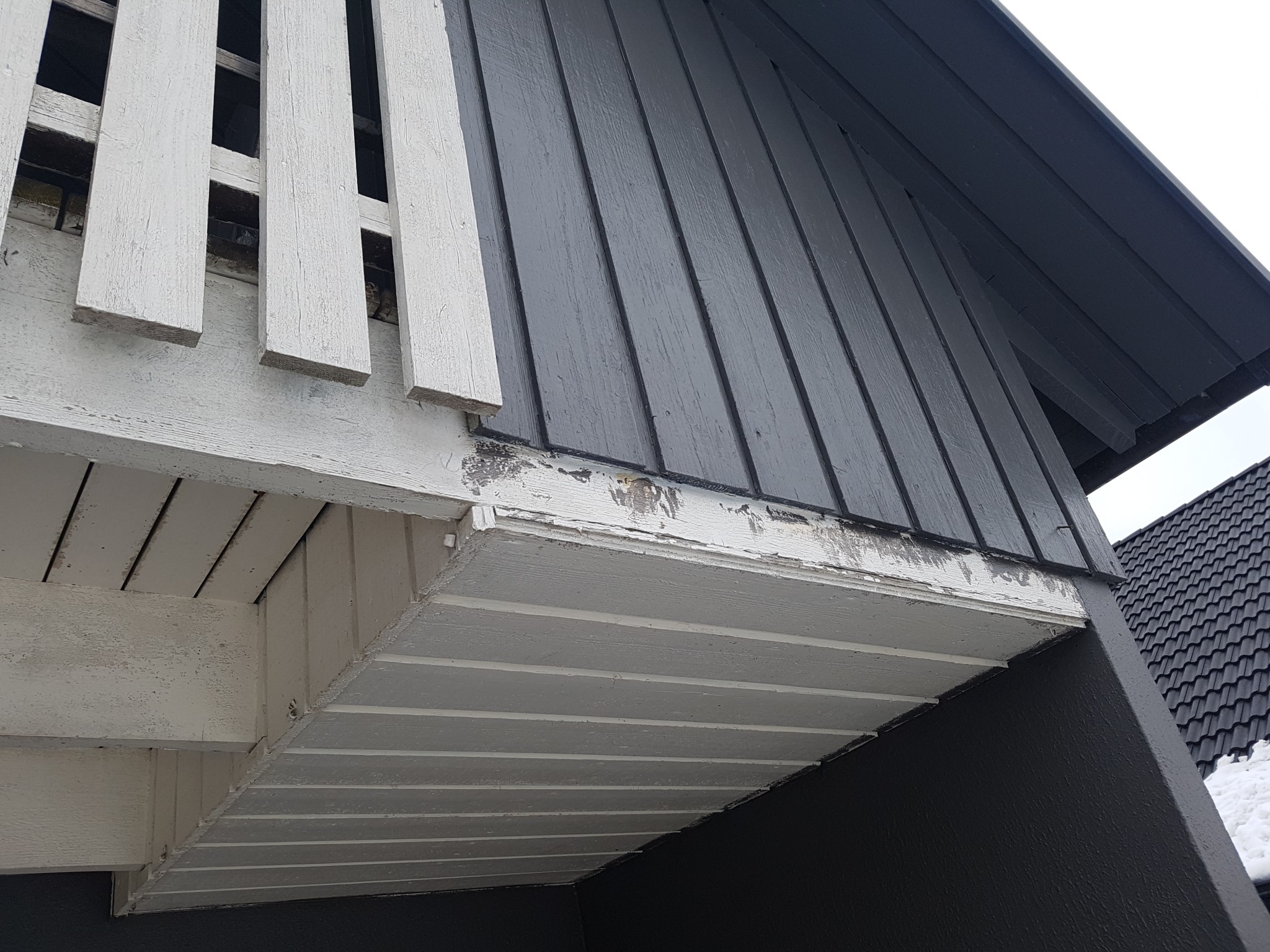
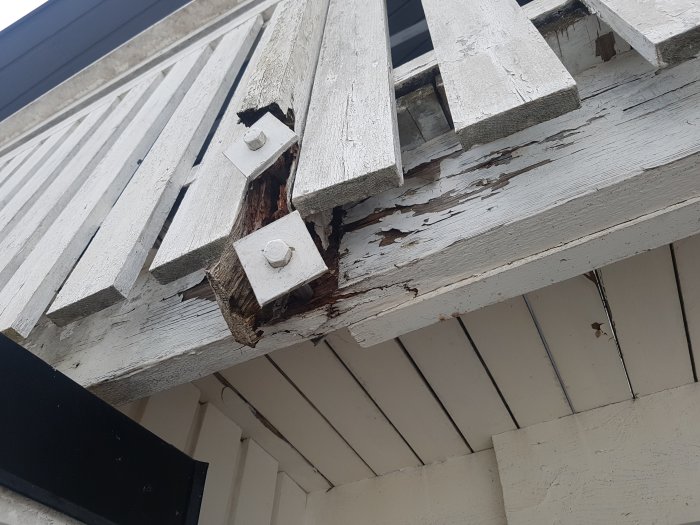
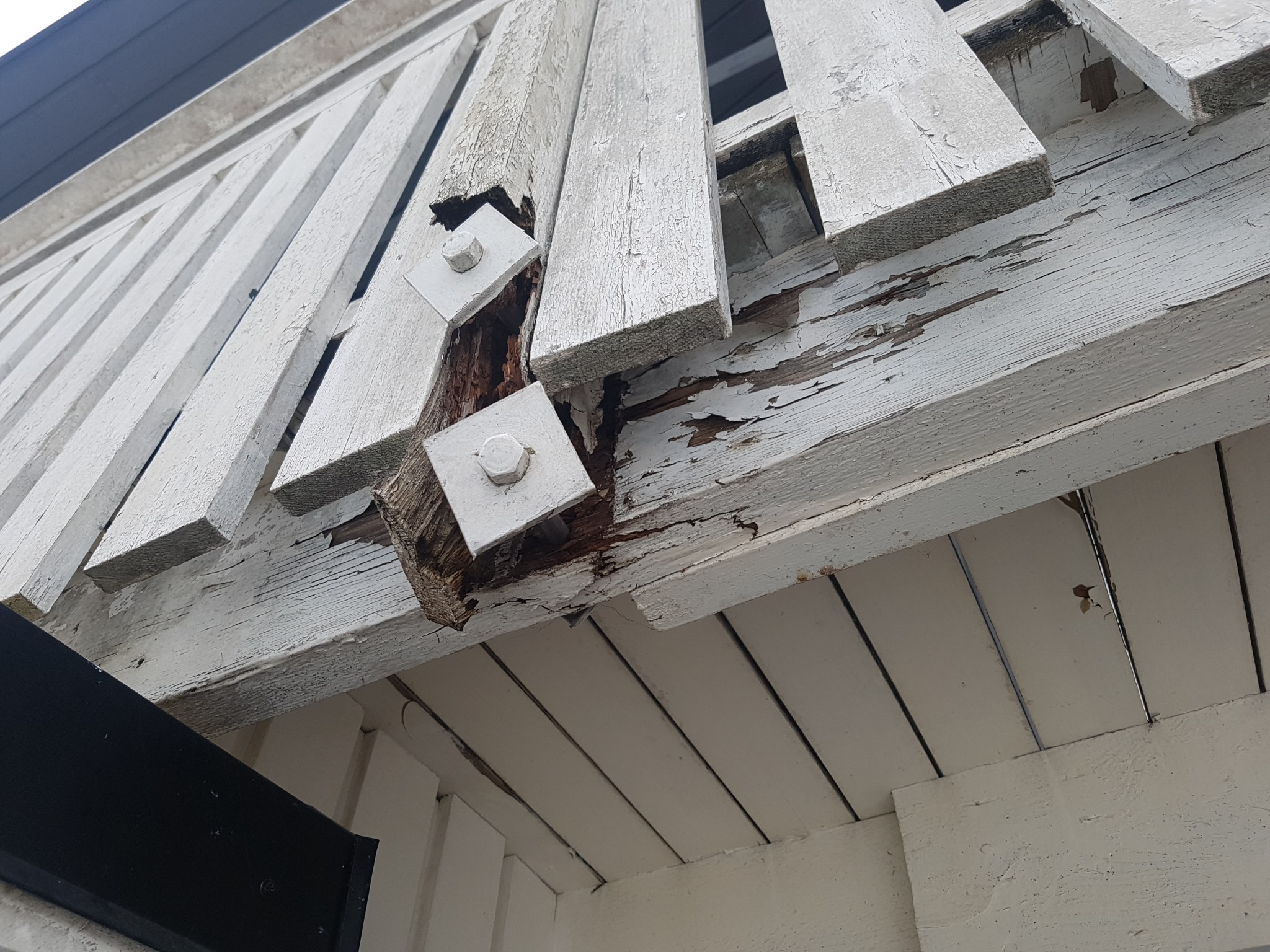
2. Close-up of the worst part
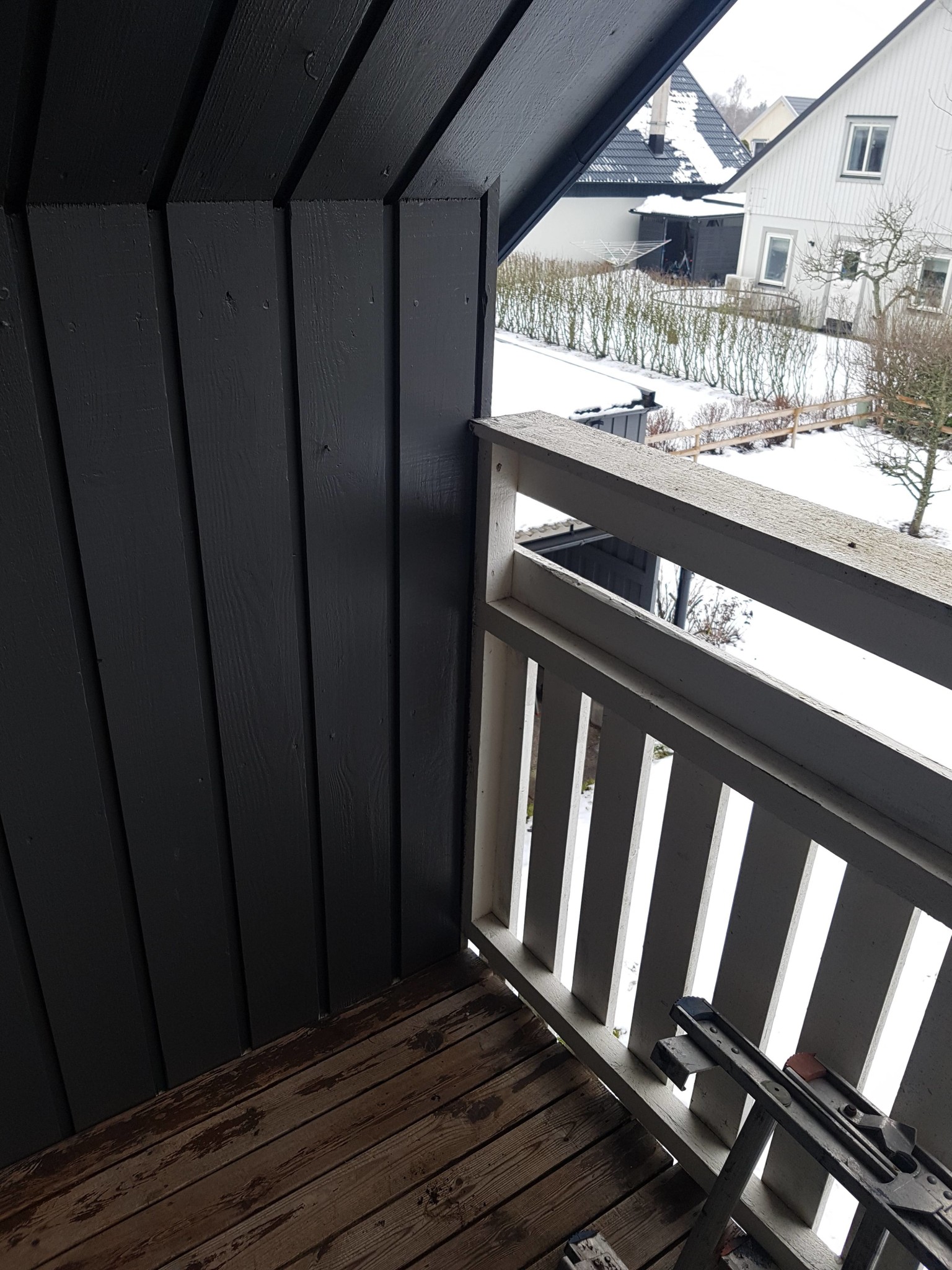
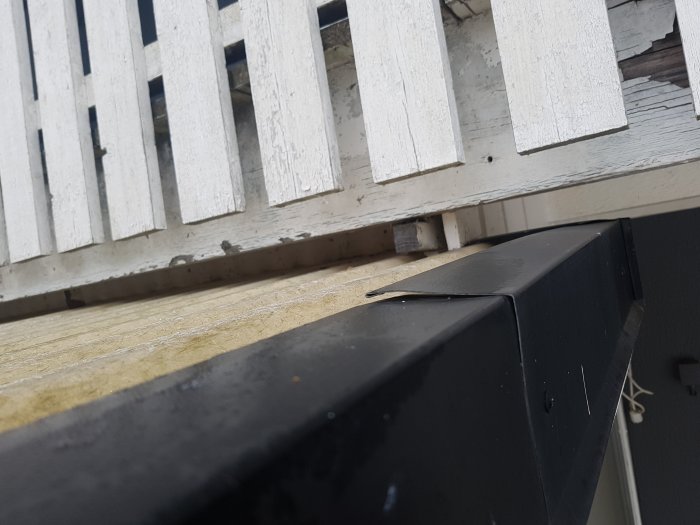
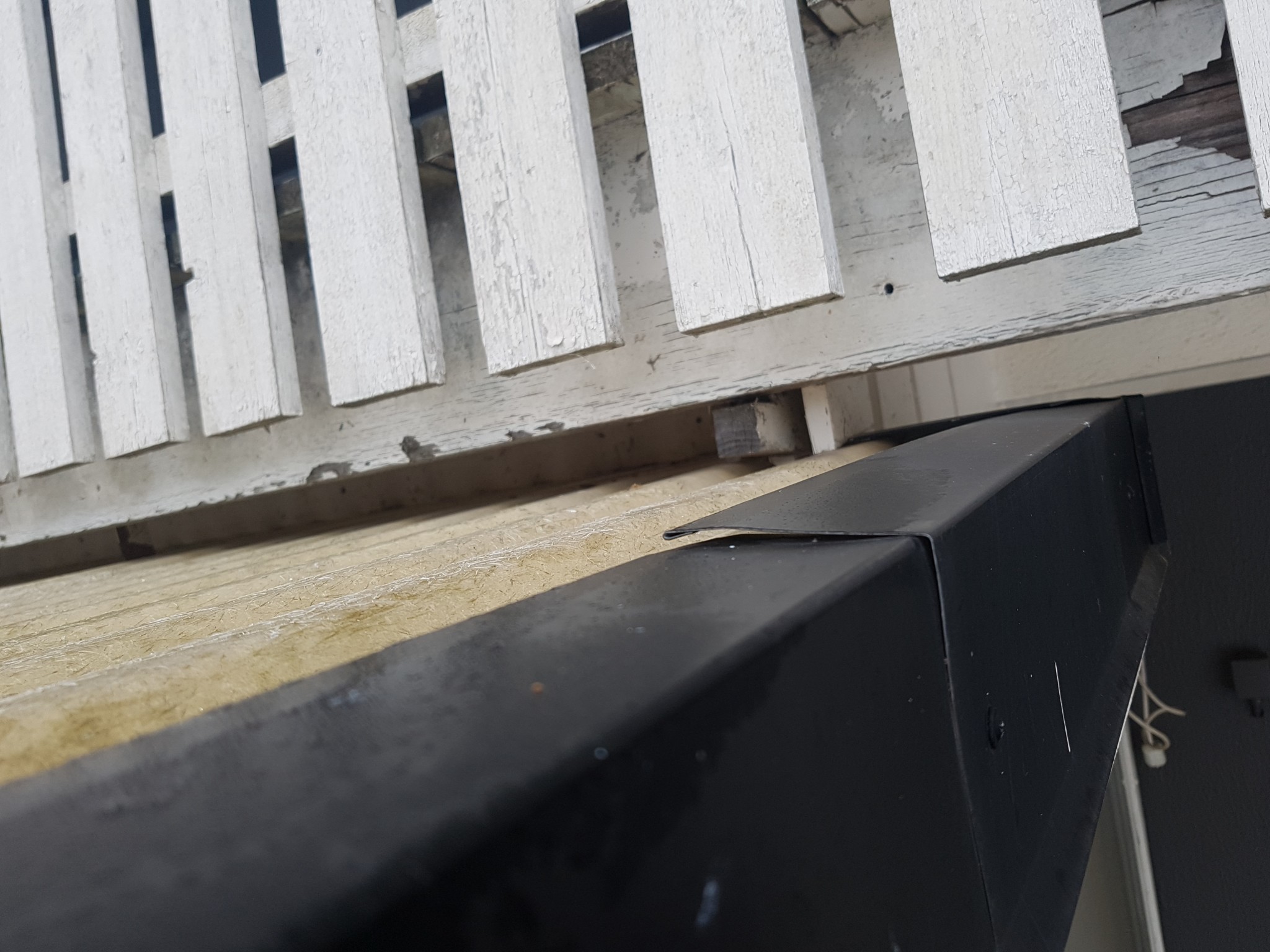
3. Close-up from above so you can see the part that extends over the patio
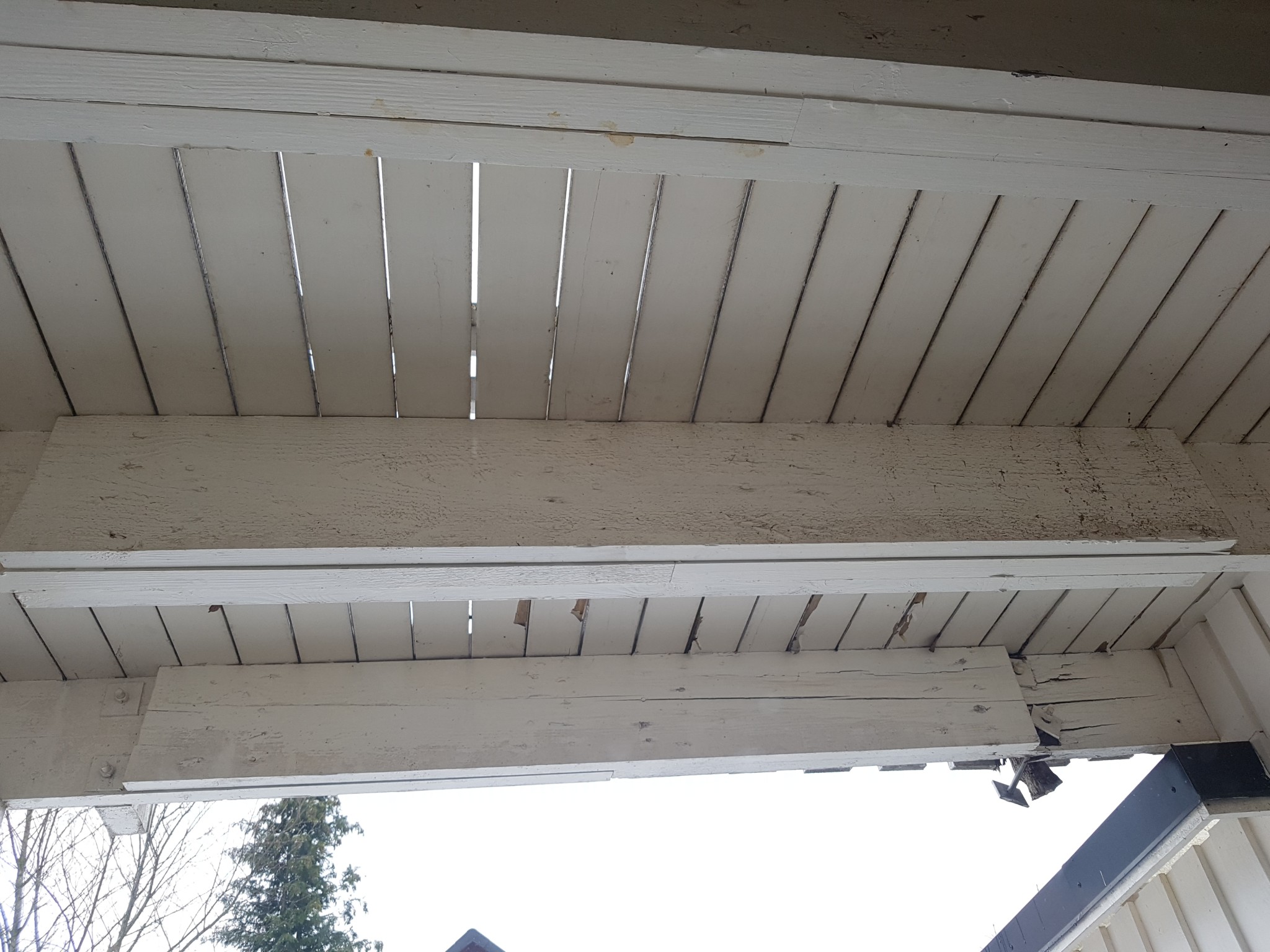
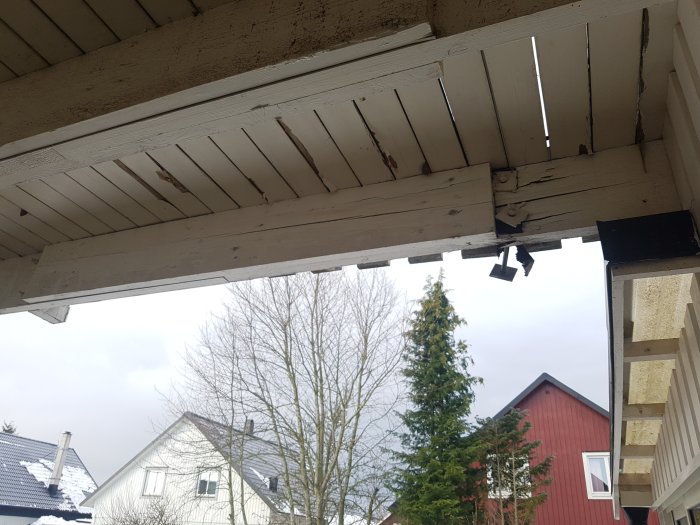
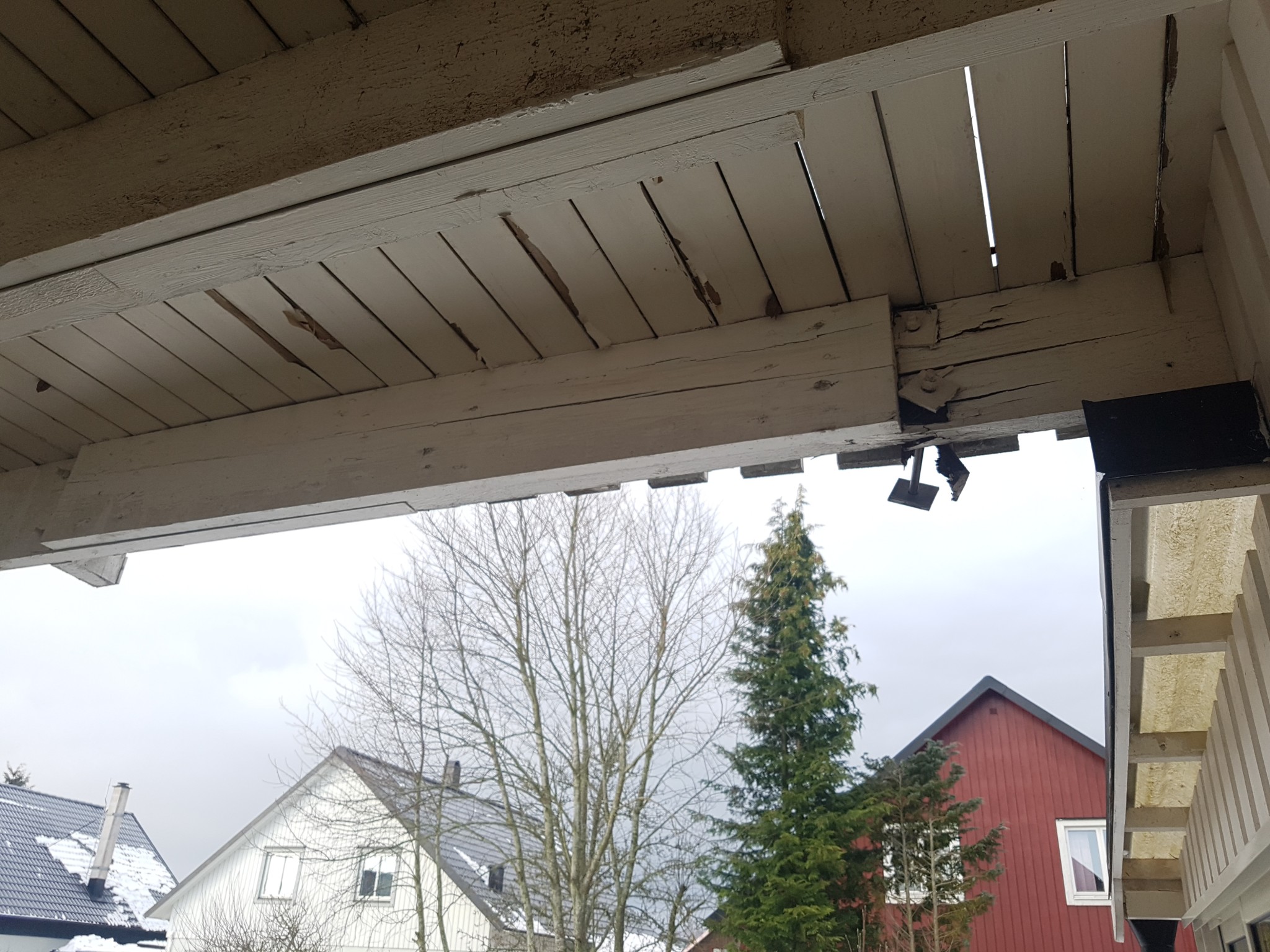
4. The backside. Note a possible previous attempt to reinforce. (EDIT: Nope, just a regular joint)
My thoughts:
I am fully aware that the rotten wood must be removed, it can't be supported in another way.
I think the railing will probably go in any case, I can probably tear it down myself and there's no rush to put up a new one (can do that next year, lots to fix that takes priority).
Planning to brace the railing as soon as possible by "hanging" the sagging part from the beams above the balcony to relieve it a bit.
One thought I had was to cut away part of the horizontal board, from where the patio begins and then as much as needed to remove what's bad. Then cut a corresponding piece and fit it in, attaching with, for example, heavy-duty perforated plates and bolts on either side. Not sure if cutting away so little closest to the patio is sufficient or if the stability will become too poor afterward.
I'm not averse to calling a carpenter.
What do you think? What would you do? Is it possible to make something good out of this? Any tips are gratefully received!
Ok, seriously: It should just be a matter of replacing the old planks with new ones. It's hardly going to collapse while you're doing it (you have several supporting joists anyway).
Tear off the entire planks, the ones that are damaged, and put in new ones the same way the old ones were installed.
Then you can consider why the damage occurred; does water run there?
Ok, seriously: It should just be a matter of replacing the old planks with new ones. It's hardly going to collapse while you're doing it (you still have several supporting beams).
Tear off the entire planks, the ones that are damaged, and install new ones in the same way the old ones were.
Then you can consider why the damage occurred; is there water running there?
As for replacing straight out - it would be a big replacement since the horizontal board goes all the way across everything. I was thinking of replacing a smaller part, but maybe that's a bad idea?
Good thought about the cause of the damage. I don't know why, but I'll keep an eye on it.
EDIT: My mistake! They don't go all the way across, but are spliced. Here the splices are (a bit) more visible:
I misunderstood the function, so it's not an attempt to reinforce around the damage but reinforcements around the splices during construction.
If you think about the "extra" boards on the outside, as seen in the middle of your latest picture, then yes, it is indeed a joint from the construction. Quite a common way to make a joint, I have used it myself. So it shouldn't be that big of a job.
If you for some reason need to replace a smaller part, then joint in the same way, with external boards on each side. Piece of cake.
that it has rotted is probably mostly due to the painting with perhaps some unsuitable paint. It seems there is paint on every single surface without any possibility for the wood to dry properly. Maybe also quite an exposed location.
I'm now wondering if the balcony floor can be saved, or if I have to tear it up to get access. Loosening it at the edge is, of course, a must since it's attached to the board that needs to be replaced.
Then I also hope to access properly over the patio, but assuming the railing is completely removed, it should go well.
Good tip on the painting, I'll make sure it's treated correctly in the future, as everything needs to be repainted anyway, I think. Then I'll also see how the other corresponding board is doing.
What is the span? I would have torn down the entire outer beam (or as you say the horizontal board) and replaced it with a new one. And torn down the entire fence. If it has started to rot somewhere due to unsuitable paint, it's likely that it will rot everywhere.
What is the span? I would have torn down the entire outer bearer (or as you say horizontal board) and replaced it with a new one. And torn down the entire fence. If it has started rotting somewhere due to inappropriate paint, it's likely that it's rotting everywhere.
The white railing part of the balcony is about eight meters wide. However, I just realized that the two bearers (joined in the middle) continue to run the entire width of the house, that is, also under the gray part by a meter or two. How do you go about replacing the whole thing, do you think? It looks like more than just the railing would need to be torn down in that case.
I agree with Stefan1972, the wood has rotted because it was painted with a diffusion-tight paint (like acrylic paint) on all sides. No wood can withstand that. In my opinion, there is no alternative but to replace everything. It's also an eyesore to see how the load-bearing joists are spliced. Very unprofessional.
I agree with Stefan1972, the wood has rotted because it was painted with a diffusion-tight paint (like acrylic paint) on all sides. No wood can withstand that. In my opinion, there's no alternative to replacing everything. It's also an eyesore to see how the load-bearing studs are joined. Very unprofessional.
Replacing the railing seems obvious, as well as the outermost studs. The questions are whether I need to replace the entire outermost beam, how I can access it to do so (see the post above yours), and how I should splice the new one if needed. Are there better approaches, in your opinion?
You should not splice, order full lengths. All timber that has been painted in the same way must be replaced. There is no point in almost fixing something.
You should not splice, order whole lengths. All wood that has been painted in the same way must be replaced. There's no point in almost fixing something.
I understand, that would mean all the studs and thereby a completely torn-up floor. The vertical post would also have to go then. Significantly bigger effort! Considering that it's not certain it has rotted due to the paint - can I examine this to be sure? Sand down some of the other wood and check? The question of how to access the ends of the wood under the gray-painted parts still remains.
The small piece of the facade you have to take down, this is not a job you do on a Friday afternoon between 3-4 PM. A scaffold to work from is almost a must and then just start tearing down until you can't anymore.
If you know it's painted with acrylic paint, you don't need to do any more investigations. You can check the condition of the pillar by poking it with a sharp knife. In healthy construction lumber, you won't get far. Then just follow Stefan N's advice in post #13. Take down anything that needs to be taken down (including facade paneling that hides beams), use scaffolding, and take your time. You learn the most by doing the job yourself.


ricebridge said:
"Yodel balcony"?