
Hello knowledgeable folks!
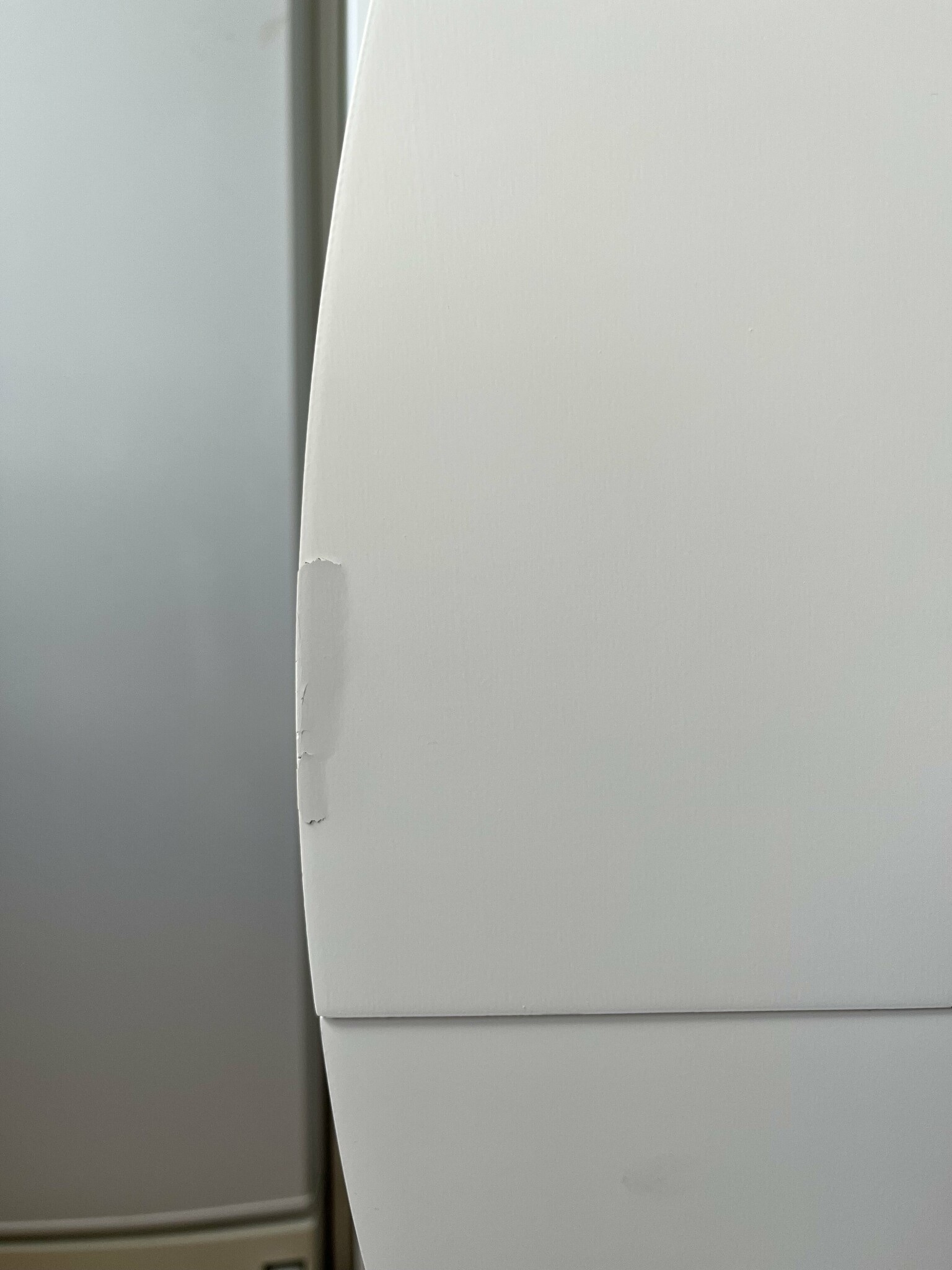
How would you go about repairing this damage? The first thought was to use some kind of filler/glue and a clamp.
But what could you put between the clamp and the table to protect the surface? Should it be wood filler or glue or something else that should be used?
Thanks in advance!
How would you go about repairing this damage? The first thought was to use some kind of filler/glue and a clamp.
But what could you put between the clamp and the table to protect the surface? Should it be wood filler or glue or something else that should be used?
Thanks in advance!


Best answer
Use white wood glue. For example, Casco orange bottle or "white school glue." Optionally, dilute the liquid glue with a little water. Widen the gaps slightly with a sharp knife, but carefully.
Pour in glue. Wait for it to sink into the gaps. Repeat.
Press, add more if it doesn't come out. Press, release, and wipe away excess glue, especially on top of the tabletop.
A flat piece of wood and the flat part of a Bregott lid should work. And preferably two clamps, but one might suffice if you have two sturdy blocks.
Remove excess glue with a wet cloth. Hard glue residue can be scraped off with a "razor blade" (scraper for the hob, with a new blade without scratches).
If any MDF is visible, "seal" with white paint so that water cannot penetrate and damage the surface.
I have never actually glued a tabletop, but MDF kitchen doors and chipboard shelf panels, plug holes/screw holes where the edge has also been damaged. It works with paper in between but can be a bit harder to remove.
Pour in glue. Wait for it to sink into the gaps. Repeat.
Press, add more if it doesn't come out. Press, release, and wipe away excess glue, especially on top of the tabletop.
A flat piece of wood and the flat part of a Bregott lid should work. And preferably two clamps, but one might suffice if you have two sturdy blocks.
Remove excess glue with a wet cloth. Hard glue residue can be scraped off with a "razor blade" (scraper for the hob, with a new blade without scratches).
If any MDF is visible, "seal" with white paint so that water cannot penetrate and damage the surface.
I have never actually glued a tabletop, but MDF kitchen doors and chipboard shelf panels, plug holes/screw holes where the edge has also been damaged. It works with paper in between but can be a bit harder to remove.
Thank you very much for the detailed tip, exactly what I was hoping for.blackarrow said:
Use white wood glue.
For example, Casco orange bottle or "white school glue."
Optionally, dilute the liquid glue with a little water.
Widen the gaps slightly with a sharp knife, but carefully.
Pour in glue. Wait for it to sink into the gaps.
Repeat
Press, add more if it doesn't come out.
Press, release, and wipe off excess glue, especially on top of the tabletop.
A flat piece of wood and the flat part of a Bregott lid should work.
And preferably two clamps, but one might be enough if you have two sturdy blocks.
Wash away excess glue with a wet cloth.
Hard glue residues can be scraped off with a "razor blade" (scraper for the hob, with a new blade without scratches).
If any MDF is visible, "seal" with white paint so water can't penetrate and damage the board.
Although I have never glued a tabletop, I have glued MDF cabinet doors and particleboard shelves, plug holes/screw holes where the edge was also damaged.
It works with paper in between but might be a bit harder to remove.
I'll update with the results!
Renovator
· Stockholm
· 44 posts
Baking paper as an interlayer in the absence of a Bregott package should work and not stick to the glue. Could be wise considering that Bregott now almost costs more than beef fillet…
Click here to reply