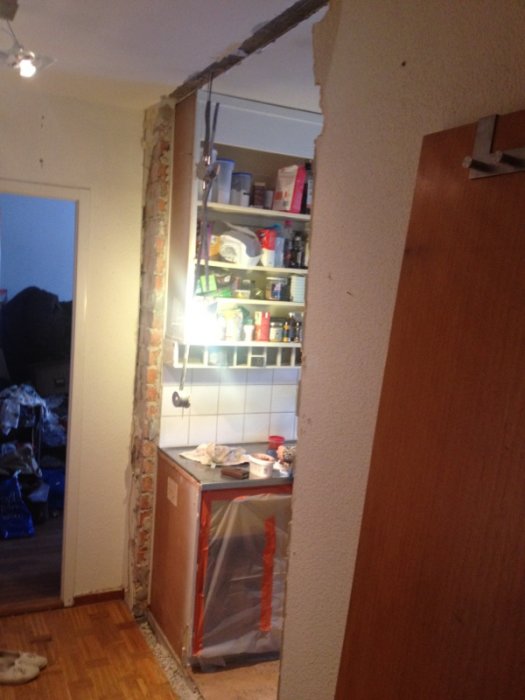
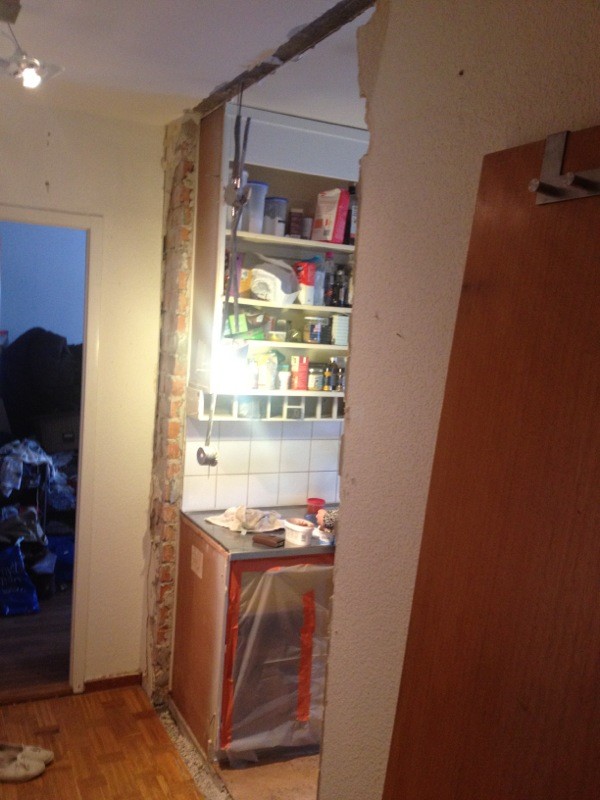
I have now taken action in our dark apartment to let some light into the hallway.
I have taken down the wall/door frame to the living room and kitchen, which has let in a lot more light into the dark hallway. Now I need suggestions on how to cover marks in the ceiling after the old wall.
I thought about using filler, but from past experience, I know it can show in the ceiling that there was a wall there before. How can it be done nicely?
I have also thought about an easier solution with a cover strip on the ceiling, but it's not as nice as floating ceilings throughout the apartment.
In the picture, I have only taken down 1 wall. The other one on the left is down now, and I will start taking down the kitchen next week.
I would appreciate some helpful tips for my project.
as long as the ceilings align with each other, there are no problems. Are there smooth concrete ceilings in adjacent rooms? If so, you just need to chip away enough so that you can fill in with plaster/husfix/gypsum mortar. Then fine spackle. After that, you'll have to paint the entire ceiling, otherwise, you're likely not to make it invisible. If there are gypsum ceilings in the other rooms, I would have laid in pieces of gypsum in between. Then strips and spackle.
About to start a similar project and was surprised at how similar your picture is to our floor plan, materials, and the wall that will be removed. How did you solve the seam in the floor and ceiling? What material did you use to get a clean finish against the brick? Very grateful for answers...
Thanks for the response. I had planned for plaster on walls and ceiling, as well as reinforcement in corners, but what works on the floor between the rooms where there is only gravel? I have planned to lay a new common wooden floor for both the kitchen and hall and want something that becomes even and seamless between them without direct disruptions... I currently have concrete under the existing carpet and floor.
These concrete roofs are often "textured," i.e., not completely smooth, which doesn't make it easy even for professionals.
So it obviously depends on how rough/smooth your roof is to get an okay result.
If you can live with an edging "board" around the entire damage, you'll avoid a lot of trouble.
Click here to reply
Vi vill skicka notiser för ämnen du bevakar och händelser som berör dig.