
4,763 views ·
12 replies
5k views
12 replies
Renovation of stone house with moisture concerns
Hello everyone.
My dear partner and I have acquired a house from the late 1800s in southern Skåne. The house is 185m2 with an additional area of 200m2. Included with this is the plot, which is approximately 9600m2.
During the inspection of the house, it was discovered that the foundation was not dehumidified. According to the report, it's a crawl space foundation, but given there is 25-30cm of clearance, I would probably call it a torpargrund(?).
According to the inspector, we need to dig out, use plastic sheeting, and install a dehumidifier (so far, we understand that), and this should be done by spring.
We also need to tear down all the interior walls, according to him, because there is capillary moisture that needs to be addressed and replaced with steel studs.
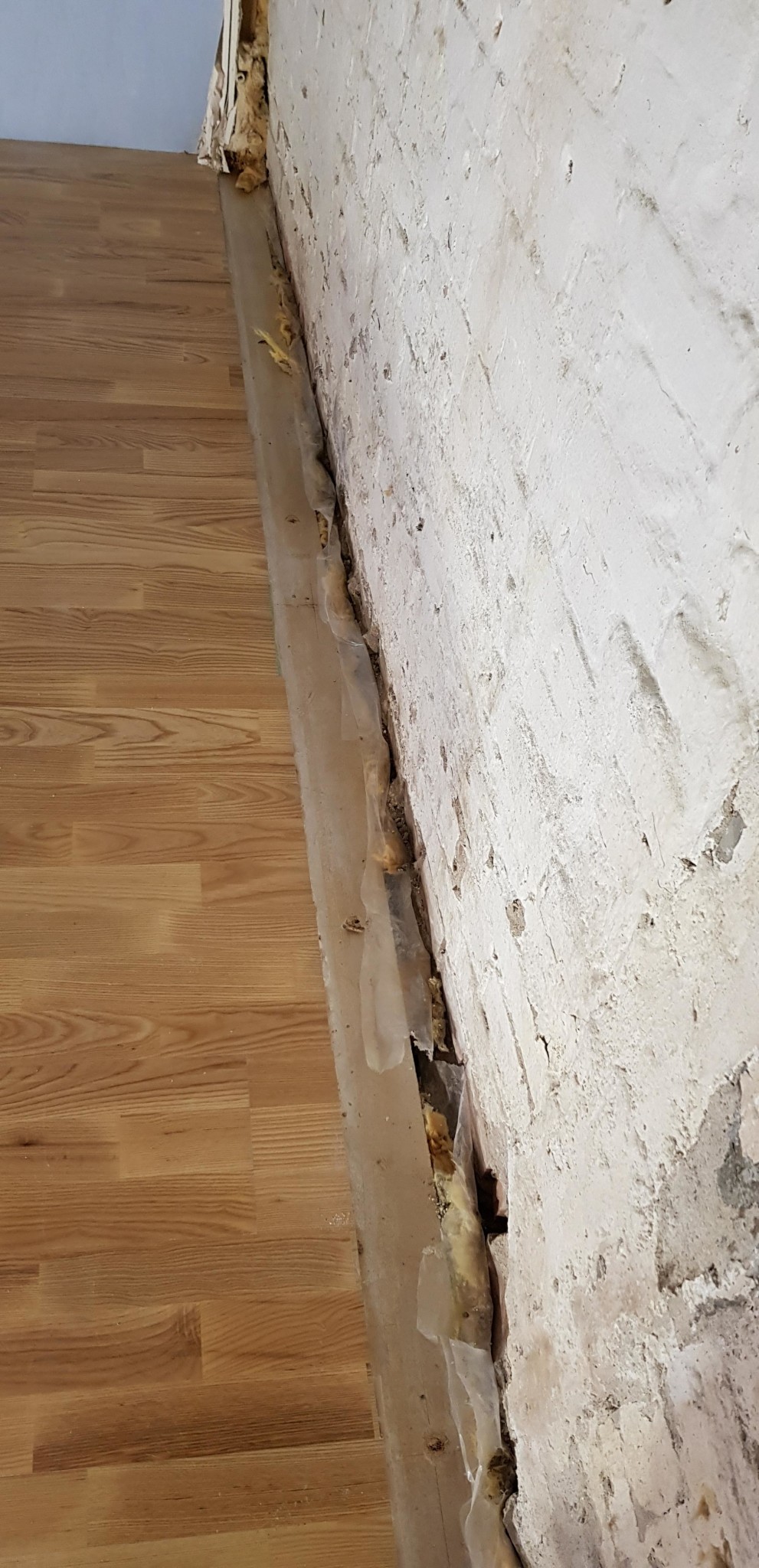
Today, I tore down one of the walls in what will become our bedroom and have a few questions.
1. Under the parquet floor, there's chipboard flooring. In 4 spots, I've measured 15-16% moisture. In my opinion, it leans towards tearing it up and replacing everything. What do you think?
2. If I do tear everything up, how should I proceed to prevent future problems (besides a dehumidifier in the foundation)?
3. The walls are to be framed with steel studs, what about insulation? When I tore it down, it was insulated, but one of the walls in the bedroom was extra insulated about 1.5 years ago. Do I need insulation on the inside, or does that "seal" the wall completely?
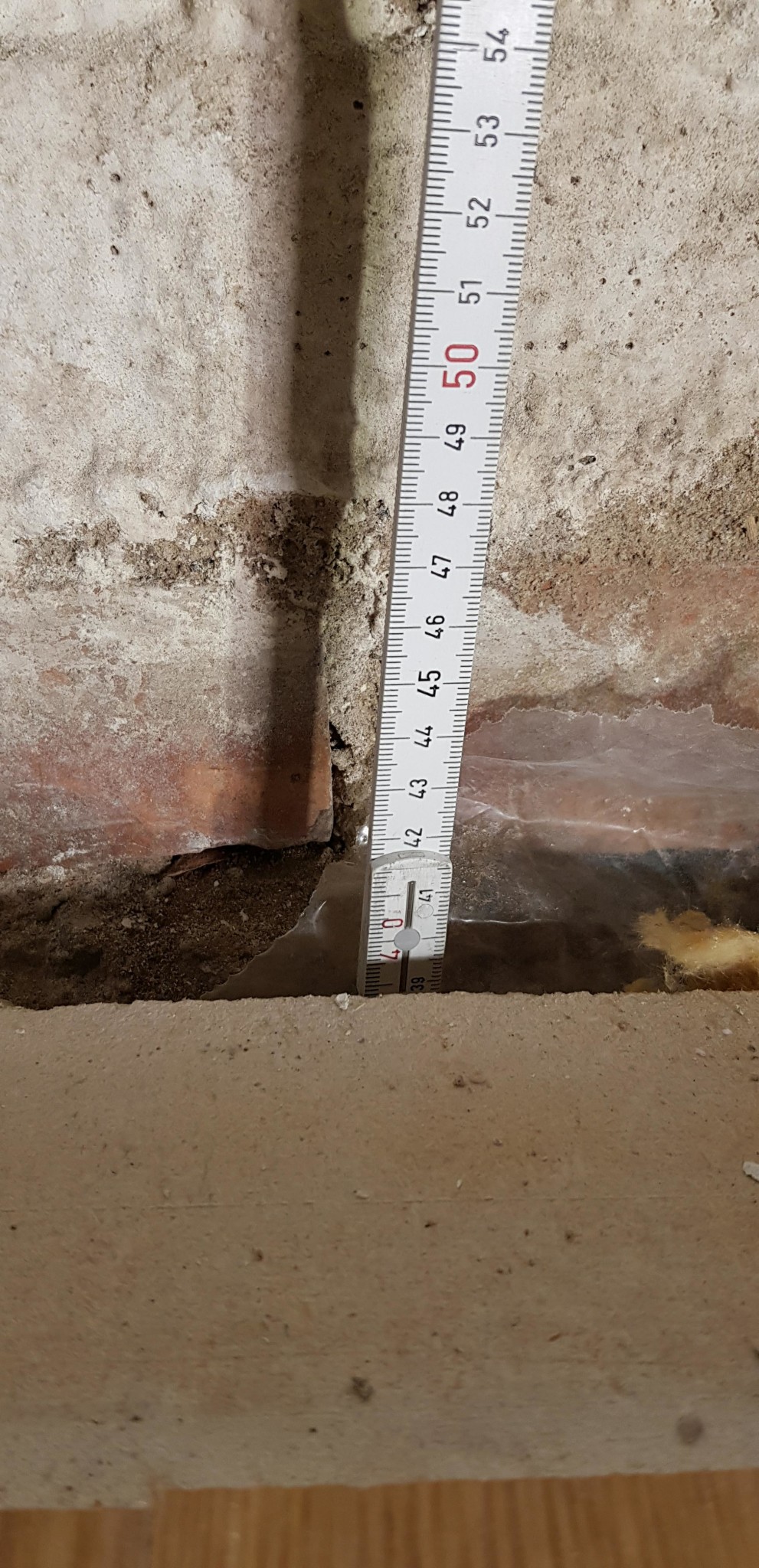
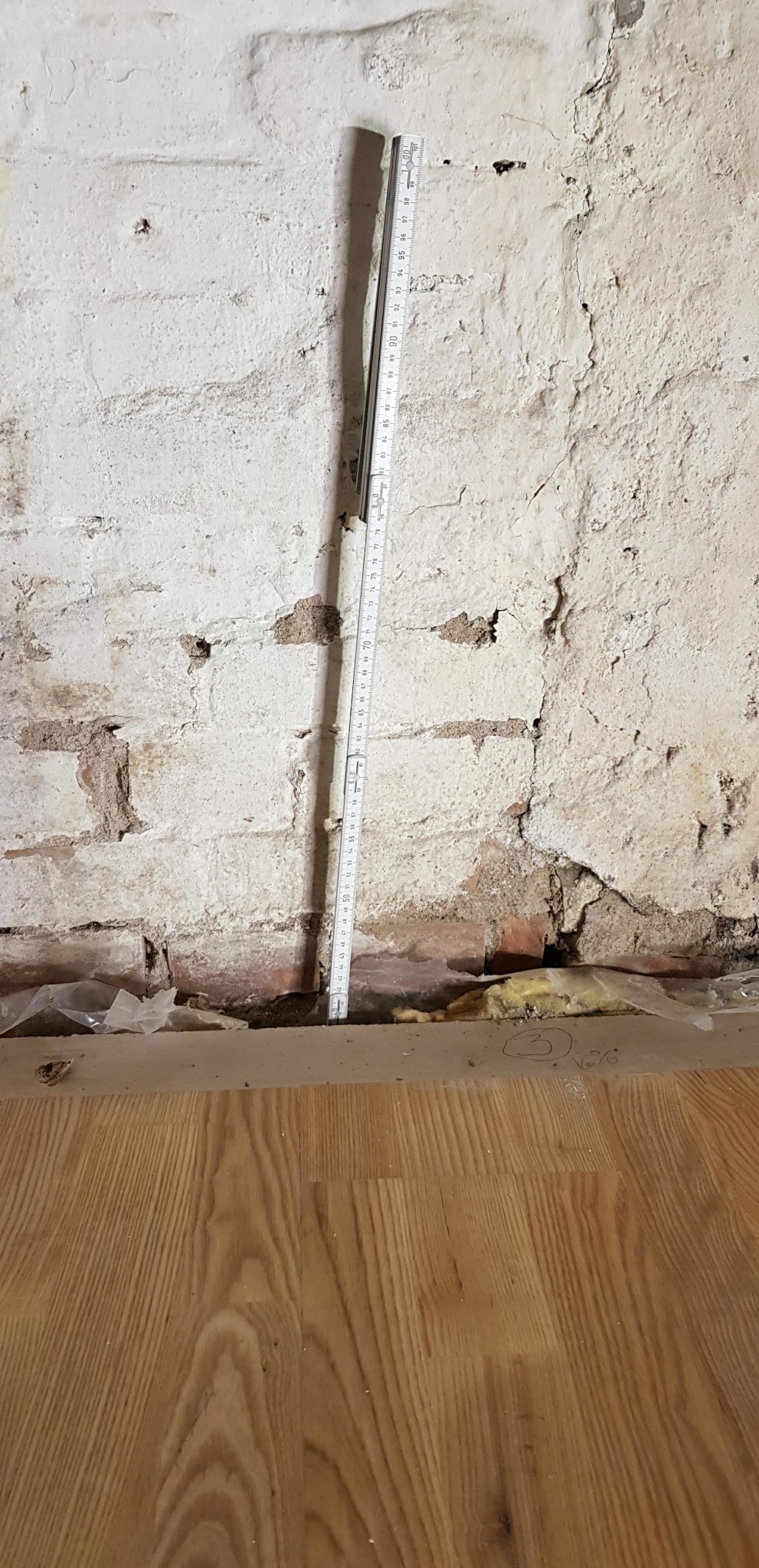
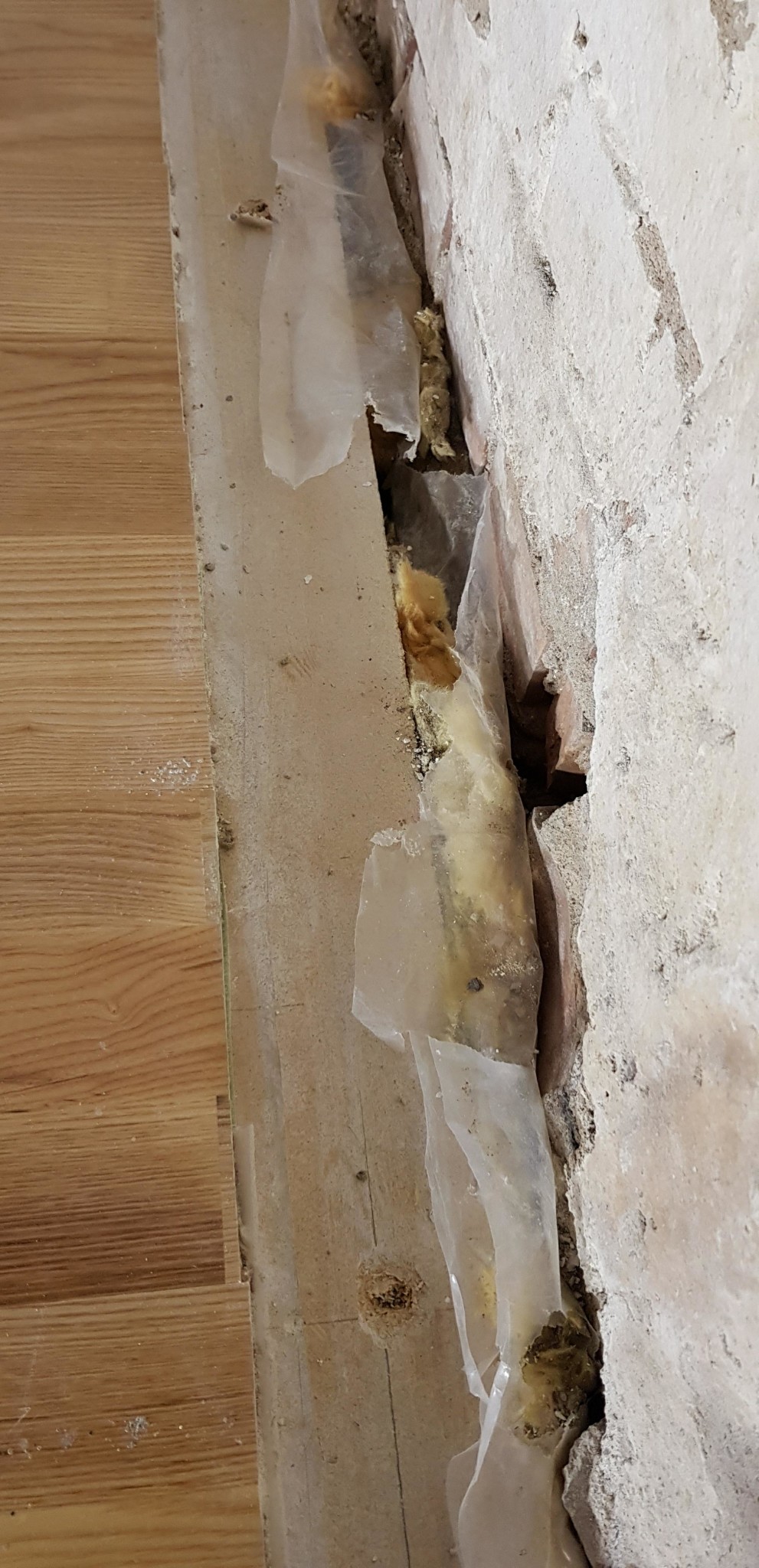
4. In the pictures where the folding ruler is inserted, as you can see, it goes about 40cm down. To soil. I assume it's supposed to be like that? The soil smells like soil. Slightly damp maybe but nothing else. There's also no other smell when the wall is torn down.
Attaching some pictures!
Best regards,
Jonas
My dear partner and I have acquired a house from the late 1800s in southern Skåne. The house is 185m2 with an additional area of 200m2. Included with this is the plot, which is approximately 9600m2.
During the inspection of the house, it was discovered that the foundation was not dehumidified. According to the report, it's a crawl space foundation, but given there is 25-30cm of clearance, I would probably call it a torpargrund(?).
According to the inspector, we need to dig out, use plastic sheeting, and install a dehumidifier (so far, we understand that), and this should be done by spring.
We also need to tear down all the interior walls, according to him, because there is capillary moisture that needs to be addressed and replaced with steel studs.
Today, I tore down one of the walls in what will become our bedroom and have a few questions.
1. Under the parquet floor, there's chipboard flooring. In 4 spots, I've measured 15-16% moisture. In my opinion, it leans towards tearing it up and replacing everything. What do you think?
2. If I do tear everything up, how should I proceed to prevent future problems (besides a dehumidifier in the foundation)?
3. The walls are to be framed with steel studs, what about insulation? When I tore it down, it was insulated, but one of the walls in the bedroom was extra insulated about 1.5 years ago. Do I need insulation on the inside, or does that "seal" the wall completely?
4. In the pictures where the folding ruler is inserted, as you can see, it goes about 40cm down. To soil. I assume it's supposed to be like that? The soil smells like soil. Slightly damp maybe but nothing else. There's also no other smell when the wall is torn down.
Attaching some pictures!
Best regards,
Jonas
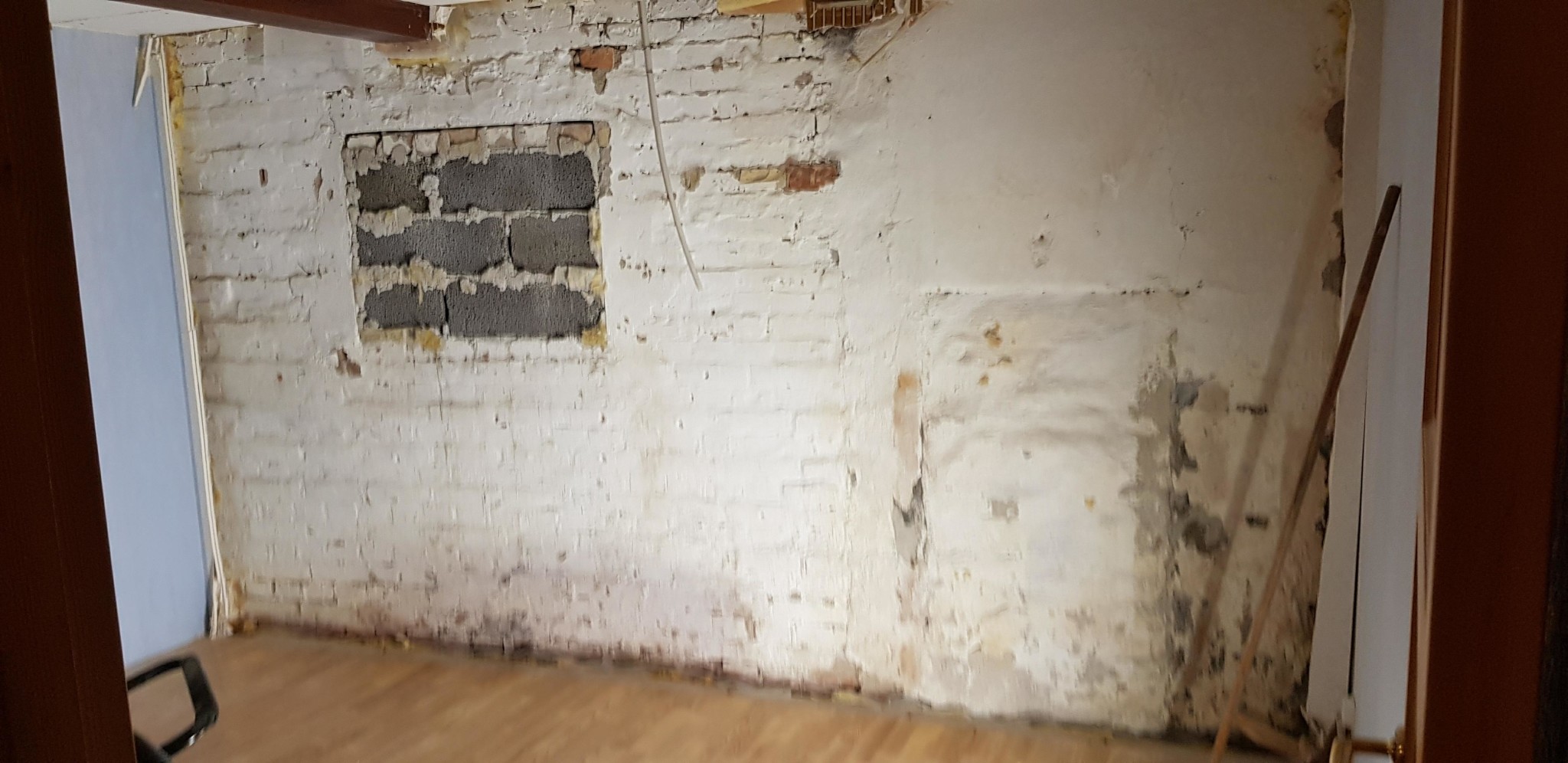
Last edited:

It feels like a somewhat uninformed "modernization." It's difficult to comment in detail since your explanation is a bit brief. A crawl space from the 1800s is usually not a problem, as long as the floorboards are not touching the ground. In this case, an additional insulation of the ground beams has created new moisture problems. A moisture content of 15% is too high for material that has been in place for a long time. There's probably no other solution than to remove everything and start over. I don't understand the reasoning about steel studs. They can be very useful, but why insist on them?


I can agree with @justusandersson. The proposed measures do not seem to consider a house from the 1800s. A foundation from the 1800s is usually not dehumidified. And replacing all interior walls with steel studs sounds odd.
One suggestion is to get a second opinion by hiring someone who knows old houses and discuss the foundation construction and any potential moisture issues. Perhaps you also know that you need to replace the floors regardless of any other measures, and can already remove floors and particle boards to inspect beams and foundation in detail?
One suggestion is to get a second opinion by hiring someone who knows old houses and discuss the foundation construction and any potential moisture issues. Perhaps you also know that you need to replace the floors regardless of any other measures, and can already remove floors and particle boards to inspect beams and foundation in detail?


Hello. Thanks for the response.
I can start by saying that it was indeed Anticimex that was hired for the inspection.
The inspector suggests that by switching to steel studs, it can't absorb capillary moisture. But at the same time, as you write, as long as the ground floor is not in contact with the soil, there shouldn't be any problems, and then the steel studs feel unnecessary if it's done correctly from below.
According to him, we only had 25-30 cm of clearance under the house and to prevent moisture issues, one could either dig out under the house or dig a trench so one can crawl underneath, use plastic, and install a dehumidifier that would run 24/7.
What is the correct approach? How do you insulate the ground floor of a house from the late 1800s? Or perhaps there shouldn't be any insulation?
/Jonas
I can start by saying that it was indeed Anticimex that was hired for the inspection.
The inspector suggests that by switching to steel studs, it can't absorb capillary moisture. But at the same time, as you write, as long as the ground floor is not in contact with the soil, there shouldn't be any problems, and then the steel studs feel unnecessary if it's done correctly from below.
According to him, we only had 25-30 cm of clearance under the house and to prevent moisture issues, one could either dig out under the house or dig a trench so one can crawl underneath, use plastic, and install a dehumidifier that would run 24/7.
What is the correct approach? How do you insulate the ground floor of a house from the late 1800s? Or perhaps there shouldn't be any insulation?
/Jonas
Insulate with cell plastic boards or Hasopor and pour slab? Provides the possibility for underfloor heating.
The foundation in old houses can look in many different ways. The floorboards can be laid directly on sand, the floor can have insulation in the void, earth banks, "regular" crawl space foundation, etc. No construction needs to be a problem, but all can be, depending on the conditions for each individual house.
There are several threads on Byggahus about old foundations, for example, https://www.byggahus.se/forum/threads/isolera-mullbaenk-foerslag.216997/
The best way to find out how your specific house works is by living in it. Are the floors cold, and if so, where? Is there draft? Smell? Moisture? Perhaps your house was unheated and absorbed moisture, which disappears when it’s warmed up? Perhaps a renovation was done incorrectly contributing to any moisture, for example, by making the floors tight, which prevents drying out? Has the very wet autumn temporarily caused high moisture levels? Is the groundwater level high? Is there really a problem with moisture in the interior walls, as they've been standing there for 125 years? Was there a void before, before the chipboard and parquet were laid? Is the joist in good condition? Maybe there isn't a major moisture problem, but you want warmer floors?
A discussion on site with someone knowledgeable in old houses is still my suggestion. Then you will always get different suggestions from different sources, and the more knowledge you have yourself, the better you can choose how to proceed.
There are several threads on Byggahus about old foundations, for example, https://www.byggahus.se/forum/threads/isolera-mullbaenk-foerslag.216997/
The best way to find out how your specific house works is by living in it. Are the floors cold, and if so, where? Is there draft? Smell? Moisture? Perhaps your house was unheated and absorbed moisture, which disappears when it’s warmed up? Perhaps a renovation was done incorrectly contributing to any moisture, for example, by making the floors tight, which prevents drying out? Has the very wet autumn temporarily caused high moisture levels? Is the groundwater level high? Is there really a problem with moisture in the interior walls, as they've been standing there for 125 years? Was there a void before, before the chipboard and parquet were laid? Is the joist in good condition? Maybe there isn't a major moisture problem, but you want warmer floors?
A discussion on site with someone knowledgeable in old houses is still my suggestion. Then you will always get different suggestions from different sources, and the more knowledge you have yourself, the better you can choose how to proceed.
Definitely Microkatten. I completely agree with your reasoning. What has been there before, I can't answer at the moment. We have only lived there for about 2 weeks, so I don't have a full grasp of the situation yet!
But what I've noticed is that there is no odor in the house, and the floors aren't cold (more than a typical laminate floor).
One thing I'm also wondering is how much material can "dry out." I understand it depends on the starting point, but let's say you excavate the foundation so the bottom beams are not in the ground. Is there anything general that can be said? According to the inspector, it's 17% saturated, is this correct?
Where can you best find a knowledgeable person in old houses? I'd be happy to have someone with expertise and a good understanding come over to clarify things for me.
Pouring a concrete slab is not something I'm very interested in. Spontaneously, it feels very expensive. And the problem should be solvable in other ways.
Thanks for the great input so far!
/Jonas
But what I've noticed is that there is no odor in the house, and the floors aren't cold (more than a typical laminate floor).
One thing I'm also wondering is how much material can "dry out." I understand it depends on the starting point, but let's say you excavate the foundation so the bottom beams are not in the ground. Is there anything general that can be said? According to the inspector, it's 17% saturated, is this correct?
Where can you best find a knowledgeable person in old houses? I'd be happy to have someone with expertise and a good understanding come over to clarify things for me.
Pouring a concrete slab is not something I'm very interested in. Spontaneously, it feels very expensive. And the problem should be solvable in other ways.
Thanks for the great input so far!
/Jonas
I think you should join these two groups on Facebook and ask for knowledgeable people in your area,J Jonas Arvidsson said:Definitely Microkatten. I completely agree with your reasoning. What has been there previously, I can't answer at the moment. We've only lived there for about 2 weeks, so I don't have a full handle on the situation yet!
But from what I've noticed, there is no smell in the house and the floors aren't cold (just a regular laminate floor).
One thing I'm also considering is how much material can "dry out." I understand it depends on the starting condition, but let's say you dig out the foundation so that the bottom beams aren't in the soil. Is there anything general that can be said? According to the inspector, 17% is saturated, is this correct?
Where is the best place to find a knowledgeable person in old houses? I'd gladly bring someone home who has knowledge and good insight to get everything clarified for me.
Pouring a concrete slab isn't something I'm very interested in. It instinctively feels very expensive, and the problem should be solvable in other ways.
Thanks for the good input so far!
/Jonas
Byggnadsvårdsportalen; köp, sälj och diskutera.
I saved a deserted house!
Alternatively, if someone here on byggahus can give you a tip on someone.
Then I am curious if there were any damages discovered in the foundation at all due to high moisture, or if you got the classic tip from anticimex regardless...
Instead of insulating the floor, you can insulate the foundation wall and thereby create a warmer and drier environment under the floor. Issues with moisture in the crawl space usually arise when the floor is insulated, thus lowering the temperature in the foundation. Besides poorly insulated floors, in the past, there was a warm chimney that heated the space (this is called torpargrund).
Thanks for the tip! The problem was discovered during an inspection by Anticimex. We chose an extended inspection, and two samples were taken in the walls. He made holes, drove in two extension spikes, and attached his moisture meter. In the kitchen, 42% was measured (west side) and in the living room, 19.5% was measured (south side).S johd01 said:I think you should join these two groups on Facebook and ask for knowledgeable people in your area,
Byggnadsvårdsportalen; köp, sälj och diskutera.
I saved an abandoned house!
Alternatively, if someone here on byggahus can give you a tip about someone.
Also, I'm curious if any damages in the foundation were discovered at all due to high humidity, or if you received the classic advice from Anticimex regardless ...
When measuring 1 dm up in the kitchen, 19.5% was measured.
His suggestion, as previously mentioned, was to dig out the foundation, use plastic, and add a dehumidifier. During the renovation of the rooms, steel studs should be used so that capillary moisture could not affect them, and his advice was also not to spend money on wallpaper and paint if the floors needed to be removed.

How is it with runoff from the groundwater and water from the roof? Is it well diverted from the house, or is it released down next to the foundation? Are there plantings/vegetation next to the foundation?
Start by solving that first and take another measurement sometime after that.
Start by solving that first and take another measurement sometime after that.
Click here to reply