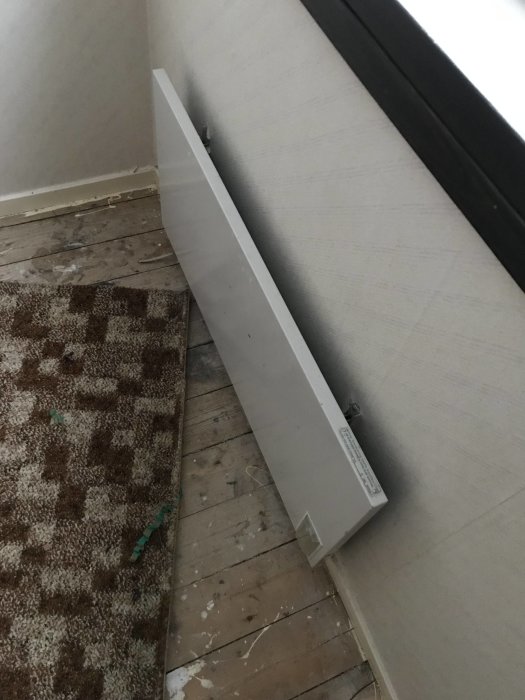
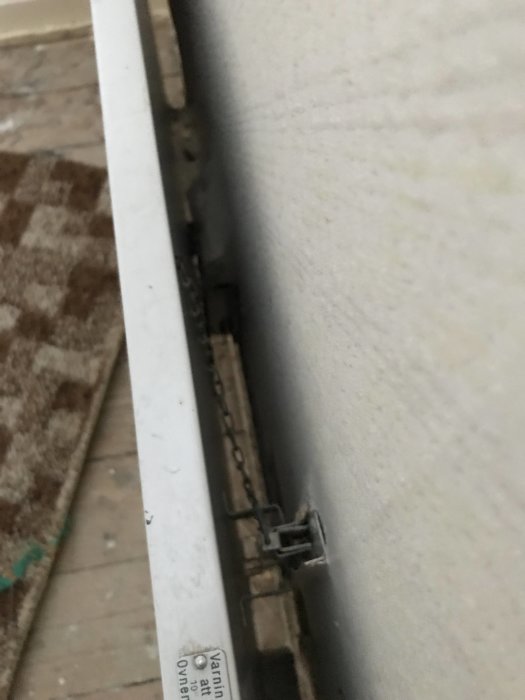
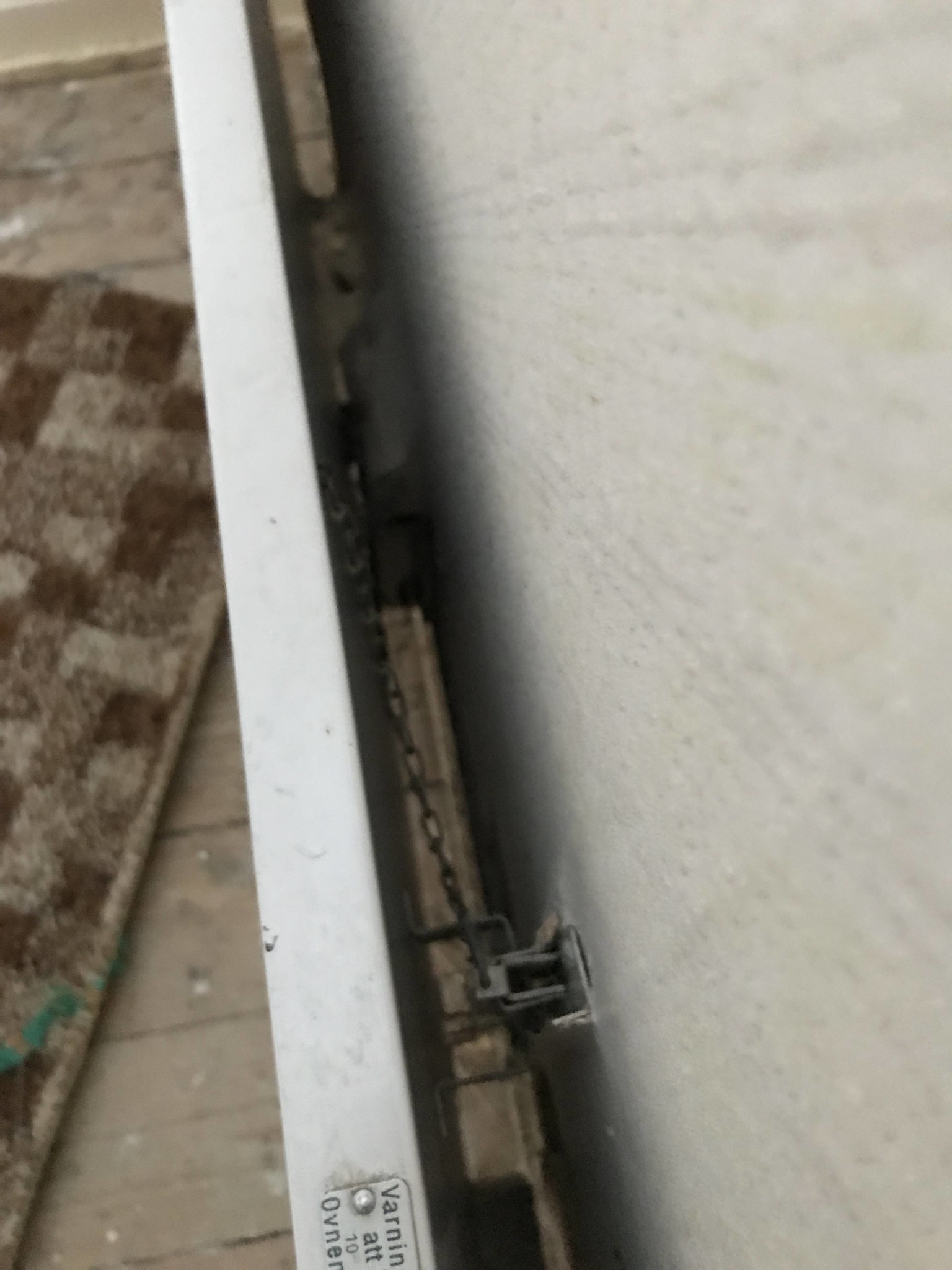
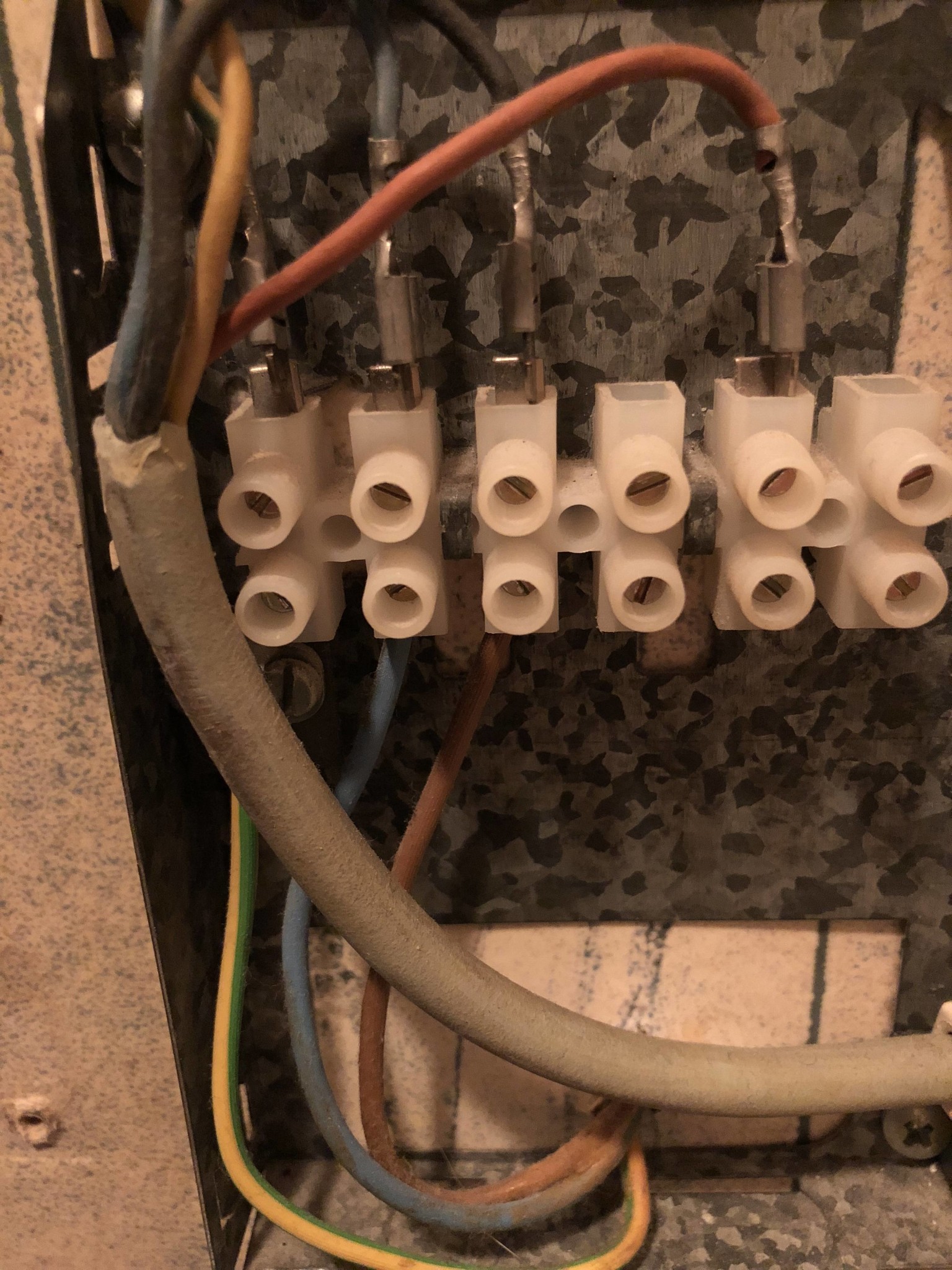
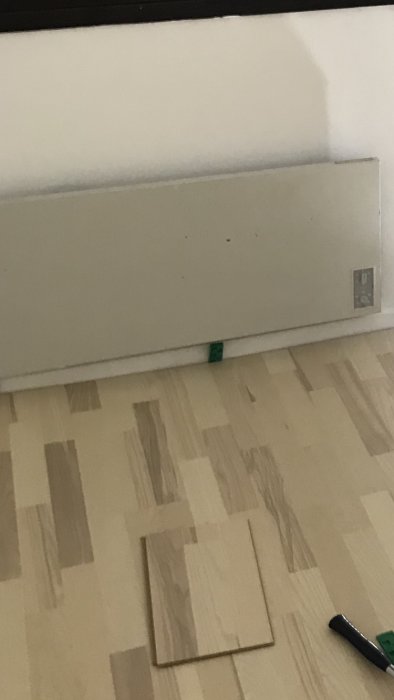
Behind the element there is a small box and that's where the element is connected, we had similar ones before we replaced them.
That's how it looks inside the box at least on ours (see picture).
Permanently connected (plug missing).
Check the nameplate to see if it is a radiator for 400V.
Remove fuses, ensure it is de-energized, document, disconnect, paint, restore.
Disconnecting is not difficult, but installing a new one should be done by an electrician if it is to be done correctly.
If you plan to do it yourself, take photos so you know which wire goes to the right place.
As mentioned, the power must be turned off before you start working on the cable connections!
If you reconnect the heater, it's very important that the cables are correctly placed because an incorrectly connected cable where the ground conductor should be means a live casing on the heater.
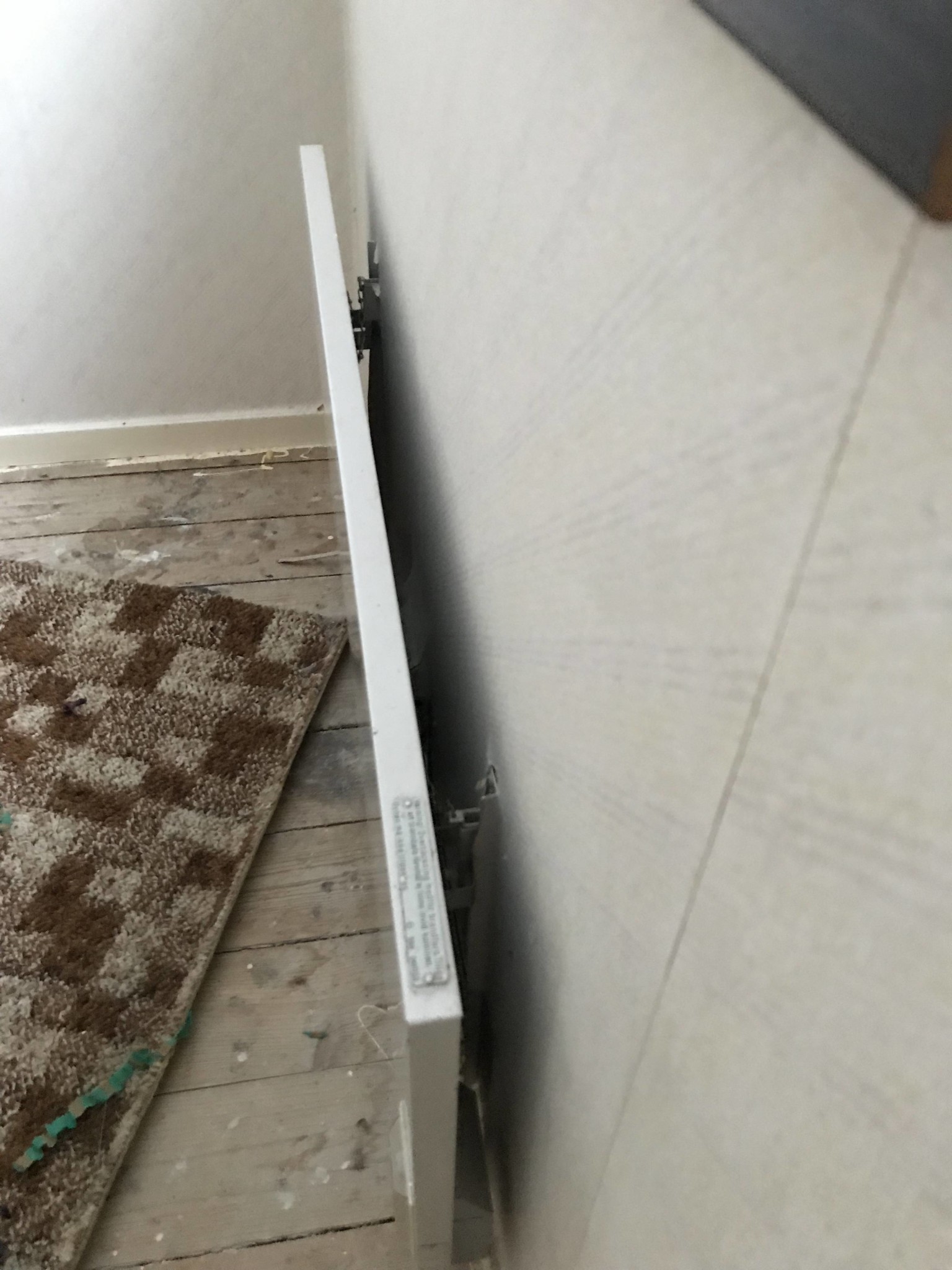
I have exactly the same radiators, and you don't need to disconnect them to paint behind ...
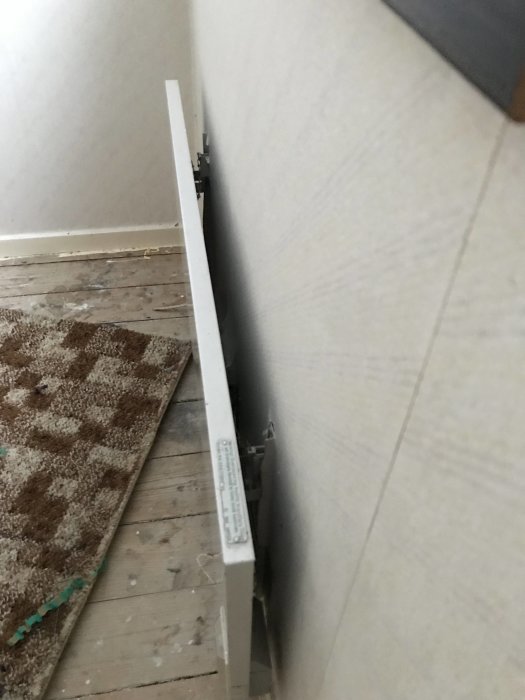
Detach them at the top so you can just fold them out... they hang from the bottom, and then you can reach 90% of the surface behind...
If you're meticulous, you can remove them from the hinge at the bottom, but let the wires stay in place (after you've removed the fuses, of course)... the wires between the wall socket and the radiator are long enough that you can put the radiator on the floor and fold it out to reach the last bit...
I have the exact same radiators, and you don't need to disconnect them to paint behind...
Just detach them at the top and fold them out... they hang at the bottom, and you'll reach 90% of the surface behind...
If you're particular, you can remove them from the hinge at the bottom, but let the cables stay (after you've removed the fuses, of course)... the cables between the wall socket and the radiator are long enough that you can set the radiator on the floor and fold it out to reach the last bit...
Perfect, it worked wonderfully. Thanks for the help!
I have now folded the radiator down so it's easy to paint.
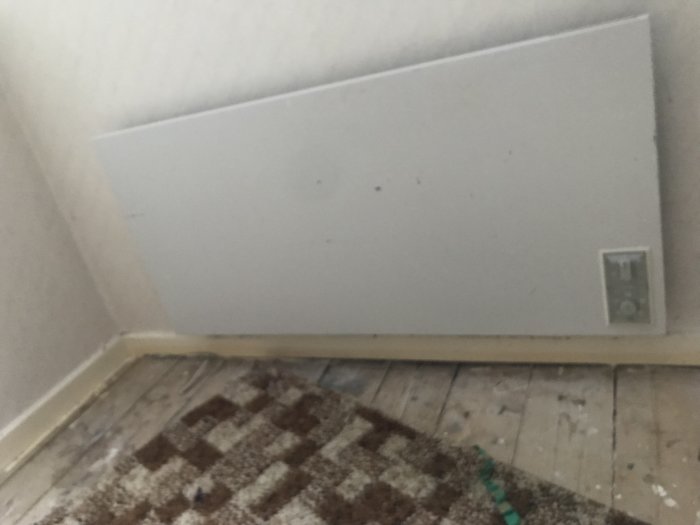
But how do you turn on the radiator?
Should you somehow open that plastic cover on the front?
It's blurry, you can hardly see inside.
Yes, behind the plastic cover, I see the on/off switch and a thermostat. The cover is probably dusty. Snap it off and clean it.
The first time you start it, monitor it. Don't turn it on and leave the house. If the thermostat is broken, it could get very warm. Turn down the thermostat after a while and listen for a click.
Expect the smell of warm dust if it hasn't been on for a long time, it should disappear after a while.
When you renovate the house, you'll probably encounter more electrical conundrums. My advice - given your own comments about electrical knowledge - is to hire an electrician to either disconnect and remove the element during other electrical work, or even better, replace it with a more modern and certainly more stylish one.
Thank you very much!
Worked perfectly to start the radiator and have also painted around it.
I also have radiator paint from before, I thought about painting some regular water-borne radiators with that paint.
Can you also paint the outside of this radiator with regular radiator paint?
Looks a bit dull when the other things in the room are fixed.
Vi vill skicka notiser för ämnen du bevakar och händelser som berör dig.