
1,052 views ·
4 replies
1k views
4 replies
Renovate Basement with Concrete Slab on Grade
Hello,
I have just moved into a house built in '73 where we have a basement/split-level. The plaster on the basement wall where the shower stands is flaking and "bulging" out.
The wall itself (see attached image) is about 70% below ground, and we want to have a fully tiled bathroom there. There's no mention of drainage, and as far as I know, none of the neighbors have drained, so I have no more information about that.
According to the inspection report, it was noted:
**Discoloration and cracks occur on the wall in the shower zone, no elevated moisture indications were noted at the time of inspection.
**There is no moisture barrier on the wall in the shower zone; water splashing against the wall should be avoided if possible, and installing a shower cabin is recommended.
My thought is to start removing the existing plaster on the wall myself and apply a new one. I need tips and advice on how to think about this and what type of plaster I should use for the future bathroom.
Questions for the forum:
What type of plaster is best suited for a basement wall in a wet room (lime-cement plaster, pure lime plaster, or other)?
Should one reinforce with primer/mortar before applying new plaster?
Should a moisture barrier/sealing layer be applied directly on plaster or should an inner wall with waterproof board be built?
Experiences in renovating a basement bathroom from the 70s – pitfalls to avoid?
I have just moved into a house built in '73 where we have a basement/split-level. The plaster on the basement wall where the shower stands is flaking and "bulging" out.
The wall itself (see attached image) is about 70% below ground, and we want to have a fully tiled bathroom there. There's no mention of drainage, and as far as I know, none of the neighbors have drained, so I have no more information about that.
According to the inspection report, it was noted:
**Discoloration and cracks occur on the wall in the shower zone, no elevated moisture indications were noted at the time of inspection.
**There is no moisture barrier on the wall in the shower zone; water splashing against the wall should be avoided if possible, and installing a shower cabin is recommended.
My thought is to start removing the existing plaster on the wall myself and apply a new one. I need tips and advice on how to think about this and what type of plaster I should use for the future bathroom.
Questions for the forum:
What type of plaster is best suited for a basement wall in a wet room (lime-cement plaster, pure lime plaster, or other)?
Should one reinforce with primer/mortar before applying new plaster?
Should a moisture barrier/sealing layer be applied directly on plaster or should an inner wall with waterproof board be built?
Experiences in renovating a basement bathroom from the 70s – pitfalls to avoid?
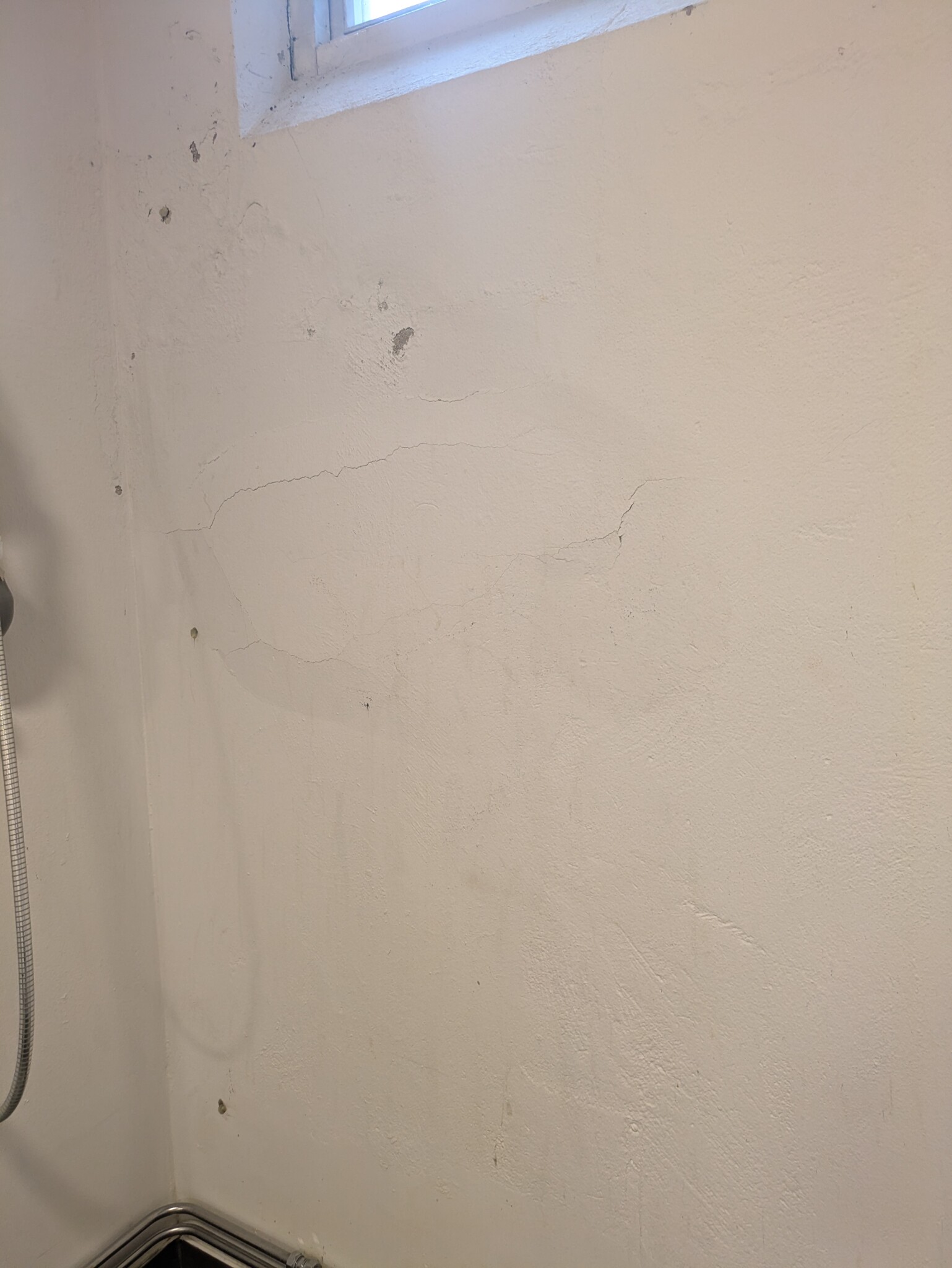
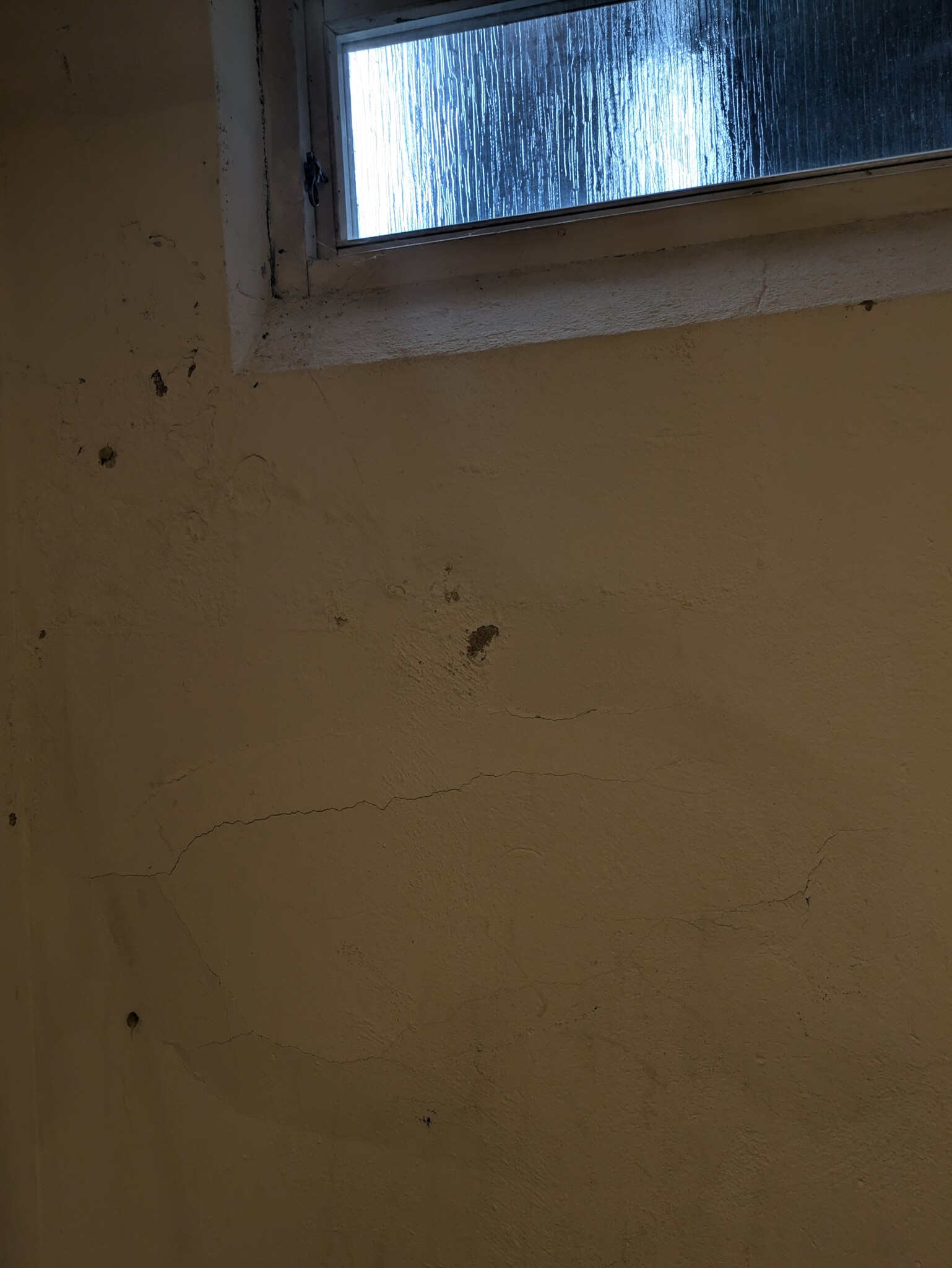
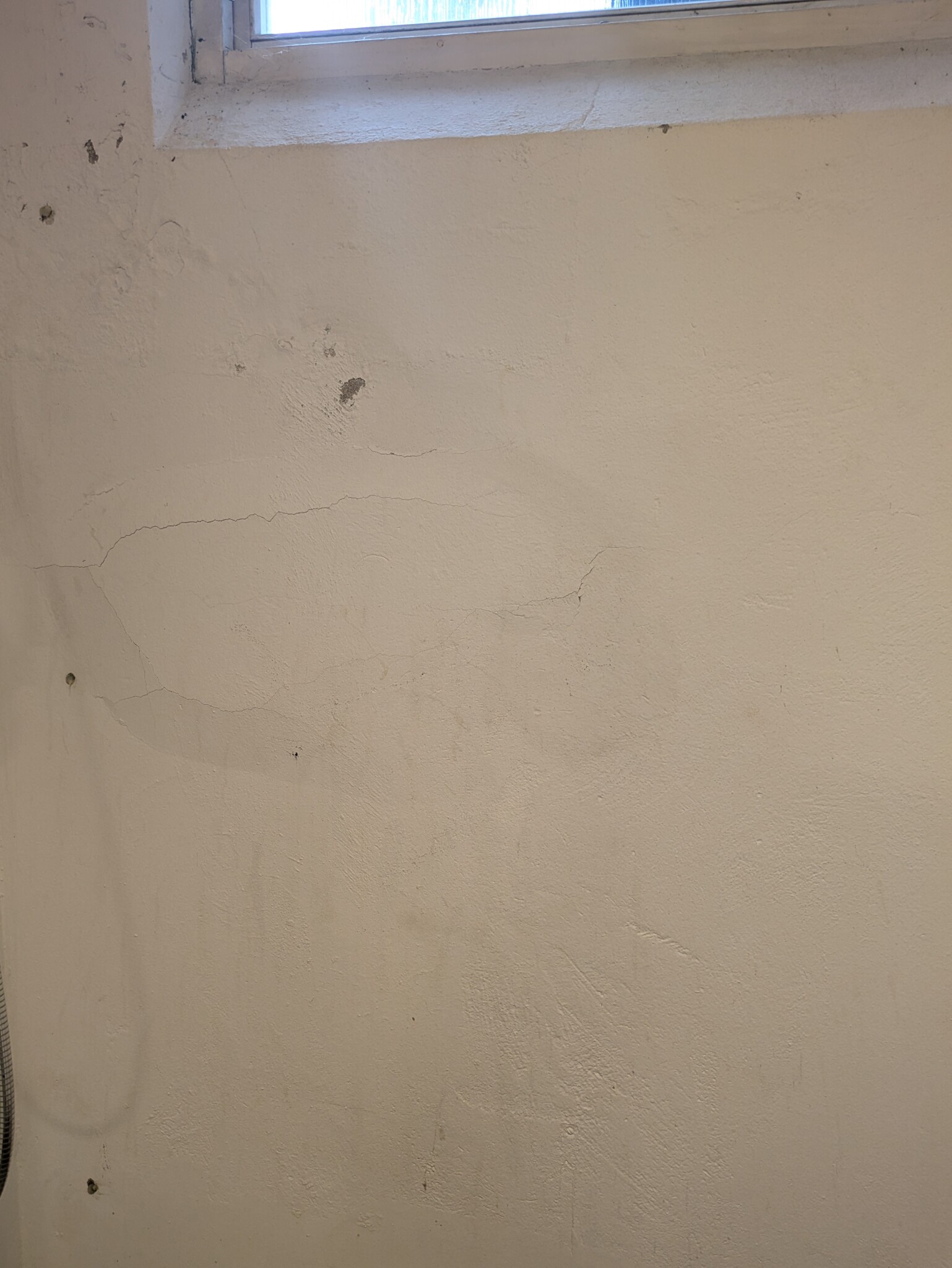

How do I know if it really does that? Where the downpipe goes is the highest point (entrance level). Could cracks or bad pipes with leaks make it try to penetrate the plaster? Trying to understand why the plaster has a "belly" on the inside.J jonaserik said:
You'll need to dig about 40-50 cm deep; normally, downpipes are connected/inserted into pipes in the ground, and the ground pipe should be about 5-10 cm above ground level to prevent soil from entering.E Er Be said:
If you find a pipe, you should be able to remove the downpipe properly, then pour a bucket of water in and see what happens. Does it come out somewhere, or does it (municipal stormwater if available) go to a stone well or ditch? Normally, they don't crack/separate in the ground. If you have trees around the house, needles/leaves might go down into the pipes and become a blockage.
But start by pouring water into the pipes.
Click here to reply