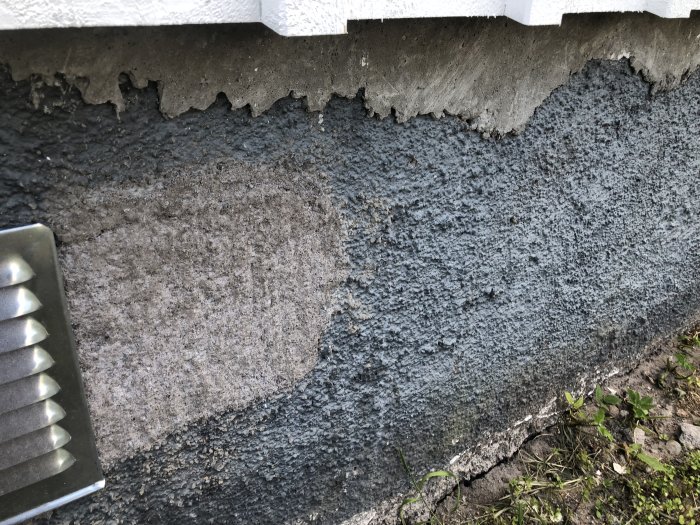
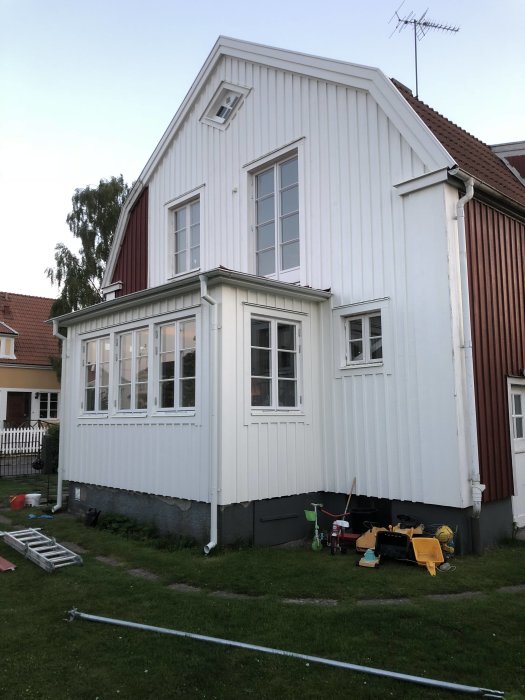
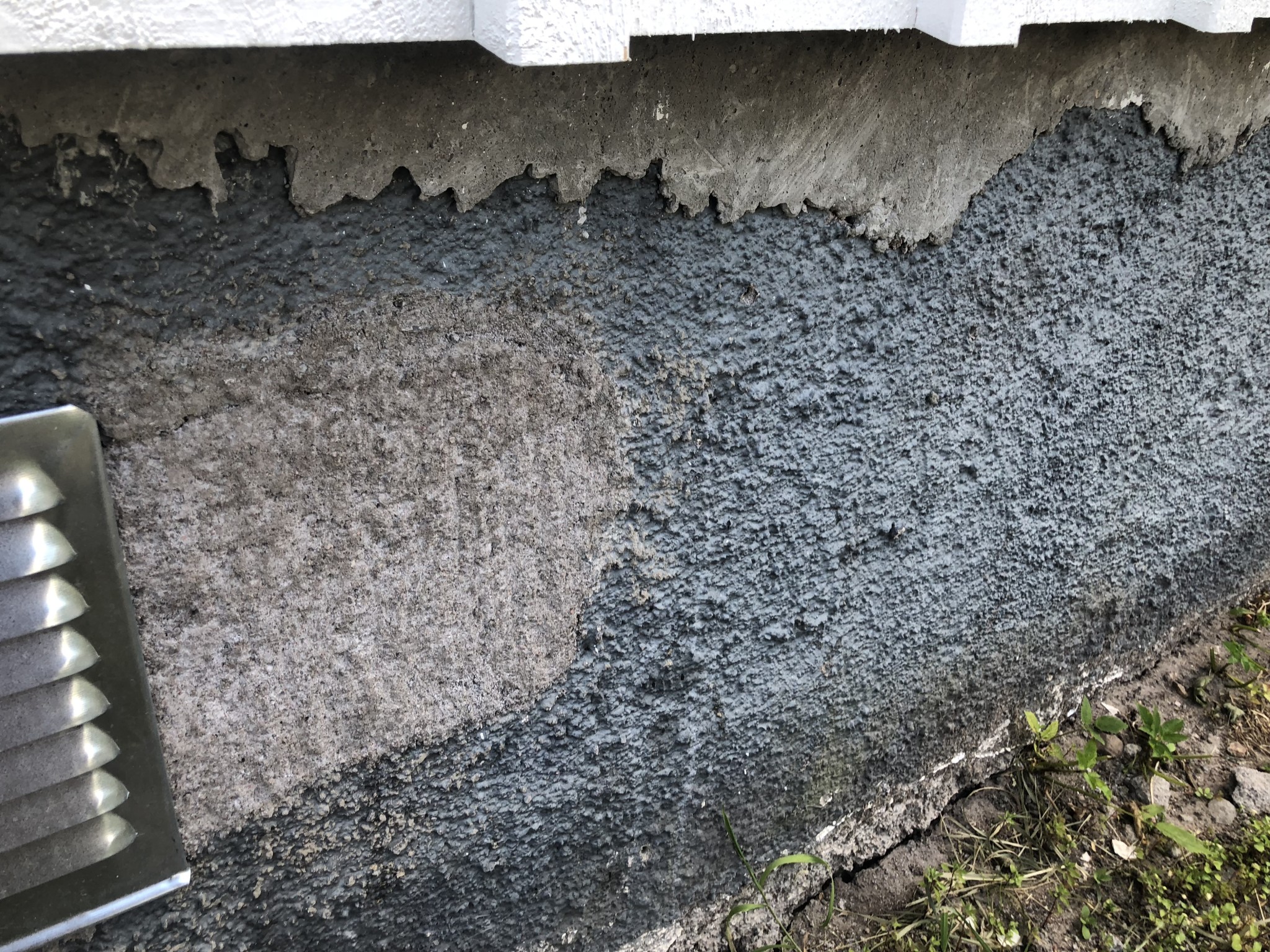
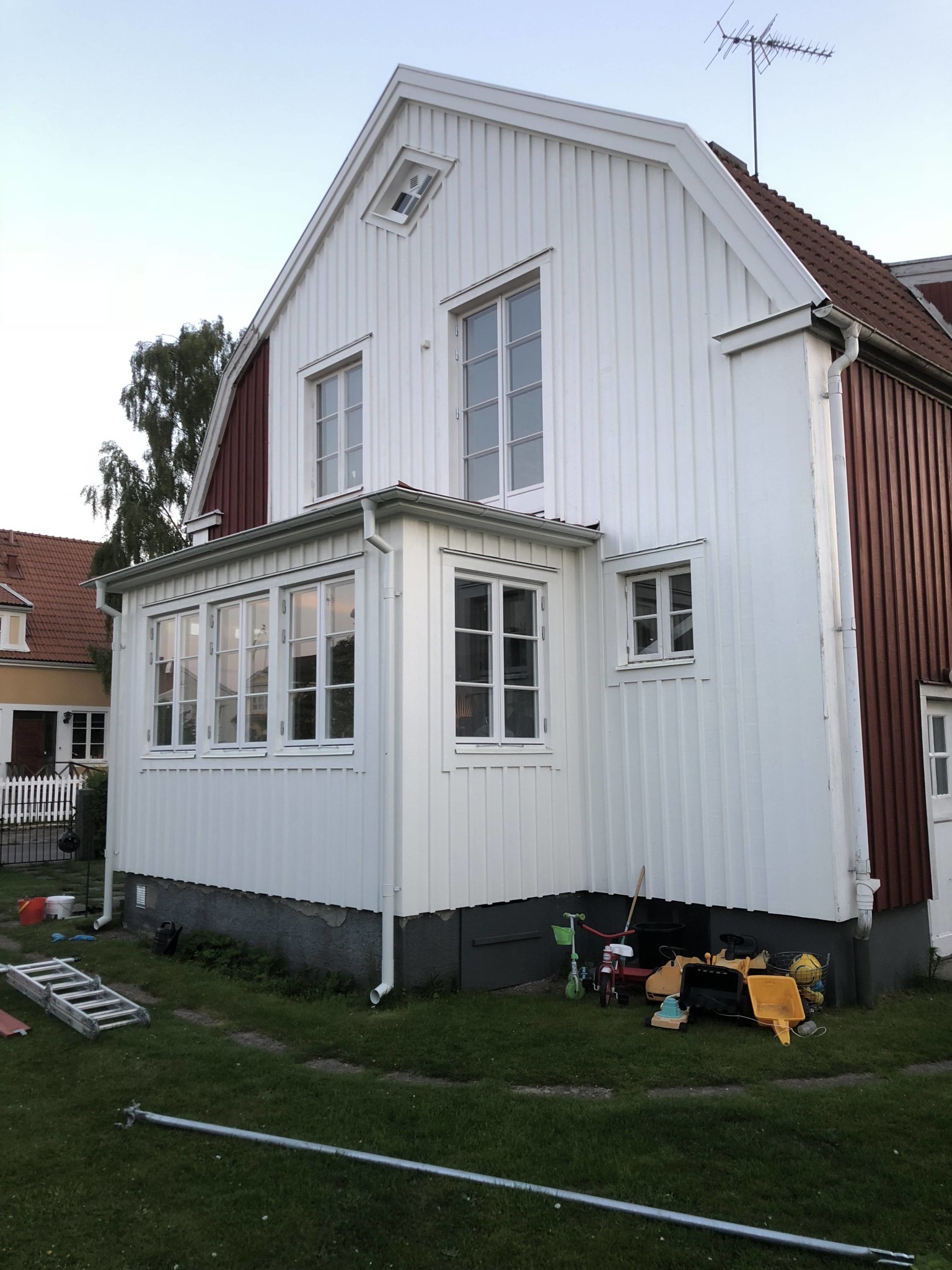
Planning to plaster the basement wall in the images below after having extended it a bit and built in a veranda. The wall is original from 1930. Cast with a limited amount of cement and mixed with very large stones. On the outside, a thin layer of slurry (I think that's what it's called) and painted with some fairly modern base coat.
If we can figure out how to proceed, we'd like to do the job ourselves. The biggest question is whether we need to knock down the slurry and perhaps primarily the paint layer, or if we can plaster directly on it? If we can leave it, how do we best clean the surface before plastering and what type of mortar is suitable?
The new concrete sticks out 5-10 mm beyond the old surface, so if we knock it down, we'll need to plaster a bit thicker with the new one.
I'm definitely not an expert on plastering, but I know a bit about old houses and construction methods. I don't think the roughcast plaster feels original. And the color is a complication. I would probably knock it down and apply a new smooth plaster. The house is nice with fine details, so why not a nicely plastered foundation wall?
If the spritputs is what I called slammning, it is very possible that it is not original. The idea is for the final result to be quite smooth, filted, and look a bit hand-plastered.
The safest approach is, of course, to chip away all the paint, but it's a bit tedious and brings with it a thicker layer of plaster. I thought that a paint designed to adhere to mineral materials might also work well with a new layer of plaster.
It's really only acrylic paints and the like that you should remove. Try polishing over a slightly larger area, such as an end wall. I'm not sure it will be good, but it should be worth a try.
Click here to reply
Vi vill skicka notiser för ämnen du bevakar och händelser som berör dig.