
Hello
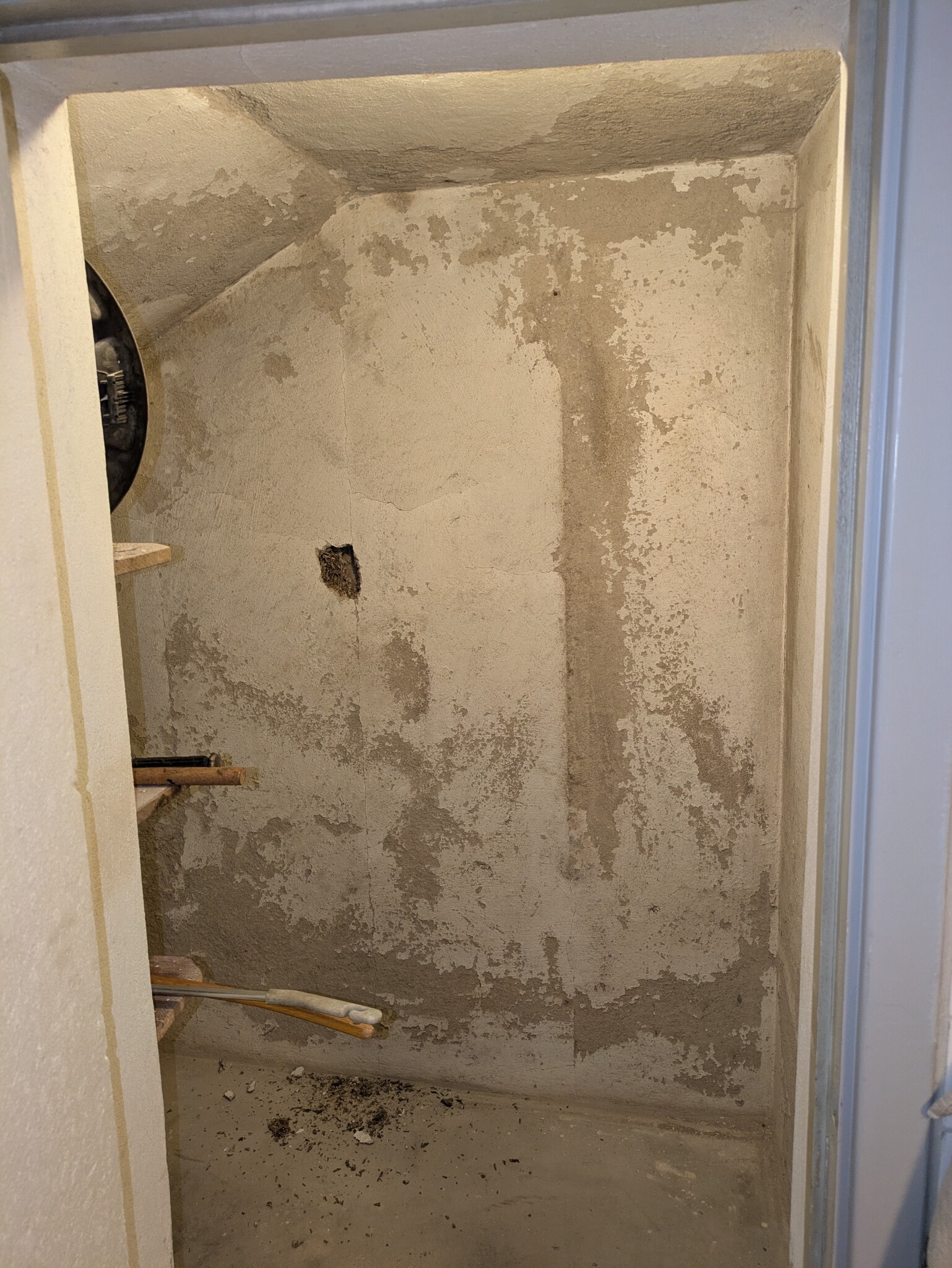
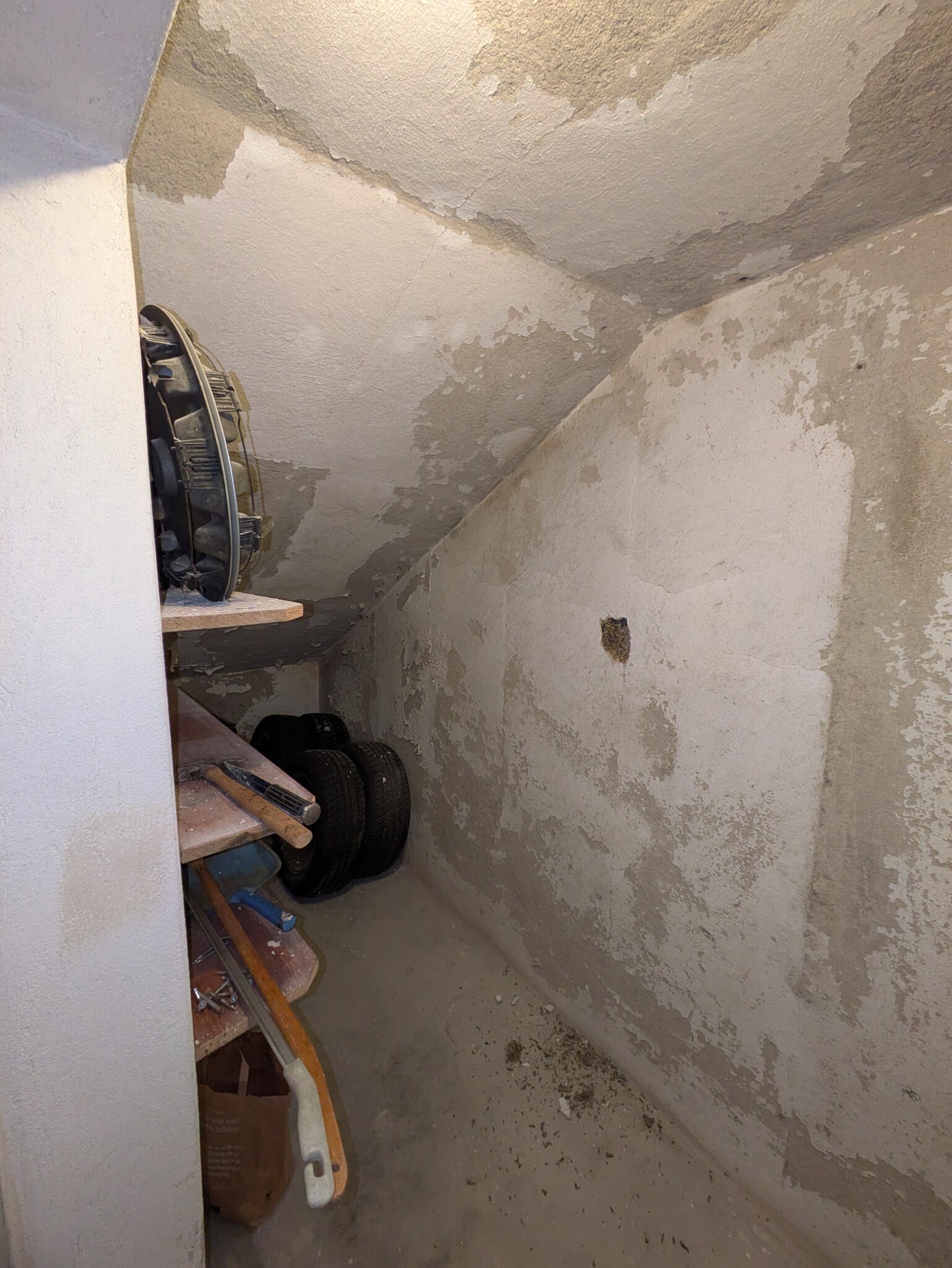
I was thinking of freshening up the space under the outer stairs. The paint had peeled off due to previous moisture. I scrape off some paint and hear that it sounds hollow. I knock on the plaster in a few places and it sounds hollow, just like when plaster is about to come off.
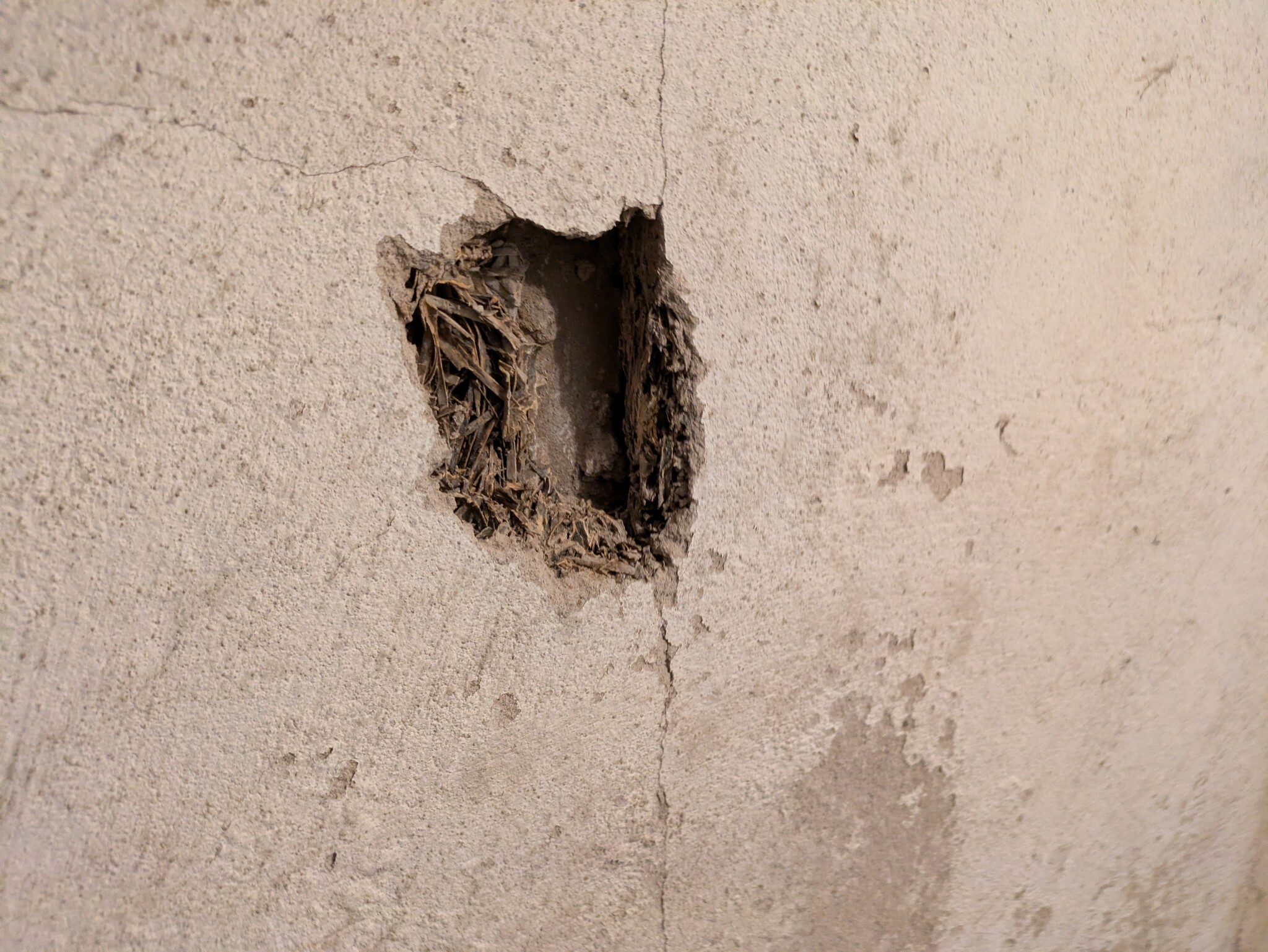
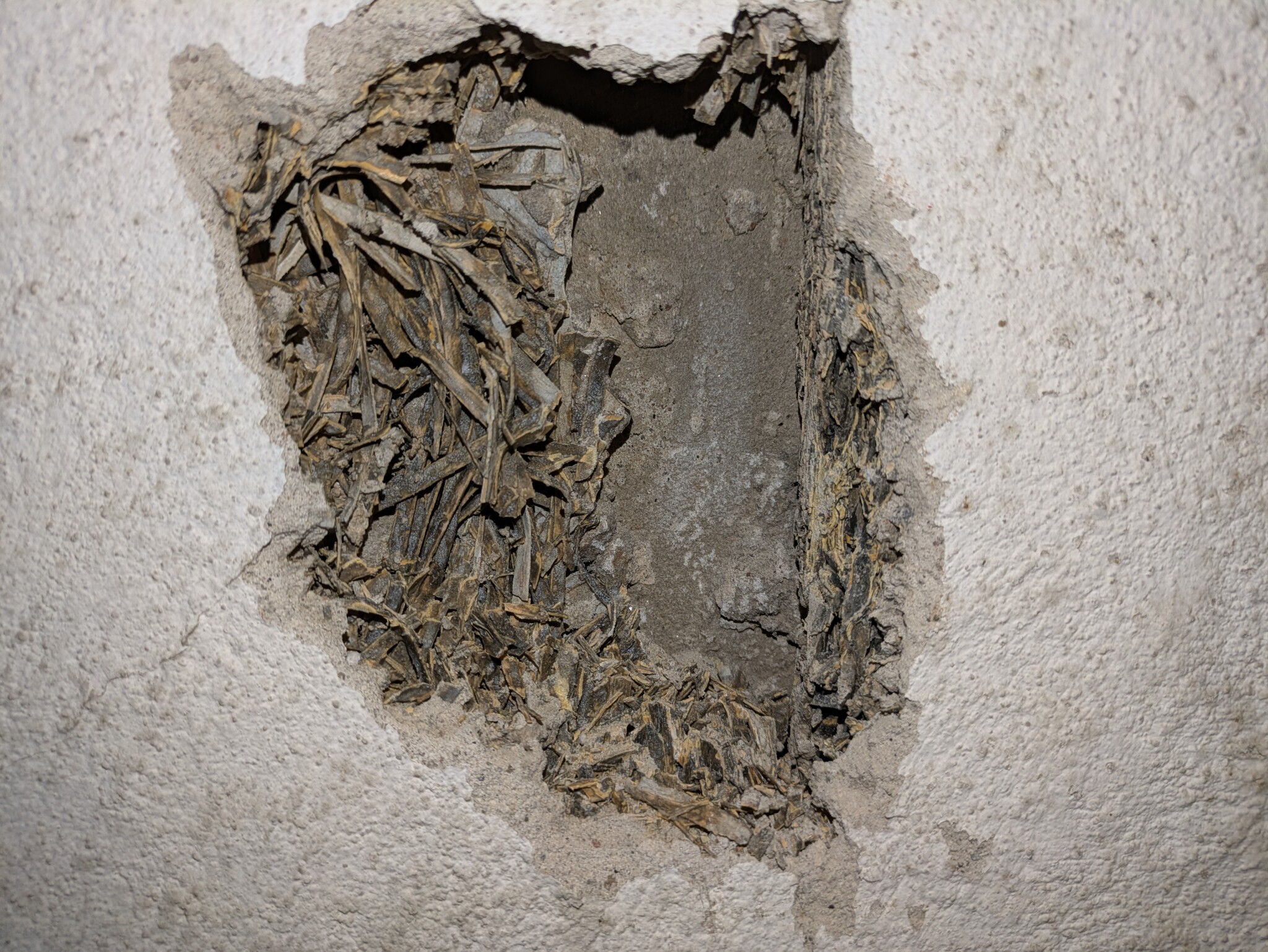
I knocked off some plaster and found a reed mat? I expected concrete blocks like the rest of the foundation. I was a bit surprised, is it common to have reeds between the plaster and the foundation?
I thought I would just replaster what came off, but now I'm uncertain. Why was it done this way? To make the plaster adhere better? Or some kind of insulating function? For the rest of the basement, the plaster is directly on the wall.
What to do now?
The house was built in '61.
I was thinking of freshening up the space under the outer stairs. The paint had peeled off due to previous moisture. I scrape off some paint and hear that it sounds hollow. I knock on the plaster in a few places and it sounds hollow, just like when plaster is about to come off.
I knocked off some plaster and found a reed mat? I expected concrete blocks like the rest of the foundation. I was a bit surprised, is it common to have reeds between the plaster and the foundation?
I thought I would just replaster what came off, but now I'm uncertain. Why was it done this way? To make the plaster adhere better? Or some kind of insulating function? For the rest of the basement, the plaster is directly on the wall.
What to do now?
The house was built in '61.

Incidentally, the effect will be that the plaster sounds hollow even if everything is in order. It's easy to be misled into thinking something is wrong. Unfortunately, it also becomes quite crumbly due to prolonged moisture exposure. In my basement, I've removed what is bad and filled it in with homemade träullit according to the manufacturer's instructions. Träull that absorbs cement slurry. Insert into the hole and apply pressure with a piece of form plywood until it dries.
V Vante said:
Thanks for the info, yes I was indeed a bit fooled because it sounds hollow almost everywhere.C cpalm said:Moreover, the effect is just that the plaster sounds hollow even if everything is in order. Easy to be fooled into thinking something is wrong.
Unfortunately, it becomes all crumbly from prolonged moisture exposure.
In my basement, I've scraped away what's too damaged and filled in with homemade träullit according to the manufacturer's instructions.
Wood fiber that absorbs cement mixture. Insert into the hole and apply pressure with a piece of form plywood until dry.
Then I'll fill the hole I made and leave the rest as is.
Sounds a bit overkill to make your own träull for this small thing, isn't there any simpler solution that works okay?
It probably sounds more complicated than it is; it's as mentioned according to the manufacturer's own instructions for repairing damage on the panels. They even used to write on their website that they send out wood wool for free for repairs, which I thought was very generous before they also sent an invoice 🤔N naikon said:
The alternative, if you want to preserve the properties and not just fill the hole with something else, is to splice in a new piece. But the panels sold today don't have the same thicknesses as before, so in my case, that wasn't an option.
Do you have plaster mesh or chicken wire? Because you can fill with plaster mesh that's folded many times which you then plaster on so it becomes equivalent to what's already there..N naikon said:
F fribygg said:
Smart!! Thanks. I'll probably fill with mesh or some leca. Sounds easy.J Jansson69 said:
Click here to reply