Kortla is the spelling and it is done with kortlingar, even though in Gothenburg it is pronounced kottla and kottlingar. Admittedly, you get more hits for Kottla if you google, but that is due to two things: there is a place called that, and some people on this forum have hammered it into people's heads :banghead:
Kortla is the spelling and you do it with kortlingar, although in Gothenburg it is pronounced kottla and kottlingar.
Admittedly, you get more hits on Kottla if you google it, but that is due to two things: there is a place called that, and some people on this forum have hammered it into people's heads :banghead:
I think that this was the first place where I just wrote kottla, I usually write "kortla/kottla" so as not to offend anyone's beliefs
However, today I saw that Svenskt Trä kottlar
Not many tips on structural engineers unfortunately ...
Anyway, continued drawing on the house to be able to submit the building notification when I realized that I have a wall on the upper floor 60 cm from the supporting wall below that needs to be removed. It's a regular interior wall that's easy to tear down, insert a glulam beam resting on pillars from below in the walls, support the middle floor from above instead, and build the wall around the glulam beam instead. The only downside is that an outlet needs to be moved up to 350-400 mm from the floor or replaced with a surface-mounted outlet.
[image]
Moelven's calculation says that I can manage with a 90*315, 105 mm support and 5 mm deflection.
Could go up to 115*360, 83 mm support and 3 mm deflection. 90*90 or 115*115 in the pillars. The pillar load ends up at 29 kN, concrete slab underneath cast in K250 (C25 today?), should work with a steel plate first to distribute the pressure.
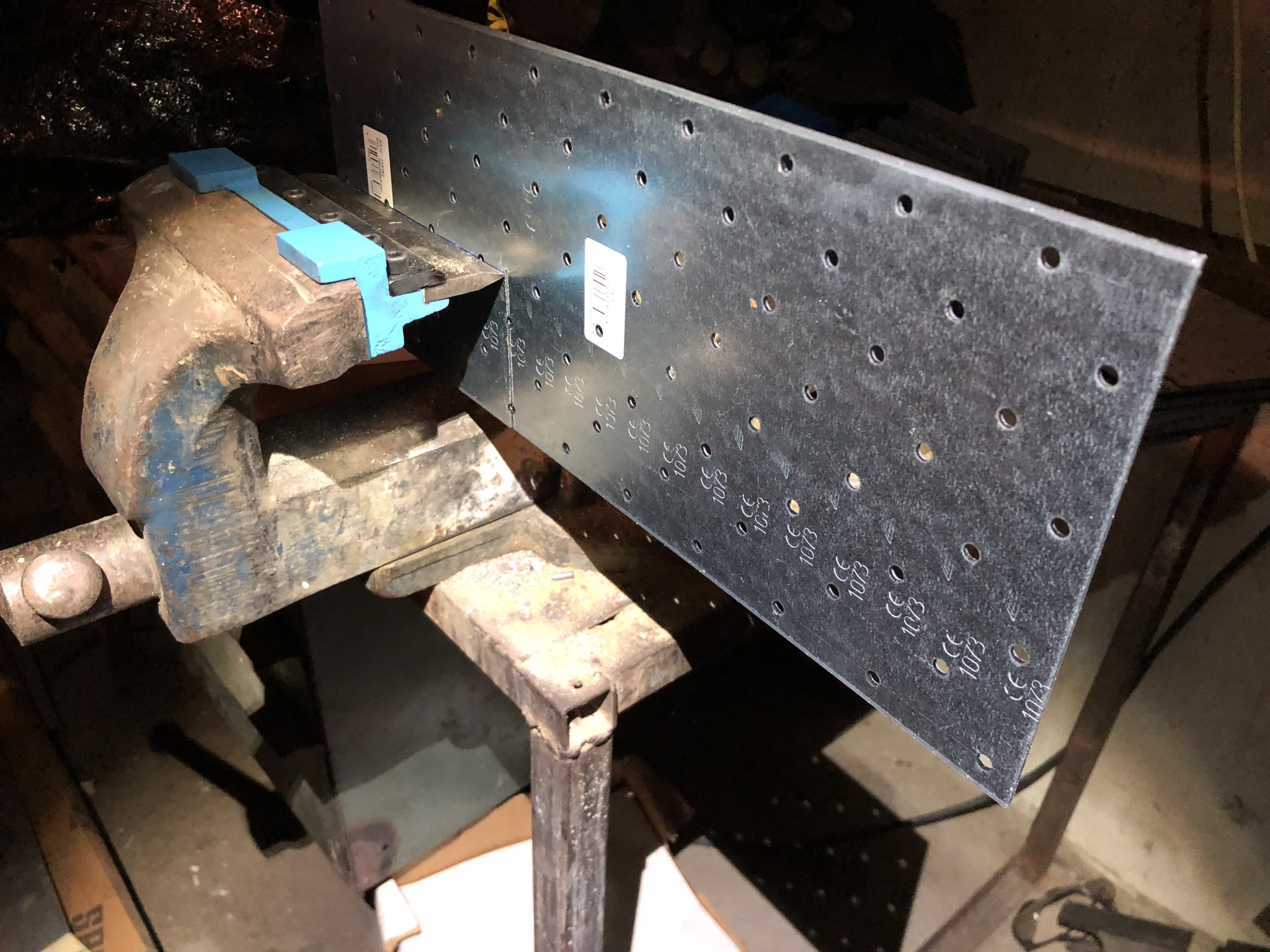
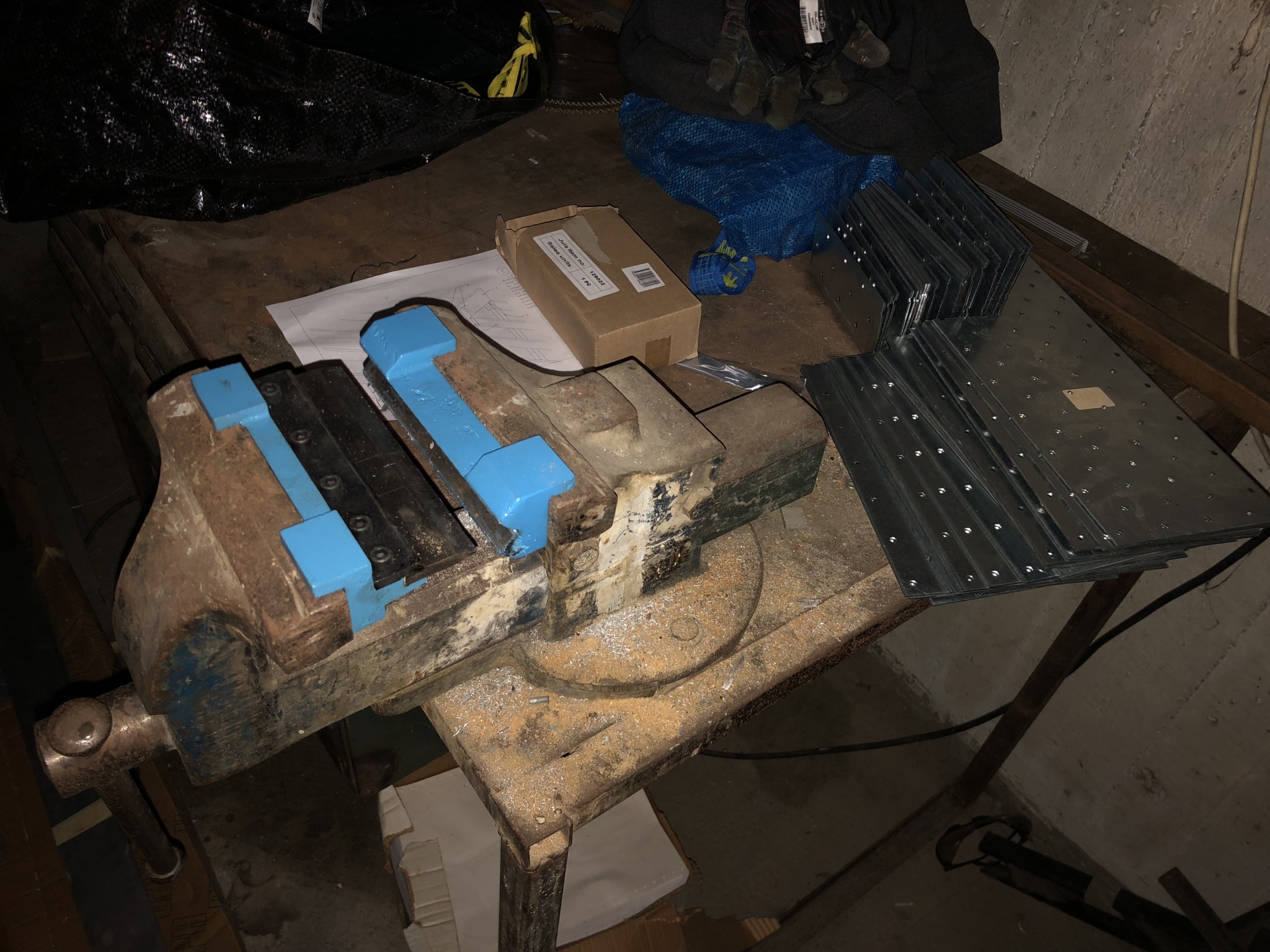
I seem to remember seeing twisted flat bars that are meant to attach glulam beams at a 90-degree angle to each other as in the image above. Otherwise, maybe it works to use a continuous threaded rod, M12 or similar, through both the glulam beam and floor joists, provided that the nuts on the top and bottom are offloaded with larger plates? Would be easier anyway and the nut height is taken care of by the slatted panel.
The advantage with this variant, no need to cut the floor joists, glulam easier to handle compared to steel beam, and would think that it's much easier to demolish and rebuild a 3-meter interior wall compared to propping up half the house, cutting floor joists, and assembling everything together again ...
Now just missing a structural engineer who can verify this variant. Moelven claims it works if it's ...
Long time I know, but how did you proceed in the end?
Clever solution
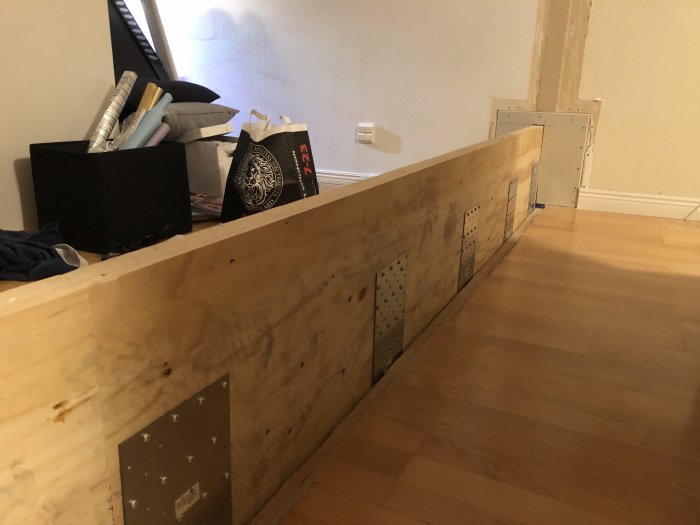
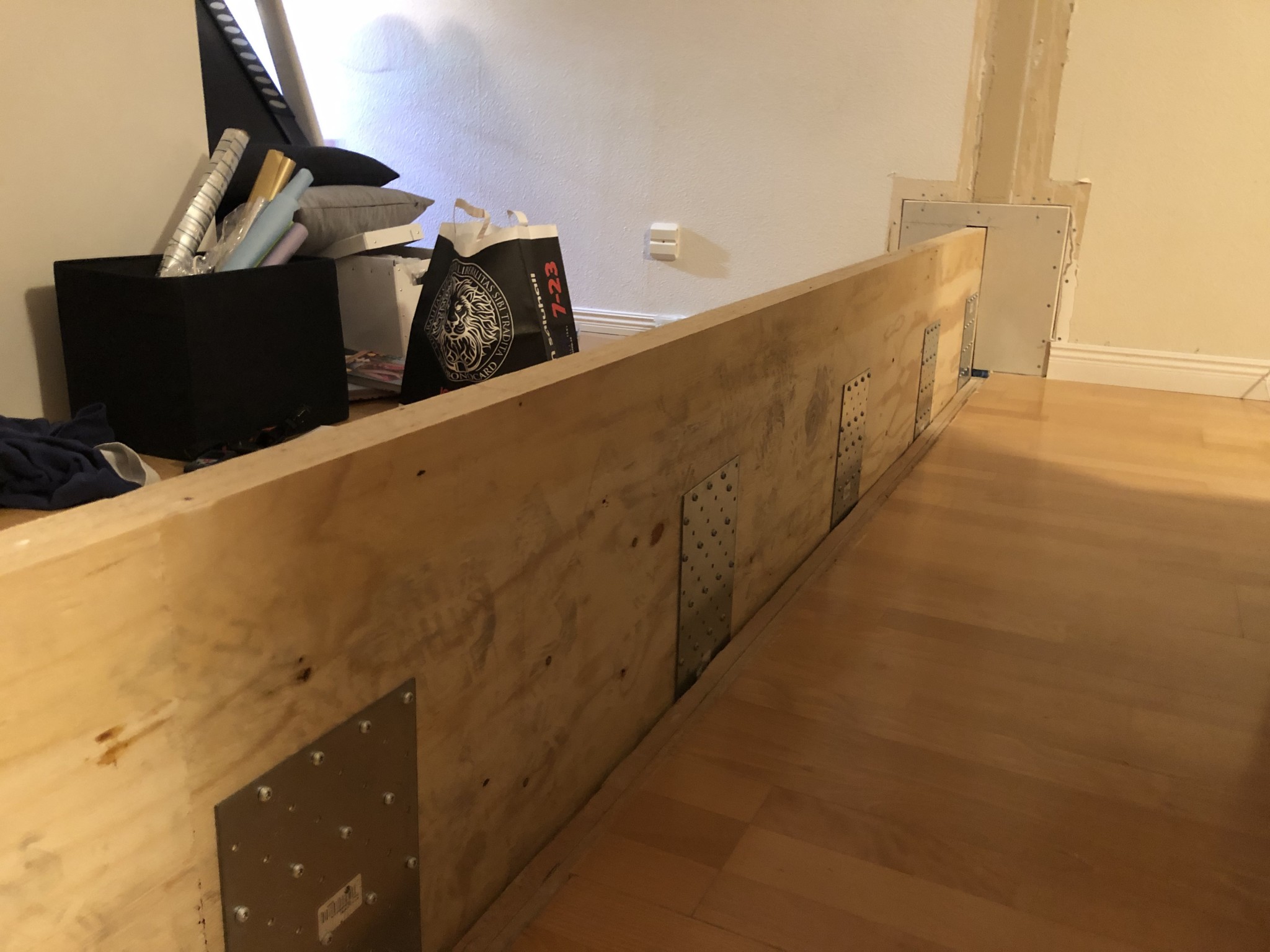
Removed the wall on the floor above temporarily and inserted a 45*415 mm Kerto beam resting on 90*90 columns embedded in the walls below and suspended the intermediate floor from it. Spoke with Moelven and it was a completely okay construction. Rebuilt the wall with 95 studs instead of 70 studs
Demolished the wall on the floor above temporarily and inserted a 45*415 mm glue-laminated beam which rests on 90*90 posts embedded in the walls downstairs, and the beam was suspended from the intermediate floor. Spoke with Moelven and it was an entirely acceptable construction. Rebuilt the wall with 95 studs instead of 70 studs.
[image]
Hi! Did you find any type of metal to fasten the beam to the intermediate floor? Or how did you do it?
I'm considering a similar solution to avoid embedding the beam as I will be building a wall on the upper floor right where the beam will be.
What you need to keep in mind when cutting the beams and installing a concealed beam, is that the floor joist is no longer continuous. This means that the intermediate beams bend down more than when they were whole. You should also take this into account, for example, if there is a bathroom on the upper floor in the relevant area.
Depending on how the light falls, it may also become visible that the ceiling is wavy. A visible beam conceals the deflection better. Also, consider beforehand if there might be installations such as ventilation or drainage that are currently in the floor joist.
Now, this is an old post, but the thread has already been brought back to life as mentioned. And I don't understand this. If you split the intermediate joist and put in a new support in the middle, you create a NEW attachment point in the span. As long as the fastening is strong, the deflection of the floor joist in this area should become _less_? It might also be noticeable though.
The beam replaces a previous support that already existed in the form of a load-bearing internal wall, so no new support has been added. What happens is that the floor structure becomes divided. Each beam then rests on two supports. An intermediate beam or a beam with two supports bends more than when the beam is whole and rests on three supports. It's said that a beam on three supports is continuous. You can test with a flexible ruler. With three supports, it bends down on one side and up on the other side of the middle support, thus counteracting deflection on the loaded side.
Click here to reply
Vi vill skicka notiser för ämnen du bevakar och händelser som berör dig.


TeroM said:
Not many tips on structural engineers unfortunately ...