
6,923 views ·
22 replies
7k views
22 replies
Recasting drainage channels ????
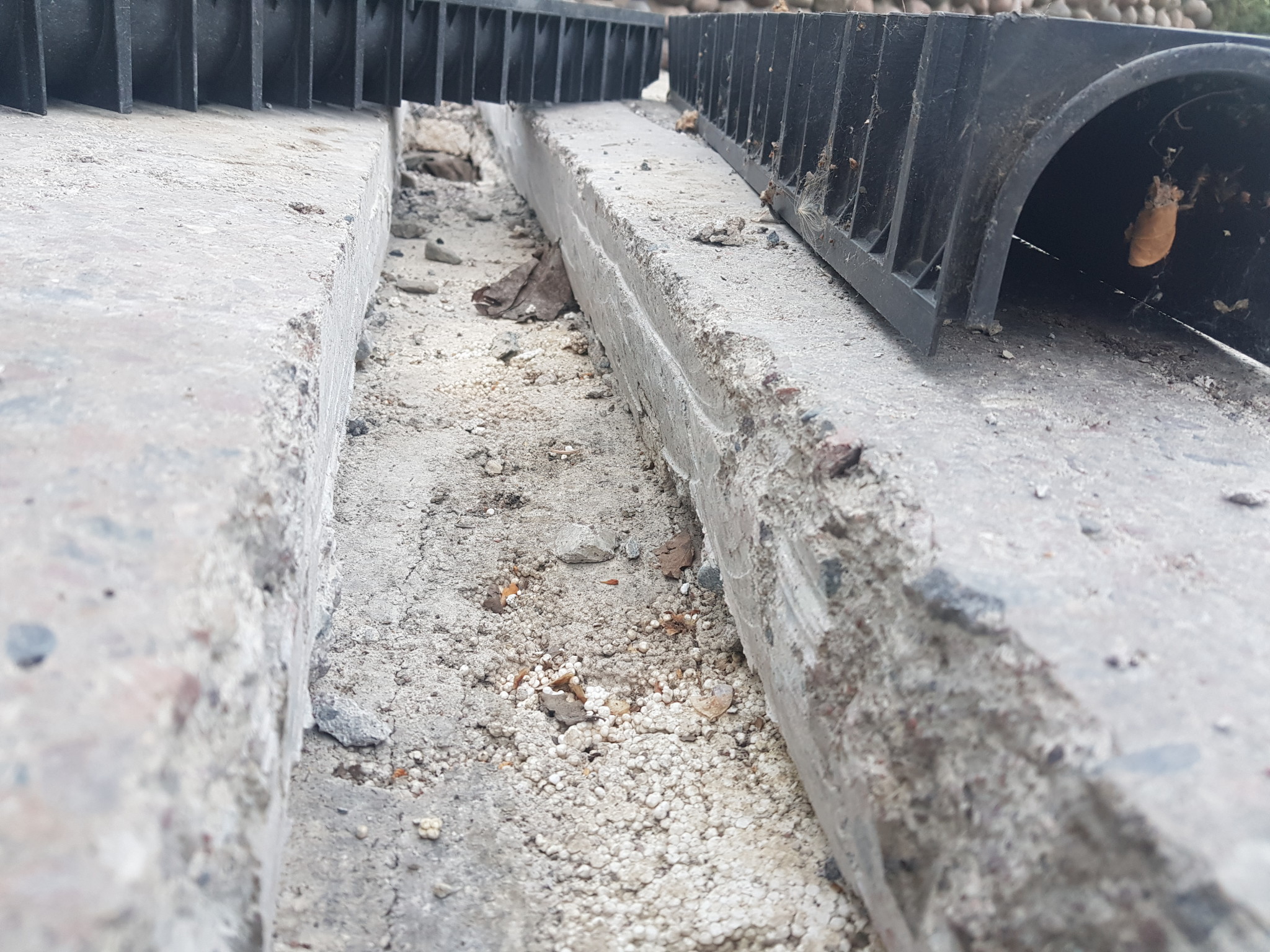
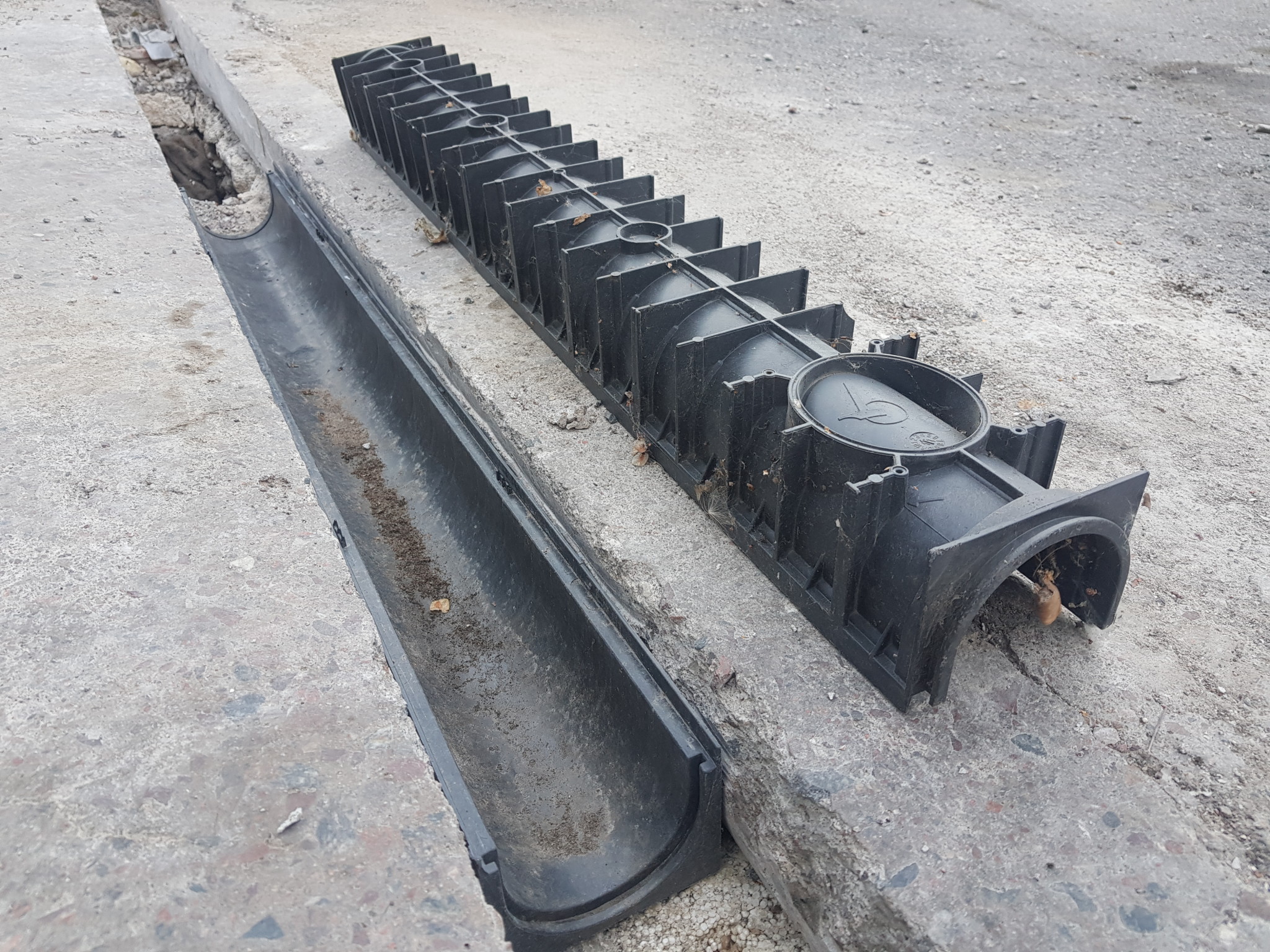
Hi, I have a small problem and I need some advice ... a couple of years ago, we poured a slab outside the garage and at the end of the slab, they cast a drainage channel with a grid designed to stop all water and pollutants from, for example, car washes from running down the street. The problem was that the grids were made of plastic and broke... I have now found new proper channels with metal grids that I want to install, but I don't know which concrete to use and how to fill it up/around/under the new channels. The new channels are a bit higher than the previous ones, so I had to remove the previous concrete, so currently, the channel/space under where the new one is to be installed is deeper than the channel. My basic idea is to mix the concrete to be fluid/easy-flowing, fill a base layer under the channels, press the channels into the concrete, and wrap a vibrator in lots of cloths and let it vibrate directly in the plastic channel until everything settles at the right level... additionally, everything is at a slope now... well, I hope I have described it understandably and that someone can provide some useful tips.
I actually think you can pour any kind of concrete there. Use regular fine concrete, 25 or 40 mpa probably doesn't matter, or mix it yourself with just cement and sand.
Don't mix it too thin, as it will crack when the excess water dries out. Instead, add a little plasticizer to the concrete when you mix it. Don't pour too much, as it will be a bit difficult to vibrate it down now that there is not much space on the side, and I think it might be hard to cover the entire space with concrete, but maybe that's not needed. Then I would probably put a weight on the channel after you've vibrated it down to prevent it from floating up before the concrete starts to set.
The question is whether you need any concrete at all, other than to scrape off under the channel? However, it looks like you are through the entire plate and down to the styrofoam insulation underneath? Is there no longitudinal reinforcement or reinforcement mesh? What is beneath the channel? If it's just insulation and you have a car driving over the grate, it feels like it would press the channel into the styrofoam.
Don't mix it too thin, as it will crack when the excess water dries out. Instead, add a little plasticizer to the concrete when you mix it. Don't pour too much, as it will be a bit difficult to vibrate it down now that there is not much space on the side, and I think it might be hard to cover the entire space with concrete, but maybe that's not needed. Then I would probably put a weight on the channel after you've vibrated it down to prevent it from floating up before the concrete starts to set.
The question is whether you need any concrete at all, other than to scrape off under the channel? However, it looks like you are through the entire plate and down to the styrofoam insulation underneath? Is there no longitudinal reinforcement or reinforcement mesh? What is beneath the channel? If it's just insulation and you have a car driving over the grate, it feels like it would press the channel into the styrofoam.
You need to chisel away more of the old concrete and pour with expanding concrete. Otherwise, there is a risk of water getting between the well and the existing concrete, which can freeze and crack the well.
as I describe in the text, the channel is sloped so the concrete can't be too fluid, at the same time there are lots of compartments in the new plastic channels, so I'm worried it will leave gaps/air behind, and if the plastic isn't supported from the sides, it will be very brittle and might crack if something hard falls into the channel, especially when it's cold. I had to cut away the concrete that was underneath because the new channels are higher, so what you see is indeed foam. I have a water-heated system throughout the entire slab to the left, and the slab is insulated and reinforced up to where the old channels were. I cast it on both sides, and there is a gravel bed underneath, so I don't think it will crack if you drive over it with a car. It becomes a U-shaped concrete shell around it, and there is plenty of space for more concrete underneath and partly under the slab (both ways). The main issue is ensuring the concrete surrounds everything compactly and doesn't run off (since there’s a slope). I've talked with the builders' merchants, and they all say I need a concrete that withstands frost; that's basically it. I must do the whole casting in one go since all the channels are hooked to each other. It has to be a delicate balance between fluidity and not running off. I was considering lowering the channel halfway down, so I have a gap to pour the concrete into and start from the lowest point, gradually pressing the channel down and having any excess mixture press out. But as mentioned, the crucial question is what to use, maybe something like foam sealant (but in concrete) that might work to fill any gaps between the compartments.Andreas Lundgren said:
I actually think you can pour any kind of concrete there. Use regular fine concrete, 25 or 40 mpa probably doesn't matter, or mix yourself with just cement and sand.
Don't mix it too thin, as it will crack when the excess water dries. Rather use some flow agent in the concrete when mixing it. Don't pour too much, it will be a bit difficult to vibrate it down now that there isn't much space beside it, I think it might be difficult to cover the entire space with concrete, but that might not be necessary. Then I would probably place a weight on the channel after you've vibrated it down, so it doesn't float up before the concrete starts to set.
The question is whether you need any concrete at all, more than just leveling under the channel? However, it looks like you're through the entire slab and down into foam insulation underneath? Isn't there longitudinal reinforcement or a reinforcement mesh? What's under the channel? If it's just insulation and you have a car driving over the grate, it feels like it will press the channel into the foam.

Use expanding concrete, it is made specifically for such purposes. It's easy-flowing and fills itself out and doesn't need to be vibrated. It's enough if you gently tap the channels with a hammer. The only downside is that it's more expensive. Don't forget to prime the surfaces with cement water (a mixture of water and cement in sour milk consistency) that you brush on before casting to get good adhesion.
Possibly cast in two rounds where in the first casting you just set the channels and fill up to the lowest point in the slope since the concrete will essentially level itself. Then in the next casting, you can pour the last part, mixing a slightly more viscous consistency and being alert when it starts to set and gets less fluid properties, and it'll go just fine. Alternatively, it might work with concrete filler Ardex A46 for the last casting, but check its strength. Otherwise, you can use it up to 30mm, but it costs about as much as gold .
.
Possibly cast in two rounds where in the first casting you just set the channels and fill up to the lowest point in the slope since the concrete will essentially level itself. Then in the next casting, you can pour the last part, mixing a slightly more viscous consistency and being alert when it starts to set and gets less fluid properties, and it'll go just fine. Alternatively, it might work with concrete filler Ardex A46 for the last casting, but check its strength. Otherwise, you can use it up to 30mm, but it costs about as much as gold
.
Last edited:
Expanding concrete helps me as the previous speaker wrote, but it's not entirely easy to achieve (regardless of which concrete you choose). Perhaps you should cut another 5-10 cm on the side so that the channel becomes wider? Then you have the opportunity to add concrete to the side rather than trying to shake it down the channel. Hard to say from your picture, but maybe it can be helpful? If you can cut and knock so that a bit of the old reinforcement is left sticking out, that's good.
All concrete is frost-resistant when it has reached sufficient strength, which can take a few days to several weeks depending on the temperature. Only if it is below 5° (the coldest time of the day in the next 5 days, as they say) when you cast do you need frost protection in it.
All concrete is frost-resistant when it has reached sufficient strength, which can take a few days to several weeks depending on the temperature. Only if it is below 5° (the coldest time of the day in the next 5 days, as they say) when you cast do you need frost protection in it.
OK, so the frost protection you're talking about is when the "pjuket" is burning, not when the concrete is finished. That's not exactly the information I've received from the dealers (sigh). And no, chiseling out the end of the reinforcement can be costly for me— the heating pipe turns right at the gutters. I could, in fact, widen it in the other direction, but there's probably only 10-15 cm total width there, and as you previously mentioned about durability and that the gutters would be pressed into the styrofoam, I want to keep it as wide as possible. There are pros & cons with everything in this, and unfortunately, no clear, simple solutions. But the expanding concrete seems to be a reasonable product to use. How much "blast power" does it have? Meaning, how much space should be left open when casting for it to expand into? Similarly, I've seen that it's like regular concrete in different coarseness— what would be preferable in my case? It seems to have a reasonably fast curing time, about 30 minutes, but does the curing go quickly or can it be worked with until it sets? (Uh, it was hard to phrase this, but I think you understand what I mean.) I'm handicapped and not the fastest when working, so the setting time (time it's workable) is crucial. The other option is just to use "regular" concrete, which is slower curing.
Was the concrete cut afterward to fit the new gutters, or was it cut to remove the old one? Either way, I would also advise cutting a bit extra now. Expanderbetong is, as mentioned before, the right product. It expands minimally and with a small casting like this, it won't even be noticeable; it's more about it not shrinking like "regular" concrete.
The casting won't be optimal regardless, so I would have widened as much as possible. Then cast at the correct level at the bottom, with the correct slope. Put down the aco-drain and then cast it in place with expanderbetong. If there's an opportunity to insert some dowels, it's recommended.
The casting won't be optimal regardless, so I would have widened as much as possible. Then cast at the correct level at the bottom, with the correct slope. Put down the aco-drain and then cast it in place with expanderbetong. If there's an opportunity to insert some dowels, it's recommended.
No, the width is identical to the old channels, but they were "wavy" on the sides to provide stability against the concrete, so currently the width is identical to the initial casting. I had to saw out the BOTTOM because the new channels are higher... so if I understand you correctly, you're suggesting that I should first cast the bottom so that the height is correct and then cast them in place with a widened channel in the current concrete? And by "dubb" do you mean that I should screw the channels to the bottom or?
Exactly, a bit like the others have already suggested.2 2 loud said:no the width is identical to the old trenches but they were "wavy" on the sides to get stability against the concrete so currently the width is identical to the initial casting BOTTOM I have had to saw out because the new trenches are higher ... so if I understand you correctly, you mean that I should first cast up the bottom so the height is correct and then cast them in the next step with a widened trench in the current concrete ? and by "dowel" do you mean that I should screw the trenches to the bottom or ?
No, that probably won't be necessary. But short rebar into the sides of the current slab. In this case, it's enough to drill for example 10 mm holes and insert 10 mm rebar. It makes a big difference for relatively little work.
ok now I understand thanksC C.Lundin said:
Yes, if you think about it, the city is full of concrete that withstands frost.2 2 loud said:
Maybe you can remove just 2-4 cm on the "outside"? If that's possible, it will make your work much easier, and if it's well cast, I think it's worth removing a bit more when it comes to final strength. But you might not be able to go at it with a chisel without first doing some sawing? If you attach a stone-cutting blade to a regular angle grinder and cut grooves along the length, you can save costs. If you don't count the labor time, that is. Perhaps it would be enough if you remove the top layer, 2-3 cm in and a few cm down? So that you can pour concrete from above? If you could open up a wider trench, you could place it in the trench, anchor it or put weights in/on it, and then pour concrete slowly from the sides, vibrate a little, have a beer, pour a little more, and so on.
Expanding concrete has a very strong explosive force when it expands, but it only expands a little to fill up.
When it comes to curing time, I don't know about expanding concrete, I didn't think about that when I used it. It depends a bit on the temperature too. Maybe someone else can answer that.
Just to clarify again, expanding concrete does not expand. You would need to pour perhaps a meter thick to notice any difference. It's about it not shrinking, like regular concrete.
The curing time is not significantly different from regular concrete.
The curing time is not significantly different from regular concrete.
ABSOLUTELY RIGHT the whole city is full of concrete BUT as I have been informed in the "professional trade world," it has to be frost-resistant, and sure, you see lots of concrete everywhere, but there's hardly an "ingredient list" painted on it, so ... there are lots of different concretes, but now I feel fairly confident in your answersYes, if you think about it, the city is full of concrete that holds in frost.
Maybe you can remove just 2-4 cm on the "outside"? Should that be possible, it will be much easier to work, and if the casting is good, I believe it outweighs the fact that you're removing a bit more regarding the final strength. But you might not be able to use a chisel, without first cutting a bit? If you put a stone blade on a regular angle grinder and cut grooves lengthwise, you'll get away relatively cheaply. If you don’t count the labor time, of course. Maybe it's enough if you remove the top, 2-3 cm in and a few cm down? So that you can pour concrete from above? If you got a wider channel, you could lay it in the channel, anchor it, or put weights in/on it, and then pour concrete calmly from the sides, vibrate a bit, have a beer, pour in a bit more, etc.
Expansion concrete has a very strong explosive force when it expands, but it only expands a little to fill in.
When it comes to cure time, I don't know for expansion concrete, I didn't think about it when I used it. It depends a bit on temperature too. Maybe someone else can answer that.