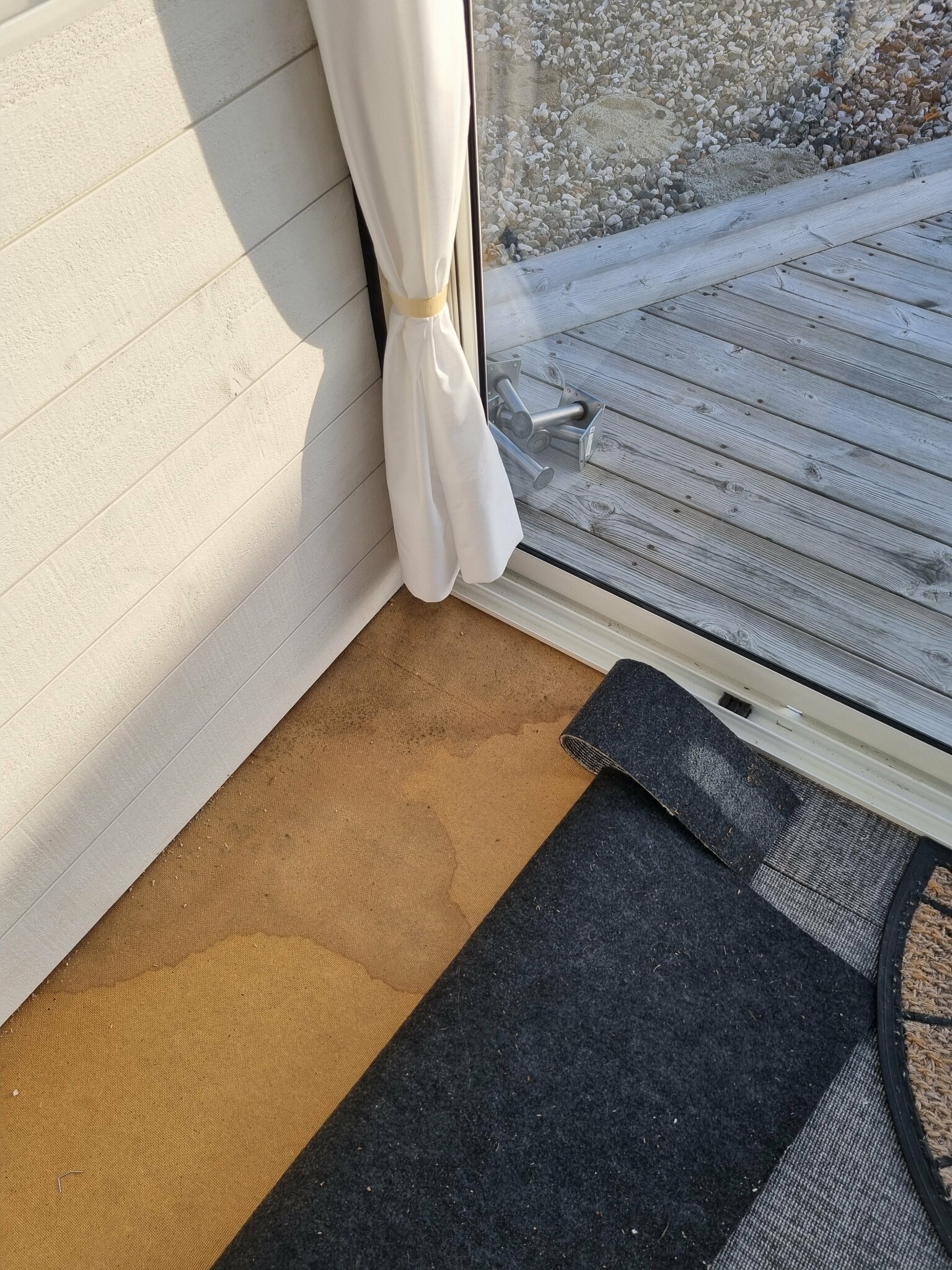
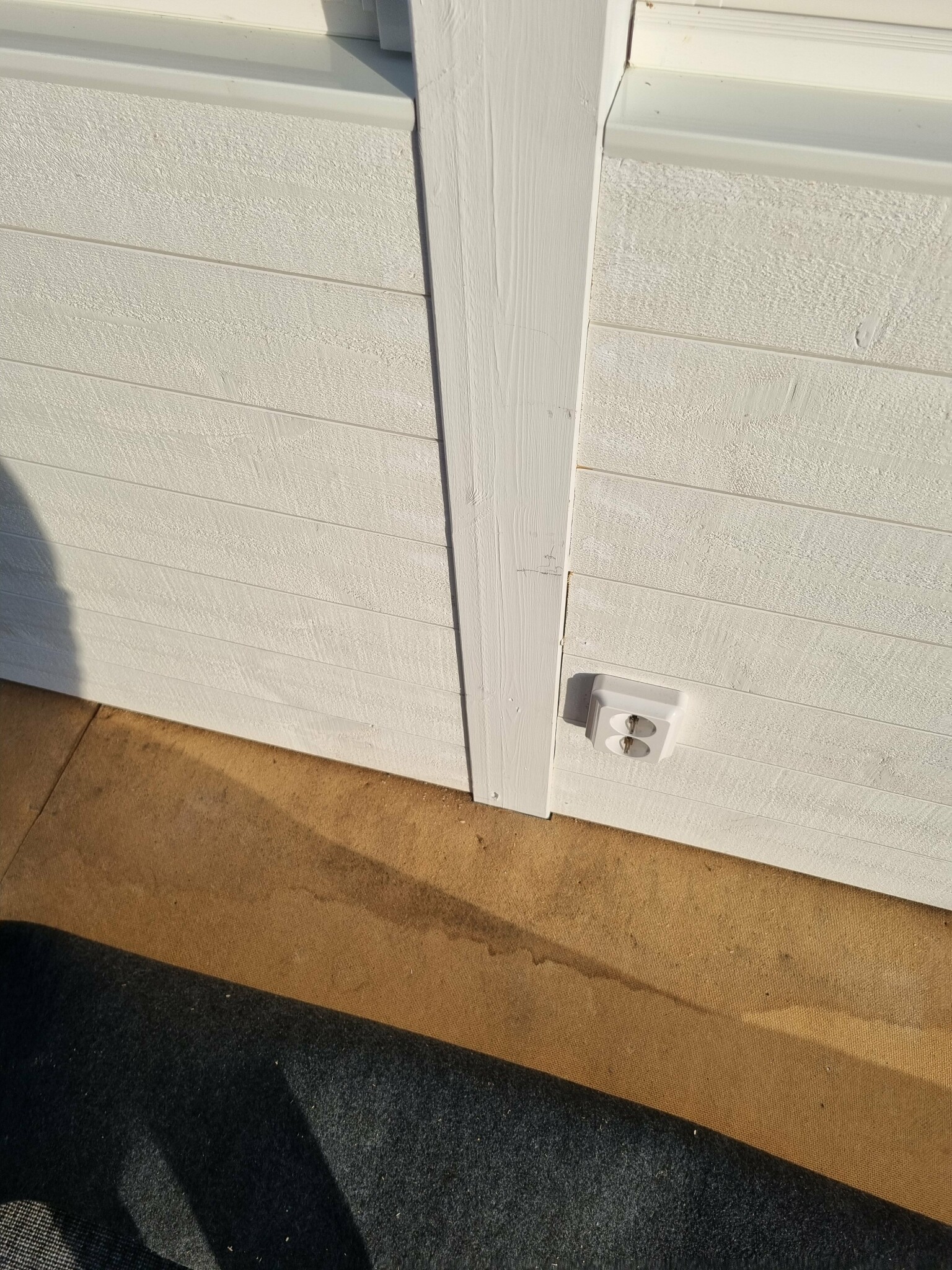
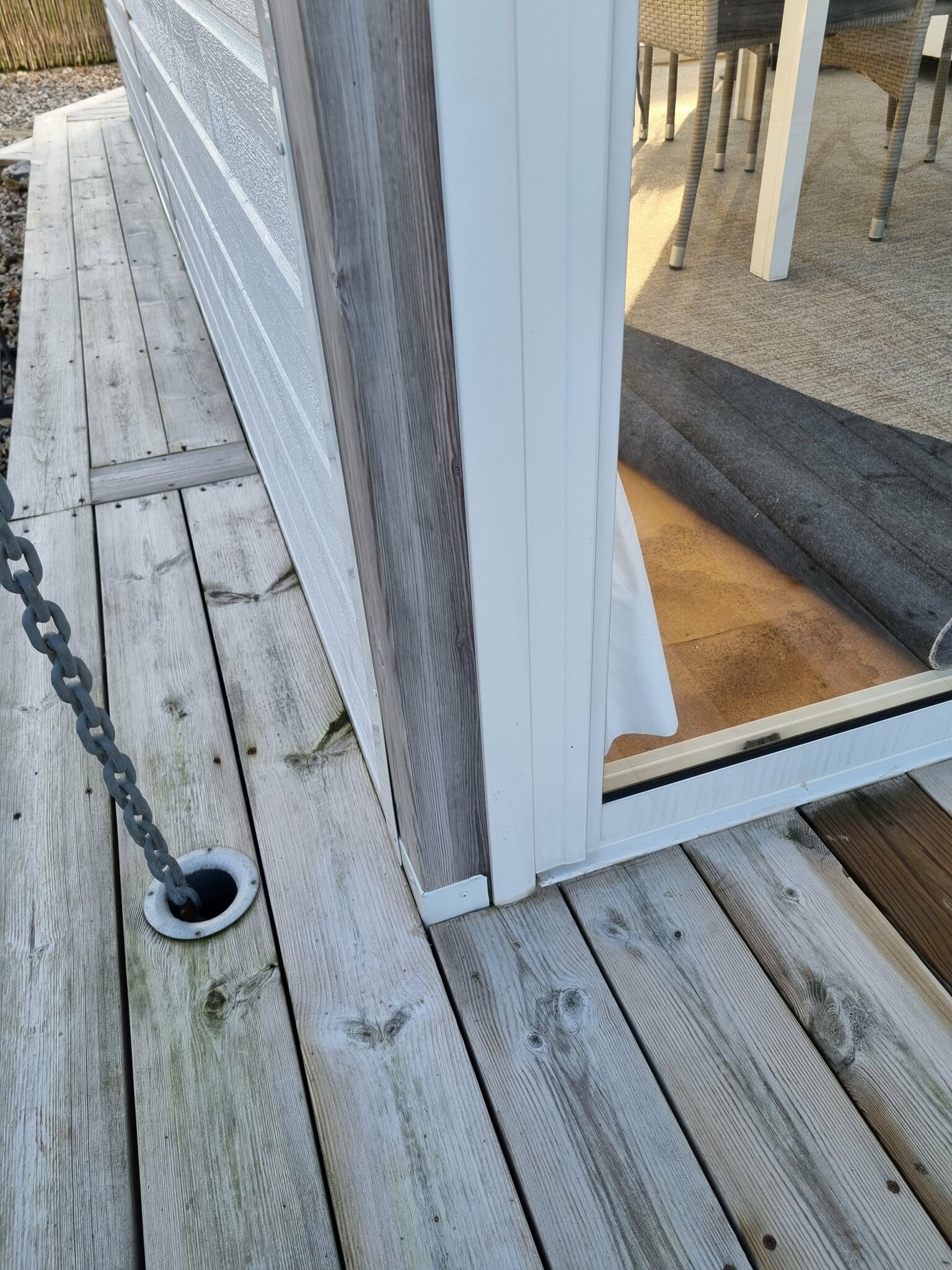
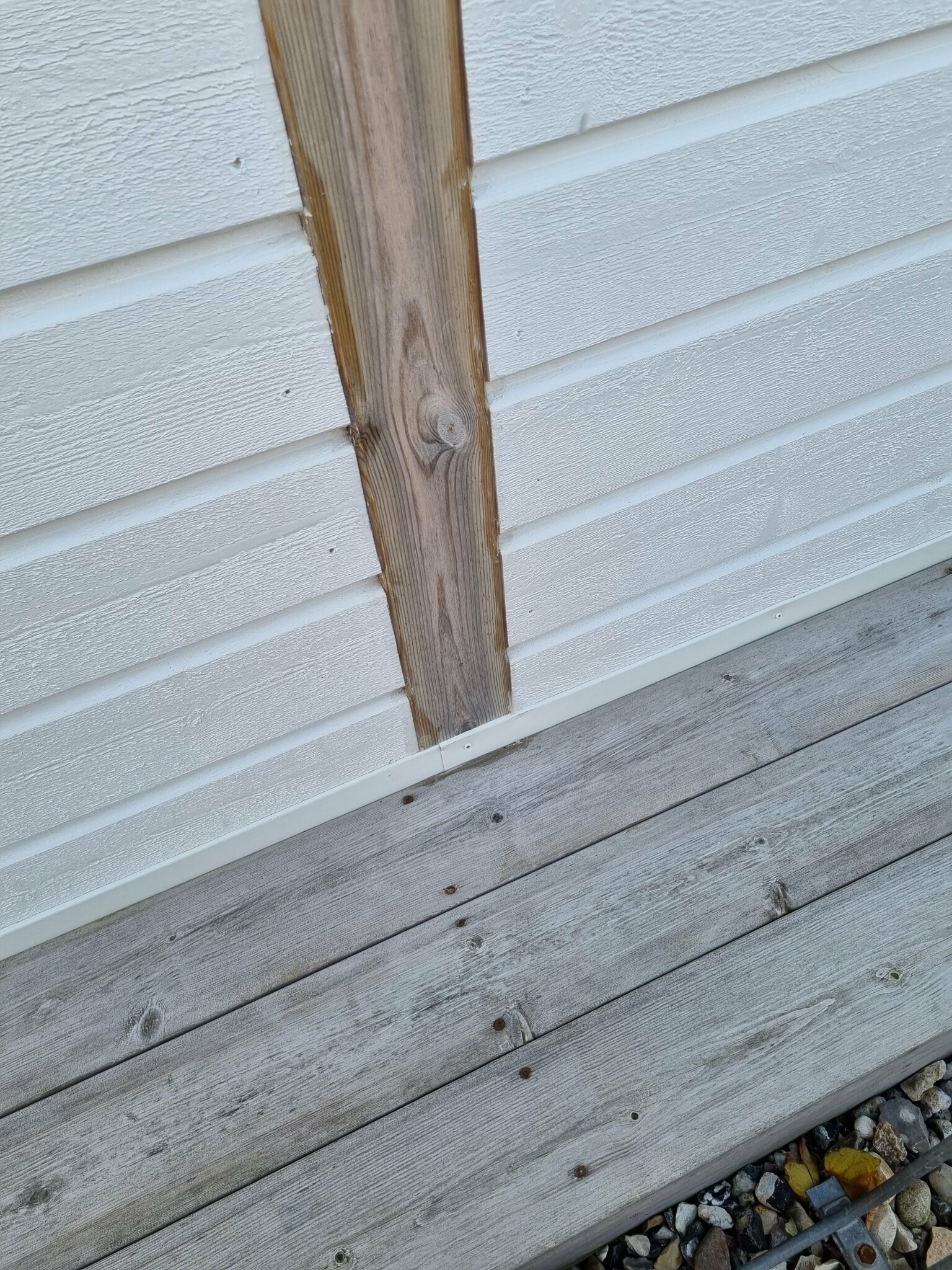
A new conservatory was built on the existing decking last year. We got water on the floor when it rained. Based on tips from here, we cut the floor under the door tracks, so there were a few mm between the boards. Metal sheeting was placed outside the posts, but we now discovered, after heavy rain, that rainwater is coming in again and probably via the posts, as it's only in the corners and the middle where the posts stand. Any good tips? Apart from tearing everything down 😕
A new sunroom was built on the existing decking last year. We got water on the floor when it rained. After getting tips from here, we cut the floor under the door rails, leaving a few mm between the boards. Metal was placed outside the posts, but we have now discovered that when it rains heavily, rainwater is again coming in, probably through the posts, as it's only in the corners and the middle where the posts are. Any good tips? Besides tearing everything down 😕
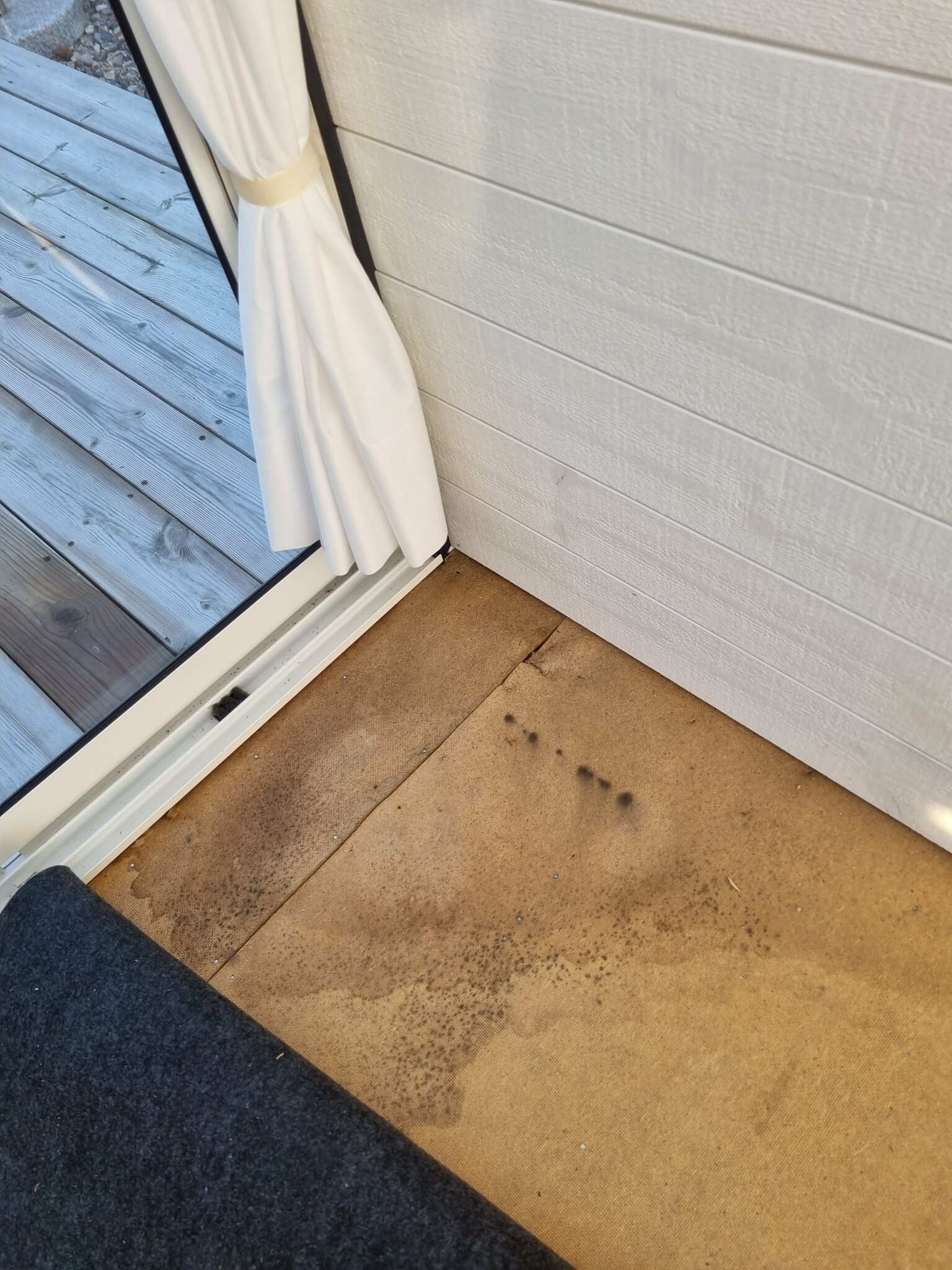
It's usually difficult to make it watertight when a conservatory is built on an existing decking. It's hard to give good tips that don't involve major changes. However, I see that you have placed Masonite or chipboard on the inside, which probably will not work over time regardless of whether it leaks through the walls or not. High risk of microbial growth.
Thanks for the response. It's oil-hardened. We put it in to seal under the carpet but it probably needs to be removed so we can get it sealed. However, it seems that the water is being drawn in through the posts. The floor under the tracks is sawed apart, a few mm in between, so that water can't get in that way.
It is always difficult to make it watertight when the conservatory is built on an already existing deck. It's hard to give good tips that don't involve major changes. However, I see that you have placed Masonite or chipboard on the inside, which probably won't work over time regardless of whether it leaks or not via the walls. There is a great risk of microbial growth.
Hello again!
Do you have knowledge about oil-hardened Masonite? We placed it because we wanted it to be more watertight under the carpet. Should it be removed? Do you have any tips on what can be placed under the carpet?
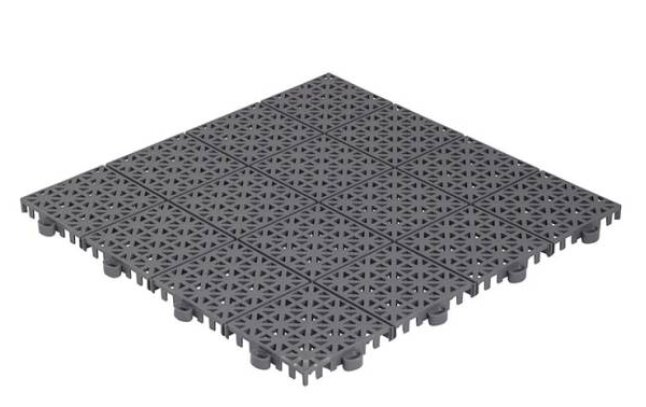
If it were my sunroom and I wanted a rug that lies flat, I would remove the masonite and replace it with plastic floor tiles that allow ventilation between the decking and the rug. Also, I would choose a rug that withstands moisture and is sufficiently permeable.
How is it sealed/moisture-protected between the post and the panel?
I can only agree with @Centano about plastic plates and breathable mat.
A bit OT:
We placed Bergo tiles under the balcony mat on the enclosed balcony when we lived in a condominium, it became both softer and warmer with the tiles under the mat than the mat directly on the concrete.
My brother-in-law has placed Bergo tiles under the carpeting in the basement.
Click here to reply
Vi vill skicka notiser för ämnen du bevakar och händelser som berör dig.

Centano said:
It is always difficult to make it watertight when the conservatory is built on an already existing deck. It's hard to give good tips that don't involve major changes. However, I see that you have placed Masonite or chipboard on the inside, which probably won't work over time regardless of whether it leaks or not via the walls. There is a great risk of microbial growth.