
943 views ·
5 replies
943 views
5 replies
Question aerated concrete+structural plywood
Hello,
I set up my training equipment in the basement on the wall - then noticed that the wall wasn't as solid as I had hoped. It was a bit porous when I drilled, maybe lightweight concrete? Therefore, I'm hesitant to use the bar for training without making it a little more stable. I would like to hear if anyone has input on the following solution I've planned:
I was thinking of screwing + gluing a 21mm construction plywood that I had at home. See picture. Then I thought the bar brackets should be screwed into both the wood and the lightweight concrete.
Does anyone's immediate thought suggest this will hold, or alternatively not hold?
I set up my training equipment in the basement on the wall - then noticed that the wall wasn't as solid as I had hoped. It was a bit porous when I drilled, maybe lightweight concrete? Therefore, I'm hesitant to use the bar for training without making it a little more stable. I would like to hear if anyone has input on the following solution I've planned:
I was thinking of screwing + gluing a 21mm construction plywood that I had at home. See picture. Then I thought the bar brackets should be screwed into both the wood and the lightweight concrete.
Does anyone's immediate thought suggest this will hold, or alternatively not hold?
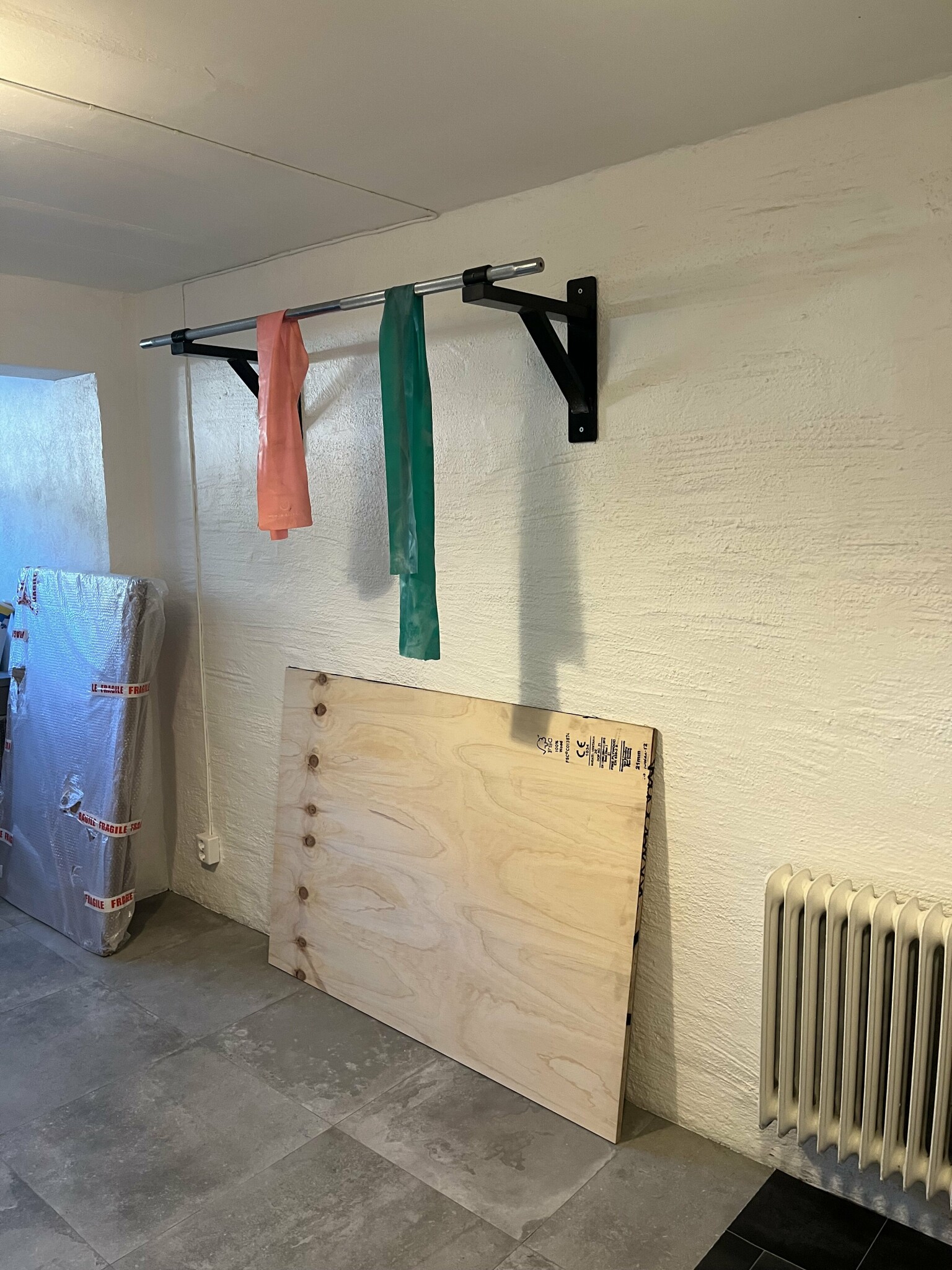
Yes, it will be quite stable with a 21mm plywood that you screw-glue into the lightweight concrete, it will distribute the pressure and leverage effect of your exercise equipment..:P Perrekk said:Hello,
I set up my exercise equipment in the basement on the wall - then noticed that the wall wasn't as hard as I had hoped. It was a bit porous when I drilled, maybe lightweight concrete? Therefore, I don't dare to use the bar for training without making it a little more stable. I would like to hear if anyone has input on the following solution I have in mind:
I thought of screwing and gluing a 21mm construction plywood that I had at home. See picture. Then I thought that the brackets for the bar should be screwed into both the wood and the lightweight concrete.
Does anyone's spontaneous thought say that this will hold, alternatively not hold?
Turn upside down to also attach to the ceiling?

Diversearbetare
· Göteborg
· 10 717 posts
There will be no difference with plywood if you can't even attach the regular fittings properly. The whole package will come off instead. The glue won't be any good either if the wall is porous as you say.
You need to use a threaded rod secured with anchor adhesive to be on the safe side.
You need to use a threaded rod secured with anchor adhesive to be on the safe side.
Thanks for the feedback and different input. At the risk of having to "try again and get it right," I might still lean towards using ankarmassa. I thought I could make do with what I had at home but perhaps it's best to purchase it after all.
Click here to reply